There’s a pattern to mass adoption in pharma. First comes clinical data, then prescriber uptake, then—inevitably—the public internet asking the same questions, over and over, in slightly different ways.
GLP-1 receptor agonists like Ozempic (and its weight-loss cousin Wegovy) have now hit that third phase. DrugChatter reads like a live feed of what patients actually want to know once the prescription is in hand.
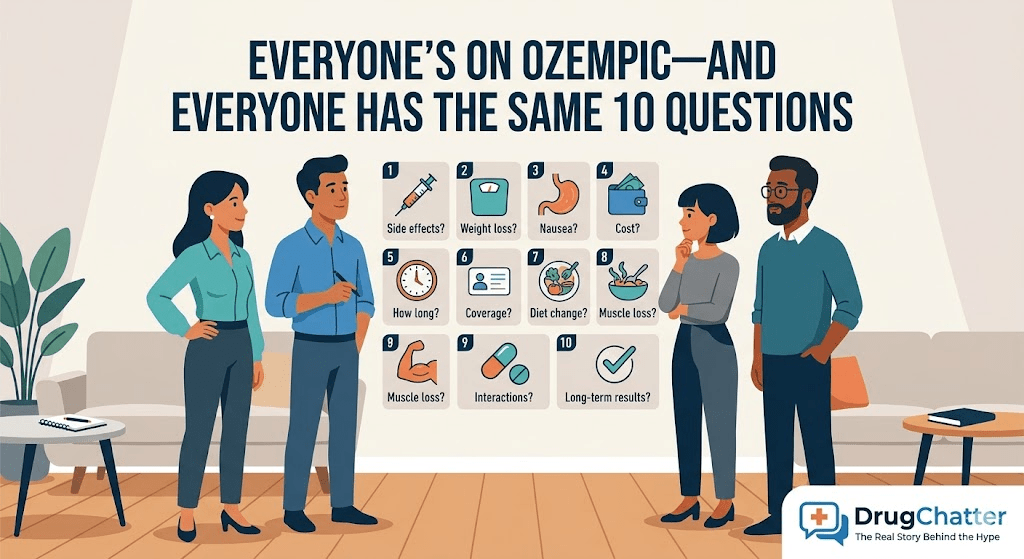
Here’s a curated look at the questions that keep coming up—and what they reveal about how this class is being used in the real world.
1. “What do I do about side effects?”
👉 https://www.drugchatter.com/chat/22270/what-should-i-do-if-i-experience-ozempic-side-effects
No surprise: tolerability dominates. Nausea, GI slowdown, and general “this feels different” are front and center.
The subtext here is important—patients aren’t just asking what happens, they’re asking how to manage it without quitting. That’s a sign of perceived benefit outweighing discomfort, at least initially.
2. “Is this going to change me long-term?”
👉 https://www.drugchatter.com/chat/45075/how-might-ozempic-impact-me-over-several-years
This is the classic chronic-therapy anxiety question. People understand this isn’t a short course of antibiotics.
They’re probing for:
- durability of weight loss
- metabolic adaptation
- unknown long-term risks
In other words: “Am I signing up for something permanent?”
3. “Will I actually lose weight?”
👉 https://www.drugchatter.com/chat/53495/can-ozempic-lead-to-weight-loss
Despite the media saturation, patients still want confirmation.
What’s interesting is that this question persists after widespread awareness of efficacy data. That suggests skepticism born from prior failed interventions (diet, exercise, earlier drugs).
4. “Is this changing how I eat?”
This is where GLP-1s get mechanistically interesting.
Patients are noticing:
- smaller portions
- reduced cravings
- altered food preferences
They’re trying to map subjective experience to mechanism—gastric emptying, satiety signaling, central appetite effects—without using those terms.
5. “Can I take this with my other meds?”
👉 https://www.drugchatter.com/chat/58756/can-ozempic-be-taken-with-blood-pressure-meds
Polypharmacy is the rule, not the exception.
These questions cluster around:
- cardiovascular drugs
- diabetes therapies
- anything affecting blood pressure or glucose
The underlying concern: additive effects vs. dangerous interactions.
6. “Does timing matter?”
👉 https://www.drugchatter.com/chat/11725/what-limits-ozempic-dosage-at-night
Not a trivial question. With weekly injectables, patients still look for optimization levers.
Timing questions hint at:
- side-effect mitigation strategies
- attempts to “hack” tolerability
- confusion about pharmacokinetics vs. daily meds
7. “How does this affect exercise?”
👉 https://www.drugchatter.com/chat/96/how-does-ozempic-affect-workout-performance
This is a newer category—and it’s growing.
Patients are trying to reconcile:
- reduced caloric intake
- potential fatigue
- performance goals
It’s the collision of metabolic therapy with fitness culture.
8. “Is this basically replacing lifestyle changes?”
(Implicit across multiple threads, not asked directly but everywhere)
Even when not stated outright, this question sits underneath many others.
The recurring tension:
- drug vs. diet
- pharmacology vs. behavior
GLP-1s blur that line more than most therapies.
9. “How does this compare to the ‘other one’?”
👉 https://www.drugchatter.com/chat/20930/is-wegovy-a-more-cost-effective-option-than-ozempic
Once patients are in the class, brand differentiation kicks in.
Questions drift toward:
- cost vs. coverage
- indication differences
- perceived potency
This is classic intra-class competition behavior—just happening at the patient level instead of the prescriber level.
10. “What happens if I stay on this forever?”
(A synthesis of multiple long-term and safety questions)
This is the endgame question.
Not:
- “Does it work?”
But: - “What’s the steady state of my life on this drug?”
That’s when a therapy has fully crossed into chronic use territory.
The Takeaway
Strip away the noise, and these questions fall into three buckets:
- Control — side effects, timing, interactions
- Expectation — weight loss, behavior change
- Commitment — long-term impact
That’s a remarkably tight set of concerns for a drug class generating billions in revenue and headlines.
Which is another way of saying: for all the complexity of GLP-1 pharmacology, the user experience reduces to a handful of very human questions.
And DrugChatter is where they show up first.