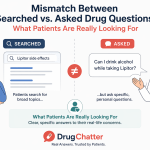
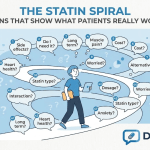
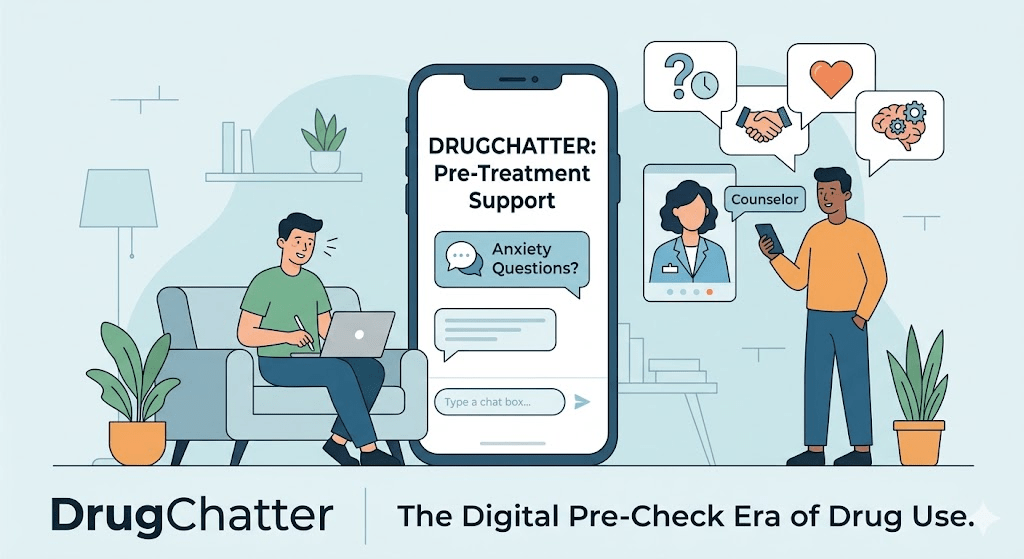
Patients are increasingly turning to online forums before their first dose—less for diagnosis, more for reassurance. The result is a predictable pattern: a cluster of “pre-treatment anxiety questions” that surface before therapy even begins, spanning food, side effects, interactions, and cost uncertainty.
What emerges is not confusion about efficacy, but uncertainty about boundaries—what is still “safe,” what is newly restricted, and what might quietly undermine treatment.
Food rules: the first line of anxiety
For statins like Lipitor, dietary ambiguity dominates early-stage concern. Patients repeatedly probe everyday foods that feel low-risk but carry perceived uncertainty: avocado intake with therapy, grapefruit interactions, dairy effects, and even wine.
Questions range from the practical to the highly specific: whether Mediterranean-style diets enhance outcomes, whether snacks matter, or if seemingly benign foods like soy milk or citrus subtly interfere with treatment intent.
Examples include:
- https://www.drugchatter.com/chat/17769/how-much-avocado-is-safe-with-lipitor-use
- https://www.drugchatter.com/chat/38965/is-it-safe-to-eat-grapefruit-while-on-lipitor
- https://www.drugchatter.com/chat/4070/does-consuming-dairy-products-affect-lipitor-s-potency
- https://www.drugchatter.com/chat/36600/what-are-the-effects-of-wine-on-lipitor-therapy
- https://www.drugchatter.com/chat/21922/how-does-a-mediterranean-diet-impact-lipitor’seffectiveness
The pattern is consistent: patients are not questioning the drug, but trying to map it onto daily life without disruption.
Interaction anxiety: the invisible risk category
Before starting therapy, patients increasingly anticipate drug–drug and drug–supplement conflicts—often over-the-counter medications, anticoagulants, and vitamins.
Common themes include NSAIDs with statins, warfarin adjustments, or whether seemingly benign supplements like probiotics or glucosamine could interfere with outcomes.
Representative questions include:
- https://www.drugchatter.com/chat/17102/can-lipitor-and-ace-inhibitors-cause-any-adverse-reactions
- https://www.drugchatter.com/chat/48298/can-ibuprofen-increase-blood-thinner-effects
- https://www.drugchatter.com/chat/32677/is-tylenol-safe-to-take-with-blood-thinners
- https://www.drugchatter.com/chat/11415/is-warfarin-s-effectiveness-altered-by-varying-lipitor-doses
- https://www.drugchatter.com/chat/56650/is-it-safe-to-combine-lipitor-and-probiotics-without-a-doctor-s-advice
The underlying behavior is anticipatory risk management: patients attempting to pre-clear combinations before they occur.
Biologics and immune uncertainty
For immunology drugs such as Cosentyx, pre-treatment anxiety shifts toward immune competence and infection risk—particularly vaccines and breastfeeding safety.
Patients frequently ask whether biologic therapy alters vaccine response, how skin tests predict allergies, and what “normal” side effects look like in real-world use.
Examples:
- https://www.drugchatter.com/chat/49740/can-cosentyx-impact-my-body-s-response-to-vaccines
- https://www.drugchatter.com/chat/4822/what-precautions-should-i-take-with-cosentyx-and-vaccines
- https://www.drugchatter.com/chat/18375/is-cosentyx-safe-for-breastfeeding-mothers
- https://www.drugchatter.com/chat/12489/how-accurate-is-a-skin-test-in-detecting-cosentyx-allergies
Here, anxiety is less about symptoms and more about immune identity under treatment.
OTC confusion: “safe enough” becomes unclear
Over-the-counter medications are a persistent gray zone. Patients question whether common drugs like ibuprofen, aspirin, or expired analgesics remain safe—or whether combinations amplify risk.
Typical concerns include bleeding risk, allergy potential in children, and whether timing or food intake alters efficacy.
Examples:
- https://www.drugchatter.com/chat/35209/what-are-the-safety-risks-associated-with-aspirin
- https://www.drugchatter.com/chat/30652/is-advil-safe-to-take-with-anticoagulants
- https://www.drugchatter.com/chat/52086/what-are-the-risks-of-using-expired-advil
- https://www.drugchatter.com/chat/29147/can-i-take-advil-with-doxycycline-for-pain-relief
- https://www.drugchatter.com/chat/15227/what-is-the-recommended-tylenol-dosage-with-advil
The underlying tension: OTC drugs feel familiar, but lose certainty once layered onto prescription regimens.
Metabolic and behavioral surprises
Newer therapies, particularly GLP-1 drugs like Ozempic, generate a different kind of pre-treatment anxiety: not interaction risk, but behavioral and physiological change.
Patients anticipate appetite shifts, cravings, fatigue, and even sensory changes before starting therapy.
Examples include:
- https://www.drugchatter.com/chat/24768/did-you-notice-any-salt-cravings-change-with-ozempic
- https://www.drugchatter.com/chat/36080/how-quickly-does-ozempic-induce-weight-loss
- https://www.drugchatter.com/chat/25778/how-does-ozempic-affect-dietary-choices
- https://www.drugchatter.com/chat/43176/how-quickly-can-lipitor-influence-snack-cravings
Unlike traditional drug concerns, these questions anticipate identity-level changes in eating behavior.
Access and affordability: anxiety before adherence begins
Before therapy even starts, cost uncertainty shapes decision-making. Patients frequently ask about discount cards, coupons, eligibility programs, and expiration rules for branded medications.
Examples:
- https://www.drugchatter.com/chat/53898/how-long-does-a-lipitor-discount-card-s-validity-typically-last
- https://www.drugchatter.com/chat/58523/are-there-any-lipitor-discounts
- https://www.drugchatter.com/chat/16547/are-there-any-advil-coupons-available-online
- https://www.drugchatter.com/chat/32080/how-can-i-qualify-for-yervoy-discounts
- https://www.drugchatter.com/chat/13040/what-is-the-minimum-order-for-vascepa-bulk-discounts
Financial friction is increasingly part of the pre-treatment decision architecture—not a downstream issue.
High-stakes therapies: oncology amplifies uncertainty
In oncology and specialty drugs, pre-treatment anxiety becomes more procedural: approvals, timing, indication specificity, and survival expectations.
Examples include:
- https://www.drugchatter.com/chat/28056/in-what-year-did-the-fda-approve-keytruda-for-cancer-treatment
- https://www.drugchatter.com/chat/40345/can-you-name-the-specific-cancer-for-which-keytruda-received-initial-fda-approval
- https://www.drugchatter.com/chat/26776/how-effective-is-lurbinectedin
- https://www.drugchatter.com/chat/41533/are-there-any-potential-side-effects-of-higher-yervoy-dosage
Here, uncertainty is not lifestyle-based—it is outcome-based, compressed into early informational searches.
The pattern beneath the questions
Across categories, the structure is consistent: patients are not asking whether a drug works, but how fragile its benefits are in real life.
Pre-treatment anxiety is increasingly defined by three forces:
- boundary testing (what can still be eaten, taken, or combined)
- anticipatory side-effect modeling (what might happen, when, and how severe)
- system navigation (cost, approvals, access constraints)
The result is a shift in how therapies are mentally staged: not at prescription, but well before the first dose.