There’s a particular genre of drug question that keeps resurfacing: not the obvious “what dose should I take?” but the far more revealing “can I bend the rules and get away with it?”
Scroll through DrugChatter and you see the pattern immediately. Patients aren’t just asking about medications—they’re reverse-engineering them. Mixing, substituting, optimizing, hacking.
Some of that curiosity is harmless. Some of it is not.
Here’s a breakdown of the most persistent—and potentially dangerous—myths hiding inside real user questions.
1. “If It’s OTC or ‘Natural,’ It Must Be Safe With My Prescription”
This is the single most common—and most misleading—assumption.
- Are there any benefits to taking lipitor and turmeric together
- Can garlic supplements reduce lipitor’s potency
- Are there any risks associated with taking lipitor and ginseng together
- How does lipitor interact with lavender oil
- Can probiotics interact negatively with lipitor’s effectiveness
The implicit model: supplements are “lightweight,” pharmaceuticals are “heavyweight,” and the two don’t really collide.
Reality: many of these compounds are metabolized through the same liver pathways. “Natural” is not a pharmacological category—it’s a marketing one.
2. “Food Can Fine-Tune Drug Performance (or Break It)”
Diet questions dominate, especially around statins.
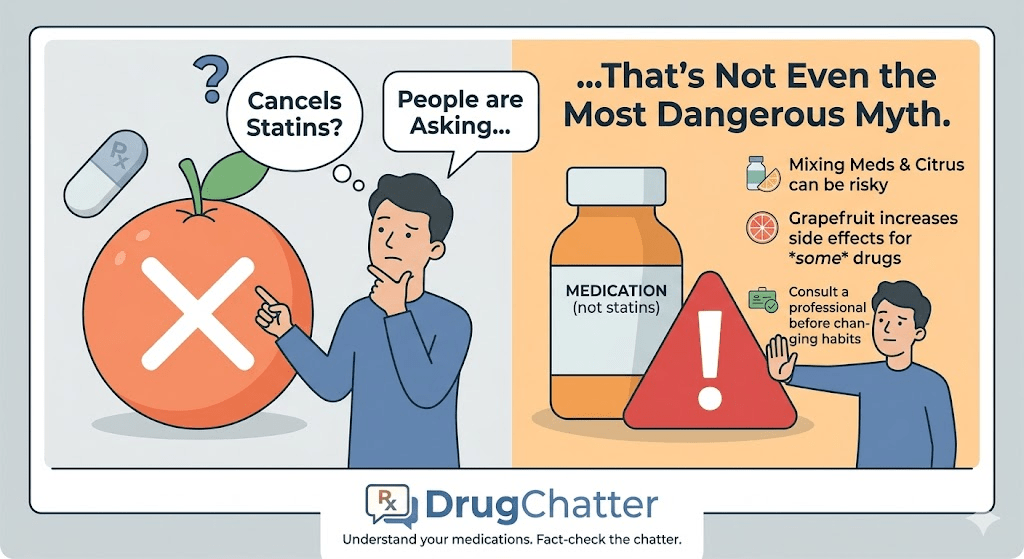
- How does grapefruit interact with lipitor
- Does cranberry juice interact with lipitor
- How does beef consumption impact lipitor’s potency
- Are there certain snacks to avoid while taking lipitor
- Does strawberry consumption affect lipitor’s potency
One of these matters a lot (grapefruit, for enzymatic reasons). The rest mostly don’t.
But users don’t distinguish between signal and noise. Everything becomes a potential “interaction,” which leads to two risks: ignoring real ones and overcorrecting for imaginary ones.
3. “You Can Swap Drugs Based on Outcome, Not Mechanism”
This is where things get structurally wrong.
- What is the recommended lipitor dosage for bp
- Can over the counter otc drugs match lipitor’s cholesterol lowering effect
- Can lipitor replace other blood pressure medications
- Can natural remedies be as effective as acyclovir
These questions collapse entirely different biological systems into a single outcome metric: “Does it help?”
Cholesterol ≠ blood pressure. Antivirals ≠ supplements. Mechanism matters—and substituting across categories is how treatment quietly fails.
4. “More (or Longer) Is Probably Fine”
Dosing drift is another recurring theme.
- How long can i take ibuprofen with lipitor
- How often can advil be taken
- What’s the maximum frequency for 325mg aspirin intake
- Can i take tylenol every few hours on lipitor
The pattern is subtle: users aren’t asking “what’s safe?” but “how far can I push it?”
That’s how liver toxicity, GI bleeding, and cumulative side effects sneak in—incrementally, not dramatically.
5. “Drug Interactions Are Optional Details”
They’re not. And users sense that—but often too late.
- Lipitor and ibuprofen together safe or risky
- Should i inform my doctor if taking both advil antidepressants
- Can advil interact with antidepressants and how can this be managed
- Can ibuprofen be taken with aspirin
These are the right questions—just often asked after the combination has already started.
The myth isn’t ignorance. It’s timing.
6. “Side Effects Are Either Rare—or Harmless”
Users tend to bucket side effects into “ignore” or “panic,” with little in between.
- What are lipitor side effects to watch for
- How does lipitor affect muscle function specifically
- Is muscle weakness a lipitor side effect
- How common are abnormal liver test results with lipitor
The danger isn’t that side effects exist—it’s misreading their significance. Some are nuisance-level. Some are early warning signals.
The platform is full of users trying to tell the difference.
7. “Lifestyle Can Replace Pharmacology”
A hopeful idea—and sometimes a risky one.
- Is lipitor’s effectiveness comparable to workouts
- Is a vegan diet recommended for lipitor users
- Can exercise offset lipitor’s impact on flexibility
- Does lipitor reduce desire for processed snack foods
Lifestyle absolutely matters. But it’s not a plug-and-play replacement for pharmacological effect sizes—especially in high-risk patients.
8. “Alcohol Is a Minor Variable”
It isn’t.
- Can i consume alcohol with lipitor
- What is the recommended alcohol limit on lipitor
- Does alcohol consumption affect ulcer healing while on advil
- Is it safe to take advil pm with alcohol
Users tend to treat alcohol as background noise—when in many cases it’s a primary modifier of risk, especially for liver and GI outcomes.
The Throughline
What ties these together isn’t misinformation—it’s partial models.
Patients understand that drugs have effects. They don’t always understand:
- how those effects are produced
- how they interact
- and where the real boundaries are
So they experiment. Carefully, sometimes. Blindly, other times.
DrugChatter’s value isn’t just answering these questions—it’s surfacing the pattern behind them.
Because the most dangerous myth isn’t about grapefruit, or turmeric, or ibuprofen.
It’s the idea that medications are modular—and that you can tweak them like a diet plan.
Biology doesn’t work that way.