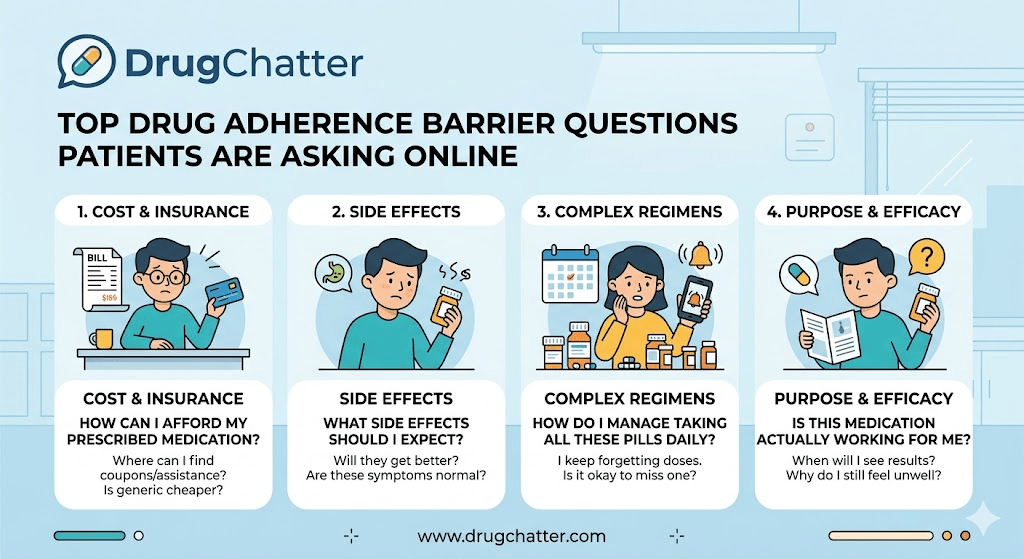
If you’ve ever watched a prescription sit on the counter while real life did what it does—work schedules, side effects, insurance hoops, pharmacy stock roulette—you already know the headline problem: adherence barriers aren’t medical mysteries. They’re practical ones. And patients ask about them constantly, in search of straightforward answers they can act on today.
Below are the top questions people are typing into their phones when medication plans start to wobble—organized around the kinds of friction that most commonly break routines: dosing and timing, side effects, interactions, lab monitoring, and, of course, cost.
1) “Is this drug even safe for me—especially if I’m older or a child?”
- Are children at similar risk for lipitor’s muscle side effects?
- Are there any elderly restrictions for cosentyx?
- Dupixent pediatric safety?
2) “What if I miss… or I’m taking it alongside other stuff?” (Interactions and medication chaos)
- What’s the recommended lipitor dose with warfarin?
- Can methotrexate cause issues with my current medications?
- How often can alcohol be consumed with lipitor?
- Drinking alcohol on vivitrol?
- Ibuprofen und eliquis?
- Hydrochlorothiazide grapefruit?
3) “Is the benefit worth the wait—or will it take forever?” (Timing and expectations)
- Is there a typical timeframe for lipitor’s full benefits to be experienced?
- How long thiamine takes to work?
- How does weight affect the effectiveness of cosentyx treatment?
4) “I’m feeling side effects—does this mean I should stop?” (Adverse effects and long-term worry)
- Can lipitor’s flexibility side effect lead to long term issues?
- Do you need regular liver tests while taking lipitor?
- Is there a risk of developing resistance to acyclovir?
- Kalbitor side effects?
- Is tigecycline contraindicated in certain liver conditions?
- Is tigecycline’s effectiveness against anaerobic bacteria widespread?
5) “How do I take it correctly?” (Administration friction and device confusion)
- How to inject cosentyx pen?
- Cosentyx pen instructions for use?
- Have you discussed lyrica’s impact on daily activities with your doctor
6) “Will food or lifestyle make my medicine fail?” (Efficacy derailments)
- How does regular consumption of fatty foods affect lipitor’s efficacy
- How often can alcohol be consumed with lipitor?
7) “Is it monitored? Is it capped? What’s the practical schedule?” (Duration, maximum dose, monitoring)
- What’s the maximum cosentyx treatment duration?
- What is the maximum cosentyx dose for heavy patients
- Cosentyx pen instructions for use?
- Do you need regular liver tests while taking lipitor?
8) “Money and access: the silent adherence killer.”
- Glatiramer acetate price?
- Nplate generic?
- Generic opsumit?
- Kazano cost?
- Northera cost?
- Natalizumab cost?
- Sohonos cost?
- Revuforj price?
- Subvenite price?
- Nplate drug buy?
- Sohonos cost?
- What requirements are needed for vascepa’s copay assistance?
- What are vascepa’s discount requirements?
- Salagen coupon?
- Lanthanum coupon?
- Cupon para zubsolv?
- Naftifine coupon?
- Entadfi discount?
- Tazorac gel price?
- Desipramine price?
- Tapinarof price?
- Tapinarof price?
- Does keytruda’s price vary by dosage or treatment duration?
- Qulipta costa rica?
- Ozempic jordan price 2026
9) “Will the supply plan change on me?” (Generics, patents, exclusivity)
- When does ngenla patent expiration?
- Is there a patent on sorafenib?
- Sutent loss of exclusivity date?
- Europe exclusivity gattex revestive date?
- Lenalidomide fda orange book patent expiration date?
- Adempas patent?
- When will apotex’s ruxolitinib generic launch in the us?
10) “What is this medication, anyway?” (Basic identification questions that affect follow-through)
- Opdivo drug class?
- Fulvestrant manufacturer?
- What is tauvid?
- Renova prescription?
- Enspryng mechanism of action?
The takeaway: adherence is often a problem of clarity
People don’t stop taking medicines because they don’t care. They stop because a side effect feels threatening, a timing question never gets answered, a food interaction seems plausible, or the cost suddenly becomes non-negotiable.
If you’re dealing with any of the issues reflected in these questions, the most important next step is the boring one that actually works: ask your clinician or pharmacist to translate the internet answers into your plan—dose, schedule, monitoring, and what to do if something feels off.