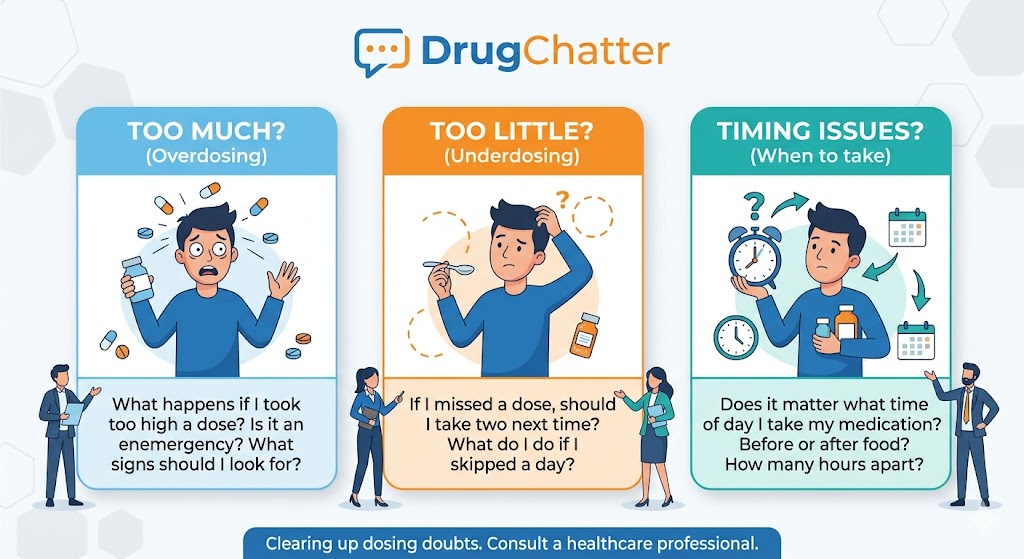
Every so often, a patient (or a caregiver) does the math the way humans do: if a dose is good, then a bigger dose must be better; if a dose is missed, then doubling up must fix it; if a schedule is confusing, then “close enough” should work. Unfortunately, drugs don’t care about our intentions. They care about exposure—how much gets into the body, how fast, and for how long.
Here are some of the most common dosing confusion questions—too much, too little, and the timing problems that turn “routine” into “mystery.” Each link goes to the original DrugChatter Q&A.
Dose confusion usually isn’t about stubbornness—it’s about complexity. But the fix is straightforward: confirm the exact dose, confirm the exact timing, and don’t “correct” missed doses by improvising. If you’re unsure, the safest move is to ask the prescriber or pharmacist before changing anything.
If you want to go deeper, click through the questions above and look for the practical guidance buried in the details—because that’s where the real dosing answers live.