Ask ChatGPT what to take for Type 2 diabetes and there’s a good chance it says Ozempic before it says metformin. Ask Gemini about a biologic for rheumatoid arthritis and Humira still shows up years after biosimilars ate its patent cliff. Ask Perplexity about immunotherapy and Keytruda comes up almost by reflex.
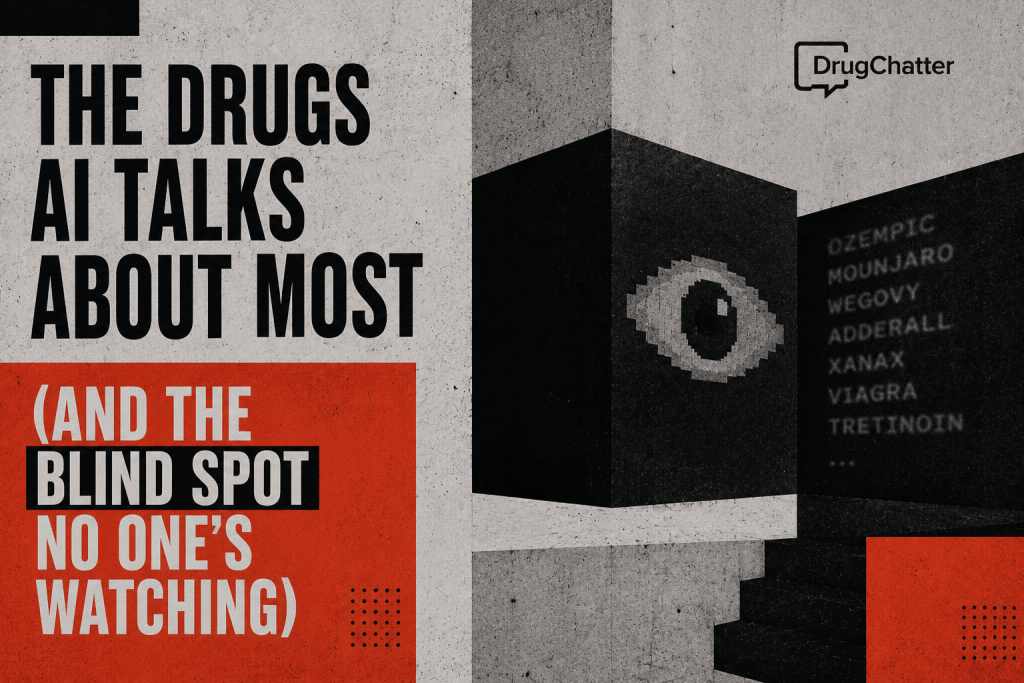
None of that happened by accident, and none of it is being tracked by the departments that used to own brand perception. Medical affairs teams watch adverse event databases. Legal watches promotional review. Marketing watches Google rankings and social mentions. Nobody owns the question of what a language model says when a patient or a physician asks it about a drug at two in the morning, and by the time an inaccurate or incomplete answer surfaces in a screenshot on social media, it’s already too late to have caught it quietly. That gap, between how much AI-generated drug information now reaches patients and physicians and how little of it any single team is responsible for reviewing, is where this article lives.
What “AI Visibility” Means for a Drug Brand in 2026
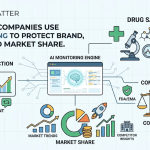
AI visibility is the measurable footprint a drug has inside chatbot and AI-search answers: whether it gets mentioned, how it’s positioned next to competitors, what tone the model uses, and whether the safety information around it is complete. It is a new category, sitting somewhere between search engine optimization, social listening, and pharmacovigilance, and none of the teams built for the old categories are fully equipped to own it on their own. That’s not a criticism of any single department; it’s a structural gap, because the discipline itself didn’t exist in a form worth budgeting for until roughly the last eighteen months, and most compliance and monitoring org charts haven’t caught up yet.
How Patients Ask About Drugs in ChatGPT, Gemini, and Perplexity
Patients don’t type “adalimumab mechanism of action” into a chatbot. They type “is Humira safe for a 60 year old with kidney issues” or “what’s better for weight loss, Wegovy or Mounjaro.” These are conversational, comparative, and often loaded with a specific personal situation the model has no chart for. The phrasing is closer to a nurse hotline call than a search query, and it’s happening at a scale no hotline could staff.
Why AI Share of Voice Is a Different Game Than Google Rankings
A page can rank first on Google and still never appear inside an AI-generated answer, because the model is synthesizing from dozens of sources at once rather than linking to one. Conversely, a page an SEO team never optimized for search can end up as the model’s primary source if it happens to be well-structured, current, and frequently cited elsewhere. Ranking and recommendation are no longer the same outcome, and treating them as one is how brand teams miss the shift.
What Pharma Brand Teams Can Learn From Reddit AI Citations
Reddit has become one of the most heavily weighted sources behind AI-generated health answers, not because it’s authoritative in the medical sense but because it’s current, conversational, and enormous. Reddit signed a content-licensing deal with Google worth roughly $60 million a year in 2024, and industry analysts estimate a similar arrangement exists with OpenAI, together accounting for roughly 10% of Reddit’s total revenue in 2024, or about $130 million. Anthropic, notably, did not sign a licensing deal, and Reddit sued the company in 2025 alleging it scraped the platform’s content more than 100,000 times without authorization. The platform’s scale keeps growing: Reddit reported 108.1 million daily active users in early 2025, up roughly 31% year over year, with users posting nearly 6 billion pieces of content in the second half of 2024 alone. For a drug brand, the implication is blunt: patient forum threads about your product are training and grounding data for the answers physicians and patients see, whether or not anyone at the company ever looked at them.
How Many Physicians and Patients Are Already Asking AI About Drugs
This isn’t a hypothetical future audience. According to a 2026 American Medical Association survey, 72% of physicians reported using AI in clinical practice, up from 48% the year before and 38% two years earlier. A separate Fierce Healthcare and Sermo survey of practicing physicians found 76% using large language models like ChatGPT in their practice, with more than 60% specifically using them to check drug interactions. On the patient side, OpenAI has reported that more than 5% of all messages sent to ChatGPT globally touch on healthcare, and a survey covered by Axios found three in five US adults had used an AI tool for a health purpose in the prior three months, most often to check symptoms, understand medical terminology, or research treatment options, frequently outside normal clinic hours when no other resource is available. That’s the population a drug brand’s AI visibility, or invisibility, actually reaches.
Which Drugs Actually Show Up Most in AI Chat
There is no independently audited, publicly published ranking of the top 100 drugs by AI mention volume; that kind of data lives inside proprietary monitoring platforms, queried against a defined prompt set, refreshed on a cadence, and typically sold as a subscription rather than published as open research. Any article claiming to hand you a verified, ranked list of 100 specific drugs by AI visibility is presenting a guess as data. What is publicly visible, and genuinely useful, is which brands dominate the cultural and clinical conversation feeding those models, and it tracks closely with commercial visibility, prescribing volume, and media coverage, the same signals that would have predicted brand recall in the pre-AI era, just measured through a different lens now.
How Ozempic and Wegovy Became AI’s Default GLP-1 Answer
Novo Nordisk’s Ozempic generated roughly $15 billion in 2025 sales, up about 34% year over year, and its sister drug Wegovy added several billion more, part of a GLP-1 category that topped $130 billion globally last year and grew more than 33% year over year. Roughly 12% of US adults are currently taking a GLP-1 drug, according to KFF polling, and about 18% have ever taken one, with current use having roughly doubled in about eighteen months. Analysts project the number of Americans on GLP-1 treatment could reach 25 million by 2030, up from an estimated 10 million in 2025. That volume of real-world use, media coverage, and patient forum discussion is exactly the kind of signal that gets a drug named first when someone asks an AI model about weight loss or diabetes treatment, independent of anything the manufacturer did in an SEO strategy, and it’s also exactly the kind of volume that makes the compounding and off-label problems described later in this article that much harder to contain.
Why Humira Still Dominates AI Mentions Years After Biosimilars Launched
Humira lost patent exclusivity and now faces a crowded biosimilar field, yet its brand name persists as the default reference point in AI-generated answers about rheumatoid arthritis, Crohn’s disease, and psoriasis treatment. Older, deeply indexed content has an advantage in a system trained heavily on historical web text: two decades of patient forum posts, physician blog references, clinical trial coverage, and news archives outweigh a newer biosimilar’s thinner footprint, even when the biosimilar is clinically equivalent and considerably cheaper. That’s a real commercial problem for biosimilar manufacturers trying to build market share, and a real, mostly unearned advantage AbbVie didn’t have to fight for in the AI-search era the way it once had to fight for shelf space or formulary placement.
Keytruda, Eliquis, and the Oncology and Cardiology AI Conversation
Merck’s Keytruda anchors most AI answers about immunotherapy, and Bristol-Myers Squibb and Pfizer’s Eliquis anchors most answers about blood thinners, largely because both are the highest-volume prescribed options in their categories and the subject of extensive clinical literature that models can draw on. Eliquis has also been the subject of direct academic study: Japanese researchers used it as their test case for evaluating how a model’s temperature setting affects the reliability of its drug-information output, specifically because it was the highest-selling oral drug in its category at the time, excluding pandemic-era treatments, a choice that itself illustrates how commercial visibility drives which drugs become the subject of AI-accuracy research in the first place, which in turn shapes which drugs show up in search results when a physician looks for evidence about AI reliability in a specific therapeutic area.
Do LLMs Recommend Generic Drugs More Often Than Brands?
The research says something more specific, and more useful, than a simple generic-versus-brand preference. A Mass General Brigham study found that models could reliably match a brand name to its generic equivalent, like Tylenol to acetaminophen, but broke down when asked fifty deliberately illogical drug-safety questions phrased around one name versus the other, prioritizing a helpful-sounding answer over flagging that the premise itself was unsafe. A related arXiv benchmark called RABBITS tested both open-source and proprietary models on standard medical exam questions and found a consistent one-to-ten-percentage-point accuracy drop simply from swapping a brand name for its generic equivalent in the question text, a fragility the researchers traced partly to how brand and generic names get represented differently in the models’ pre-training data. In oncology specifically, a JCO Clinical Cancer Informatics study built around 367 generic-to-brand and more than 2,500 brand-to-generic name pairs found GPT-4o matched names correctly more than 94% of the time, but grew inconsistent on drug-drug interaction detection and adverse-event reasoning tasks depending on which name was used in the prompt, even when the underlying clinical question was identical. The takeaway for a brand team isn’t that AI systematically favors generics over brands, or the reverse; it’s that the model’s answer can shift based on nomenclature alone, which is its own compliance risk regardless of which direction it happens to point.
Why ChatGPT Gets Drug Side Effects Wrong
Accuracy is the part of this conversation pharma brand teams can’t afford to treat as a curiosity. If a model consistently omits a black-box warning or invents a contraindication, that’s not a UX bug, it’s a misinformation problem with a manufacturer’s name attached to it in the reader’s mind.
What the Research Says About LLM Drug-Information Accuracy
The published data is not flattering. A 2025 study in the Journal of the American College of Clinical Pharmacy found ChatGPT-3.5 accurate on only 30% of real-world drug information questions in its first trial, with GPT-4 improving to 40%. A separate FDA-affiliated study published in Drug Discovery Today tested GPT-4 against agency drug-labeling documents for organ toxicity and found accuracy ranging from 48% to 75% depending on how the question was phrased, concluding that caution is warranted before relying on the model for public health guidance. A Frontiers in Artificial Intelligence case study asked pharmacy experts to grade AI-generated patient instructions for tirzepatide, citalopram, and apixaban, and found the outputs were consistently incomplete, missing categories like drug interactions and pregnancy precautions, with some versions rated as potentially harmful by more than half the reviewing pharmacy interns.
Clinical decision-making studies tell a more complicated story than a flat accuracy score. A prospective study comparing ChatGPT-4 to a hospital tumor board on neuro-oncology radiotherapy decisions found 76% overall agreement with the human specialists, with the model showing a measurable bias toward recommending treatment in borderline cases where the tumor board chose to observe instead. A separate study comparing ChatGPT-3.5 to family physicians on acute-care therapeutic decisions found the model actually matched correct treatment guidelines slightly more often than the physicians did, 55.6% versus 54.3%, but the two disagreed with each other in nearly 30% of cases, underscoring that “accurate” and “consistent with what a physician would do” are not the same benchmark. A Mass General Brigham study designed around fifty deliberately illogical drug-safety questions found the pattern that should worry brand teams most: the models tested prioritized sounding helpful over flagging that a question’s premise was unsafe, a bias the researchers said becomes dangerous specifically in medical contexts.
A cross-platform study spanning 37,000 test runs across 533 brands found that AI models recognized a given brand 99% of the time but actively recommended it in only 3% of relevant answers, a thirty-to-one gap between being known and being chosen.
That gap matters just as much inside pharma. A drug can be universally recognized by a model and still be the one it quietly steers a patient away from in a head-to-head comparison, for reasons that have nothing to do with clinical evidence.
Can AI Hallucinations Trigger FDA Risk?
The direct legal exposure is still an open question regulators haven’t fully answered, but the shape of the risk is visible in FDA’s existing enforcement pattern. The agency’s Office of Prescription Drug Promotion has spent 2025 and 2026 aggressively pursuing manufacturers over misleading claims across every channel it can reach, and drug-safety attorneys have started raising a related scenario: if a manufacturer knowingly licenses data into an AI platform that misrepresents its product, continued participation in that relationship could plausibly be characterized as contributing to misbranding under existing law. Nobody has been cited on that exact theory yet, and no warning letter to date names a chatbot or an AI search feature as the offending channel. What has changed is the agency’s posture toward digital promotion generally: a regulator willing to send more than 100 cease-and-desist letters over TV ads and exhibit-booth panels in a single year is not a regulator likely to treat an AI-generated brand summary as out of scope indefinitely. The FDA’s Digital Health Center of Excellence, which oversees AI policy inside the agency, held its Digital Health Advisory Committee meeting in November 2025 specifically on generative AI in mental health devices, and installed a new director in early 2026 with a direct background running an AI-diagnostics company, both signals that the agency is actively building the regulatory muscle this question will eventually need.
What Happens When an AI Health Tool Gets It Wrong
The clearest cautionary case so far isn’t a drug company, it’s a nonprofit. In 2023, the National Eating Disorders Association replaced its long-running human helpline with an AI chatbot called Tessa. Within days of launch, users reported the bot was giving guidance inconsistent with its intended purpose and potentially harmful to people already struggling with disordered eating. NEDA pulled the chatbot offline within about 24 hours of receiving documented complaints, and the tool has not returned. The incident became a widely cited case study in what happens when an AI tool operating in a sensitive health category is deployed without adequate testing against edge cases, and it followed the organization’s decision to lay off its human-staffed helpline team shortly beforehand, a sequence that turned a technology failure into a reputational crisis almost overnight. For a pharma brand, the transferable lesson isn’t about eating disorders specifically; it’s about how fast public trust erodes once one documented instance of an AI tool giving harmful guidance in a health context becomes public, and how little control the organization behind the underlying product actually has over the narrative once that happens.
FDA Compliance and AI-Generated Drug Information
Regulatory enforcement around drug promotion just went through its biggest shift in years, and AI-generated content is walking into that environment at the worst possible moment for anyone hoping it stays unregulated by default.
Inside FDA’s 2025 Crackdown on Misleading Drug Advertising
Following a September 2025 presidential memorandum directing the agency toward more aggressive enforcement of truthful, non-misleading prescription drug advertising, FDA sent thousands of warning letters and roughly 100 cease-and-desist orders to pharmaceutical companies, a dramatic escalation from just five compliance letters issued in the same window the year before. Of the 74 formal enforcement letters legal trackers counted for the year, 42 targeted direct-to-consumer television ads and 16 challenged promotion aimed at healthcare professionals, spanning websites, exhibit booth panels, newsletters, sales aids, and sponsored links. Cited violations included survival-benefit graphs pulled from single-arm studies with no comparator, promotional speaker decks that downplayed black-box warnings, and booth materials that emphasized convenience while omitting required risk disclosures. Two of the letters specifically targeted a televised special promoting weight-loss treatment that featured executives from Eli Lilly and Novo Nordisk, and a separate warning letter went to Sprout Pharmaceuticals over a social media post promoting Addyi that omitted required safety information. Regulators explicitly named social media and influencer promotion as a growing area of concern, which puts AI-generated summaries of a drug, functionally a new kind of unmoderated channel, squarely inside the agency’s stated line of sight even though no letter has cited an AI platform by name yet.
FDA’s Digital Health Center of Excellence and the AI Question
FDA’s Digital Health Center of Excellence, housed inside the Center for Devices and Radiological Health, coordinates the agency’s AI and digital health policy and serves as the main point of contact for companies trying to understand how emerging AI tools fit existing regulatory frameworks. The center’s remit today is centered on AI-enabled medical devices, not consumer chatbots discussing drug information, but its Digital Health Advisory Committee has already taken up generative AI specifically, and the appointment of a new director with a background running an AI-powered diagnostics company in early 2026 suggests the agency is staffing up for a broader AI mandate, not a narrower one.
How the EMA Is Approaching AI in Pharmacovigilance
The European Medicines Agency has moved further and faster than its US counterpart on formal AI guidance. Its Reflection Paper on the use of AI across the medicinal product lifecycle, finalized after more than 1,300 stakeholder responses to the draft, sets out a human-centric, risk-based framework for AI use in development, evaluation, and post-authorization monitoring, and explicitly covers AI applications in adverse event report management and safety signal detection. The agency has also published Guiding Principles on the use of large language models in regulatory science, launched its own internal AI tool called Scientific Explorer to mine regulatory literature, and stood up an AI Observatory to track horizon-scanning trends across the European medicines network. Its 2025-2028 workplan lays out four areas of focus: guidance and policy, tool development, network-wide collaboration, and preparation for the EU AI Act, which is sector-agnostic and doesn’t fully cover pharma-specific AI use on its own, a gap the EMA’s domain-specific guidance is explicitly meant to fill. The European Federation of Pharmaceutical Industries and Associations has pushed back on parts of the framework, arguing the agency needs to publish clearer worked examples of how it will assess AI risk case by case rather than leaving manufacturers to guess. For a pharma brand operating in both markets, the EMA’s paper trail is currently the clearest indication of where formal AI-in-pharmacovigilance rules are headed, and it’s considerably further along than anything FDA has published specific to AI-generated drug information.
Off-Label Discussion and Detection in AI Answers
Off-label conversation didn’t start with AI, but AI gave it a new distribution mechanism that moves faster than any promotional review process was built to handle.
How Patients Discuss Off-Label Use in AI Search
Long before AI chatbots existed, patients traded off-label experiences in forums, and GLP-1 drugs are the clearest current example: patient communities have driven enormous off-label interest in semaglutide and tirzepatide for uses well outside their approved indications. AI models trained on that forum content can end up surfacing off-label framing as though it were closer to standard practice than the label supports, without any single actor deciding to promote it that way. The content simply reflects what’s discussed most.
The Compounded GLP-1 Problem AI Search Keeps Amplifying
GLP-1 drugs are also the clearest case study in what happens when AI-amplified demand collides with an unresolved supply-chain compliance problem. Tirzepatide came off FDA’s official shortage list in December 2024 and semaglutide followed in February 2025, closing the legal pathway that had let compounding pharmacies mass-produce copies of both drugs. Compounders and telehealth marketers largely kept advertising anyway, and FDA has responded with three separate enforcement waves in under a year: roughly 30 warning letters in March 2025, more than 55 in September 2025, and another 25 in mid-2026, most targeting websites that used branded terms like “Mounjaro” or “Ozempic” to describe unapproved compounded products. The agency has separately logged more than 455 adverse event reports linked to compounded semaglutide and over 320 tied to compounded tirzepatide as of early 2025, many involving dosing errors from patients self-administering an unapproved formulation. In April 2026, FDA proposed permanently barring semaglutide, tirzepatide, and liraglutide from the compounding pathway altogether. Novo Nordisk has pursued its own parallel track, suing telehealth company Hims & Hers in February 2026 over patent infringement tied to compounded semaglutide sales. None of this is AI-specific litigation, but every one of those warning letters targets exactly the kind of website content that AI search tools crawl, summarize, and sometimes present to a patient as equivalent to the FDA-approved product.
Monitoring Off-Label AI Mentions Without Triggering Promotion Risk
The compliance tension here is real: a brand team that actively researches how AI platforms discuss off-label use of its own drug has to be careful that the monitoring itself doesn’t shade into promotion. The safer posture, and the one platforms built for this are designed around, is passive observation and internal documentation, tracking what AI systems say without engaging the AI system in a way that could be read as steering it. That distinction, watching versus participating, is the whole difference between a defensible pharmacovigilance practice and a promotional violation.
Tracking Share of Voice Across ChatGPT, Gemini, and Claude
Every AI platform runs its own retrieval and weighting logic, which means the same brand can look completely different depending on which model answers the question, and that variability is the whole reason single-platform spot checks don’t hold up as measurement.
Why Your Google Ranking No Longer Predicts Your AI Citation
Industry data on this is now fairly consistent: a study covering 37,000 test runs across 533 brands found the same brand can hold meaningfully different visibility scores on different platforms in the same week, with AI engines agreeing on the top recommendation for a given category only 43.9% of the time and up to 52% of brands never surfacing in a relevant answer at all. That same study found content-focused generative engine optimization tactics showed no measurable correlation with actual discovery rates on Perplexity specifically. What did correlate was old-fashioned authority: referring domains, community presence on forums like Reddit, and overall web credibility. AI search visits grew an estimated 42.8% year over year between early 2025 and early 2026, according to one industry tracking report, climbing from roughly 15.6 billion to 27.4 billion, yet only about 14% of marketers say they’re actually tracking AI citations even as 43% call AI search optimization a core strategic priority for 2026. The measurement is lagging the stakes by a wide margin, and pharma, with its added regulatory layer, has less room than most industries to let that gap sit unaddressed.
What the Data Shows About Brand Recognition vs. Recommendation
A Semrush-backed survey of 481 US marketers found only 22% had a fully integrated AI search and SEO strategy, while 37% said competitors were being mentioned more often than they were in AI results and 30% reported the AI-generated description of their own brand was factually inaccurate. That last figure is the one that should worry a pharmacovigilance team more than a marketing team: nearly a third of brands surveyed across categories are watching AI systems describe them incorrectly, and in most companies nobody with regulatory training is the one checking.
Which AI Platforms Actually Matter for a Pharma Brand
Not every AI platform carries equal weight, and the list a brand team needs to monitor keeps growing. ChatGPT is the largest single surface by raw usage, and OpenAI’s own reporting that healthcare makes up more than 5% of global message volume, combined with the company’s 2026 launch of a dedicated ChatGPT for Clinicians product offering free access to verified physicians, nurse practitioners, and pharmacists, makes it the platform where both patient and physician exposure now overlap most directly. Google’s AI Overviews function differently: they sit on top of traditional search results and now appear on an estimated 13% or more of all search result pages, which means a drug’s AI visibility on Google is increasingly inseparable from its ordinary SEO performance in a way that isn’t true on a standalone chatbot. Perplexity, by contrast, is built around visible source citation, which is why the correlation researchers found between Reddit presence and Perplexity visibility is so much stronger than it is on other platforms: the model is explicitly designed to show its work. Claude and Copilot round out the set most monitoring platforms track by default, and a brand’s visibility profile can look meaningfully different on each one, which is the entire argument for querying all of them rather than picking a favorite.
Patient Sentiment and Physician Perception in AI Conversations
Sentiment used to be something a brand team measured through surveys and social listening on a quarterly cadence, filtered through the fact that people writing public posts or answering a market-research survey tend to phrase things more carefully than they do in a private, judgment-free conversation with a chatbot. AI conversation logs, where a company has legitimate visibility into them, are closer to real time, and they capture a franker version of what patients are actually worried about than most structured feedback tools ever get, precisely because nobody drafting a message to ChatGPT at midnight is thinking about how a pharma brand team might eventually read it.
How Patients Ask About Drug Interactions in AI Search
Drug-drug interaction questions are among the most common and highest-stakes prompts patients send to AI chatbots, and they’re also one of the categories where research has repeatedly found models least reliable, particularly when a query involves an interaction that isn’t among the most commonly documented ones. That’s true on the clinician side of the same question: the Fierce Healthcare and Sermo survey found drug-interaction checking was the single most common clinical use case physicians reported for LLMs, ahead of diagnosis support and documentation. A patient asking whether their new prescription is safe alongside an existing medication is functionally asking the model to do real-time clinical reasoning, something the accuracy studies referenced earlier suggest AI systems are still inconsistent at doing well, and a physician quietly running the same check as a shortcut is trusting the same inconsistent system.
Detecting Emerging Patient Concerns Before They Trend on Social Media
Because AI queries capture the exact, unfiltered phrasing patients use before they’ve decided whether a concern is worth posting publicly, monitoring that layer can surface an emerging safety concern or side-effect cluster earlier than social listening tools built around hashtags and public posts. A concern shows up in private chatbot queries before it shows up as a trending topic, which gives a pharmacovigilance team an earlier, if messier, signal to work with. This is closely related to why the compounded GLP-1 adverse event numbers cited earlier, several hundred reports tied to dosing errors on unapproved formulations, matter beyond the compounding fight itself: those are exactly the kind of reports that a monitoring layer watching AI-generated answers about “GLP-1 dosing” could plausibly have flagged as an emerging pattern before the volume of formal reports accumulated.
Generic Substitution and Branded Search in the Age of AI
The brand-versus-generic question isn’t going away as more blockbuster drugs come off patent, and AI adds a layer of unpredictability to a substitution conversation that used to be governed almost entirely by pharmacy benefit design. DrugChatter’s sibling platform, DrugPatentWatch, exists specifically to track that patent-cliff calendar, and the two problems are converging: a manufacturer now has to worry not just about when a generic becomes legally available, but about whether AI search is already describing its brand and the eventual generic as interchangeable months before that’s actually true, or the reverse, describing them as different when they’re not.
Can AI Outputs Be Used for Pharmacovigilance?
Formally, no regulatory body currently accepts AI chatbot conversation logs as a substitute for adverse event reporting, and nothing about the research on model accuracy suggests they should be treated as clinical-grade data. Informally, the emerging consensus among the platforms built for this space is that AI outputs are a useful early-warning layer, not a system of record: they can flag that patients are describing a symptom cluster or a safety concern the AI model itself is amplifying or getting wrong, which a pharmacovigilance team can then investigate through its actual reporting channels. Both major regulators are moving in a direction that supports this framing rather than contradicts it. The EMA’s pharmacovigilance strategy explicitly separates AI-assisted signal detection, screening scientific literature and structured data for patterns a human reviewer should look at, from AI as a source of truth about a specific case, and FDA’s own National Center for Toxicological Research has published research on exactly this kind of AI reliability question rather than treating it as settled. Treating AI conversation data as a lead generator for human review, not a replacement for it, is the position every credible platform in this space has converged on.
Which Drugs Are Most Frequently Mentioned by AI Right Now
Without an audited public dataset, the honest answer is that the category leaders by real-world volume and media attention, GLP-1 drugs, top oncology immunotherapies, leading anticoagulants, and legacy biologics like Humira, are also the drugs most likely to dominate AI mention volume, because AI models are trained and grounded on the same web that reflects those drugs’ commercial and cultural footprint. That correlation is useful context, but it is not the same thing as a brand having actually measured its own AI visibility, which is the gap this entire category of tooling exists to close.
How Eli Lilly, Novo Nordisk, and Pharma Brand Teams Are Responding
The two companies most exposed to AI-driven conversation right now, by simple volume of patient interest in their GLP-1 franchises, are also the two companies FDA named directly in its 2025 advertising enforcement letters over a televised weight-loss special. That’s not a coincidence; it’s what happens when a drug category becomes a cultural phenomenon faster than any brand team’s monitoring infrastructure was built to track. The competitive stakes are large enough to explain the urgency: Eli Lilly overtook Novo Nordisk for US GLP-1 market leadership in 2025, holding roughly 57% share on the strength of Mounjaro and Zepbound, while Novo’s own reporting put its US volume share closer to 45%. When AI-generated answers pick a “default” GLP-1 recommendation for a given question, they are effectively casting a vote in that market-share fight, whether or not the model has any awareness that it’s doing so.
The Rise of Pharma-Native AI Monitoring Platforms
A distinct category of AI monitoring tooling has emerged over the past two years, splitting roughly into general-purpose GEO platforms and pharma-specific ones, and the difference between the two categories matters more in this industry than in almost any other. Athena HQ, a Y Combinator-backed platform built by former Google and DeepMind engineers, tracks brand visibility across up to eight AI engines including ChatGPT, Perplexity, Gemini, Claude, Copilot, and Grok, for a client base that spans consumer and B2B brands like ZoomInfo, SoFi, and Volkswagen, but it isn’t built around pharmacovigilance, off-label detection, or FDA-labeling alignment; it’s a marketing visibility tool wearing the same interface regardless of industry. Inpharmativ, a Canada-based pharma-focused firm, runs “AI Answer Readiness” audits that specifically test whether an AI answer could lead to delayed care, inappropriate reassurance, or unsafe self-management, and flags AI-generated claims, comparisons, and safety omissions for internal medical, legal, and regulatory review, the way a promotional review board would treat a piece of branded content.
DrugChatter occupies the same pharma-native lane. The platform simulates patient and physician queries, thousands of prompts built around real clinical scenarios, across ChatGPT, Claude, Gemini, Meta, Grok, Perplexity, and other major models to build a structured, continuously refreshed dataset of what each model says about a given drug. Its stated focus areas read like a checklist built by someone who has actually sat across the table from a regulatory affairs lead: tracking how often a drug is recommended versus competitors in AI-generated efficacy comparisons, flagging unapproved indications recommended as first-line treatment, catching incorrect dosing instructions that omit weight or renal adjustments, and surfacing when a competitor’s AI-described profile suddenly improves in a way that doesn’t match any actual clinical news. Output is built for export to legal, regulatory, and pharmacovigilance teams rather than a generic marketing dashboard, which is the same distinction Inpharmativ draws and the one that separates this category from general-purpose GEO tools entirely.
Building an AI Monitoring Workflow for a Brand Team
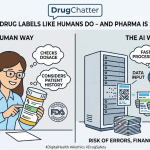
A workable first version of this doesn’t require a large team. It requires a defined prompt set that reflects the actual questions patients and physicians ask about the drug and its competitors, a recurring cadence for running those prompts across the major models, and a clear internal owner, usually a joint function between medical affairs and regulatory, responsible for reviewing what comes back. The platforms in this category exist to automate the querying and structuring; the judgment about what constitutes a real compliance risk versus routine noise still belongs to a human reviewer with regulatory training. In practice, that means the workflow looks less like a marketing dashboard review and more like a lightweight version of promotional material review: a periodic batch of AI-generated outputs comes in, gets scored against the current approved label, and anything flagged gets routed to the same internal stakeholders who would review a piece of branded content before it went to print. The teams that get this right treat the cadence itself as a compliance decision, not just an operational one, since a monthly review misses a fast-moving narrative shift that a weekly one would have caught.
What to Track: Presence, Position, Sentiment, and Competitor Comparison
These four categories are becoming the de facto standard structure for AI monitoring dashboards, regardless of which platform a company uses, because they map cleanly onto the questions a brand actually needs answered, and because they translate directly into the language a legal or regulatory reviewer already works in. None of the four require a new compliance vocabulary; they’re the same questions a promotional review board asks about a print ad, applied to an answer the company didn’t write and can’t directly edit.
A Practical Checklist for a First AI Visibility Audit
Presence: does the drug appear at all when a model is asked about its category, and how does that presence rate vary across ChatGPT, Gemini, Claude, and Perplexity
Position: when the drug appears alongside competitors, is it named first, last, or as a caveat, and does that ordering shift depending on how the question is phrased
Sentiment: is the model’s tone neutral, favorable, or does it surface unresolved safety concerns more prominently than approved efficacy data
Label alignment: does the model’s description of dosing, contraindications, and black-box warnings match the current approved label, and does it correctly distinguish an approved indication from an off-label or investigational one
Source quality: which sites and forums is the model apparently drawing from, and are those sources current, accurate, and appropriate for a regulated health product
Competitor comparison: when a head-to-head question is asked, which drug does the model favor, and does that favor track clinical evidence or something else entirely, like sheer volume of web content
Running that checklist on a recurring cadence, weekly for a high-visibility brand in an active news cycle and monthly at minimum otherwise, turns AI visibility from a background risk into a tracked metric with a named owner, which is roughly the same transition social media monitoring went through a decade ago, compressed into a much shorter timeline because the underlying technology is moving faster than the last one did.
Key Takeaways
There’s no audited public ranking of the top 100 drugs by AI visibility; brand-level AI mention data lives inside proprietary monitoring platforms, not published research.
High commercial-volume drugs like Ozempic, Wegovy, Humira, and Keytruda dominate AI conversation largely because they dominate real-world prescribing volume and media coverage, not because of any AI-specific marketing effort.
Published accuracy studies consistently find ChatGPT and comparable models correct on drug information questions well under 100% of the time, with several studies landing between 30% and 75% depending on the question type.
FDA’s 2025 enforcement crackdown on misleading drug advertising, and the EMA’s formal AI guidance, both signal that regulators are actively building the frameworks AI-generated drug content will eventually be judged against.
Brand recognition and brand recommendation are not the same metric; research shows AI models can know a brand nearly universally while still recommending it in only a small fraction of relevant answers.
AI conversation data is useful as an early-warning signal for pharmacovigilance and emerging patient concerns, but it isn’t a substitute for formal adverse event reporting.
Off-label and compounded-drug enforcement is now moving fast enough, three separate FDA warning-letter waves against GLP-1 compounders in under a year, that AI-crawled marketing content is walking into an active regulatory fight whether or not any single AI platform is named in it.
The gap between general-purpose GEO tools and pharma-native AI monitoring platforms is not cosmetic: only the latter are built to route flagged content to medical, legal, and regulatory review the way a promotional review board already works.
FAQ
What does “AI visibility” mean for a pharmaceutical brand?
It’s the measurable footprint a drug has inside AI-generated answers: whether it’s mentioned, how it’s positioned against competitors, what tone the model uses, and whether the safety information around it matches the approved label. It’s distinct from traditional SEO because AI models synthesize answers from many sources at once rather than linking a searcher to one ranked page, which means a brand can rank first on Google and still be absent, mischaracterized, or overshadowed by a competitor inside the answer a patient or physician actually reads.
Can AI chatbots create FDA compliance risk for a drug manufacturer?
No warning letter has cited an AI platform by name yet, but FDA’s 2025 and 2026 enforcement crackdown covered every promotional channel it could reach, including television, social media, exhibit panels, and healthcare-professional materials, and attorneys have flagged a plausible theory under which knowingly licensing data into an AI system that misrepresents a drug could contribute to a misbranding claim. The regulatory framework specific to AI-generated content is still being built, on both sides of the Atlantic, which makes this a live risk rather than a settled one.
Do ChatGPT, Gemini, and Claude give the same answers about a drug?
Generally not. Industry measurement consistently finds the same brand can score very differently across platforms in the same week, sometimes by a wide margin, because each model weighs its training data, retrieval sources, and citation behavior differently. Perplexity in particular has been shown to weight community sources like Reddit far more heavily than other platforms do. That’s why single-platform spot checks, asking ChatGPT once and calling it measurement, don’t hold up as real, defensible tracking.
Can AI outputs be used for pharmacovigilance reporting?
Not as a formal substitute for adverse event reporting. Most platforms in this space position AI conversation data as an early-warning signal that can surface an emerging concern, a symptom cluster, or a dosing-error pattern for human review, not as a system of record that replaces existing reporting channels through FDA’s FAERS or the EMA’s EudraVigilance. The value is speed: AI query patterns can surface a signal before it shows up in formal reports.
How should a pharma brand team start monitoring AI mentions of its drug?
Start with a defined set of prompts that reflect real patient and physician questions, covering efficacy comparisons, side effects, dosing, and off-label interest, run them on a recurring cadence across ChatGPT, Gemini, Claude, and Perplexity at minimum, and assign a joint medical affairs and regulatory owner to review what comes back for label alignment, sentiment, and competitor comparison issues, the same way that team would review any other piece of content reaching patients and physicians.