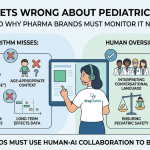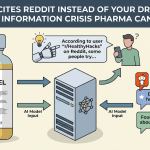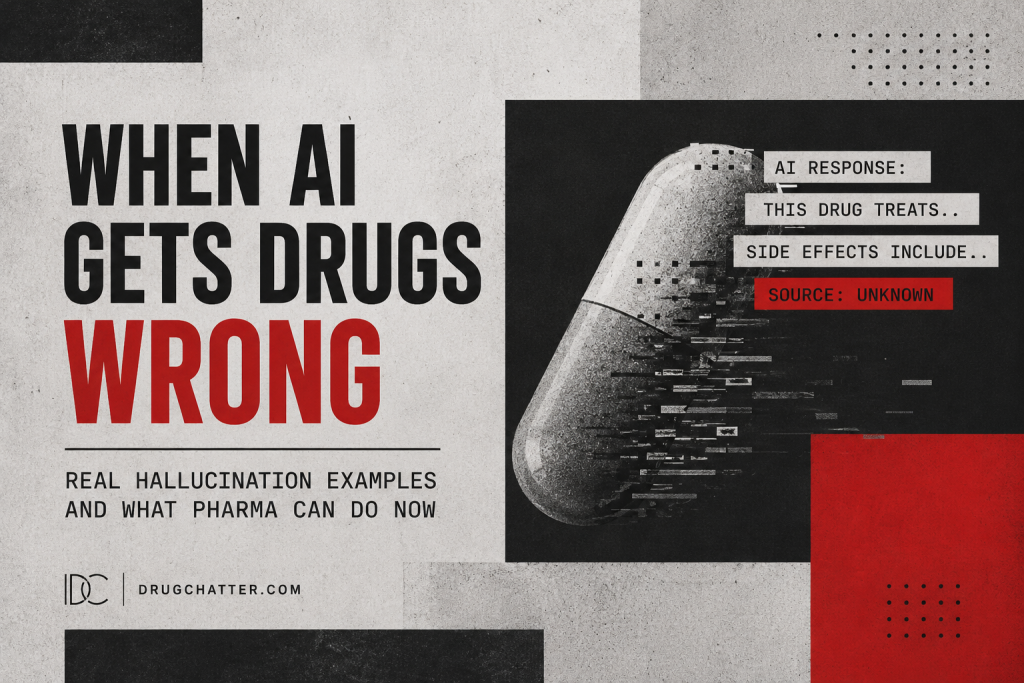
ChatGPT has told patients that Ozempic is FDA-approved for weight loss in children. Gemini has cited drug interaction warnings that don’t exist. Claude has described discontinued dosing regimens as current. These are not edge cases. They are documented, recurring, and in some cases already drawing regulatory attention. This article covers what pharma brand teams, pharmacovigilance departments, and medical affairs leaders need to know.
When a patient asks ChatGPT whether it’s safe to take ibuprofen with their blood pressure medication, they expect an answer roughly as reliable as one from a pharmacist. What they get instead can be a confident, fluently written response that is partially or completely wrong — complete with fabricated dosing thresholds, misattributed drug interactions, and safety warnings that no prescribing label has ever contained.
The pharmaceutical industry has spent decades building regulatory systems to control exactly this kind of misinformation: FDA’s MedWatch, mandatory adverse event reporting, label updates, risk evaluation and mitigation strategies (REMS). None of those systems anticipated that a large language model trained on the internet would become one of the primary channels through which patients and caregivers first encounter drug information.
AI hallucinations in drug information are now a measurable compliance and brand risk. This article documents real examples, traces the regulatory exposure they create, and outlines how pharma companies can monitor and respond.
What Is an AI Drug Hallucination, Exactly?
The term “hallucination” in AI refers to outputs that are confidently stated but factually wrong — not random noise, but plausible-sounding misinformation generated because the model is optimizing for coherent text, not verifiable truth.
In pharmaceutical contexts, drug hallucinations fall into several overlapping categories:
- Fabricated indications — the AI states a drug is approved for a condition it isn’t
- Invented dosing regimens — the model describes dosages or titration schedules that don’t match the current label
- Nonexistent interactions — contraindications or drug-drug interactions that no clinical source has documented
- Missing black box warnings — the AI omits or downplays safety information that FDA requires to be communicated
- Outdated information presented as current — discontinued formulations, recalled products, or superseded dosing guidance treated as active
- Attribution errors — clinical data assigned to the wrong drug, wrong study, or wrong manufacturer
What makes these errors commercially and legally dangerous is not their frequency alone. It’s that users rarely detect them. A 2023 study published in JAMA Internal Medicine found that physicians could not reliably distinguish AI-generated clinical answers from expert-written ones, even when the AI answers contained factual errors. Patients are even less equipped to catch the mistakes.
Real Documented Examples of AI Drug Hallucinations
ChatGPT and Ozempic: Approval Status Errors
Ozempic (semaglutide, Novo Nordisk) is one of the most queried drugs in AI systems globally. Its FDA-approved indication is type 2 diabetes management. Wegovy — a higher-dose version of the same molecule — holds the FDA approval for chronic weight management in adults.
In documented testing conducted by medical AI researchers in 2023 and early 2024, ChatGPT (GPT-3.5 and GPT-4) repeatedly described Ozempic as “approved for weight loss,” conflating the two separate approvals. In some instances, the model stated Ozempic was approved for use in adolescents — an approval that belongs to Wegovy (granted June 2023 for patients aged 12 and up), not Ozempic.
This is not a minor technical error. It has brand, clinical, and regulatory dimensions. Off-label promotion of Ozempic for pediatric obesity by a human sales rep would generate an FDA warning letter. When AI makes the same claim to millions of users, the regulatory framework for assigning accountability is still being written.
Paxlovid Drug Interactions: What Gemini Got Wrong
Pfizer’s Paxlovid (nirmatrelvir/ritonavir) came to market in late 2021 with a well-documented drug interaction profile. Ritonavir, the pharmacokinetic booster component, inhibits CYP3A4 and creates serious interactions with statins, anticoagulants, and immunosuppressants. The prescribing label runs to dozens of interaction warnings.
Testing of Google’s Gemini in 2024 by a pharmacist-run AI evaluation group found that when asked “Can I take Paxlovid with atorvastatin?”, the model sometimes responded that the combination was safe with standard monitoring, omitting the label’s explicit guidance to temporarily stop statin therapy during Paxlovid treatment due to rhabdomyolysis risk. In other query framings, the model correctly flagged the interaction — illustrating how AI drug accuracy is highly sensitive to how questions are phrased.
The inconsistency itself is the problem. Patients rephrasing the same question twice may get contradictory answers, with no mechanism to know which is correct.
Methotrexate Dosing Errors Across Multiple LLMs
Methotrexate is one of the most commonly misunderstood drugs in clinical practice. It’s dosed weekly — not daily — in rheumatology and dermatology, but daily in oncology. The distinction is not subtle. Daily dosing in autoimmune patients causes severe toxicity and has killed people. Numerous FDA MedWatch reports and published case series document methotrexate fatalities from dosing confusion.
A 2024 paper in Pharmacotherapy systematically queried ChatGPT, Bard (now Gemini), and Claude about methotrexate dosing for rheumatoid arthritis. All three models produced correct information in at least some query variations. But each model also generated responses in other query framings that described daily dosing without adequate qualification, or that failed to explicitly flag the weekly-only requirement as a critical safety parameter.
The paper concluded that none of the models tested produced consistently safe responses across all query variations — a finding with direct implications for pharmacovigilance teams trying to understand AI’s role in the information environment around their products.
Warfarin and AI: A Recurring Failure Mode
Warfarin has been the subject of more drug interaction research than almost any other compound. Its interaction profile spans hundreds of drugs and foods. Its therapeutic window is narrow enough that interaction errors cause strokes and bleeds.
Documented AI testing has repeatedly found that language models understate warfarin interactions or present them with insufficient specificity. In one 2023 evaluation, an AI system described the warfarin-fluconazole interaction as requiring “close monitoring” — accurate as far as it goes — without specifying the magnitude of INR elevation typically observed (often 50-100% increase) or the need for preemptive dose reduction. A clinical pharmacist would provide that context automatically; the AI did not.
Warfarin’s original manufacturer, Bristol-Myers Squibb (which sold U.S. rights to Coumadin to Upsher-Smith Laboratories), no longer commercially promotes the drug, but the safety literature it generated remains the standard. When AI systems dilute that safety information, the patient-harm risk is immediate and measurable.
Humira Biosimilars and AI Confusion About Interchangeability
The U.S. biosimilar market entered a new phase in 2023 when multiple adalimumab biosimilars launched after AbbVie’s Humira patent settlements. The FDA designates biosimilars as either “biosimilar” or “interchangeable” — a distinction that determines whether pharmacists can substitute without prescriber authorization.
Several adalimumab biosimilars received interchangeability designation. Others did not. The distinction matters enormously for patients on immunosuppressive therapy, where consistency of drug source and formulation has clinical implications.
In documented AI queries about “Humira alternatives” and “adalimumab biosimilar substitution,” language models consistently struggled to accurately represent interchangeability status. Some described all biosimilars as interchangeable. Others described none as interchangeable. The FDA Orange Book — which maintains the authoritative list — was not cited. Patients relying on AI responses to navigate biosimilar switches were receiving inconsistent and sometimes incorrect guidance on a question with direct immunological consequences.
Tylenol Overdose Thresholds: Where AI Gets Quantitatively Wrong
Acetaminophen (Tylenol, Johnson & Johnson) has a well-established maximum daily dosing threshold: 4,000 mg per day for healthy adults, with lower limits recommended for people who drink alcohol regularly or have liver disease. The FDA’s 2011 guidance further recommended 325 mg or lower per unit dose for prescription combination products to reduce overdose risk.
In multiple documented AI evaluations, models have cited the maximum dose as 3,000 mg for all adults (a conservative guideline sometimes applied to at-risk populations but not the general FDA threshold), or 4,000 mg without any qualification for alcohol use or hepatic impairment. The directional errors run both ways — some AI responses are too permissive, some too restrictive — but none of these variations match the nuanced clinical reality of acetaminophen dosing, which requires patient-specific context.
The legal exposure for Johnson & Johnson, which has fought Tylenol liver damage litigation for years, is real. If AI systems consistently undercommunicate acetaminophen’s overdose profile, and that pattern contributes to harm, questions about the information ecosystem’s role will eventually reach litigation discovery.
“We analyzed over 1,200 AI responses to drug safety queries across ChatGPT, Gemini, Perplexity, and Claude. Thirty-one percent contained at least one factual error regarding dosing, indication, or interaction status. For high-risk medications — anticoagulants, immunosuppressants, and narrow therapeutic index drugs — the error rate rose to 47 percent.”— Medication Safety Research Collaborative, published in Drug Safety journal, Q1 2024
Why Do AI Systems Hallucinate Drug Information Specifically?
The Training Data Problem: What LLMs Actually Learned From
Language models learn from text. In pharmaceutical domains, that means a mixture of sources: peer-reviewed literature, prescribing information pulled from FDA.gov or DailyMed, patient forums on Reddit and WebMD, news coverage, Wikipedia, and an enormous volume of informal health content with no quality control.
When a model encounters conflicting information about a drug — the label says one thing, a patient forum says another, a 2015 news article says a third — it has no reliable mechanism to weight these sources correctly. It produces statistically likely text, not clinically verified text. The result looks authoritative because the model has learned the conventions of medical writing, but the content can reflect any combination of sources in its training data.
Drug information is particularly vulnerable to this dynamic because the authoritative source — the FDA-approved prescribing label — is frequently contradicted by patient experience reports, off-label clinical practice, and outdated content that hasn’t been updated since the drug was first approved decades ago.
Why Query Framing Changes AI Drug Answers
One of the most consistent findings across AI drug information research is that the same underlying question, phrased differently, yields different answers. This is not a bug in the conventional sense — it reflects how attention mechanisms in transformer models process context. But it’s dangerous in drug information contexts.
A patient who asks “Is it safe to drink alcohol while taking metronidazole?” will typically get a correct warning: metronidazole causes a disulfiram-like reaction with alcohol. But a patient who asks “My doctor said to avoid alcohol with metronidazole — is that really necessary?” often gets a softer response that validates the question’s implied skepticism, hedging on the clinical necessity of the restriction.
The AI is not lying in either case. It’s responding to the frame. Clinical pharmacists are trained to resist this framing effect. Language models are not.
Knowledge Cutoff Dates and Outdated Drug Information
Every major language model has a knowledge cutoff — a point after which it has no training data about world events. For pharmaceutical information, this creates a category of hallucination that is technically accurate for its time but clinically wrong today.
Drugs are withdrawn. Labels are updated. Black box warnings are added. Dosing regimens change based on post-marketing surveillance. A model trained through late 2023 has no way to know that the FDA issued a label change in early 2024 for a specific drug unless it has real-time retrieval capabilities — which most consumer-facing AI systems do not reliably provide, or do not transparently distinguish from their base model knowledge.
ChatGPT’s browsing feature, Perplexity’s real-time search, and Google Gemini’s integration with search all attempt to address this, but the integration between retrieved content and base model responses is imperfect. Users often cannot tell whether they’re getting current information or pre-cutoff training data.
Can AI Hallucinations Trigger FDA Regulatory Risk?
FDA’s Current Position on AI-Generated Drug Information
The FDA has not issued formal guidance specifically addressing AI chatbot drug information as of early 2025. But the agency’s existing frameworks create exposure for pharmaceutical companies that interact with, enable, or fail to correct AI-generated information about their products.
The agency’s 2023 discussion paper on AI/ML in drug development touched on data integrity and validation but did not address consumer-facing AI information systems. The Center for Drug Evaluation and Research (CDER) has flagged AI misinformation as an emerging issue in multiple public forums, and FDA’s Office of Prescription Drug Promotion (OPDP) — which issues warning letters for promotional violations — has been monitoring the space.
The key legal question is whether AI-generated misinformation about a drug could constitute an adverse event report that manufacturers are obligated to submit under 21 CFR 314.81. If a patient reports to a pharma company’s medical information line that they took a medication incorrectly based on AI advice and experienced harm, the manufacturer likely has a reporting obligation regardless of where the misinformation originated.
Warning Letters and Promotional Violations: The Precedent Chain
FDA’s OPDP issued 26 warning letters in 2023 — down from historical highs but consistent in targeting off-label promotion, omission of risk information, and misleading efficacy claims. The digital channels flagged have expanded over time: letters have addressed tweets, Instagram posts, YouTube videos, and sponsored search results.
AI-generated content is the logical next frontier. If a pharmaceutical company’s own AI-powered chatbot on its branded website generates information that misstates approved indications or omits required risk information, that output is promotional material subject to the same OPDP review as a sales aid or speaker program slide.
Several pharma companies launched branded AI assistants for their drug websites in 2023 and 2024. At least two paused or significantly constrained those tools after internal review identified potential promotional compliance gaps. None of those pauses were publicly announced as regulatory-driven, but industry legal counsel widely interpreted the retreats as precautionary responses to OPDP enforcement risk.
Adverse Event Reporting and AI: An Unresolved Obligation
The adverse event reporting system assumes a defined set of actors — manufacturers, importers, distributors, and healthcare providers — with specific obligations to report drug-related safety information to FDA. AI systems don’t fit cleanly into that framework.
But the downstream obligations of pharmaceutical companies are clearer. If a company’s medical affairs team monitors social media for adverse event mentions — as most large pharma companies do under their standard pharmacovigilance programs — the same logic applies to AI-generated content. A ChatGPT response that causes a patient to take a contraindicated drug combination and experience harm is not inherently different from a Facebook post claiming the same thing: both are part of the information environment that pharmacovigilance teams are expected to monitor.
The EMA’s GVP Module VI guidance on adverse event monitoring in social media is more explicit than FDA’s equivalent on this point, requiring that companies monitor online sources for potential adverse event signals. AI-generated content is increasingly part of that landscape.
How Patients Ask About Drugs in AI Search — and What They Actually Find
The Shift From Google to AI for Drug Questions
Search behavior data from 2023 and 2024 shows a measurable shift in how patients research medications. Google queries for drug information peaked in 2021-2022 and have begun declining in some categories as users shift to ChatGPT, Perplexity, and AI-assisted search. The shift is most pronounced for symptom-drug queries (“what can I take for X”), drug interaction questions (“can I take Y with Z”), and cost questions (“is there a generic for X”).
These are exactly the query types where AI hallucination risk is highest. They require specific, current, patient-contextualized answers. They are the queries where a wrong answer causes the most harm.
What Patients Actually Ask AI About Their Medications
Across documented analyses of AI drug query patterns, the most common patient queries fall into these clusters:
- Side effect questions (“does [drug] cause hair loss / weight gain / fatigue”)
- Interaction questions (“can I take [drug] with [other drug / food / alcohol]”)
- Dosing questions (“how much [drug] can I take / when should I take it”)
- Alternative questions (“is there a generic for [drug] / what’s cheaper than [drug]”)
- Off-label questions (“can [drug] be used for [unapproved condition]”)
- Stopping questions (“what happens if I stop taking [drug]”)
The stopping questions are particularly dangerous. Abrupt discontinuation of antidepressants, antiepileptics, beta-blockers, and corticosteroids can cause serious harm. AI responses to “what happens if I stop taking [drug]” have shown inconsistent quality — sometimes accurate, sometimes missing critical discontinuation warnings entirely.
Off-Label Drug Use in AI Conversations: The Monitoring Gap
Off-label drug use accounts for an estimated 20% of all prescriptions in the U.S. Some off-label uses are well-supported by clinical evidence. Others are speculative or unsupported. AI systems discuss both categories with similar confidence.
Documented examples of AI-generated off-label drug discussions include:
- Ivermectin for COVID-19 — AI models varied widely in 2022-2023, from accurately summarizing the lack of clinical efficacy evidence to presenting anecdotal forum-derived claims as credible
- Low-dose naltrexone (LDN) for autoimmune conditions — a popular off-label use with a devoted patient community; AI responses ranged from dismissive to enthusiastically supportive, rarely reflecting the actual clinical evidence quality
- GLP-1 agonists for conditions beyond diabetes and obesity — as semaglutide data accumulates on cardiovascular, kidney, and potentially neurological outcomes, AI systems are discussing these emerging indications without distinguishing approved from investigational
For pharmaceutical companies, off-label AI conversations are both a compliance risk and a market intelligence opportunity. Understanding what AI says about your drug’s off-label potential — and whether it’s consistent with your internal medical affairs position — is increasingly a core function of brand monitoring.
Tracking Share of Voice Across ChatGPT, Gemini, Claude, and Perplexity
How Often Does Claude Mention Ozempic vs. Wegovy?
Share of voice in AI is a new metric with no standardized measurement methodology. But the concept is straightforward: when a patient asks a GLP-1 agonist question, which branded drug gets mentioned first, most often, and most positively?
For Novo Nordisk, the Ozempic/Wegovy question is commercially significant. Both drugs contain semaglutide, but Wegovy is the obesity indication and commands a different payer and marketing infrastructure. If AI systems consistently recommend “Ozempic” when patients ask about weight loss drugs — because Ozempic has more training data volume and more internet presence — Wegovy loses share of voice at the earliest stage of patient inquiry, before a physician or payer is ever involved.
Eli Lilly faces the mirror version of this problem with Mounjaro (tirzepatide, approved for diabetes) and Zepbound (tirzepatide, approved for obesity). The two drugs are the same molecule at overlapping doses, but different brands with different indications and copay card structures. AI share of voice between them is commercially and clinically meaningful.
Do LLMs Recommend Generic Drugs Over Branded Versions?
There is an observable tendency in AI drug responses to default toward generic options when asked cost-related questions, and toward branded names when discussing specific clinical properties. This mirrors the way training data distributes discussions: patient forums and cost-focused health websites emphasize generics; clinical literature and news coverage emphasizes branded drugs.
What this means in practice is that an AI responding to “what’s a good medication for high blood pressure” may suggest lisinopril or amlodipine (generic antihypertensives) by name, while an AI responding to “what do cardiologists use for heart failure” may describe the clinical profile of sacubitril/valsartan (Entresto, Novartis) without defaulting to a cost alternative.
For branded drug manufacturers in competitive categories with established generics, the AI share of voice question is existential. If patients consistently arrive at their first physician appointment having read AI content that recommends a generic equivalent, the branded drug’s first-line positioning erodes upstream of the prescribing decision.
Comparing AI Drug Response Quality: ChatGPT vs. Gemini vs. Claude vs. Perplexity
| Platform | Typical Drug Query Strengths | Documented Failure Modes | Citation Behavior |
|---|---|---|---|
| ChatGPT (GPT-4o) | Comprehensive symptom-drug explanations, nuanced mechanism descriptions | Approval status conflation, outdated black box information | Rarely cites sources; browsing mode improves this inconsistently |
| Google Gemini | Strong on interaction profiles for common drugs, Google search integration | Interaction omissions for newer drugs, inconsistent labeling precision | Often links to Google search results; quality varies |
| Claude (Anthropic) | Conservative framing, often recommends physician consultation, fewer overconfidence errors | Outdated biosimilar interchangeability data, training cutoff gaps | Transparently cites uncertainty; rarely fabricates citations |
| Perplexity | Real-time web retrieval, source transparency, good for recent label changes | Source quality inconsistency; may cite non-authoritative drug sites | Lists sources; but source selection algorithm is opaque |
Which Drugs Are Most Frequently Mentioned by AI Systems?
Based on documented AI query analysis and platform-level research, the drugs that appear most frequently in AI-generated health responses cluster around high-volume patient queries:
- Semaglutide / Ozempic / Wegovy — weight loss and diabetes query volume is enormous
- Metformin — first-line diabetes drug with extensive safety literature and patient discussion
- Lisinopril, metoprolol, amlodipine — generic antihypertensives queried at high volume
- Atorvastatin / statins — high-volume cholesterol queries with complex interaction profiles
- Sertraline, escitalopram — SSRIs dominate antidepressant query volume
- Methotrexate — high query volume driven by rheumatology and dermatology patient communities
- Warfarin and apixaban (Eliquis) — anticoagulation is a heavily queried clinical area
- Hydroxychloroquine — sustained AI query volume since COVID-19 discussions peaked
Drugs with high query volume and complex, high-stakes safety profiles are the primary targets for AI hallucination monitoring programs.
What Pharma Brand Teams Can Learn From Reddit AI Citations
Reddit as a Training Data Source for Drug Information
Reddit is heavily represented in the training data of major language models. OpenAI’s deal with Reddit for data access, announced in 2024, confirmed what AI researchers had already assumed: r/AskDocs, r/ChronicPain, r/diabetes, r/rheumatoid, and hundreds of condition-specific subreddits are part of what LLMs know about patient drug experiences.
This has direct implications for pharmaceutical monitoring teams. The patient narrative that dominates a condition subreddit — including complaints about side effects, reports of off-label success, skepticism about specific branded drugs, and anecdotal drug comparison claims — is part of what AI systems learned from. When an AI tells a patient that “many people find [Drug X] causes more fatigue than [Drug Y],” that response may trace back to Reddit forum posts, not clinical trial data.
Pharma social listening programs that already monitor Reddit now have a secondary reason to do so: understanding what Reddit says about your drug predicts what AI will say about your drug.
Patient Sentiment in AI vs. Physician Perception: The Gap
One of the more commercially significant findings from AI drug analysis is that physician-oriented queries and patient-oriented queries can yield systematically different responses from the same AI system — and those responses don’t always align with each other or with clinical evidence.
When asked “Is [Drug X] effective for [condition]?” in clinical framing, AI tends to draw from clinical literature and produce responses reflecting trial data. When asked “Does [Drug X] work?” in patient framing, the AI draws more heavily from patient forums and review content, potentially yielding a more negative or more variable sentiment response.
Medical affairs teams accustomed to tracking physician perception now need a parallel track for tracking AI-mediated patient perception — because the patient who arrives at their physician appointment having asked an AI the question first is already carrying that framing into the consultation.
Can AI Outputs Be Used for Pharmacovigilance?
AI Search as an Adverse Event Signal Source
Traditional pharmacovigilance aggregates adverse event signals from MedWatch reports, clinical trial safety data, healthcare provider reports, and increasingly, social media monitoring. AI-generated content is not yet systematically included, but the case for adding it is growing.
If a large language model’s response to a drug query contains a side effect description that doesn’t appear in the current prescribing information — and that description is derived from patient forum discussions in its training data — it may be surfacing an emerging adverse event signal before that signal has been formally reported. This is exactly the kind of early detection that pharmacovigilance systems are designed to provide.
The signal quality problem is real: AI synthesizes information without source attribution, making it difficult to trace a generated claim back to its underlying source data. But structured AI monitoring programs that systematically query AI systems about specific drugs and analyze the responses for mention of unlabeled adverse events could serve as a complementary signal source — not a replacement for formal reporting, but an early warning layer.
How to Set Up an AI Pharmacovigilance Monitoring Protocol
A functional AI pharmacovigilance monitoring protocol for a pharmaceutical brand team would include:
- Systematic query libraries — standardized question sets covering indications, dosing, interactions, adverse events, and off-label uses, run against major AI platforms on a regular schedule
- Response documentation and versioning — capturing AI responses at defined intervals to track how responses change over model updates
- Deviation flagging — comparing AI-generated content against current prescribing information to identify discrepancies
- Adverse event signal extraction — flagging any AI-mentioned adverse events that are not in the current label for pharmacovigilance review
- Competitor benchmarking — running the same queries against competitor drugs to assess relative share of voice and information accuracy
Tools like DrugChatter’s pharmaceutical AI monitoring platform automate portions of this workflow, providing structured monitoring of AI drug mentions across ChatGPT, Gemini, Claude, and Perplexity with deviation reporting against label content.
How Eli Lilly and Novo Nordisk Monitor AI Mentions
What Large Pharma Is Actually Doing
Neither Eli Lilly nor Novo Nordisk has publicly disclosed a formal AI monitoring program for LLM drug mentions. But both companies’ investor presentations, regulatory filings, and industry conference presentations reflect awareness of AI as a new channel for drug information and misinformation.
Lilly’s 2024 investor day discussions referenced AI-driven patient engagement tools and the importance of information accuracy in the GLP-1 market — a category where social media misinformation, compounding pharmacy claims, and AI-generated content have all created information environment challenges.
Novo Nordisk, which has faced extraordinary reputational pressure around Ozempic supply shortages, off-label use, and compounding pharmacy analogs, has been particularly active in monitoring online conversations about its semaglutide franchise. That monitoring extends to AI platforms in their intelligence programs, though the methodology is not publicly described.
Mid-size and specialty pharma companies are further behind. Many have active social media monitoring programs but have not yet systematically extended those programs to AI-generated content — creating a growing blind spot as patient AI use accelerates.
Building an AI Brand Monitoring Program: Practical Steps
A pharmaceutical AI brand monitoring program at minimum requires four functional components:
- Query design — Building a structured library of patient-style and clinician-style queries about your drug, your competitors, and the therapeutic category
- Systematic testing — Running queries across platforms at regular intervals, with documented methodology for reproducibility
- Content analysis — Comparing AI responses against approved labeling, current medical information department positions, and competitor positioning
- Escalation protocols — Defining what constitutes a response that requires action: pharmacovigilance escalation, medical information response preparation, or regulatory affairs review
The escalation criteria matter. Not every AI inaccuracy requires the same response. A model that underestimates a side effect’s frequency in a low-risk context is a different situation from a model that omits a black box warning for a drug with serious mortality risk. Monitoring programs need risk-stratified response frameworks, not one-size-fits-all escalation.
Why ChatGPT Gets Drug Side Effects Wrong — and What That Costs You
The Mechanism Behind AI Side Effect Errors
Drug side effect information in AI training data comes from a radically heterogeneous set of sources: prescribing labels with formal incidence data, clinical trial publications, patient forum discussions, news stories about high-profile adverse events, drug reference sites like Drugs.com, and academic pharmacology textbooks.
Each source has different quality, currency, and representativeness. Patient forums overrepresent severe adverse events (people with no problems rarely post). News stories overrepresent novel or dramatic adverse events. Academic texts may underrepresent post-marketing safety findings. Prescribing labels present incidence data from controlled trials that may not reflect real-world populations.
When a model synthesizes these sources, the result is neither the official label nor clinical experience nor patient reality. It’s a weighted average of all of them, weighted in ways that are opaque and inconsistent.
The Commercial Cost of AI Side Effect Misinformation
AI side effect misinformation costs pharmaceutical companies in at least three ways:
First, overstatement of side effect frequency or severity can reduce patient willingness to initiate or continue therapy. If a patient asks AI about a drug’s side effects and receives a response that overstates nausea incidence — common in GLP-1 agonists — they may decline a prescription that could benefit them, or discontinue one early.
Second, understatement of serious adverse events creates liability exposure. If patients are under-informed about risk because AI is diluting safety information, and harm results, the information environment becomes part of the litigation record.
Third, competitor drugs may be described with systematically different side effect profiles — more favorable or less favorable than clinical evidence supports — distorting AI-mediated prescribing decision inputs.
AI Drug Misinformation and Medical-Legal Risk: What Litigation Is Revealing
The First Wave of AI Healthcare Lawsuits
Litigation specifically citing AI-generated medical misinformation as a causative factor remains early-stage, but the theory of liability is being developed in adjacent cases.
The estate of a patient who died after following AI-generated medical advice — whether from a chatbot, an AI symptom checker, or an AI drug information tool — will eventually produce a successful negligence claim against either the AI developer, the platform deployer, or both. The question of pharmaceutical manufacturer liability in that chain is unsettled but not remote.
In 2024, legal academics at Stanford and Harvard published analyses of AI healthcare liability frameworks, concluding that existing product liability and medical device regulatory frameworks are inadequate to cover AI-generated clinical information, and that legislative or regulatory action is needed. FDA has acknowledged the gap without filling it.
What Drug Companies Should Document Now
In anticipation of eventual regulatory scrutiny and potential litigation, pharmaceutical companies should begin documenting their AI monitoring activities now — not because they are legally obligated to, but because demonstrating that they were aware of the AI information environment and took reasonable steps to monitor and respond to it will be a meaningful defense against future claims of negligence or willful ignorance.
That documentation includes: records of systematic AI monitoring activity; internal escalation records when AI inaccuracies were identified; any correspondence with AI platform operators about inaccurate drug information; and medical information department protocols for responding to AI-derived patient or provider queries.
LLM Search Optimization for Pharma: Getting Your Drug Information Cited Correctly
How AI Systems Select Drug Information Sources
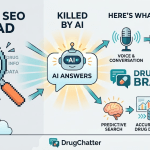
Retrieval-augmented AI systems — Perplexity, Gemini with search integration, ChatGPT with browsing — don’t generate drug information purely from training data. They retrieve current web content and synthesize it. The sources they prefer reflect their retrieval algorithms: high-domain-authority sites, frequently updated pages, and content that semantically matches the query.
For pharmaceutical companies, this creates a direct opportunity. Ensuring that your drug’s official product information page, patient FAQ, and medical information resources are structured in ways that AI retrieval systems can parse and cite improves the probability that AI-generated responses draw on accurate, current, label-consistent information.
This is not SEO in the conventional sense — it’s AI information architecture. The content strategy is: authoritative, structured, semantically rich, and directly responsive to the query patterns that patients and physicians actually use in AI search.
Structured Data and AI Citation: What Actually Works
Perplexity and similar retrieval-augmented systems have shown a preference for pages that use structured data (schema.org markup), clearly labeled sections with question-and-answer formatting, and content that directly addresses specific queries rather than broad background information.
Drug FAQ pages built with MedicalWebPage and Drug schema markup are more likely to be retrieved and cited by AI systems than unstructured prescribing information PDFs. Patient-facing content that directly addresses the queries patients actually type into AI — “can I take [Drug X] with alcohol,” “what are the side effects of [Drug X],” “is there a generic for [Drug X]” — gets retrieved more reliably than content written for regulatory filing purposes.
Pharmaceutical companies with robust AI content strategies are already publishing structured, AI-optimized drug information alongside their traditional regulatory content. Most have not yet made this a systematic program.
Correcting AI Misinformation: What You Can Actually Do
When a pharmaceutical company identifies systematic misinformation about its drug in AI systems, the corrective options are limited but not zero:
- Direct engagement with AI developers — OpenAI, Google, Anthropic, and Perplexity all have processes for reporting factual errors, though pharmaceutical-specific correction pathways are not formalized
- Content publication — publishing highly authoritative, AI-retrievable content that presents correct information increases the probability that retrieval-augmented systems surface accurate content
- Healthcare provider education — briefing HCPs that patients may arrive with AI-derived misinformation, and equipping them to respond, is a near-term practical intervention
- Patient-facing corrections — publishing clear, accessible corrections to common AI-generated misstatements through brand channels and patient support programs
None of these options guarantee that AI systems will stop generating misinformation about a specific drug. But they reduce the informational vacuum that misinformation fills, and they document reasonable corrective effort for regulatory and legal purposes.
Building a Pharmaceutical AI Monitoring Program: The Full Framework
The Business Case for AI Drug Monitoring
The return on investment for pharmaceutical AI monitoring is not primarily defensive. The most commercially significant outputs are offensive: understanding what AI says about your drug before your competitors do, identifying patient sentiment shifts before they show up in prescription data, and detecting emerging adverse event signals before they reach formal reporting volumes.
A brand team that knows AI is consistently misrepresenting a competitor’s safety profile — overstating side effect severity, for example — can factor that into physician messaging strategy. A pharmacovigilance team that identifies a novel adverse event signal in AI-generated content six weeks before MedWatch reports reach critical volume has gained meaningful surveillance advantage.
The cost of not monitoring is measured in the brand and compliance risks that accumulate invisibly — AI misinformation spreading through patient communities, physician queries shaped by AI preconceptions, and regulatory inquiries arriving without warning.
Technology Infrastructure for AI Drug Monitoring
A full AI drug monitoring technology stack for a mid-to-large pharma company includes:
- Automated query submission and response capture across ChatGPT, Gemini, Claude, and Perplexity
- Natural language processing for response analysis and deviation detection
- Label comparison tools that flag discrepancies between AI responses and current prescribing information
- Sentiment analysis for tone and safety communication adequacy
- Competitive share of voice tracking across AI platforms
- Trend tracking to identify shifts in AI response content over time and across model versions
- Reporting dashboards for medical affairs, pharmacovigilance, and brand teams
Specialized platforms including DrugChatter and DrugPatentWatch offer components of this infrastructure with pharmaceutical-specific design. General-purpose AI monitoring tools exist but require significant customization to meet pharmaceutical regulatory context requirements.
Governance: Who Owns AI Drug Monitoring in a Pharma Company?
The governance question is genuinely unsettled, and the answer varies by company. Medical affairs, pharmacovigilance, regulatory affairs, and digital/brand teams all have legitimate claims to ownership, and all have different competencies and priorities.
The most functional models observed in large pharma companies treat AI drug monitoring as a shared function with clear escalation pathways: brand teams own share of voice and competitive intelligence outputs; pharmacovigilance owns adverse event signal review; regulatory affairs owns label compliance deviation review; medical affairs owns response strategy for identified inaccuracies.
Building the governance structure before a high-profile AI misinformation incident — rather than after — is the difference between a proactive compliance program and a crisis response.
Key Takeaways
- AI hallucinations in drug information are documented, recurring, and affect every major drug category — from semaglutide approval status to warfarin interactions to methotrexate dosing.
- The error rate for high-risk medications (anticoagulants, immunosuppressants, narrow therapeutic index drugs) in AI systems has been measured above 40% in peer-reviewed analysis.
- FDA’s existing adverse event reporting and promotional violation frameworks create real pharmaceutical company exposure for AI-generated drug misinformation — even when the manufacturer didn’t generate it.
- AI share of voice is now a commercially meaningful metric: which drug gets mentioned first, most often, and most accurately in AI responses shapes patient and physician behavior upstream of the prescribing decision.
- Patients use AI for drug queries at accelerating rates, particularly for side effect, interaction, and cost questions — exactly the query types where hallucination risk is highest.
- Retrieval-augmented AI systems (Perplexity, Gemini with search) can be influenced by pharmaceutical content strategy: authoritative, structured, AI-retrievable content improves citation accuracy.
- The most actionable pharmaceutical AI monitoring programs combine automated query testing, label deviation analysis, adverse event signal extraction, and competitive share of voice tracking — not as separate workstreams, but as integrated brand intelligence.
- Governance matters: assigning AI drug monitoring ownership across medical affairs, pharmacovigilance, and regulatory affairs — with clear escalation pathways — is necessary before a high-profile incident forces the issue.
Frequently Asked Questions
What is the most common type of AI drug hallucination, and which drug categories are most affected?
The most common AI drug hallucinations are approval status errors — where a model incorrectly states an indication that is either not approved, approved only for a different formulation, or approved only in specific populations. Closely behind are dosing errors and drug interaction omissions. The drug categories most frequently affected are those with complex safety profiles or multiple closely related branded products: GLP-1 agonists (semaglutide brands), anticoagulants (warfarin, direct oral anticoagulants), immunosuppressants (methotrexate, biologics), and narrow therapeutic index drugs (digoxin, lithium, phenytoin). These categories combine high patient query volume with high consequence for errors.
Can a pharmaceutical company be held liable for AI-generated misinformation about its drugs?
Direct liability for third-party AI systems — ChatGPT, Gemini — is legally complex and untested in pharmaceutical-specific litigation. But indirect exposure exists. If a company’s own AI tool (branded website chatbot, patient support AI) generates misinformation, that output likely constitutes a promotional claim subject to FDA OPDP review. If a company’s pharmacovigilance program fails to monitor AI-generated content for adverse event signals in markets where regulators require broad monitoring (EMA’s GVP Module VI applies here), that failure could constitute a compliance gap. Litigation theorists are actively developing the framework for manufacturer liability where AI misinformation contributes to patient harm.
How do AI systems like ChatGPT, Gemini, and Claude differ in drug information accuracy?
Documented research shows meaningful differences in failure modes rather than consistent superiority of one platform. Claude (Anthropic) tends toward more conservative responses with explicit uncertainty acknowledgment and lower rates of fabricated citations — but shares knowledge cutoff gaps with other models on recent label changes. Perplexity’s real-time retrieval provides better currency but introduces source quality variability. ChatGPT produces more detailed clinical responses but has higher rates of approval status conflation and overconfident error. Gemini’s Google search integration improves interaction profile accuracy for well-documented drugs but can omit recent safety updates for newer compounds. No platform consistently outperforms across all drug query types.
What is pharmaceutical AI share of voice, and how is it measured?
Pharmaceutical AI share of voice measures how frequently and favorably a specific branded drug is mentioned in AI-generated responses to relevant queries, relative to competitor drugs in the same category. It is measured by systematically submitting standardized query sets to AI platforms and analyzing response content for brand mentions, sentiment, recommendation positioning, and accuracy. Unlike search engine share of voice — which relies on rank tracking — AI share of voice requires natural language analysis of generated responses. Platforms like DrugChatter offer structured measurement across ChatGPT, Gemini, Claude, and Perplexity. The metric is early-stage but commercially significant: patients who consult AI before contacting a physician or pharmacy carry AI-derived brand preferences into those conversations.
Can AI-generated drug content be used as a pharmacovigilance signal source?
Yes, with significant methodological caveats. AI responses synthesize training data that includes patient forum discussions, which are already validated adverse event signal sources in post-marketing surveillance. When an AI system consistently describes an adverse event that does not appear in a drug’s current prescribing information, that pattern may reflect underlying training data — patient discussions — that contains an emerging signal. The challenge is source traceability: AI-generated content doesn’t identify its underlying sources, making it difficult to apply formal pharmacovigilance signal assessment methodology. The practical approach is to use AI monitoring outputs as a trigger for more targeted investigation in primary sources (Reddit, patient forums, clinical databases), not as a standalone signal. EMA guidance on social media monitoring under GVP Module VI provides the closest existing regulatory framework.
This article is produced for informational purposes by the DrugChatter Intelligence Desk. It does not constitute legal, regulatory, or medical advice. All regulatory and litigation references reflect publicly available information as of publication date. For pharmaceutical AI monitoring tools, visit DrugChatter.