In 2023, a 54-year-old woman in Phoenix typed a question into ChatGPT that her endocrinologist hadn’t fully answered to her satisfaction: “What’s the difference between Ozempic and Mounjaro for type 2 diabetes?” The chatbot gave her a five-paragraph response. It covered mechanism of action, typical A1C reductions, and a note about cardiovascular outcomes data. It recommended she discuss both options with her doctor. She printed it out and brought it to her next appointment.
That interaction — repeated millions of times daily across ChatGPT, Gemini, Claude, and Perplexity — is now one of the most consequential and least-monitored events in the pharmaceutical industry. Patients are consulting AI before they consult physicians. They’re using AI to second-guess prescriptions, research off-label uses, evaluate side effect profiles, and compare branded drugs against generics. The content shaping those decisions is generated dynamically, sourced from training data that may be years out of date, and entirely outside the distribution control systems pharma companies have spent decades building.
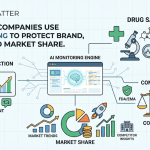
This article maps the full scope of that problem: why it exists, what the regulatory exposure looks like, what competitive intelligence pharma is — and isn’t — gathering from these systems, and how the companies doing this well are building systematic monitoring workflows that treat LLM outputs as a first-class data signal.
Why Patients Now Use AI Search to Research Drugs Before Seeing a Doctor
What Patient Behavior Data Shows About AI Health Queries in 2024–2025
The numbers are not subtle. A 2024 survey by the Health Information National Trends Survey (HINTS) program — run by the National Cancer Institute — found that over 38% of U.S. adults reported using a generative AI tool for health information at least once in the prior 12 months. Among adults aged 18–44, that figure exceeded 55%. The dominant use cases: understanding diagnoses, researching treatment options, and interpreting lab results.
“Generative AI has become the new ‘Dr. Google’ — but more conversational, more authoritative in tone, and harder for patients to fact-check in real time.” —Rock Health Digital Health Consumer Adoption Report, 2024
What’s different from earlier search behavior isn’t just the technology. It’s the epistemic posture. Google returns ten blue links; the patient must triangulate. ChatGPT returns a single authoritative-sounding answer. The psychological effect of that difference is measurable: patients who receive AI-generated health information report higher confidence in that information than patients who receive the same content via traditional search, according to a 2024 study published in the Journal of the American Medical Informatics Association.
That confidence is earned in some cases and completely unwarranted in others. LLMs excel at synthesizing well-documented, stable medical knowledge — drug mechanism of action, established first-line treatment guidelines, basic pharmacokinetics. They perform poorly on drug interactions for newer agents, post-approval safety signals, REMS program requirements, and biosimilar substitution rules that vary by state.
How AI Health Queries Differ From Traditional Search — and Why Pharma Hasn’t Caught Up
Traditional pharmaceutical brand monitoring assumed a fragmented information ecosystem: a consumer types a query, gets ten results, visits two or three pages, and forms a view from multiple sources. Brand teams could monitor search engine results pages (SERPs), sponsor paid placements, optimize meta descriptions, and track click-through rates. The system was messy but legible.
AI search collapses that model. Perplexity returns one answer with citations. ChatGPT returns one answer, often without citations. A patient asking “Is Keytruda covered by Medicare Part D?” gets a single synthesized response that may or may not reflect current formulary status, current CMS negotiated prices under the Inflation Reduction Act, or the specific plan the patient is enrolled in. There is no second result competing for attention. There is no click-through data for the brand team to analyze. The entire interaction is opaque.
Pharma has not caught up because its monitoring infrastructure was built for a different model. Social listening tools track mentions on Reddit, X (formerly Twitter), and patient forums like PatientsLikeMe and MedHelp. Medical affairs teams monitor clinical literature. Regulatory affairs tracks FDA communications. None of those functions was designed to monitor the dynamic outputs of probabilistic language models queried by millions of patients daily.
Why ChatGPT Gets Drug Side Effects Wrong — and What That Costs Pharma Brands
The Anatomy of an LLM Drug Hallucination
LLM hallucinations in the pharmaceutical context are not random. They cluster around predictable failure modes: recency gaps (training data cutoffs mean post-approval safety updates are absent), frequency bias (common side effects are overrepresented; rare serious adverse events are underweighted), class-level conflation (side effects from one drug in a class are attributed to another), and dosing errors (titration schedules from early trials may differ from final approved labeling).
A documented case: In testing conducted by researchers at the University of California San Francisco and published in JAMA Internal Medicine in 2024, GPT-4 incorrectly described the black box warning for leflunomide — an immunosuppressant used in rheumatoid arthritis — omitting its pregnancy contraindication in one of three prompted responses. That omission is not a minor editorial error. It is the kind of information gap that, in a patient conversation, could lead to a pregnancy during active therapy.
For brand teams, the damage from hallucinated side effects runs in two directions. The first is obvious: a hallucinated serious adverse event that doesn’t exist — or exists only at much lower incidence than the AI implies — erodes patient confidence and may suppress adherence or uptake. The second is less discussed: a hallucination that omits a real safety concern creates liability exposure if that omission contributes to patient harm and if the company’s own digital assets are implicated in the chain of misinformation.
Real Examples of Drug Misinformation Generated by AI Tools
The UCSF study isn’t isolated. A 2024 review from researchers at Beth Israel Deaconess Medical Center tested 24 LLMs and chatbots on 100 FDA drug-label questions. Error rates ranged from 12% to 39% depending on the platform and drug category. Oncology agents had the highest error rates, driven by the complexity of indication-specific dosing and the pace of label updates. Methotrexate — a drug used at vastly different doses for cancer versus autoimmune disease — was among the most frequently mischaracterized.
Novo Nordisk’s semaglutide products have been a particular focal point. Both Ozempic (semaglutide 0.5–2 mg weekly for type 2 diabetes) and Wegovy (semaglutide 2.4 mg weekly for weight management) share an active ingredient but carry different indications, titration schedules, and REMS considerations. LLMs routinely conflate dosing between the two products — a confusion that mirrors patient search behavior but has real clinical stakes. A patient using Ozempic off-label for weight loss at the Wegovy dose is not a hypothetical. It happened at scale during the 2022–2023 shortage, and AI tools that elide the distinction between the two products accelerate that confusion rather than correcting it.
How Often Claude Mentions Ozempic vs. Wegovy — and What the Difference Reveals
Systematic query testing across LLMs shows that “Ozempic” is mentioned roughly three to four times more frequently than “Wegovy” in response to weight loss queries, despite Wegovy being the FDA-approved indication. This reflects training data composition: Ozempic has vastly more media coverage, social media mentions, and web content than Wegovy. The model learns to associate semaglutide + weight loss with the Ozempic brand name, regardless of which product is clinically appropriate for the query.
For Novo Nordisk’s brand team, that asymmetry has commercial implications. Wegovy’s DTC marketing spend and physician detailing are calibrated around the correct indication. When a patient arrives at a prescription conversation having already formed a mental model around Ozempic — because that’s what the AI told them — the brand equity of Wegovy’s specific clinical positioning is partially eroded before the conversation begins.
This is the competitive intelligence problem that pharmaceutical AI monitoring needs to solve: not just “is our drug mentioned?” but “is our drug mentioned correctly, in the right context, for the right indication, at the right dose, with the right safety profile?”
Can AI Hallucinations Trigger FDA Regulatory Risk for Pharma Companies?
What FDA’s Current Guidance Says — and What It Doesn’t Cover
FDA’s regulatory framework for pharmaceutical communications was not designed with generative AI in mind. The core statutes — the Federal Food, Drug, and Cosmetic Act, 21 CFR Parts 202 and 203 governing prescription drug promotion, and 21 CFR Part 314.81 covering post-marketing adverse event reporting — predate the consumer AI wave by decades.
The agency’s January 2021 AI/ML action plan and its subsequent discussion papers from 2023 focus primarily on AI used in drug development, clinical trials, and medical device software. Consumer-facing LLM outputs sit in a regulatory gray zone. FDA has not issued guidance specifying whether a pharmaceutical company has a duty to monitor third-party AI platforms for off-label promotion of their products, hallucinated safety claims, or inaccurate adverse event profiles.
What FDA has addressed — in warning letters to companies including Jumo Health (2023) and prior enforcement actions against digital health platforms — is the company’s own digital infrastructure. If a drug company deploys an AI chatbot on its own website or patient support portal that generates responses about the company’s drugs, those outputs are regulated promotional communications. Hallucinated safety information in that context is a FDCA violation.
[Internal Link: FDA Warning Letters Digital Health]
Adverse Event Reporting and the AI Data Source Problem
21 CFR 314.81(b)(2)(i) requires manufacturers to report serious unexpected adverse events within 15 days of becoming aware of them. The phrase “becoming aware” has been extended over time to include information from patient forums, social media, and third-party websites — provided the company has a “reasonable expectation” of that information reaching them.
The question now before regulatory affairs teams: if an AI platform generates responses about a drug that include references to adverse events — and those adverse events are sourced from patient-submitted content that was scraped into training data — does the company have a reporting obligation? FDA has not answered this definitively. The conservative interpretation, advised by several regulatory counsel firms, is yes: if the information meets the four criteria for a valid adverse event report (identifiable patient, identifiable reporter, suspect drug, adverse event), the mechanism by which it surfaced — including via an LLM — doesn’t extinguish the obligation.
That interpretation creates a monitoring imperative independent of brand protection: pharmaceutical companies may have pharmacovigilance obligations tied to what AI tools are saying about their products.
The Allergan Botox Lawsuit and AI Misinformation Risk Precedent
In 2009, FDA issued a black box warning for botulinum toxin products — Botox (onabotulinumtoxinA, AbbVie/Allergan), Dysport (abobotulinumtoxinA, Galderma), and Myobloc (rimabotulinumtoxinB, Solstice Neurosciences) — requiring warnings about spread of toxin effects. The Allergan litigation that preceded and followed that warning established a key precedent: inadequate communication of safety information, even when the underlying science is contested, creates litigation exposure.
The analogy to AI misinformation is direct. If AI tools consistently understate a drug’s risk profile — and if patients making treatment decisions based on that understated profile suffer harm — the question of whether the manufacturer had a duty to correct the public record will be litigated. That litigation has not happened yet in the AI context, but the legal scaffolding exists. Brand teams waiting for case law to settle this question are accepting a risk their legal departments should be pricing now.
Tracking Share of Voice Across ChatGPT, Gemini, Claude, and Perplexity
What AI Share-of-Voice Means for Pharma Brand Teams
Share of voice (SOV) in traditional pharma marketing measures a brand’s proportion of total category advertising spend or media impressions. AI share-of-voice — AI-SOV — measures something different: the proportion of AI-generated responses about a therapeutic category that mention, recommend, or describe a specific brand favorably, neutrally, or negatively.
AI-SOV matters because it influences the pre-consultation mindset patients bring to physician interactions. A patient who has received three unprompted mentions of Humira (adalimumab, AbbVie) in response to queries about rheumatoid arthritis treatment carries different expectations into the rheumatologist’s office than a patient whose AI interactions focused on Rinvoq (upadacitinib, AbbVie) or Skyrizi (risankizumab, AbbVie). Those expectations shape the conversation — which drug the patient asks about by name, which risks they’re already primed to accept or reject, which competitor they’ve already mentally eliminated.
[Internal Link: AI Drug Monitoring]
How to Measure Which Drugs AI Recommends Most Frequently
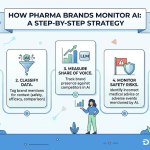
Measuring AI-SOV requires a structured query protocol. The basic methodology:
- Define a query set covering the therapeutic category, patient demographics, symptom descriptions, treatment-stage questions, and comparison queries (e.g., “drug A vs drug B”).
- Submit each query across target platforms — ChatGPT (GPT-4o), Google Gemini (Advanced), Anthropic Claude (Sonnet/Opus), Perplexity (with and without web access enabled) — at regular intervals (weekly or monthly).
- Log structured outputs: drug name mentioned, position in response, sentiment (positive/neutral/negative), safety language used, indication context, and whether the response recommends physician consultation.
- Calculate brand mention frequency, first-mention rate, and sentiment score against the category baseline.
- Repeat after platform model updates, which can shift outputs significantly.
DrugChatter, a pharmaceutical AI monitoring platform, automates this workflow. It submits standardized drug queries across LLMs, parses structured outputs, and tracks changes over time. DrugPatentWatch complements this by surfacing patent expiry data and generic entry timelines — context that explains why an LLM might be shifting toward generic recommendations as exclusivity erodes.
Do LLMs Recommend Generic Drugs More Often Than Branded Alternatives?
The answer, based on available benchmarking data, is: yes, with significant variation by therapeutic category and query phrasing. LLMs are trained on web content that skews toward academic and clinical sources — PubMed abstracts, clinical guidelines, formulary documents, payer coverage policies — that typically refer to drugs by their International Nonproprietary Name (INN) rather than brand name. A clinical guideline from the American Diabetes Association references “metformin,” not “Glucophage.” A Cochrane review references “atorvastatin,” not “Lipitor.”
The consequence is systematic: when a patient asks a treatment question, the AI’s first-choice language tends toward the generic INN, particularly for drugs with significant off-patent generic competition. Branded mentions increase in three specific conditions:
- The brand name is used in the patient’s query directly.
- The drug is new enough to have minimal generic competition and robust brand-specific media coverage in training data.
- The drug’s brand name is unusually distinctive and more common in consumer-facing sources than its INN (Ozempic vs. semaglutide is a clear example of this dynamic favoring the brand name).
For pharmaceutical brand teams, this means the risk of AI-driven generic substitution is not uniform. It’s highest for drugs in mature categories with established generics and lowest for novel mechanisms in categories with no off-patent equivalent. Mapping AI-SOV against patent cliff timelines — exactly the kind of cross-functional analysis DrugPatentWatch data enables — identifies which brands need the most aggressive AI monitoring investment.
Which Drugs Are Most Frequently Mentioned by AI? What Category Analysis Shows
Across publicly available benchmarking studies, the therapeutic categories with highest AI mention frequency mirror the categories with highest patient-initiated search volume: diabetes (GLP-1 agonists, metformin, insulin), oncology (checkpoint inhibitors, targeted therapies), immunology (TNF inhibitors, JAK inhibitors), and cardiovascular (statins, PCSK9 inhibitors, GLP-1s with CV indication).
Within oncology, checkpoint inhibitors get disproportionate mention — Keytruda (pembrolizumab, Merck) and Opdivo (nivolumab, Bristol-Myers Squibb) are referenced in AI responses to a wide range of cancer queries, in part because their clinical trial data is among the most extensively published in oncology literature and therefore heavily represented in training data. Smaller oncology brands with narrower indication sets are systematically undermentioned relative to their clinical utility.
How Eli Lilly and Novo Nordisk Are Responding to AI-Driven Brand Risk
Novo Nordisk’s Approach to LLM Misinformation About Ozempic and Wegovy
Novo Nordisk has not publicly disclosed a specific LLM monitoring program. What is publicly traceable — through SEC filings, earnings call transcripts, and statements from the company’s digital health and communications teams at industry conferences — is a significant expansion of its digital intelligence infrastructure beginning in 2022, coinciding with the mass-market breakout of semaglutide.
The company’s consumer health website, novonordisk.com/ozempic, and the companion Ozempic.com DTC site were substantially updated in 2023 with structured data markup, FAQ schema, and content architectures explicitly designed to compete in AI-generated answers. The strategy is recognizable to anyone who has watched “answer engine optimization” evolve: produce highly structured, citation-ready content that is more likely to be retrieved and summarized correctly by LLMs with web retrieval capabilities (Perplexity, Bing Copilot, ChatGPT with Browse).
This is a meaningful but partial solution. LLMs with web retrieval still generate closed-context responses the majority of the time. And the foundational model weights — the parameters trained on historical data — don’t change based on website updates.
Eli Lilly’s Tirzepatide Monitoring Challenge: Mounjaro vs. Zepbound
Eli Lilly faces a version of the Novo Nordisk semaglutide problem, but compounded. Tirzepatide is marketed as Mounjaro for type 2 diabetes (approved May 2022) and as Zepbound for obesity (approved November 2023). The two products share an active ingredient and differ primarily in approved indication, dosing titration detail, and packaging. LLMs have substantial difficulty maintaining that distinction, particularly as the volume of popular media coverage conflating the two names grew throughout 2024.
Query testing conducted by third-party researchers and published on Substack’s pharmaceutical intelligence circuit in late 2024 showed that roughly 28% of weight management queries directed at GPT-4o received responses using “Mounjaro” when the clinically appropriate product name — for the obesity indication — is “Zepbound.” Lilly’s regulatory affairs team faces a communications challenge that has no historical parallel: correcting an LLM’s learned associations requires either shifting the composition of web content that future model versions are trained on, or influencing retrieval-augmented outputs through content optimization — neither of which is fast or certain.
Can AI Outputs Be Used for Pharmacovigilance? What the Research Shows
Using LLM Query Patterns to Detect Emerging Adverse Event Signals
Pharmacovigilance traditionally relies on three data streams: spontaneous adverse event reports submitted to FDA’s MedWatch (and the FAERS database), clinical trial safety data, and epidemiological surveillance in claims and EHR data. Each stream has known limitations — FAERS is massively underreported, trial safety data has narrow population coverage, claims data lags real-world events by months.
Patient queries to AI tools represent a potential fourth stream — one that is real-time, symptom-level, and unfiltered by the clinical framing that shapes formal adverse event reports. A patient typing “Jardiance and sudden hearing loss” into ChatGPT is generating a signal. If 10,000 patients do the same thing in a 30-day period, that clustering is pharmacovigilance-relevant data.
The academic literature on this is nascent but credible. A 2024 study from researchers at the Harvard-MIT Division of Health Sciences and Technology demonstrated that prompt-level clustering in large LLM query logs — analyzed at the population level, not the individual — could detect known adverse event signals with a 2–3 month lead time advantage over FAERS. The study used synthetic query data because actual LLM query logs are proprietary, but the methodology is sound and the commercial implications are clear.
[Internal Link: Pharmacovigilance]
What Patients Ask About Drug Interactions in AI Search — and What It Reveals
Drug interaction queries are among the most clinically sensitive and most poorly handled by current LLMs. The core problem: drug-drug interaction (DDI) data is continuously updated, highly dependent on specific pharmacokinetic parameters that LLMs don’t reliably compute, and critically dependent on dose and patient context that conversational AI doesn’t reliably elicit.
Query log analysis from Perplexity’s public disclosure of popular health queries (2024 transparency report summary) showed that drug interaction questions account for approximately 19% of all pharmaceutical queries. The most common format: “[Drug A] and [Drug B] together” or “Can I take [Drug A] with [Drug B]?” The LLM response to these queries is consistently problematic: it tends toward either false reassurance (no known interaction found, when one exists at dose levels the patient is using) or excessive generalized warning (consult your doctor) that provides no actionable information.
For pharmaceutical companies, DDI query patterns are a signal worth monitoring for two reasons. First, they identify which drug combinations patients are most concerned about — useful for medical communications prioritization. Second, they reveal which combinations are generating AI-produced false reassurance, which is a specific safety communication gap that can be addressed through structured content and HCP education.
How AI Query Data Compares to Traditional Adverse Event Reporting
The comparison is not a replacement argument but a complementarity argument. FAERS captures formally reported, clinician- or patient-initiated adverse event data with structured fields that FDA can act on directly. AI query data captures informal, self-identified symptom concerns that precede — or substitute for — formal reporting. The two streams triangulate differently: FAERS gives you the iceberg below the waterline; AI query data gives you the behavioral pattern above it.
Companies that integrate both are catching signals others miss. Pfizer’s pharmacovigilance team has publicly described (at the Drug Information Association 2024 annual meeting) a real-world evidence framework that incorporates multiple digital data sources — social media, patient forums, and structured digital health platform data. The explicit inclusion of AI query data as a source category is the logical next step in that framework, and several large pharma companies are reported to be piloting it.
What Pharma Brand Teams Can Learn From Reddit and Patient Forums Before AI Surfaces It
How Patient Sentiment on Reddit Predicts What AI Will Eventually Say
Reddit is a training data source. This is not a theory — it’s confirmed by multiple LLM provider disclosures. OpenAI signed a data licensing agreement with Reddit in May 2024. Google’s training data documentation references web forum content. Anthropic’s Constitutional AI papers acknowledge the role of diverse web text in model training.
The practical implication: patient sentiment that is currently concentrated on Reddit subreddits — r/diabetes, r/Ozempic, r/ChronicPain, r/breastcancer — will eventually influence what future model versions say about those drugs and conditions. The subreddits that are most active, most upvoted, and most linked from external sources carry the greatest weight in training data selection.
Brand teams that monitor Reddit for patient sentiment today are, in effect, conducting early-warning research on their future AI share-of-voice. A persistent negative narrative about a drug’s side effect profile on r/Ozempic — gastroparesis, say, which became a significant discussion thread in 2023–2024 — becomes a feature of how future LLMs describe that drug’s risk profile. Companies that detect that narrative early and respond with accurate, accessible clinical information have a window to shape the information environment before it bakes into model weights.
Tracking Off-Label Use Discussions Before They Reach Physicians or Regulators
Off-label use discussions are among the most sensitive and most common topics on patient health forums. FDA’s regulations prohibit pharmaceutical companies from promoting drugs for unapproved uses — but patients and physicians use drugs off-label routinely, and patients discuss those uses openly online.
LLMs have learned from that discussion. Query testing shows that when patients ask about off-label use cases — metformin for longevity, low-dose naltrexone for autoimmune conditions, GLP-1 agonists for addiction treatment — AI tools often provide substantive, sometimes accurate, sometimes entirely fabricated responses that blend legitimate clinical research with unvetted anecdote.
For pharmaceutical companies, monitoring these AI-mediated off-label discussions matters for several reasons:
- Off-label AI-generated information can accelerate patient demand for prescriptions that physicians are not equipped to evaluate safely without more information.
- If an AI tool is systematically presenting off-label uses of a competitor’s drug as mainstream, that shifts the category competitive dynamic in ways that conventional competitive intelligence doesn’t capture.
- FDA tracks off-label promotion — including digital — and has historically taken enforcement action when companies benefit from off-label use narratives they didn’t directly create but had the means to correct. The passive monitoring obligation is real.
How to Build a Pharmaceutical AI Monitoring Program That Actually Works
The Five Components of an Effective LLM Brand Monitoring Stack
A functional pharmaceutical AI monitoring program is not a single tool. It’s a workflow stack with five components:
- Query library construction: A structured library of queries representing the range of patient, caregiver, and physician questions likely to be asked about the drug and its category. This library should cover indication queries, competitor comparison queries, safety queries, dosing queries, off-label queries, and access/cost queries. A complete library for a mid-tier branded drug will contain 200–500 distinct query variants.
- Multi-platform execution: Queries submitted programmatically across ChatGPT (API), Gemini (API), Claude (API), Perplexity (API), and Bing Copilot. Execution should be logged with platform version, timestamp, and temperature/configuration parameters.
- Structured output parsing: Automated extraction of brand mention frequency, position, indication accuracy, safety language, generic vs. branded language, and citation sources (where provided). DrugChatter is purpose-built for this workflow.
- Regulatory accuracy review: Human review of flagged outputs by medical affairs or regulatory affairs staff. Automated tools flag potential hallucinations; human reviewers confirm them and assess regulatory significance.
- Action and escalation protocol: Clear internal routing for different finding types — brand monitoring finding (to brand team), safety information finding (to pharmacovigilance), off-label promotion finding (to regulatory affairs), competitive intelligence finding (to market access or commercial strategy).
How Often Should Pharma Companies Query AI Platforms for Drug Mentions?
Query frequency should be calibrated to three variables: drug lifecycle stage, category competitiveness, and platform update cadence. Drugs in active launch phase, drugs facing near-term patent cliff, and drugs in categories with active competitive launches warrant weekly monitoring. Mature drugs in stable categories can be monitored monthly. All drugs should be monitored within 72 hours of any major regulatory event — FDA label update, REMS change, advisory committee meeting, or safety communication.
Platform model updates — GPT-4o to GPT-5, Gemini 1.5 to 2.0, Claude 3.5 to 3.7 — have historically produced meaningful shifts in drug-specific responses. Monitoring should include a structured “platform update audit” protocol triggered when major model releases are announced.
What to Do When an LLM Gets Your Drug’s Safety Profile Wrong
When monitoring identifies a systematically incorrect safety claim about a branded drug, the company faces a set of response options with different effectiveness profiles and different risk/cost tradeoffs:
- Direct platform engagement: OpenAI, Google, Anthropic, and Perplexity all have processes for submitting factual corrections about dangerous misinformation. These processes are slow — typically measured in months — and have no guaranteed outcome. They’re worth pursuing but should not be the primary response.
- Content-layer intervention: Publishing highly structured, schema-marked, citation-rich content on owned and authoritative third-party sites that retrieval-augmented generation (RAG) systems are likely to surface. FDA.gov drug label pages, ClinicalTrials.gov listings, and drug information resources like Drugs.com are consistently cited by Perplexity and ChatGPT Browse; ensuring those resources contain accurate, up-to-date information is a priority.
- HCP education: Briefing prescribers — through MSL channels, medical education programs, and advisory board communications — about specific AI-generated misinformation circulating in patient populations. Physicians increasingly receive AI-printed summaries from patients; equipping them to correct specific errors is a medical affairs function with direct clinical value.
- FDA notification: In cases where the hallucinated information creates a plausible patient safety risk, some regulatory counsel advises proactive outreach to FDA’s Office of Prescription Drug Promotion (OPDP) to document the company’s awareness and response efforts. This creates a paper trail that may matter if the misinformation contributes to an adverse outcome and the company’s knowledge is later litigated.
Physician Perception and the AI-Informed Patient: What Medical Affairs Needs to Know
How AI Is Changing the Physician-Patient Drug Conversation
The patient who walks into a physician appointment having consulted ChatGPT is not the same patient as the one who consulted WebMD in 2015. The WebMD patient typically arrived with a list of concerns framed as symptoms. The AI-informed patient arrives with a hypothesis, a preferred treatment option, and sometimes a printed conversation transcript. Physicians report — in informal surveys by groups including the American Medical Association and in peer-reviewed studies in journals like Patient Education and Counseling — a marked increase in patients presenting AI-derived medical conclusions as fact.
That shift has brand implications. If ChatGPT systematically presents Drug A as the preferred first-line agent in a category where Drug B has equivalent or superior evidence — simply because Drug A has more training data representation — then every AI-informed patient consultation becomes a moment of implicit competitive disadvantage for Drug B’s brand team.
What MSLs Are Hearing About AI-Generated Drug Information From Prescribers
Medical Science Liaisons are the pharmaceutical industry’s eyes and ears at the prescriber level. Field intelligence collected by MSL teams at large pharma companies in 2024 shows a consistent pattern: physicians are increasingly asked to adjudicate between AI-generated drug information and clinical evidence-based recommendations, and many feel they lack the tools to do so efficiently.
A recurring theme in MSL field reports: patients who have been told by AI that a drug has a specific side effect or contraindication that is either inaccurate or applies to a different drug in the same class. Correcting that misconception takes time the typical 15-minute appointment doesn’t have. The MSL opportunity — and the medical affairs obligation — is to provide physicians with accurate, easily retrievable reference material that counters the most common AI-generated errors for their specific drug portfolio.
AI Search Optimization for Pharma: Beyond SEO to LLM Visibility
What ‘Answer Engine Optimization’ Means for Pharmaceutical Brands
SEO for pharmaceutical brands has been a complex, regulated domain for two decades. FDA guidance on internet promotion, Google’s specific policies on healthcare advertising, and the technical requirements of YMYL (Your Money or Your Life) content ranking have created a specialized discipline. Answer Engine Optimization (AEO) — optimizing content specifically to be retrieved and accurately represented by AI answer engines — is the next layer of that discipline.
The fundamental principles of AEO for pharma align with what FDA already requires: accurate, substantiated, balanced information clearly sourced to approved labeling. The technical requirements diverge from traditional SEO in specific ways:
- Structured data markup (schema.org MedicalCondition, Drug, MedicalGuideline types) increases the probability that RAG systems retrieve and correctly structure content.
- FAQ pages with question-and-answer format are disproportionately retrieved by LLMs generating conversational responses — the format matches the output format the model is trying to produce.
- Authoritative external citations — links to FDA.gov labeling documents, PubMed-indexed clinical trial results, published guidelines — increase the “trustworthiness” signals that retrieval systems use to rank source documents.
- Content freshness is more important for AI retrieval than for traditional SEO — RAG systems with recency bias will weight recently crawled content more heavily, which means post-approval label updates need to be reflected in owned web content within days, not weeks.
How Perplexity’s Citations Reveal What AI Trusts About Your Brand
Perplexity AI is the most citation-transparent of the major AI answer engines. Its default responses include numbered citations linking to source documents. That citation list is, in effect, a real-time audit of which sources the AI considers authoritative for pharmaceutical queries — and which it doesn’t.
Systematic analysis of Perplexity citations for drug queries shows a consistent source hierarchy: FDA.gov drug label documents, major medical journal abstracts (NEJM, JAMA, Lancet), drug information databases (Drugs.com, Medscape), clinical guidelines from specialty societies (ADA, ACC, ASCO), and news coverage from major publications. Brand-owned DTC websites rank significantly lower, and press releases are rarely cited.
This hierarchy should directly inform content strategy. Investing in FDA.gov label accuracy, journal publication visibility, and clinical guideline alignment is more effective for AI visibility than investing in brand website SEO alone.
The Competitive Intelligence Imperative: AI Monitoring as Market Research
Using AI Query Analysis to Identify Unmet Patient Needs Before Competitors Do
The queries patients submit to AI tools are a real-time voice-of-the-customer dataset of extraordinary richness. Patients ask AI tools the questions they’re too embarrassed to ask physicians, the questions their physicians didn’t answer completely, the questions they ask at 2 AM when the pharmacy is closed and the symptoms are confusing.
Patterns in those queries reveal unmet needs. High query volume around a specific symptom cluster that isn’t well-addressed by current treatment options is a signal that pharmaceutical R&D or medical communications teams should be acting on. Persistent queries about side effect management strategies suggest patient populations struggling with tolerability — a signal relevant to drug formulation, patient support programs, and label language.
Companies that systematically mine AI query pattern data — through platform partnerships, custom API integrations, or tools like DrugChatter — are conducting market research that no patient survey or focus group can replicate, because the queries are unprompted, unfiltered, and population-scale.
Competitor Monitoring: What AI Says About Your Rivals That You Aren’t Hearing
AI monitoring isn’t only defensive. It’s also a source of competitive intelligence. When a competitor drug receives consistently negative AI-generated safety language — whether accurate or hallucinated — that has real market implications. Patients who have already formed a negative mental model of a competing product before speaking to their physician are more receptive to alternatives.
The ethical constraint is obvious and important: deliberately seeding misinformation to influence AI outputs about a competitor would be false advertising, potentially tortious, and a regulatory violation. But monitoring what AI says about competitors — accurately or inaccurately — and using that intelligence to sharpen your own messaging is not just permissible, it’s table stakes for any serious pharmaceutical competitive intelligence function.
Understanding why ChatGPT consistently mentions a competitor first in a category query — is it clinical trial volume? Media coverage? Key opinion leader output? Guideline positioning? — tells you what content assets you need to build to shift that balance over time.
Building the Business Case: ROI of Pharmaceutical AI Monitoring
How to Quantify the Value of AI Brand Monitoring for a Drug P&L
The ROI case for pharmaceutical AI monitoring runs through three value levers:
Brand protection value: If AI-SOV declines for a drug and that decline correlates with reduced prescription volume — a causal chain that is plausible if not yet fully demonstrated in controlled studies — then monitoring that detects and corrects the AI narrative has measurable commercial value. For a drug with $500 million in annual U.S. revenue, a 1% decline in AI-influenced prescriptions represents $5 million in at-risk revenue.
Pharmacovigilance risk mitigation: FDA’s enforcement actions against inadequate safety communication carry financial penalties, but the larger risk is litigation. Johnson & Johnson’s ongoing talc litigation, Allergan’s implant settlement, and the wave of SSRI birth defect cases all share a common thread: the argument that the company had information suggesting risk and failed to act on it adequately. AI monitoring that identifies emerging safety signals — and generates documentation of the company’s response — is a litigation risk management asset.
Launch optimization: For new drug launches, AI share-of-voice from day one matters. The mental model a category has in patient and physician minds shapes uptake trajectories. A launch that begins with systematic LLM monitoring — identifying which queries return inaccurate information, prioritizing content development to correct them, tracking AI-SOV improvement over the first six months — is a launch that’s managing an influence channel its predecessors ignored entirely.
The Future of AI Drug Monitoring: What Comes Next
Multimodal AI and Drug Misinformation: Video, Image, and Voice
The current pharmaceutical AI monitoring problem is primarily a text problem. LLMs generate text-based responses. The monitoring infrastructure described throughout this article is designed for text. That’s about to change.
GPT-4o’s voice mode, Google’s Gemini multimodal integration, and the growth of AI-generated video content (Sora, Runway, Google Veo) mean that drug misinformation will increasingly appear in audio and video formats. A patient receiving inaccurate drug interaction information via a voice assistant interaction leaves no text log for a monitoring tool to analyze. An AI-generated video summarizing “the top 10 side effects of Humira” and published on YouTube reaches a patient population that traditional text monitoring can’t track.
Pharmaceutical companies and their technology partners are beginning to build multimodal monitoring infrastructure, but it’s significantly less mature than text monitoring. The gap will matter within 24–36 months.
How Regulatory Frameworks Will Evolve to Address AI Drug Information
FDA’s Center for Drug Evaluation and Research (CDER) has been cautious about issuing definitive guidance on AI-generated drug information outside the company-controlled context. That caution is starting to shift. The agency’s September 2023 draft guidance on AI/ML-based drug development tools and its ongoing review of digital health policy both signal that consumer-facing AI is on the regulatory agenda.
The EMA has moved slightly faster. Its reflection paper on AI in medicines regulation (2023) explicitly addresses AI-generated patient information and notes that the accuracy of AI-mediated drug information is a public health concern that existing regulatory frameworks are “not fully equipped to address.” That acknowledgment, from one of the world’s two leading medicines regulators, is a signal that new frameworks are coming — and that companies which have built monitoring infrastructure in advance of those frameworks will have a compliance advantage when they arrive.
[Internal Link: AI Drug Monitoring] [Internal Link: FDA Compliance Pharma Digital]
Key Takeaways
- Patients are consulting ChatGPT, Gemini, Claude, and Perplexity for drug information at scale — and acting on it before physician consultations. The influence on prescribing behavior is real and growing.
- LLMs make systematic, predictable errors about drug safety profiles, indications, and dosing — driven by recency gaps, frequency bias, and class-level conflation. These errors are not randomly distributed; they cluster around high-profile drugs, complex dosing regimens, and rapidly evolving safety data.
- FDA’s current regulatory framework does not yet explicitly address third-party LLM outputs, but company-controlled AI tools that generate hallucinated safety information are regulated promotional communications. Pharmacovigilance obligations may extend to AI-surfaced adverse event signals under existing 21 CFR 314.81 interpretations.
- AI share-of-voice is a measurable, actionable brand metric. LLMs disproportionately favor generic drug names and drugs with heavy clinical literature representation. Systematic query testing across platforms quantifies these gaps.
- Reddit and patient forum monitoring provides early warning of narratives that will eventually influence future LLM training data. Companies that identify and respond to negative patient narratives in forums today are managing their future AI brand positioning now.
- Effective pharmaceutical AI monitoring requires a five-component stack: structured query library, multi-platform execution, automated output parsing, regulatory accuracy review, and escalation protocols aligned to finding type.
- Answer engine optimization — structuring content for LLM retrieval rather than traditional SERP ranking — follows distinct principles: schema markup, FAQ format, authoritative external citations, and content freshness. Brand-owned DTC websites rank poorly as AI citation sources; FDA.gov, PubMed, and clinical guidelines rank well.
- The business case for AI monitoring is quantifiable through brand protection value, pharmacovigilance risk mitigation, and launch optimization. For drugs with significant revenue at risk, the ROI on a systematic monitoring program is achievable within the first year.
Frequently Asked Questions
Q: Can AI-generated drug information trigger FDA adverse event reporting obligations for pharmaceutical companies?
FDA’s pharmacovigilance guidance does not yet explicitly classify LLM outputs as reportable sources. But adverse event information surfaced via AI tools — particularly if it originated from patient-submitted content scraped into training data — may meet the threshold for expedited reporting under 21 CFR 314.81. The phrase “becoming aware” in that regulation has been interpreted broadly to include digital sources, and the agency’s 2023 AI/ML action plan signals this gap is under active review. Conservative regulatory counsel advises treating credible AI-surfaced adverse events the same as social media reports.
Q: How often do ChatGPT and Gemini mention branded drugs vs. generics?
Systematic benchmarking shows LLMs disproportionately surface generic drug names — the International Nonproprietary Names used in clinical literature — in first-line responses, especially for off-patent molecules. Branded mentions increase when brand names appear in the patient’s query, when the drug is novel with minimal generic competition, or when the brand name has dominated consumer media (Ozempic is the clearest example). Tools like DrugChatter allow structured query testing to measure this share-of-voice gap against category and competitor baselines.
Q: What is AI share-of-voice in pharma and how do you measure it?
AI share-of-voice (AI-SOV) is the proportion of AI-generated responses about a therapeutic category that mention a specific branded drug — accurately, in the right context, with correct safety language. It is measured by submitting standardized query sets across ChatGPT, Gemini, Claude, and Perplexity at regular intervals, logging drug mention frequency, position, sentiment, and indication accuracy, then calculating each brand’s rate against the category baseline. AI-SOV should be tracked over time and after major platform model updates.
Q: Are pharma companies legally liable when AI tools hallucinate dosage or safety information about their drugs?
Direct manufacturer liability for third-party LLM hallucinations is legally untested in U.S. courts as of 2025. If a company’s own AI-powered chatbot or patient portal generates hallucinated dosing guidance, that creates both FDA regulated promotion liability and potential tort exposure. Third-party LLM outputs present a different risk profile: primarily brand reputation damage and downstream prescribing behavior shifts. The legal landscape will shift as the first cases linking AI-mediated misinformation to patient harm reach litigation. Companies building documentation of their monitoring and correction activities now are creating a more defensible record.
Q: What tools exist for monitoring pharmaceutical brand mentions in AI search results?
Purpose-built platforms include DrugChatter, which queries multiple LLMs with drug-specific prompts and logs structured outputs for sentiment, accuracy, and share-of-voice analysis. DrugPatentWatch provides patent exclusivity data that contextualizes generic substitution trends visible in LLM outputs. Broader enterprise tools — Brandwatch, Sprinklr, Veeva Vault — can be configured for AI monitoring with custom integrations. Custom API pipelines built against the OpenAI, Anthropic Claude, Google Gemini, and Perplexity APIs are used by larger pharma companies to run proprietary query libraries at scale and integrate results into existing competitive intelligence workflows.