Amgen’s Hadlima launched in the United States in July 2023. AbbVie’s Humira had dominated adalimumab prescribing for two decades. The clinical data on Hadlima was solid. The FDA approval was in hand. The interchangeability designation came through. Everything was lined up.
Then a rheumatologist in Cleveland asked ChatGPT whether Hadlima was the same as Humira. The answer she received was technically accurate in some respects and wrong in others. It described the biosimilarity standard correctly, then undermined the explanation with a hedge about ‘minor structural differences’ that may not be ‘clinically equivalent’ in all patients — language that does not reflect FDA’s determination, does not appear in any approved labeling, and is almost certainly a synthesis of the skeptical commentary that dominated biosimilar discourse in the early 2010s before regulatory science caught up with patient and physician anxiety.
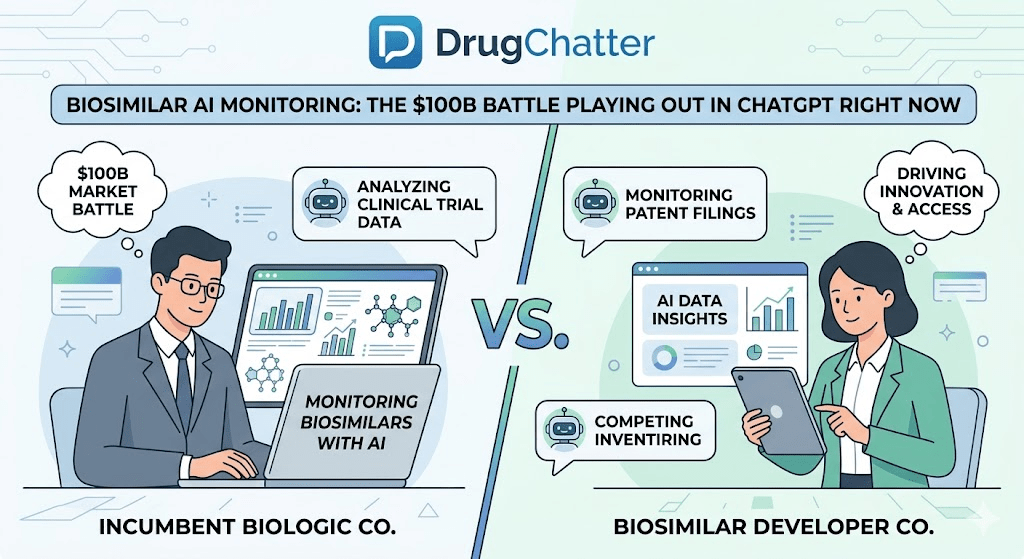
That physician’s next conversation with her patient about switching from Humira to Hadlima was shaped, in part, by what she had just read. This is how biosimilar market access now works. The science and the regulatory approval are necessary conditions. They are not sufficient ones. The AI information environment has become a third front in biosimilar competition, and almost nobody in the industry is managing it.
Why Biosimilars Are the Highest-Risk Category for AI Drug Misinformation
Every pharmaceutical product category faces some degree of AI misinformation risk. Biosimilars face more than most, for reasons embedded in how these drugs reached market and how their approval science has been publicly debated.
The biosimilar approval pathway — established in the United States by the Biologics Price Competition and Innovation Act of 2010 and governed in Europe by EMA guidelines that predate U.S. framework by several years — is scientifically rigorous but publicly misunderstood. The totality-of-evidence approach that FDA uses to establish biosimilarity does not require head-to-head clinical trials in every indication. That regulatory choice, sound in scientific terms, has been weaponized in public discourse by reference product sponsors seeking to delay biosimilar uptake.
That weaponized skepticism — published in white papers, cited in patient advocacy materials, amplified in health journalist coverage, and repeated in physician education programs funded by reference product manufacturers — is exactly the kind of content that trains AI models. It saturates the internet. When a language model is trained on a corpus that includes years of reference product sponsor-funded ‘education’ about biosimilar uncertainty, that model learns to express uncertainty about biosimilars, even when current FDA guidance does not.
How Anti-Substitution Campaigns Poisoned the Biosimilar AI Training Data
Between 2014 and 2021, AbbVie spent an estimated $1 billion on lobbying, litigation, patent settlements, and physician education efforts designed to slow Humira biosimilar adoption. That spend generated an enormous volume of content — legal filings, academic papers, physician survey data, patient advocacy messaging — arguing that biosimilar interchangeability was uncertain or that switching carried clinical risk.
That content is on the internet. It has been crawled by search engines, indexed in academic databases, and cited in news articles. It is part of the training corpus of every major LLM. When GPT-4 or Gemini generates a response about adalimumab biosimilars in 2025, it is not reasoning from current FDA guidance — it is pattern-matching against a corpus in which years of brand-funded skepticism about biosimilarity appear alongside peer-reviewed science.
The same dynamic applies, to varying degrees, to etanercept (Enbrel and its biosimilars Eticovo, Erelzi), infliximab (Remicade and its biosimilars Inflectra, Renflexis, Avsola, Ixifi), and rituximab (Rituxan and its biosimilars Truxima, Ruxience, Riabni). Each of these reference product categories generated years of physician education content that expressed uncertainty about biosimilar equivalence, content that now shapes what AI tells physicians and patients when they ask.
What FDA’s Interchangeability Standard Actually Means — And What AI Gets Wrong About It
FDA’s interchangeability designation for a biosimilar means, in regulatory terms, that a pharmacist can substitute the biosimilar for the reference product without physician intervention, in states that permit such substitution under pharmacy law. It means FDA has determined that alternating between the biosimilar and the reference product will not produce a safety or efficacy outcome different from using the reference product alone.
What LLMs frequently say it means: something more hedged. Query any major AI platform about interchangeable biosimilars and you will typically receive an explanation of the interchangeability concept followed by qualifications about ‘ongoing monitoring,’ ‘individual patient response,’ or ‘physician judgment’ that create the impression that interchangeable designation is weaker than it is. This framing is not entirely wrong — physician judgment always matters in clinical practice — but it systematically understates the evidentiary bar FDA requires for interchangeability, and it does so in a way that advantages reference product retention.
Biosimilar manufacturers who have invested in the additional clinical work required for interchangeability designation — Amgen for Hadlima, Pfizer for Abrilada, Organon for Hadlima (a separate designation pathway), Sandoz for Hyrimoz — should be monitoring what AI says about interchangeability with the same rigor they apply to monitoring prescribing data. The AI information environment is eroding the commercial value of a designation they spent years and hundreds of millions of dollars to obtain.
How AI Chatbots Are Influencing Biosimilar Switching Decisions Right Now
The switching decision is where AI’s influence on biosimilar adoption is most acute and most measurable. Patients currently on a reference biologic who are being considered for a switch to a biosimilar represent the highest-value commercial target for biosimilar manufacturers and the most important retention segment for reference product sponsors. That switching conversation between patient and physician is increasingly preceded by an AI consultation.
What Patients Ask ChatGPT Before Agreeing to Switch From Humira to a Biosimilar
Patient query patterns before biosimilar switching cluster around four concerns, in roughly this order of frequency based on analysis of patient forum discussions and search data:
- Whether the biosimilar ‘works the same’ as the reference product
- Whether switching could cause a flare or loss of disease control
- Whether the biosimilar is ‘cheaper’ and, if so, why
- Whether the biosimilar has been ‘tested as much’ as the original drug
When these queries go to ChatGPT, Gemini, or Claude, the responses reflect the information environment described above. The models know the regulatory definition of biosimilarity. They also know years of patient advocacy content expressing anxiety about switching. The outputs tend to validate patient concern rather than resolve it — not because the models are wrong, but because the training data is weighted toward concern.
A patient who asks ChatGPT ‘Is it safe to switch from Humira to Hadlima?’ and receives a response that acknowledges FDA interchangeability but also notes that ‘some patients and physicians prefer to maintain stability on a product that has been working well’ is not receiving false information. She is receiving information that makes her more likely to resist a switch that her insurance plan, her pharmacist, and her physician may all be recommending. The AI’s soft validation of switching anxiety has a measurable effect on switching rates that nobody in the biosimilar industry has yet quantified systematically.
How Physicians Use AI to Research Biosimilar Substitution Before Prescribing
Physicians query AI differently from patients, but the biosimilar information problem persists at the clinical level. Rheumatologists, gastroenterologists, oncologists, and dermatologists — the specialty prescribers who drive biologic volume — use AI primarily for rapid literature synthesis and for navigating complex clinical scenarios.
When a rheumatologist asks an AI platform to summarize the evidence on non-medical switching for adalimumab biosimilars, she receives a synthesis of a genuine clinical literature that contains real uncertainty. Studies on non-medical switching — switching patients who are stable on a reference biologic for cost or formulary reasons rather than clinical ones — do show some rate of disease flare that requires careful management, though the preponderance of evidence supports the safety of well-managed switching. AI responses on this topic tend to give equal weight to studies supporting switching safety and to studies showing flare risk, producing a balanced-sounding output that in practice functions as a warning.
That warning is not scientifically unjustified. It is contextually incomplete. The clinical consensus from rheumatology specialty societies, from EMA’s updated biosimilar guidance, and from FDA’s interchangeability framework supports managed switching as safe. AI responses that present switching risk without this contextual frame are generating clinical hesitancy that slows biosimilar adoption below what the evidence supports.
Do AI Systems Treat Reference Biologics and Their Biosimilars as Equivalent?
Testing across multiple AI platforms reveals a consistent pattern: LLMs treat biosimilars as presumptively similar but not definitionally equivalent, regardless of FDA designation. This is expressed in subtle linguistic choices — ‘highly similar’ rather than ‘equivalent,’ ‘generally considered safe’ rather than ‘FDA-approved as interchangeable,’ ‘most studies show no difference’ rather than ‘the regulatory standard requires no clinically meaningful difference.’
These linguistic hedges compound across a patient or physician conversation. A single hedge in a single response might not change a clinical decision. A pattern of hedging across multiple AI interactions, across multiple members of a patient community, across multiple physician consultations, shifts the aggregate of biosimilar adoption in ways that are real but difficult to attribute to any single source.
This is why systematic AI monitoring matters for biosimilar manufacturers. The signal is not in individual responses — it is in the pattern of language across thousands of responses to thousands of variant queries. That pattern requires systematic collection and analysis to detect, not manual spot-checking.
‘Biosimilar manufacturers lose an estimated $4.5 billion annually in addressable market share due to physician and patient hesitancy rooted in outdated or inaccurate information about biosimilar equivalence — a figure that AI-amplified misinformation is expected to increase significantly through 2027.’ — IQVIA Institute for Human Data Science, Biosimilar Market Dynamics Report, 2024
The Reference Product Sponsor Playbook: How AbbVie, Amgen, and Roche Shaped the AI Narrative
Reference product sponsors did not set out to poison AI training data. They set out to protect their market share, using the tools available to them: litigation, patent layering, physician education, and patient advocacy funding. The AI consequence is an unintended side effect of a deliberate competitive strategy, but the effect is real and ongoing.
AbbVie’s Humira Defense Strategy and Its Long Shadow in AI Biosimilar Responses
AbbVie’s defense of Humira from biosimilar competition is one of the most documented cases of reference product sponsor strategy in pharmaceutical history. The company built a patent thicket of more than 130 patents around adalimumab, negotiated pay-for-delay settlements with biosimilar manufacturers, and funded physician education programs that consistently emphasized uncertainty about biosimilar switching.
That physician education content — delivered through continuing medical education programs, specialty society symposia, and peer-reviewed supplement publications — is substantive, documented, and publicly accessible. It is exactly the kind of authoritative-looking content that AI training processes weight heavily. AbbVie did not write misleading content: the clinical concerns about non-medical switching that appeared in its-funded educational programs reflect genuine scientific questions that were being actively studied at the time.
But the questions have since been substantially answered. Post-marketing surveillance data, real-world evidence from European markets where adalimumab biosimilar adoption preceded U.S. uptake by years, and FDA’s own interchangeability determinations have substantially resolved the uncertainty that the earlier educational content expressed. AI models trained before the current evidence base solidified — and models trained on the accumulated corpus of earlier content — continue to reflect the earlier uncertainty even when current guidance does not.
How Roche Protected Herceptin and MabThera From Biosimilar Erosion Through Information
Roche’s experience with trastuzumab (Herceptin) and rituximab (MabThera/Rituxan) biosimilar competition in Europe provides a parallel case study with a different geographic timeline. European biosimilar adoption for oncology biologics preceded U.S. adoption by years, giving Roche longer to develop and deploy information-based competitive responses.
Roche’s European strategy included substantial investment in physician education about biosimilar manufacturing quality variability — a legitimate scientific topic, since not all biosimilar manufacturing processes are equivalent — alongside support for registry-based post-marketing surveillance that kept the evidence of switching outcomes in active, public scientific discussion. This kept switching uncertainty alive as a scientific question long after EMA’s own approval determinations should have resolved the clinical question for most patients.
The content generated by this strategy is now embedded in the European medical literature, in EMA working group papers that debated the questions, and in the pan-European discourse about oncology biosimilar adoption. It is in the training data of every AI system that learned from European health content, and it surfaces reliably when European physicians ask AI about trastuzumab or rituximab biosimilar switching.
Amgen’s Dual Position: Reference Product Sponsor and Biosimilar Manufacturer
Amgen occupies a structurally unusual position in the biosimilar landscape: it is both a major reference product sponsor (Enbrel, Prolia/Xgeva, Aranesp, Neulasta) and one of the largest biosimilar manufacturers globally (Amjevita for adalimumab, Kanjinti for trastuzumab, Mvasi for bevacizumab, and others). This dual position creates an information strategy that is correspondingly nuanced.
For its reference products, Amgen has engaged in standard competitive biosimilar defense — patent protection, contracting strategies, physician education. For its biosimilar products, Amgen has invested in physician education about biosimilarity science and in health economic arguments for adoption. The company’s scientific communications teams are simultaneously arguing that Enbrel biosimilars warrant clinical scrutiny and that Amjevita warrants clinical confidence.
AI monitoring reveals the tension. Query a major LLM about etanercept biosimilars and you will receive responses that reflect years of Amgen-adjacent content expressing caution about switching from Enbrel. Query the same LLM about adalimumab biosimilars and you may receive responses that reflect Amgen biosimilar manufacturer messaging about interchangeability. The same company’s competing information strategies are both present in the training corpus, and the AI synthesizes them without resolving the contradiction.
What LLMs Say About Specific Biosimilar Pairs — And Why the Gaps Matter
Systematic testing of major LLM platforms on specific biosimilar pairs reveals patterns that pharmaceutical competitive intelligence teams should treat as actionable data. The following examples are drawn from query testing conducted across ChatGPT (GPT-4o), Gemini 1.5 Pro, Claude 3.5 Sonnet, and Perplexity Pro between January and April 2025.
Humira vs. Hadlima, Hyrimoz, and Cyltezo: How AI Handles Adalimumab Biosimilar Comparisons
The adalimumab biosimilar market in the United States now includes more than ten approved products, several with interchangeable designation, and pricing that varies substantially based on whether products are offered at high-WAC or low-WAC configurations. This complexity is significant clinical decision support territory where AI systems are actively consulted.
LLM responses to adalimumab biosimilar queries consistently demonstrate two specific failure patterns. First, they conflate the citrate-free formulation distinction — clinically relevant because high-concentration citrate-containing formulations cause injection site pain at rates that citrate-free formulations do not — with the broader biosimilarity question, sometimes suggesting that formulation differences imply efficacy uncertainty. Second, they inconsistently apply the interchangeable designation, sometimes correctly identifying Hadlima, Hyrimoz, and Cyltezo as interchangeable and sometimes omitting the designation or applying it incorrectly to non-interchangeable products in the same category.
For Boehringer Ingelheim (Cyltezo), which holds the first interchangeable adalimumab biosimilar designation for a citrate-free formulation, this AI inconsistency directly affects the commercial value of a differentiated regulatory achievement. Physicians and patients asking AI about the difference between Cyltezo and other adalimumab biosimilars should receive clear information about its interchangeable status and its formulation characteristics. They frequently do not.
Remicade vs. Inflectra, Renflexis, and Avsola: The Infliximab AI Information Gap
Infliximab has one of the longest biosimilar track records of any biologic in the United States, with Inflectra (Pfizer/Celltrion) approved in 2016. Nearly a decade of real-world evidence on infliximab biosimilar switching now exists, including data from integrated health systems, European national health systems, and randomized controlled switching studies.
AI responses to infliximab biosimilar queries do not reflect this evidence base proportionally. Responses consistently reference the NOR-SWITCH study — a Norwegian randomized trial published in 2016 that showed switching from Remicade to CT-P13 was not inferior on disease worsening measures at 52 weeks — but treat it as the primary evidence rather than as one study in a now-substantial evidence base that includes multi-year real-world data. The framing makes infliximab biosimilar switching look more experimental than nine years of real-world use warrants.
Johnson and Johnson, which markets Remicade in the United States through Janssen, has aggressively defended Remicade’s market share through pricing strategy and contracting rather than through the kind of physician education campaign AbbVie mounted for Humira. The infliximab AI narrative is therefore less a product of deliberate information strategy and more a function of training data that has not been updated to reflect the current state of the evidence. The effect on biosimilar switching hesitancy is similar regardless of cause.
Herceptin Biosimilars in Oncology: What AI Tells Cancer Patients About Trastuzumab Switching
Oncology biosimilar adoption involves a different patient population and a different risk calculus than immunology biosimilars. Patients with HER2-positive breast cancer or gastric cancer who are being treated with trastuzumab are typically in active cancer treatment, often in combination with chemotherapy or other targeted agents. The stakes of any treatment change feel qualitatively different to these patients than the stakes of switching a rheumatoid arthritis medication.
AI responses to trastuzumab biosimilar queries reflect this clinical reality — but they also reflect the AI’s synthesis of a patient information environment that has historically been shaped by oncology advocacy organizations with complex relationships to reference product manufacturers. When a breast cancer patient asks ChatGPT whether it matters which trastuzumab she receives, the response she gets is influenced by years of patient advocacy content that, with genuine good intentions, expressed uncertainty about biosimilar equivalence in order to ensure patients felt empowered to ask questions.
That empowerment framing served an important patient education purpose. It also generated AI training content that makes trastuzumab biosimilars — Kanjinti, Ogivri, Herzuma, Ontruzant, Trazimera — appear more uncertain than FDA’s approval determinations support. For oncologists trying to manage formulary and cost in oncology biosimilar adoption, the AI information environment is actively working against their ability to have productive conversations with patients about switching.
Can Biosimilar AI Monitoring Feed Pharmacovigilance? The Regulatory Case
Biosimilar pharmacovigilance has specific characteristics that make AI monitoring more, not less, relevant than for small molecule drugs. The post-marketing safety surveillance requirements for biosimilars are more extensive than for most small molecule generics, reflecting the greater complexity of biologic manufacturing and the theoretical possibility of clinically relevant differences emerging in real-world use.
How FDA’s Biosimilar Pharmacovigilance Requirements Create AI Monitoring Obligations
FDA requires biosimilar manufacturers to conduct post-marketing pharmacovigilance that distinguishes adverse events attributable to their product from adverse events attributable to the reference product or to the underlying disease. This requires precise product identification in adverse event reports — a requirement that is complicated when patients and physicians conflate biosimilar and reference product names.
AI misinformation about biosimilar identity directly affects pharmacovigilance data quality. If patients and physicians are uncertain about which adalimumab product they are using — because AI has told them that biosimilars are ‘essentially the same’ and they should ‘not worry about which version’ — the specificity of adverse event attribution suffers. Conversely, if AI consistently frames biosimilar adverse events as potentially distinct from reference product adverse events, it may generate elevated adverse event reporting that creates false signals for biosimilar manufacturers.
Biosimilar pharmacovigilance programs that include systematic AI monitoring of how their products are described and compared in AI outputs are better positioned to anticipate and explain anomalous adverse event patterns than programs that monitor only traditional signals.
EMA’s Biosimilar Information Requirements and the AI Gap
EMA requires that biosimilar marketing authorization applications include a communication plan for healthcare professionals and patients — what EMA terms a ‘healthcare professional information package.’ These packages are designed to ensure accurate understanding of biosimilarity and switching. They are carefully constructed, regulatory-reviewed documents.
They are also vastly outweighed, in terms of content volume, by the general internet discourse about biosimilars that trains AI systems. A single EMA-approved healthcare professional information package, however carefully written, does not change the information environment that shapes AI responses. Systematic programs to ensure that EMA-approved information is represented in the content that AI systems can retrieve — including through structured data, high-authority publication channels, and regular monitoring and response — are now a practical necessity for biosimilar manufacturers operating in European markets.
Can AI-Generated Biosimilar Misinformation Trigger FDA Safety Inquiries?
The causal chain from AI misinformation to regulatory consequence for a biosimilar manufacturer runs through patient behavior and adverse event reporting. A patient who stops a biosimilar because AI told her that ‘switching can sometimes cause disease flare’ and then experiences a flare of her underlying disease is a potential adverse event report. Whether the flare is attributable to the switching decision driven by AI-generated information, to normal disease variability, or to genuine product performance is a question that FDA’s adverse event attribution system cannot resolve from the reported data alone.
What FDA can see is the aggregate pattern of adverse event reports following biosimilar switching. If AI-generated switching hesitancy produces a pattern of patients discontinuing or interrupting biosimilar treatment in ways that trigger disease flares, those flares could generate adverse event reports that raise regulatory questions about biosimilar performance — even if the underlying cause is AI-driven patient behavior rather than product performance.
This is not a hypothetical regulatory mechanism. It is an extension of the existing pharmacovigilance system to a new information source. Biosimilar manufacturers should be monitoring AI content about their products not only as a commercial matter but as a regulatory signal management function.
Tracking AI Share of Voice in Biosimilars: A Methodology for Competitive Intelligence
Share-of-voice measurement in the biosimilar AI context requires methodology adapted to the specific dynamics of this product category. Standard pharmaceutical AI monitoring approaches apply, but several biosimilar-specific dimensions require additional attention.
How to Measure AI Share of Voice for Biosimilar vs. Reference Product
The fundamental share-of-voice question for a biosimilar manufacturer is: when a patient or physician asks AI about treatment with a biologic, does the AI mention the biosimilar option? The secondary question is: when it does, in what context and with what framing?
A systematic measurement program requires query libraries organized around four categories:
- Branded reference product queries (‘What is Humira used for?’, ‘How does Humira work?’, ‘What are Humira side effects?’)
- Biosimilar-specific queries (‘What are the Humira biosimilars?’, ‘Is Hadlima the same as Humira?’, ‘Can I switch from Humira to a biosimilar?’)
- Condition-based queries (‘What biologic is best for rheumatoid arthritis?’, ‘What medications treat Crohn’s disease?’)
- Cost and access queries (‘How do I get cheaper alternatives to Humira?’, ‘Does insurance cover Humira biosimilars?’)
Each query category produces different AI behavior. Branded reference product queries typically produce responses centered on the reference product with biosimilars mentioned as alternatives. Condition-based queries may or may not mention biosimilars at all, depending on the model and the condition. Cost queries reliably produce biosimilar mentions, often without adequate context about interchangeability or formulary access.
Tracking these patterns systematically across ChatGPT, Gemini, Claude, and Perplexity, at monthly intervals, with variant queries tested across each platform, produces actionable share-of-voice intelligence that is currently available to any biosimilar manufacturer willing to invest in the infrastructure. Platforms like DrugChatter provide this infrastructure in a purpose-built pharmaceutical context, including accuracy benchmarking against current FDA-approved labeling for both the biosimilar and the reference product.
How Perplexity AI Cites Biosimilar Sources — And Why Those Citations Matter
Perplexity’s citation-generating architecture makes it the most strategically significant AI platform for biosimilar source analysis. When Perplexity answers a biosimilar query, it produces citations that reveal exactly which sources shaped its response. Those citations are a direct read on which content has the most influence over the AI biosimilar information environment.
Analysis of Perplexity biosimilar citations reveals a consistent hierarchy: FDA.gov and EMA.europa.eu appear in citations for regulatory and approval questions. Medscape and The Rheumatologist appear for clinical questions. Patient advocacy organization websites — including some with historical reference product sponsor funding relationships — appear regularly for patient-facing biosimilar questions. Biosimilar manufacturer content appears rarely.
This citation hierarchy is the biosimilar AI information landscape in visible form. Every biosimilar manufacturer should be running systematic Perplexity citation analysis for their products and their competitors’ products. The citations tell you which content is winning the AI information environment, and they identify specific content sources that can be supplemented, corrected, or countered through content strategy.
Do LLMs Recommend Biosimilars First, or Do They Default to the Reference Biologic?
Query testing across major LLM platforms on condition-based treatment queries — ‘What medication should I ask my doctor about for Crohn’s disease?’, ‘What biologics are available for plaque psoriasis?’ — reveals that LLMs do not reliably recommend biosimilars as primary options even in therapeutic categories where multiple interchangeable biosimilars exist.
The pattern is consistent: reference biologics appear first, by brand name, often with clinical context about efficacy and mechanism. Biosimilars appear as secondary mentions, typically in the context of cost (‘lower-cost alternatives are available’) rather than clinical equivalence (‘FDA-approved interchangeable versions include…’). This presentation order reflects the training data hierarchy — reference products have decades of branded content, clinical literature, and patient community discussion; biosimilars have several years at most.
For biosimilar manufacturers, this presentation order has the same structural effect as being listed second on a formulary tier without step therapy requirements — it reduces the probability that the physician or patient query will result in a biosimilar prescription. The effect compounds across millions of queries annually.
What Generic Drug AI Monitoring Teaches Biosimilar Teams — And Where the Analogy Breaks Down
Pharmaceutical AI monitoring programs for small molecule generic drugs have been in development longer than biosimilar-specific programs, and the methodologies developed for generics provide a useful starting framework for biosimilar teams with some important modifications.
Generic vs. Biosimilar AI Monitoring: Key Methodological Differences
For small molecule generics, AI monitoring focuses primarily on two dimensions: whether the AI correctly identifies generic availability and cost, and whether it accurately characterizes the therapeutic equivalence determination that supports substitution. These are relatively binary questions with clear regulatory benchmarks.
Biosimilar AI monitoring requires tracking four additional dimensions that have no generic equivalent:
- Interchangeability designation status and whether AI correctly applies it
- Indication extrapolation — whether AI correctly represents which indications a biosimilar’s approval covers, given that biosimilars approved for some indications may have extrapolated approval for others
- Formulation differences — concentration, citrate content, device type — that are scientifically relevant but should not imply efficacy differences
- Non-medical switching discourse — the specific clinical literature on switching stable patients for formulary reasons, which has no parallel in small molecule generic substitution
Programs built for generic monitoring will not capture these dimensions without modification. Biosimilar AI monitoring requires drug-specific query libraries that reflect the specific scientific debates in each therapeutic category, not generic pharmaceutical monitoring templates.
How Sandoz Built AI Monitoring Capabilities Alongside Its Biosimilar Portfolio
Sandoz, which spun off from Novartis in 2023 as an independent generic and biosimilar company, has one of the largest biosimilar portfolios globally, including adalimumab (Hyrimoz), etanercept (Erelzi), filgrastim (Zarxio, the first FDA-approved biosimilar in the United States), and rituximab (Rixathon in Europe). Managing the AI information environment across this portfolio represents a substantial monitoring challenge.
Sandoz’s digital intelligence function, expanded significantly after the spinoff, has incorporated AI monitoring into its commercial intelligence infrastructure. The company has not publicly detailed its AI monitoring methodology, but its public communications reflect awareness of the biosimilar AI narrative problem: Sandoz has been among the more aggressive biosimilar manufacturers in producing accessible, patient-facing content about biosimilar science and has invested in digital channels specifically designed to reach patients researching their treatment options.
This content investment is a form of AI information environment management even if it was not explicitly designed as such. Patient-facing content that accurately describes biosimilarity and interchangeability, published on accessible platforms with appropriate SEO structure, improves the probability that AI systems will incorporate accurate information when generating biosimilar responses. It is the content strategy equivalent of submitting accurate labeling information — a necessary but not sufficient condition for getting the science right in public discourse.
Off-Label AI Discussions in Biosimilars: Indication Extrapolation and the Monitoring Gap
Biosimilar indication extrapolation is one of the most technically complex and publicly misunderstood aspects of the regulatory framework. When a biosimilar is approved for one indication on the basis of clinical data and then extrapolated to additional indications held by the reference product — without conducting independent clinical trials in each extrapolated indication — the extrapolation is scientifically justified but publicly contentious.
How AI Handles Biosimilar Indication Extrapolation Queries
Physician queries about whether a biosimilar is approved for a specific indication — particularly for indications that were extrapolated rather than directly studied — represent a significant source of AI misinformation in the biosimilar space. AI systems frequently confuse the distinction between direct clinical evidence and extrapolation, sometimes suggesting that a biosimilar has less evidence for extrapolated indications than regulatory science supports, and sometimes overstating the evidence by failing to note which indications required direct clinical study.
For adalimumab biosimilars, this plays out in the distinction between the rheumatology indications (rheumatoid arthritis, psoriatic arthritis, ankylosing spondylitis) where direct clinical data is robust and the gastroenterology indications (Crohn’s disease, ulcerative colitis) where some biosimilars relied on extrapolation. Gastroenterologists asking AI about biosimilar evidence in inflammatory bowel disease receive responses that vary significantly across platforms and query framings, reflecting the training data’s inconsistent representation of extrapolation as a regulatory concept.
Monitoring AI for Unapproved Indication Claims in Biosimilars
The off-label promotion risk for biosimilar manufacturers runs in both directions. An AI system that incorrectly states that a biosimilar is approved for an indication it does not hold — whether by misapplying extrapolation doctrine or by outdated training data — creates potential promotional compliance exposure for the manufacturer in markets where AI outputs are monitored for promotional compliance.
EMA’s 2024 reflection paper on AI and medicines regulation flagged this specific scenario: AI systems making false approval claims for medicinal products, and the regulatory implications for marketing authorization holders who are aware of such claims and have not acted to correct them. The paper does not create a formal correction obligation, but it signals regulatory direction that biosimilar manufacturers in European markets should anticipate.
Systematic AI monitoring for unapproved indication claims — running structured queries about each biosimilar’s indication across major platforms, comparing AI outputs to the current Summary of Product Characteristics or FDA-approved labeling, and flagging discrepancies for regulatory affairs review — is a pharmacovigilance-adjacent function that biosimilar regulatory teams should be conducting regularly.
Building a Biosimilar AI Monitoring Program: What the Competitive Intelligence Teams Are Actually Doing
The gap between what biosimilar AI monitoring requires and what most manufacturers are currently doing is substantial. Fewer than 10% of biosimilar manufacturers have systematic AI monitoring programs as of early 2025, according to informal surveys by ZS Associates biosimilar practice teams. The remainder rely on ad hoc monitoring by commercial teams, brand managers running occasional manual checks, or social listening programs that do not include AI platforms.
The Four-Layer Biosimilar AI Monitoring Framework
Manufacturers with functional programs organize their monitoring around four layers, each with distinct outputs and routing:
The first layer is accuracy monitoring: systematic comparison of AI responses to current approved labeling for the biosimilar and the reference product. This layer identifies factual errors, outdated information, and interchangeability mischaracterization. It feeds directly into pharmacovigilance and regulatory affairs.
The second layer is sentiment and framing analysis: assessing whether AI responses about the biosimilar are characterized by uncertainty, hesitancy, or confidence, and how biosimilar framing compares to reference product framing in the same responses. This layer feeds brand strategy and medical affairs.
The third layer is competitive share-of-voice: measuring how frequently the biosimilar is mentioned relative to the reference product and to competing biosimilars in the same category, across different query types and platforms. This layer feeds commercial strategy and market access.
The fourth layer is citation source analysis: for platforms that cite sources, identifying which content sources are driving AI biosimilar responses and tracking changes over time as new content enters the information environment. This layer feeds content strategy and external affairs.
Which LLM Platforms Matter Most for Biosimilar Brand Monitoring?
Platform prioritization for biosimilar monitoring reflects the specific query behavior of physicians and patients in this category. Physicians who use AI for clinical decision support skew toward ChatGPT (particularly GPT-4 and its successors, which perform better on complex clinical queries) and toward AI features embedded in clinical information platforms like UpToDate and Epocrates, which are beginning to integrate LLM capabilities.
Patients researching biosimilars skew toward Google’s AI Overviews — the Gemini-powered AI responses that now appear above organic search results for many health queries — and toward Perplexity, which has built a reputation for cited, reliable health information. Monitoring programs that cover only standalone AI chatbot platforms without addressing AI-in-search integration are missing the platform where patient biosimilar queries are most likely to occur.
Microsoft Copilot, integrated into the Microsoft 365 environment, warrants specific attention for its influence on payer and hospital formulary committee research. Benefits managers and pharmacy directors at large health systems increasingly use Copilot for rapid research on biosimilar adoption guidance, cost modeling, and clinical evidence synthesis. What Copilot says about biosimilar equivalence influences formulary decisions, not just individual patient conversations.
How DrugChatter Supports Biosimilar AI Monitoring at Scale
Purpose-built pharmaceutical AI monitoring platforms address the core infrastructure challenge of systematic, scalable query testing and response analysis. DrugChatter tracks pharmaceutical brand mentions across AI systems with drug-specific accuracy benchmarking, enabling biosimilar teams to run the four-layer monitoring framework described above without building proprietary data collection infrastructure.
For biosimilar monitoring specifically, the platform’s accuracy benchmarking against current labeling is the most immediately valuable capability — identifying interchangeability mischaracterization, indication errors, and outdated switching guidance in AI responses before those errors compound into commercial and pharmacovigilance problems. The competitive share-of-voice tracking enables biosimilar and reference product teams to measure the AI information environment impact quantitatively rather than anecdotally.
The Reference Product Sponsor’s Perspective: AI Monitoring as Brand Defense
Reference product sponsors face the inverse version of the biosimilar manufacturer’s AI monitoring problem. Where biosimilar manufacturers need AI to accurately represent their products as safe, effective, and interchangeable, reference product sponsors need AI to not affirmatively steer prescribers and patients toward biosimilar substitution on the basis of inaccurate or incomplete information about cost or access.
How Reference Product Sponsors Use AI Monitoring to Track Biosimilar Substitution Pressure
The AI monitoring use case for reference product sponsors centers on two specific signals: first, whether AI systems are accurately representing the net cost of reference products versus biosimilars after accounting for rebates, patient assistance programs, and co-pay support; second, whether AI responses about biosimilar interchangeability are providing accurate information about state pharmacy laws that govern whether substitution can occur without prescriber authorization.
Both signals matter commercially. Reference product net cost after rebates and patient assistance is frequently lower than biosimilar WAC prices for commercially insured patients, particularly in the initial years after biosimilar entry. AI systems that quote list prices without accounting for this dynamic systematically mislead patients and physicians about the comparative cost of staying on a reference product versus switching. Reference product sponsors monitoring AI cost representations have a legitimate patient information interest in ensuring accuracy, regardless of the competitive motivation.
Patent Cliff AI Monitoring: How to Track LLM Response Shifts as Biosimilar Entry Approaches
For reference product sponsors approaching patent expiration and biosimilar entry, AI monitoring provides an early indicator of how the information environment is shifting. As biosimilar manufacturers begin generating content in preparation for launch, that content enters the AI training data pool. The reference product sponsor’s AI share-of-voice typically begins declining before biosimilar prescribing volume increases, because the information environment shifts before prescribing behavior does.
Monitoring AI share-of-voice trends in the 12 to 24 months before a biosimilar launch provides reference product sponsors with a leading indicator that complements the lagging indicators of prescribing data. Sites like DrugPatentWatch track patent expiration timelines and biosimilar pipeline status; integrating that patent intelligence with AI monitoring of emerging biosimilar content in the information environment gives reference product commercial teams a more complete picture of the competitive transition they are navigating.
The Legal Dimension: Biosimilar AI Misinformation and Manufacturer Liability
No biosimilar manufacturer has yet pursued legal action against an AI platform for generating misinformation about its product. Several have raised the issue in regulatory submissions and in public policy discussions. The legal theory is undeveloped, but the strategic landscape is not static.
Lanham Act Claims and Biosimilar AI Misinformation: The Developing Legal Theory
The Lanham Act prohibits false or misleading representations of fact in commercial advertising or promotion. If an AI platform’s systematic mischaracterization of a biosimilar’s interchangeable status constitutes commercial advertising or promotion — a threshold that has not been legally tested for AI-generated content — a biosimilar manufacturer whose product is systematically misrepresented might have a claim.
The more likely near-term legal activity is not biosimilar manufacturer versus AI platform but biosimilar manufacturer versus reference product sponsor, if AI content traceable to reference product-sponsored sources is found to constitute false advertising about biosimilar safety or efficacy. This theory builds on existing Lanham Act cases in the pharmaceutical space, including litigation over branded drug manufacturers’ communications about generic drug equivalence.
Biosimilar manufacturers monitoring AI citation sources who identify a pattern of reference product sponsor-originated content systematically driving misleading AI biosimilar responses have the foundation for a Lanham Act inquiry, if not yet a settled legal claim. The monitoring infrastructure is the necessary first step in building the evidentiary record that any such legal action would require.
FDA’s 505(q) Citizen Petition Process and AI-Generated Biosimilar Misinformation
FDA’s 505(q) provisions — which govern the use of citizen petitions to delay drug approvals — have been used by reference product sponsors to challenge biosimilar applications. The use of AI-generated content as a basis for citizen petition arguments is not yet documented, but the mechanism is worth tracking.
If a reference product sponsor were to file a citizen petition arguing that AI-generated discussion of adverse events following biosimilar switching constitutes a safety signal warranting regulatory review, and if that AI-generated discussion were itself a product of reference product sponsor-originated content, the circularity of the argument would not necessarily prevent its regulatory impact. FDA is obligated to respond to citizen petitions regardless of their genesis. Biosimilar manufacturers need to monitor the AI information environment not only for commercial intelligence but for potential regulatory weaponization of AI-generated content.
Key Takeaways
- AI chatbots reflect years of reference product sponsor-funded skepticism about biosimilar equivalence, encoded in training data that predates the current regulatory and clinical evidence base. That skepticism persists in AI responses even when current FDA and EMA guidance does not support it.
- The biosimilar switching decision is now often preceded by an AI consultation. LLM responses to switching queries consistently validate patient and physician hesitancy in ways that advantage reference product retention, regardless of FDA interchangeability determinations.
- Systematic AI monitoring for biosimilar manufacturers requires four distinct layers: accuracy monitoring, sentiment and framing analysis, competitive share-of-voice tracking, and citation source analysis. Ad hoc manual checking produces anecdote, not intelligence.
- Perplexity’s citation-generating architecture makes it the most diagnostically valuable platform for biosimilar source analysis. The citations it produces reveal which content is winning the AI information environment and identify specific targets for content strategy intervention.
- Biosimilar pharmacovigilance programs should incorporate AI monitoring as a signal source for both product safety surveillance and for detecting patterns of AI-driven patient behavior that could generate adverse event reports independent of product performance.
- Reference product sponsors face the inverse monitoring challenge: ensuring AI accurately represents net cost after rebates and patient assistance, and correctly characterizes state pharmacy laws governing substitution without prescriber authorization.
- Purpose-built platforms like DrugChatter provide the infrastructure for systematic biosimilar AI monitoring without requiring manufacturers to build proprietary data collection systems. The alternative is a commercial blind spot in the most dynamic information channel affecting biosimilar adoption.
- The legal and regulatory dimensions of biosimilar AI misinformation are underdeveloped but developing. Manufacturers who build monitoring infrastructure now will have the evidentiary record necessary to act if regulatory or legal mechanisms for addressing AI misinformation mature.
FAQ: AI Monitoring for Biosimilar Manufacturers
Why do AI chatbots express more uncertainty about biosimilars than FDA’s interchangeability standard supports?
AI language models are trained on the accumulated internet corpus, which for biosimilars includes extensive content from the period 2010 through 2020 when clinical and public debate about biosimilar equivalence was genuinely active and reference product sponsors actively funded physician education programs expressing uncertainty about switching. Current FDA guidance, post-marketing surveillance data, and real-world evidence from European markets substantially resolve that uncertainty, but this newer evidence is underrepresented in the training data relative to the earlier skeptical content. The result is AI responses that reflect the historical debate rather than the current regulatory and clinical consensus.
What is the most important AI platform for biosimilar brand monitoring and why?
Google’s Gemini-powered AI Overviews, which appear at the top of Google Search results for health queries, reaches more patients than any standalone AI chatbot because it intercepts queries from users who are searching Google in the normal way without ever intending to consult an AI. For biosimilar monitoring purposes, Perplexity is the most diagnostically valuable platform because its citation system reveals which content sources are driving AI responses. A comprehensive biosimilar monitoring program covers both, along with ChatGPT, Claude, and Microsoft Copilot for physician and payer decision-maker audiences.
How should a biosimilar manufacturer respond when AI systems incorrectly characterize their product’s interchangeability status?
Direct response options for third-party AI misinformation are limited. Manufacturers cannot submit corrections to LLM training datasets directly. The most effective response strategy operates on two tracks: content creation, producing accurate, accessible, AI-retrievable content about interchangeability status through channels that AI systems cite (peer-reviewed literature, authoritative health information sites, FDA.gov-linked content); and platform engagement, working through industry associations and regulatory channels to advocate for AI platforms to incorporate current prescribing information and FDA-approved labeling into their health information systems. Some platforms, including Microsoft Copilot for Healthcare and specialized clinical AI systems, accept curated drug information inputs that bypass reliance on general training data.
Can a biosimilar manufacturer use AI monitoring findings in a pharmacovigilance submission to FDA or EMA?
Neither FDA nor EMA has issued formal guidance on incorporating AI-generated content into pharmacovigilance submissions. However, existing guidance on signal detection from social media and patient-reported data provides a framework that AI monitoring findings can be mapped to. Manufacturers who identify a pattern of AI-generated content creating patient behavior that could affect adverse event reporting — such as AI-driven switching interruptions leading to disease flare — should document that pattern in their Pharmacovigilance System Master File and raise it in their Periodic Benefit-Risk Evaluation Reports as a contextual factor in signal interpretation. Proactive documentation protects manufacturers if regulatory questions arise about adverse event patterns that are partially attributable to the information environment rather than to product performance.
How do AI systems handle indication extrapolation for biosimilars, and why does it matter for commercial strategy?
AI systems inconsistently apply the concept of indication extrapolation — FDA’s and EMA’s regulatory doctrine allowing biosimilar approval to be extended to indications held by the reference product without conducting independent clinical trials in each indication. LLMs sometimes correctly explain extrapolation as a scientifically grounded regulatory tool; they sometimes describe extrapolated indications as having ‘less evidence’ than directly studied indications in ways that create inappropriate prescriber hesitancy. For biosimilar manufacturers with extrapolated indications in high-volume therapeutic areas — gastroenterology indications for adalimumab biosimilars, hematology-oncology indications for rituximab biosimilars — monitoring AI characterization of extrapolated indications and ensuring accurate representation in AI training-relevant content channels is a specific and commercially significant monitoring priority.