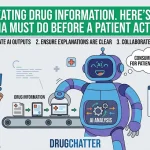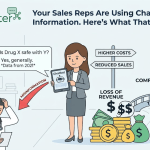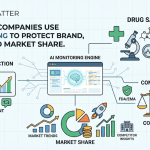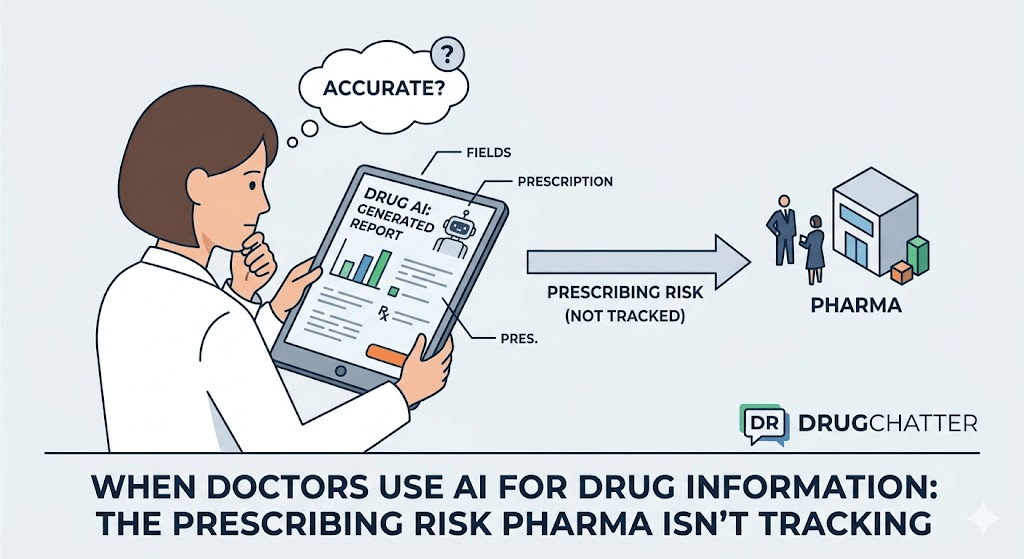
A hospitalist in Cleveland needs to know the renal dosing adjustment for a patient on apixaban with a creatinine clearance below 25 ml/min. It’s 2 a.m. His clinical pharmacist is not on call. He opens ChatGPT on his phone, types the question, and gets a detailed answer in nine seconds.
The answer is plausible. It is formatted with confidence. It cites no source. And depending on which version of GPT-4 he’s running, it may reflect labeling that predates FDA’s 2023 update to Eliquis prescribing guidance for patients with severe renal impairment.
He adjusts the dose. He moves on. No one flags it.
This scenario plays out across hospitals, clinics, and private practices thousands of times a day. Physicians are using AI tools for clinical decisions at a rate that has outpaced both hospital policy and pharmaceutical company awareness. For drug manufacturers, the implications run from brand perception and market share to adverse event reporting obligations and FDA compliance. Most pharma companies are not yet watching.
How Widespread Is Physician AI Use for Drug Prescribing Decisions?
The data is recent enough to still surprise people. A 2024 survey published in the Journal of General Internal Medicine found that 51% of U.S. physicians had used a general-purpose AI chatbot for at least one clinical decision in the prior three months. Among physicians under 45, the figure was 67%. Among residents and fellows, it exceeded 80%.
The American Medical Association’s AI in Medicine survey, conducted in late 2024 and released in early 2025, found that 38% of physicians reported using AI for drug information specifically — dosing, interactions, contraindications, or prescribing alternatives — at least monthly. That figure represents roughly 300,000 physicians in the United States alone consulting AI systems for drug information with meaningful frequency.
What those physicians are not doing, in most cases, is cross-referencing the AI output against current FDA-approved prescribing information. They are treating the AI answer the way they once treated a senior colleague’s verbal guidance: fast, authoritative, and probably right.
Which Medical Specialties Use AI for Drug Information Most Frequently
Usage patterns differ by specialty in ways that matter for pharmaceutical companies tracking which physician segments are most exposed to AI-generated drug information errors.
Emergency medicine and hospital medicine physicians lead in frequency of AI drug queries, driven by the pace of clinical decision-making and the breadth of drug classes they must manage. Primary care physicians follow, particularly for complex polypharmacy situations that exceed any single physician’s recall. Oncologists use AI for chemotherapy protocol questions and drug interaction checks in patients on multiple agents. Psychiatrists consult AI for off-label use data and augmentation strategies that may not appear in first-line prescribing guides.
Each of these specialties represents a specific risk profile for pharmaceutical companies. An emergency physician querying an AI about a drug contraindication and receiving an outdated answer is a patient safety event waiting to happen. A psychiatrist querying AI about off-label use of a branded antipsychotic and receiving AI-generated information that contradicts current FDA labeling is a pharmacovigilance signal that will never appear in FAERS if no adverse event occurs.
What Drug Questions Are Physicians Actually Asking AI Systems?
The query taxonomy for physician AI use differs from patient use in meaningful ways. Physicians ask more precise clinical questions, but they also ask questions that require current, authoritative, and source-verifiable answers — exactly the conditions under which LLMs fail most predictably.
The most common physician drug query categories, based on analysis of publicly reported AI interaction studies and published clinical AI research, break into four areas:
- Renal and hepatic dose adjustment queries for specific drugs in specific patient profiles
- Drug-drug and drug-disease interaction checks in polypharmacy patients
- Off-label use evidence queries, particularly for drugs with active but unlabeled indications
- Comparative efficacy questions when selecting between agents in the same class
These are also the four query types where AI error rates are highest, because they require current labeling data, nuanced clinical judgment, and precision that general-purpose language models are architecturally unsuited to provide reliably.
Are Physicians Checking AI Drug Answers Against FDA Prescribing Information?
Rarely, according to available evidence. A 2024 study from the University of Michigan Medical School surveyed 412 attending physicians on their AI use habits in clinical settings. Only 19% reported routinely cross-referencing AI drug information against the official prescribing information or a clinical pharmacist. The majority reported treating AI answers as adequate if they were consistent with general knowledge they already held about the drug.
The confirmation bias effect is clinically significant. A physician who already knows a drug’s general profile is likely to find that an AI answer consistent with that general knowledge ‘seems right,’ even when the specific detail they queried — a renal adjustment, a specific drug interaction, a population contraindication — is wrong. The error is in the precision, not the general framework, and physicians are not calibrated to scrutinize precision in AI outputs the way they might scrutinize a novel or counterintuitive answer.
‘In a benchmarking analysis of 10 major LLMs responding to 200 clinical pharmacology questions, the models provided incorrect or incomplete drug dosing information 34% of the time, with the highest error rates in renal adjustment and pediatric dosing queries.’ — American Society of Health-System Pharmacists Foundation Research Report, 2024
Why AI Gets Physician-Level Drug Prescribing Questions Wrong
The failure modes for physician-directed drug queries are distinct from those in patient-directed queries, and they produce different types of harm. Patients receive overly alarming or overly reassuring general information. Physicians receive plausible-sounding but clinically incorrect specific information. The second category is more dangerous.
Training Data Gaps in AI Drug Prescribing Information
Pharmaceutical prescribing information is a tightly controlled document class. The FDA-approved package insert is a regulatory document with specific format requirements, updated through a formal submission process, and not always rendered in the crawlable web formats that train large language models effectively. The result is that AI systems learn drug information from secondary and tertiary sources — clinical education websites, medical textbooks in digital format, published journal articles, physician discussion forums — rather than from the primary regulatory document that governs prescribing.
These secondary sources are not wrong, exactly, but they are selectively accurate. A textbook chapter on anticoagulation written in 2021 will describe Eliquis dosing as it was understood in 2021. A clinical education article on JAK inhibitor safety written before the FDA’s 2021 boxed warning update will not reflect the current regulatory risk framework. When an AI is trained on these sources, it inherits their information epoch, presenting historical accuracy as current guidance.
Knowledge Cutoff Errors in AI Drug Dosing Guidance
Knowledge cutoff errors are systematic and predictable. Every major LLM has a training data cutoff beyond which new information does not exist in the model. For pharmaceutical prescribing information, this creates compounding risk because drug labels change continuously.
Between 2020 and 2025, FDA issued more than 800 label changes affecting drugs in the top 250 by prescribing volume. These changes included new contraindications, revised dosing recommendations, updated drug interaction warnings, and new boxed safety warnings. An LLM trained on data through mid-2023 does not know about any label change occurring after that date. An LLM trained through mid-2024 knows nothing about changes from the past year.
For pharmaceutical companies, this means that AI systems are currently providing physicians with prescribing information that may be up to two years out of date for any given drug. The probability that a physician querying AI about a specific drug receives information predating a clinically material label change is not negligible — it is, for many drugs, the most likely outcome of an AI drug query today.
Hallucinated Drug Interactions: When AI Invents Clinical Contraindications
Drug interaction hallucination is a specific and well-documented failure mode for LLMs in clinical settings. A 2023 study from the Cleveland Clinic published in npj Digital Medicine tested GPT-4’s performance on drug interaction questions and found that the model fabricated clinically significant interactions between drug pairs with no known interaction in 8% of test queries, while simultaneously missing known major interactions in 14% of queries.
For a physician making a prescribing decision, both error types are dangerous. A hallucinated interaction causes unnecessary drug avoidance or substitution. A missed real interaction causes patient harm. Neither error generates any signal unless a physician or pharmacist independently identifies the discrepancy. In the absence of systematic cross-referencing, neither type of error is reliably caught.
Pharmaceutical companies whose drugs are involved in hallucinated interactions — either as the drug incorrectly said to interact or the interacting agent incorrectly named — have a direct brand and safety interest in knowing this is occurring. It is currently unmonitorable through any standard pharmacovigilance mechanism because no adverse event report is generated when a physician correctly avoids a drug based on a false interaction claim.
How AI Handles Off-Label Drug Use Queries From Physicians
Off-label use of approved drugs is legal for physicians to prescribe but illegal for manufacturers to promote. AI occupies an undefined position in this regulatory framework. When a physician asks ChatGPT about off-label use of a branded drug, the AI will typically respond with a discussion of published evidence, case series, and expert opinion — exactly the kind of medical communication that FDA prohibits manufacturers from initiating but permits when physicians ask for it through medical affairs channels.
The practical effect is that AI has become an unregulated off-label medical information channel. Physicians who would previously have contacted a manufacturer’s medical science liaison for off-label use data are now querying AI. The data they receive may be accurate (reflecting published literature), outdated (reflecting pre-current evidence), or actively misleading (reflecting AI synthesis errors in clinical literature interpretation).
For manufacturers, the loss of visibility into physician off-label queries is a significant intelligence gap. Medical affairs teams build their engagement strategies around understanding what off-label uses physicians are exploring. That signal traditionally came through MSL interactions, speaker programs, and medical information call center logs. AI is diverting a growing share of those queries to channels the manufacturer cannot see.
The FDA Compliance Exposure When Physicians Prescribe Based on AI Drug Information
Does a Physician’s AI-Influenced Prescribing Decision Create Manufacturer Liability?
The direct answer is no, under current law. Pharmaceutical manufacturers are not liable for clinical decisions made independently by licensed physicians, including decisions influenced by third-party information sources. The learned intermediary doctrine, which governs pharmaceutical product liability in most U.S. jurisdictions, places the responsibility for clinical decision-making with the prescribing physician, not the manufacturer, as long as the manufacturer has adequately warned the physician through approved labeling.
The more complex question is what happens when the AI-generated information that influenced a physician’s decision was inaccurate in a way that contradicts current FDA labeling, and an adverse event resulted. In that scenario, the direct liability runs to the AI platform for failure to provide accurate medical information — a theory of liability that has not yet been litigated to judgment in a U.S. federal court but is actively being developed by personal injury plaintiffs’ firms.
For pharmaceutical companies, the practical risk is more immediate than legal liability. An adverse event driven by physician reliance on incorrect AI drug information will appear in FAERS with the drug correctly identified and the physician’s decision listed as the proximate cause. The AI’s role in the prescribing decision will not appear anywhere in the report. FDA’s safety signal detection will process the event the same way it processes any adverse event, potentially triggering safety inquiries that require manufacturer response and resource investment even though the manufacturer’s product performed exactly as labeled.
Can AI-Generated Prescribing Errors Trigger FDA Safety Inquiries?
Yes, and the mechanism requires no malice or negligence by the manufacturer. FDA’s adverse event surveillance system is designed to detect safety signals regardless of cause. If AI-generated prescribing errors cause a cluster of adverse events attributable to a specific drug — for example, a cluster of bleeding events in patients whose physicians received incorrect renal dosing information from an AI — FDA’s pharmacovigilance algorithms will detect the signal and initiate inquiry.
The inquiry process requires manufacturer response, label review, and potentially risk evaluation and mitigation strategy modifications — all costly, time-consuming processes triggered by events that had nothing to do with the manufacturer’s own communications or drug performance.
Pharmaceutical companies whose drugs are commonly queried by physicians in AI systems need to understand this exposure. The drugs at highest risk are those with complex dosing adjustments, narrow therapeutic indices, or recently updated safety profiles — exactly the drugs physicians are most likely to query AI about and most likely to receive incorrect information on.
FDA Guidance on AI Clinical Decision Support: What Exists and What Doesn’t
FDA’s regulatory framework for AI in clinical settings covers AI/ML-based software as a medical device under 21 CFR Part 820 and the 2021 AI/ML Software as a Medical Device Action Plan. This framework applies to AI tools sold or marketed specifically as clinical decision support software. It does not apply to general-purpose AI chatbots used informally by physicians for clinical information.
This regulatory gap is significant. A hospital-deployed AI clinical decision support tool for drug dosing is a medical device subject to FDA oversight. A physician using ChatGPT on his personal phone to look up the same dosing information is using a tool that FDA currently has no authority to regulate for clinical accuracy.
FDA’s Digital Health Center of Excellence has acknowledged this gap publicly. A 2024 discussion paper from the center described general-purpose AI use in clinical settings as a ‘regulatory blind spot’ requiring policy development. No final guidance has been issued. Until it is, the information environment in which physicians are making AI-assisted prescribing decisions is essentially unregulated for accuracy.
What Hospital Pharmacy Departments Are Doing About Physician AI Drug Queries
Hospital pharmacy departments are the most active institutional responders to physician AI drug use. Several large academic medical centers, including Cleveland Clinic, Johns Hopkins Hospital, and UCSF Medical Center, issued formal guidance to physicians in 2024 advising against using general-purpose AI chatbots for drug dosing decisions and directing physicians to consult clinical pharmacists or established drug information databases such as Lexicomp, Micromedex, or UpToDate.
The guidance has had limited effect on actual physician behavior, for the same reason speed limits have limited effect on highway driving: enforcement is impractical at the point of behavior. A physician consulting ChatGPT at 2 a.m. in a call room is not going to be intercepted by a pharmacy policy. What hospital pharmacy can do — and some are beginning to do — is track AI-related prescribing discrepancies when they are identified during medication reconciliation and adverse event review, and report them to clinical leadership.
For pharmaceutical companies, this emerging hospital pharmacy surveillance function is a potential intelligence partnership. Companies that engage proactively with hospital pharmacy directors on AI drug information accuracy are both providing a service and gaining visibility into how their drugs are being characterized in clinical AI contexts.
Which Drugs Are Most Vulnerable to AI Prescribing Information Errors?
High-Risk Drug Categories in AI Clinical Queries: Anticoagulants, Oncologics, and Biologics
Not all drugs carry equal AI error risk. The drugs most likely to generate clinically harmful AI prescribing errors share identifiable characteristics: complex dosing that varies by patient parameters, frequent label updates, narrow therapeutic indices, and high physician query volume.
Anticoagulants represent the highest-frequency, highest-acuity risk category. Drugs like apixaban (Eliquis), rivaroxaban (Xarelto), warfarin, and direct thrombin inhibitors require precise dosing based on renal function, weight, indication, and co-medications. Their label information changes regularly. An error in anticoagulant dosing has immediate, serious consequences: bleeding or thromboembolic events. AI systems are being queried about anticoagulant dosing in exactly the high-acuity, time-pressured clinical situations where errors are most likely to go undetected.
Oncology drugs present a different risk profile. Chemotherapy dosing is highly individualized, based on body surface area, renal and hepatic function, and protocol-specific adjustments. The volume of oncology drug label updates is substantial — FDA approves oncology label modifications at a higher rate than any other therapeutic area. An AI trained on data from eighteen months ago may not reflect current approved dosing protocols for drugs where those protocols have been modified based on post-marketing data.
Biologics and biosimilars introduce a third complexity: interchangeability. An AI system that does not reflect current FDA interchangeability designations may guide a physician toward or away from a biosimilar substitution incorrectly, with formulary and patient care implications.
Narrow Therapeutic Index Drugs and AI: The Highest-Acuity Error Risk
Narrow therapeutic index drugs — those where the difference between a therapeutic and toxic dose is small — represent the most acute AI error risk. This category includes lithium, digoxin, warfarin, phenytoin, cyclosporine, tacrolimus, aminoglycosides, and several chemotherapy agents.
For these drugs, a dosing error of even modest magnitude can produce serious toxicity. An AI system that provides a dosing recommendation that is 20% above the appropriate level for a patient with compromised renal clearance is not making a small error — it is generating a clinical crisis. Published benchmarking studies consistently show that AI performs most poorly on narrow therapeutic index drug queries, particularly when patient-specific parameters like renal function or weight are incorporated into the question.
Pharmaceutical companies whose portfolios include narrow therapeutic index drugs should treat AI prescribing information accuracy as a patient safety matter, not a marketing one. The reputational and regulatory consequences of a cluster of adverse events linked to AI-generated dosing errors involving their drug are significant enough to warrant proactive monitoring investment.
How AI Handles Pediatric Drug Dosing Queries From Physicians
Pediatric dosing is among the most error-prone areas in all of clinical pharmacology, and AI performance on pediatric drug queries is consistently the weakest domain in published benchmarking studies. The ASHP Foundation’s 2024 analysis cited in this article found that AI systems provided incorrect pediatric dosing information in 47% of test queries — a rate that should alarm anyone who understands how frequently pediatric dosing questions arise in emergency and inpatient settings.
The underlying reason is data scarcity. Pediatric pharmacokinetic data is less abundant in published literature than adult data. AI models trained on that literature have less evidence to draw from, producing higher uncertainty and higher hallucination rates in pediatric drug queries. For drugs that have specific FDA-approved pediatric indications with separate dosing guidance, AI systems frequently default to adult dosing information with weight-based adjustments that may not reflect the actual approved pediatric protocol.
Psychiatric Drug Prescribing and AI: Off-Label Use Queries in Mental Health
Psychiatry has one of the highest rates of off-label prescribing of any specialty, and psychiatrists are among the most active AI users for drug information, according to specialty-specific surveys. The combination creates specific risk.
AI systems responding to psychiatrist queries about off-label antipsychotic augmentation, off-label antidepressant combinations, or off-label mood stabilizer use draw on published case reports, small open-label studies, and expert commentary — exactly the type of evidence that is most inconsistently represented in AI training data and most likely to produce synthesized conclusions that misrepresent the current evidence base.
For pharmaceutical manufacturers of psychiatric drugs, the clinical AI information environment is simultaneously an off-label promotion risk (if AI is generating favorable off-label use narratives) and a brand damage risk (if AI is generating unfavorable or inaccurate safety characterizations). Monitoring which direction the AI information environment is moving requires systematic query testing, not periodic manual checks.
What Pharma Companies Are Losing When Physicians Switch to AI Drug Queries
The MSL Intelligence Gap: How AI Is Disrupting Medical Affairs Field Operations
Medical science liaisons have served two functions for pharmaceutical companies: communicating scientific information to physicians and gathering intelligence about what questions physicians are asking about the drug. The second function is commercially and strategically valuable — MSL interaction logs have historically been one of the richest sources of physician-level intelligence available to a manufacturer’s medical affairs team.
As physicians divert their drug information queries to AI, the MSL interaction model loses its intelligence function even when the MSL relationship is maintained. A physician who used to call her MSL with three clinical questions now asks ChatGPT two of those three and contacts the MSL only for the question where she anticipates the AI’s answer will be inadequate. The manufacturer sees a reduced interaction rate and concludes engagement is declining, without understanding that the nature of physician information-seeking behavior has changed fundamentally.
Medical affairs teams need new intelligence sources to compensate for this shift. Systematic AI monitoring — tracking what physicians are asking AI systems about a given drug, and what answers they are receiving — is the most direct substitute for the intelligence that MSL interactions previously provided. Platforms like DrugChatter are designed precisely for this function, providing manufacturers with visibility into physician-directed AI queries that no internal field team can currently access.
How AI Is Changing Physician Drug Detailing Receptivity
Physicians who have developed AI as a primary drug information source are becoming less receptive to traditional pharmaceutical detailing for a specific and measurable reason: they already have answers to the questions that detailing is designed to address. When a pharmaceutical sales representative arrives to discuss a drug’s dosing, efficacy data, and safety profile, a physician who has already queried AI about those topics has already formed a view — which may or may not be accurate, but which creates a prior that sales interactions must overcome.
Market research conducted by ZS Associates in 2024 found that 31% of physicians reported that AI tool use had reduced their interest in pharmaceutical sales representative interactions, with the strongest effect among physicians who rated their AI drug information experiences as ‘generally accurate’ — a rating that, given the published error rates, suggests calibration problems independent of AI accuracy itself.
For brand teams managing drug launches and lifecycle strategies, this shift in physician AI receptivity affects promotional channel mix and ROI assumptions. Detailing calls to physicians who have already formed AI-generated views about a drug face a different and harder persuasion task than calls to physicians with open questions. Understanding what AI has already told a physician segment about your drug is now a prerequisite for effective field force deployment.
Generic Drug Recommendations in AI: Are LLMs Undermining Branded Drug Prescribing?
Physician-directed AI queries about drug selection show the same generic favoritism observed in patient-directed queries, but with different consequences. When a physician asks an LLM about treatment options for a condition and receives a generic-first or generic-only answer, the impact on prescribing can be direct and immediate in a way that a patient’s generic-influenced question typically is not.
Analysis of LLM responses to physician-framed queries about common conditions — type 2 diabetes management, hypertension, major depression — consistently shows generic-first responses in cost-framing queries and class-level responses in efficacy queries that name generic agents before branded alternatives within the same class. For pharmaceutical companies with branded drugs facing generic competition, this AI prescribing environment is a structural headwind that is entirely invisible to traditional market research.
DrugPatentWatch data shows that over 60% of the top 100 branded drugs by prescribing volume face at least one generic competitor. For these products, the AI share-of-voice question is not abstract — it directly maps to prescribing volume risk in a physician population that is increasingly using AI as a first-line information source for prescribing decisions.
How Pharmaceutical Companies Can Monitor What AI Tells Physicians About Their Drugs
Building a Physician-Directed AI Query Monitoring Program
A physician-specific AI monitoring program differs from a patient-focused program in its query library, its accuracy benchmarking standards, and its cross-functional routing. Physician queries are more technical, more specific, and require pharmacist or clinical expert review rather than general content review. The outputs are more immediately actionable for medical affairs and regulatory functions than for brand marketing.
The foundational elements of a physician AI monitoring program:
- A physician-vocabulary query library that mirrors how clinicians actually phrase drug questions to AI, including clinical parameter-specific queries (renal dosing, hepatic adjustment, pediatric dosing) and off-label use queries relevant to the drug’s therapeutic area
- Systematic testing across ChatGPT, Gemini, Claude, Perplexity, and Microsoft Copilot at regular intervals, with version tracking to detect changes as models are updated
- Clinical accuracy benchmarking against current FDA-approved prescribing information, conducted by pharmacists or clinical pharmacologists rather than content generalists
- Routing protocols that send pharmacovigilance-relevant findings to the pharmacovigilance function, off-label content findings to regulatory affairs, and competitive intelligence findings to medical affairs and brand strategy
The routing function is where most early AI monitoring programs fail. Companies that route all AI monitoring findings to digital marketing create a function that can report on brand mentions but cannot act on safety or compliance findings. The intelligence value is only realized when findings reach the teams with authority to act on them.
Tracking AI Accuracy Against Current FDA Drug Labeling: A Practical Framework
Accuracy benchmarking for physician-directed AI drug queries requires a structured comparison methodology. The standard is current FDA-approved prescribing information — not UpToDate, not Micromedex, not a recent journal article, but the FDA label as currently approved and posted in the Drugs@FDA database. Any AI output that deviates materially from current approved labeling on a safety or efficacy parameter is an error, regardless of whether the AI’s answer reflects historical accuracy or alternative evidence.
A practical accuracy scoring framework for physician AI monitoring uses four categories:
- Accurate and current: the AI response matches current approved labeling on the queried parameter
- Accurate but incomplete: the AI response is not wrong but omits clinically relevant information present in current labeling (e.g., a dosing recommendation without the renal adjustment caveat)
- Outdated: the AI response matches prior labeling that has since been updated, presenting historical accuracy as current guidance
- Inaccurate: the AI response contains information that does not match current or prior approved labeling (hallucination or attribution error)
The ‘accurate but incomplete’ category is the most underappreciated risk in physician AI monitoring. A technically correct answer that omits a critical safety caveat produces the same clinical outcome as an incorrect answer, but it would not be flagged by a simple accuracy check looking only for factually wrong information.
How to Detect When AI Is Recommending Competitor Drugs Over Yours to Physicians
Competitive AI share-of-voice for physician-directed queries requires a different query framing than patient-directed monitoring. Physician queries are class-level and indication-specific: ‘best SGLT2 inhibitor for a patient with heart failure and CKD,’ ‘preferred PCSK9 inhibitor for a patient with ASCVD and statin intolerance,’ ‘which JAK inhibitor has the most favorable safety profile in older patients.’
These queries produce responses that reflect AI’s synthesized view of comparative clinical evidence — a view shaped by whatever published literature and clinical guidelines the model was trained on. Systematic monitoring of these queries reveals which products AI recommends in head-to-head clinical comparisons, which clinical attributes AI treats as comparative advantages, and whether your drug’s positioning in AI-generated clinical algorithms matches your intended positioning.
Discrepancies between intended positioning and AI-generated positioning are actionable for medical affairs. If AI consistently positions a competitor as preferred in a subgroup where your drug has equivalent or superior evidence, that is a publication strategy and data dissemination problem — your evidence exists but is not penetrating the channels that train AI systems. Platforms like DrugChatter can systematically surface these competitive positioning gaps across multiple AI platforms simultaneously, providing intelligence that would otherwise require weeks of manual query testing to generate.
What Medical Information Call Center Data Reveals About Physician AI Behavior
Pharmaceutical companies’ medical information call centers receive physician inquiries about their drugs and log those inquiries in structured databases. That data is a proxy, though imperfect, for what questions physicians have about a drug that AI is not answering adequately.
Analysis of call center inquiry patterns can reveal where physician AI use is failing: the questions that physicians are still calling medical information to ask are the questions where they found the AI answer unsatisfactory or absent. For complex renal dosing adjustments, niche drug interactions, and specific patient population questions, medical information call volumes may be declining not because the questions have gone away but because physicians are getting answers — whether accurate or not — from AI before they reach the point of calling.
Companies tracking both call center inquiry patterns and AI monitoring data simultaneously can begin to triangulate the physician information environment: what are physicians asking, what is AI telling them, and what are they calling about when the AI falls short. This triangulation is more actionable than either data source alone.
Real Cases: When AI Drug Information Reached Clinical Practice With Harmful Results
Documented AI Drug Prescribing Errors in Published Clinical Literature
The clinical literature on AI drug prescribing errors is still thin — not because errors are rare, but because attribution of clinical errors to AI information sources is not yet part of standard incident reporting. What has been published reflects the earliest documented cases, not the full scope of AI-influenced prescribing errors in clinical practice.
A case series published in Pharmacotherapy in 2024 described three cases at a single academic medical center where physician prescribing decisions were subsequently identified as inconsistent with current FDA labeling, with the prescribing physicians reporting AI consultation as part of their decision process. Two cases involved dosing adjustments for patients with renal impairment; one involved a drug interaction check. In all three cases, the AI information was outdated relative to labeling updated within the prior eighteen months. No serious adverse events resulted in these cases, but the pattern prompted the medical center to formally survey its physician staff on AI drug information use practices.
An analysis published in JAMA Internal Medicine in 2024 documented a case at a large community hospital where a patient received an incorrect warfarin dose following a physician AI query that returned a dosing recommendation inconsistent with the patient’s INR and current prescribing guidelines. The event was identified during pharmacy review, the dose was corrected before administration, and no patient harm occurred. The incident was reported to hospital risk management but was not filed as an FDA MedWatch report, because no adverse event occurred. The AI’s role in generating the incorrect prescribing recommendation was documented internally but generated no regulatory signal.
Aetion, IBM Watson Health, and the History of Clinical AI Drug Information Failures
The current generation of general-purpose LLMs used by physicians informally is not the first AI application in pharmaceutical decision support, and the history of prior clinical AI deployments offers relevant context for understanding current risks.
IBM Watson for Oncology, deployed at major cancer centers beginning in 2015, generated significant clinical controversy when internal MD Anderson Cancer Center documents revealed that the system’s treatment recommendations conflicted with standard-of-care guidelines in a significant fraction of cases. MD Anderson cancelled its contract with IBM Watson Health in 2017 after a reported $62 million investment. Memorial Sloan Kettering Cancer Center, one of Watson’s development partners, issued a statement clarifying that Watson’s recommendations were ‘for educational purposes’ rather than direct clinical guidance — a distinction that not all clinical users understood.
The Watson episode established a pattern that repeats in current LLM use: clinical AI tools adopted faster than validation evidence justified, with insufficient physician understanding of their limitations. The difference in the current moment is scale. Watson was deployed by a small number of major cancer centers under formal contracts. ChatGPT and its peers are being used by hundreds of thousands of physicians on personal devices, with no institutional oversight, no deployment contracts, and no validation requirements.
How AI Drug Interaction Errors Have Reached Clinical Harm Incidents
Clinical harm incidents directly attributable to AI drug interaction errors are beginning to appear in the adverse event literature, though attribution is inconsistent. The FDA MedWatch database, as of 2025, has no reporting field for AI involvement in a prescribing decision — adverse events that follow AI-influenced prescribing errors are coded identically to events following other types of prescribing errors.
A 2025 case report in the Annals of Emergency Medicine described a patient presenting with serotonin syndrome following concurrent use of two medications for which the prescribing physician had received AI clearance when querying for drug interactions. The AI system queried — identified in the case report as a major commercial LLM without specific version identification — had not flagged the serotonergic interaction. The patient recovered with treatment. The case report authors noted that the relevant drug interaction had been added to both drugs’ prescribing information in 2022, and that an LLM with a training cutoff predating that update would not reflect the interaction warning.
This case illustrates the specific mechanism by which knowledge cutoff errors translate to clinical harm: not through AI hallucination, but through the accurate representation of outdated safety information as current prescribing guidance.
How AI Search Platforms Handle Drug Safety Disclaimers for Physician Queries
Do ChatGPT, Gemini, and Claude Add Adequate Disclaimers to Drug Prescribing Responses?
The major LLM platforms have evolved their disclaimer behavior for medical queries over the past two years, but the evolution has not produced consistent or clinically adequate safety framing in physician-directed drug queries.
ChatGPT typically appends a disclaimer to drug information responses noting that the information may not be current and recommending consultation with a healthcare professional. The disclaimer is accurate but produces an effect opposite to its intent when directed at a physician: a physician who is herself the healthcare professional receiving the query answer is unlikely to interpret ‘consult a healthcare professional’ as relevant to her situation. The disclaimer was designed for patients; it does not function as a safety signal for clinicians.
Gemini’s medical query disclaimers are more variable, sometimes appearing at the beginning of responses and sometimes at the end, with language that differs across query types. Claude adds safety framing more consistently than either competitor, frequently noting specific limitations in its knowledge currency for pharmaceutical information. None of the major platforms currently flags specific knowledge cutoff dates in pharmaceutical responses or alerts users when the queried drug’s label has been updated since the model’s training.
Perplexity AI Drug Queries: When Citations Create False Confidence in Physician Users
Perplexity’s citation model creates a specific risk in physician use that non-citing LLMs do not. When Perplexity cites a source in a drug information response, it signals to the reader that the information is verifiable. For physicians, this citation signal can produce false confidence in the answer’s currency and accuracy — the presence of a citation suggests that someone looked this up, even if the cited source is outdated.
Systematic testing of Perplexity responses to physician drug queries reveals that the platform frequently cites prescribing information documents, clinical guidelines, and medical education content that postdates its training data but that do not necessarily reflect current FDA-approved labeling. A citation of a 2022 clinical practice guideline in a 2025 response to a dosing query does not confirm current accuracy — but physicians reading the response with a citation are more likely to trust it than physicians reading an identical uncited answer.
For pharmaceutical companies, Perplexity’s citation patterns are a specific monitoring target. What sources is Perplexity citing for drug information queries about your product? Are those sources current? Do they reflect post-marketing label changes? Are competitor drugs cited to more authoritative or more current sources than your product? The answers to these questions are accessible through systematic query monitoring and represent actionable intelligence for both content strategy and medical affairs.
What Pharmaceutical Companies Should Build Right Now
The Cross-Functional AI Drug Intelligence Model for Medical Affairs, Regulatory, and Brand Teams
Pharmaceutical companies that are beginning to take AI monitoring seriously are discovering that no single function owns the problem. Medical affairs owns physician engagement and scientific communication. Regulatory affairs owns label accuracy and compliance. Pharmacovigilance owns safety signal detection. Brand marketing owns competitive positioning. AI monitoring findings are relevant to all four, and programs that route all findings to one function systematically underserve the others.
The most effective organizational model — emerging from early adopters in the top-20 pharma by revenue — creates a cross-functional AI intelligence function that reports to a medical or regulatory affairs leader (not marketing) and distributes findings through defined routing protocols. Safety-relevant findings go to pharmacovigilance within 48 hours. Off-label content findings go to regulatory affairs and legal within a week. Competitive positioning findings go to medical affairs and brand strategy on a monthly reporting cycle. The cross-functional model ensures that each finding reaches the team equipped to act on it.
AI Drug Monitoring Vendor Selection: What to Look for Beyond Basic Mention Tracking
The AI monitoring vendor market for pharmaceuticals is developing rapidly, with significant variation in methodology, depth, and pharmaceutical-specific capability. Generic brand monitoring platforms that track AI mentions can tell you whether your drug was mentioned. They cannot tell you whether the mention was accurate, whether it reflected current labeling, or whether it was in a clinical context relevant to physician prescribing.
Pharmaceutical-specific AI monitoring requires vendor capabilities that generic platforms do not offer:
- Clinical accuracy benchmarking against current FDA-approved prescribing information, not just content analysis
- Query library design that reflects actual physician and patient information-seeking behavior, not generic drug queries
- Therapeutic area expertise that can distinguish between clinically significant errors and minor phrasing variations
- Pharmacovigilance-relevant categorization that identifies adverse event-relevant content within AI outputs
DrugChatter is purpose-built for pharmaceutical AI monitoring with these capabilities, covering physician-directed and patient-directed query monitoring across major LLM platforms. For companies evaluating vendors, the clinical accuracy benchmarking capability is the most important differentiator — without it, you are measuring AI mentions, not AI drug information quality.
How to Use AI Drug Monitoring Data to Improve Physician Education and Medical Affairs Strategy
The output of a physician AI monitoring program is not just a risk dashboard — it is market research data about what questions physicians are asking, what information they are receiving, and where gaps exist between the AI information environment and the manufacturer’s intended scientific narrative.
Medical affairs teams that have integrated AI monitoring data into their planning cycles report using it for several specific purposes. MSL field force deployment decisions benefit from knowing which AI-generated misconceptions are most prevalent in a given physician segment — the MSL can be equipped to specifically address those misconceptions rather than leading with standard messaging the AI has already covered. Publication strategy decisions benefit from knowing which clinical attributes are absent from AI responses because they lack published evidence — a gap in AI responses about your drug’s performance in a specific subgroup signals a publication need that data may support. Speaker bureau programming benefits from knowing which off-label use questions AI is generating in a therapeutic area — those are the questions physicians have, and CME programming that addresses them serves a real educational need while navigating the off-label promotion constraints that AI bypasses entirely.
Key Takeaways
- Physicians are using AI for drug information at significant and growing rates. More than a third of U.S. physicians query AI for drug dosing, interactions, and prescribing decisions at least monthly. Most do not cross-reference AI answers against current FDA prescribing information.
- AI error rates in physician drug queries are documented and clinically significant. Published benchmarking shows incorrect or incomplete drug information in 34% of clinical pharmacology queries overall, rising to 47% for pediatric dosing questions.
- Knowledge cutoff errors — where AI presents outdated labeling as current — are the most common and least visible error type in physician AI drug queries. Over 800 label changes affecting top-250 drugs occurred between 2020 and 2025, all invisible to models trained before each change.
- The regulatory exposure for pharmaceutical manufacturers is indirect but real. AI-influenced prescribing errors that produce adverse events will appear in FAERS without the AI’s role being documented, potentially triggering safety inquiries that require manufacturer resources to address.
- The MSL intelligence model is eroding as physicians divert drug queries to AI. Medical affairs teams that do not develop AI monitoring capabilities are losing visibility into what physicians are asking about their drugs and what answers they are receiving.
- Physician-directed AI monitoring requires clinical accuracy benchmarking against current FDA labeling — not just mention tracking or sentiment analysis. The ‘accurate but incomplete’ error category, where AI gives a technically correct but clinically incomplete answer, is the most undermonitored risk in current programs.
- Cross-functional routing of AI monitoring findings — to pharmacovigilance, regulatory affairs, medical affairs, and brand strategy — is what separates intelligence programs from reporting programs. Most companies that have started AI monitoring have not built the routing infrastructure that makes findings actionable.
- Platforms like DrugChatter provide the pharmaceutical-specific query design, clinical benchmarking, and therapeutic area expertise that generic brand monitoring tools cannot offer for physician-directed drug information monitoring.
FAQ: Physicians, AI Drug Information, and Pharmaceutical Monitoring
How accurate is ChatGPT when physicians use it for drug dosing questions?
Published benchmarking studies put ChatGPT’s accuracy on clinical drug dosing questions at roughly 60 to 70 percent overall, with accuracy declining significantly for questions requiring patient-specific parameter adjustments such as renal or hepatic dose modification. The American Society of Health-System Pharmacists Foundation’s 2024 analysis found incorrect or incomplete dosing information in 34% of clinical pharmacology queries across ten major LLMs, with GPT-4 performing better than average but still incorrectly handling 27% of renal dosing adjustment queries. Accuracy also degrades for any label change that postdates the model’s training cutoff, which may be twelve to twenty-four months behind the query date for any given drug query.
What are the FDA compliance risks for a pharmaceutical company when a physician makes a prescribing error based on AI information?
Direct manufacturer liability for a physician’s AI-influenced prescribing decision does not exist under current law — the learned intermediary doctrine places prescribing responsibility with the physician. The indirect regulatory risk is more significant: adverse events following AI-influenced prescribing errors appear in FAERS without the AI’s role being captured, creating safety signals that require manufacturer response and investigation regardless of the drug’s performance within its labeled indication. Manufacturers of drugs commonly queried by physicians in AI systems face a higher base rate of AI-generated adverse event signals than manufacturers of drugs with lower AI query volume, and should factor this into their pharmacovigilance resource planning.
Which AI platforms pose the greatest risk for physician drug information errors?
General-purpose LLMs without real-time database access or curated pharmaceutical data sources pose the highest risk for physician drug information errors. ChatGPT (without web browsing), Claude (in its standard configuration), and Gemini (without specific clinical data integration) all operate from training data with fixed cutoffs that may be significantly behind current FDA labeling. Perplexity presents a different risk: its citation model can create false confidence in outdated information by signaling verifiability without guaranteeing currency. The lowest-risk AI tools for physician drug information are those integrated with current clinical pharmacology databases — Lexicomp, Micromedex, or UpToDate — though these are not the tools most physicians are actually using for informal drug queries.
How can a pharmaceutical company’s medical affairs team use AI monitoring data to improve physician engagement?
AI monitoring data reveals what physicians are asking about a drug and what information they are receiving — intelligence that was previously available only through MSL interaction logs, which are incomplete as physician AI use diverts queries away from manufacturer channels. Medical affairs teams can use this data for four specific applications: equipping MSLs to address documented AI-generated misconceptions in their therapeutic area; identifying publication gaps where AI responses are incomplete because supporting evidence has not been published or widely indexed; informing speaker bureau and CME programming based on actual physician query patterns rather than assumed educational needs; and flagging off-label use discussions in AI responses to direct appropriate regulatory and legal review before those discussions generate formulary or prescribing pattern pressure.
What should a pharmaceutical company include in a physician-directed AI drug monitoring program that a standard brand monitoring program would miss?
Standard brand monitoring programs track mention frequency, sentiment, and competitive share of voice. A physician-directed AI drug monitoring program requires four additional capabilities: clinical vocabulary query design that mirrors how physicians actually phrase clinical questions (as opposed to how patients or marketers would frame them); clinical accuracy benchmarking against current FDA-approved prescribing information conducted by pharmacist or clinical pharmacologist reviewers; pharmacovigilance-relevant content categorization that identifies adverse event-related information within AI outputs; and separate routing protocols for safety findings, off-label content findings, and competitive intelligence findings. Without these capabilities, a pharma company monitoring AI mentions of its drugs knows how often it is mentioned — but not whether what is being said about it is accurate, current, or clinically dangerous.