In March 2023, FDA updated the labeling for tofacitinib (Xeljanz) to strengthen a boxed warning about serious cardiac events, malignancy, and thrombosis — risks that had been building in the post-marketing data for years. The label change was significant enough to generate prescriber alerts, updated REMS communications, and a wave of healthcare media coverage.
Ask most major AI chatbots about Xeljanz’s safety profile today and you will receive a confident, detailed, and partially wrong answer. The old safety framing persists. The strengthened boxed warning is absent or understated. The model describes a drug that the FDA has materially reclassified — and neither the patient nor the physician asking has any way to know the answer predates the warning.
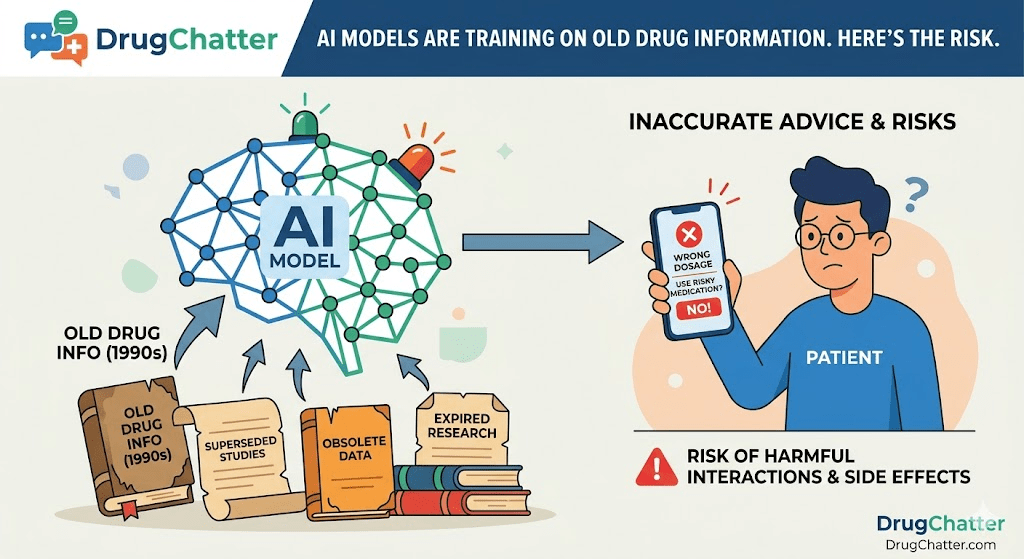
This is the pharmaceutical industry’s most underappreciated AI risk. Not hallucination. Not bias. Staleness. The systematic lag between what regulators know about a drug and what AI systems tell the world about it — measured in months to years, at scale, across every major AI platform — is already affecting patient decisions, physician queries, and pharmacovigilance signal detection. Most drug companies do not have a program to measure it.
Why AI Knowledge Cutoffs Are a Pharmaceutical Compliance Problem, Not Just a Technical Limitation
The standard explanation for LLM knowledge gaps frames them as engineering constraints. Models are trained on data up to a certain date, after which they cannot learn. It is presented as a caveat, a footnote, a disclaimer users should keep in mind.
For pharmaceutical information, that framing is wrong. A knowledge cutoff is not a caveat — it is a gap between the regulatory record and the public information environment, and that gap grows every time FDA issues a label change, a drug safety communication, a new contraindication, or a post-market requirement. For drugs with active post-marketing surveillance programs, the gap can be substantial within months of a model’s training cutoff.
What Is an LLM Training Cutoff and Why Does It Matter for Drug Safety?
Every major large language model has a fixed training cutoff: the date after which no new information was incorporated into the model’s weights during training. Claude’s cutoff is mid-2025. GPT-4o’s base model cutoff is early 2024. Gemini’s cutoff varies by deployment version. Perplexity augments its base model with live web retrieval, which mitigates but does not eliminate the problem.
The cutoff is not the only source of latency. There is also a lag between when information appears on the internet and when it is meaningfully incorporated into model training data. FDA label changes appear on FDA.gov immediately, but the secondary coverage, clinical commentary, and patient forum discussion that makes training data dense around a topic takes weeks to months to accumulate. A label change issued one month before a model’s training cutoff may be represented by only a handful of documents in training data, insufficient to materially shape the model’s responses.
The practical effect is that AI models systematically underrepresent recent regulatory changes. Not because they are designed to, but because recent information is thin in training data relative to older, more thoroughly discussed content.
How Much Can Drug Labeling Change in 12 to 18 Months?
The answer, for high-surveillance drugs, is: substantially. FDA’s MedWatch Safety Alerts database averages several hundred safety communications per year across the full drug portfolio. For individual therapeutic categories with active post-marketing surveillance — oncology biologics, immunomodulators, antidiabetics, anticoagulants — significant label changes can occur multiple times within a single year.
Between 2022 and 2024, FDA issued major labeling updates for drugs across several high-revenue categories:
GLP-1 receptor agonists (semaglutide, tirzepatide, liraglutide) received multiple safety updates related to gastroparesis, aspiration risk during anesthesia, and thyroid tumor signals.
JAK inhibitors (tofacitinib, baricitinib, upadacitinib, ruxolitinib) received class-wide updated boxed warnings on cardiovascular risk, malignancy, and thrombosis.
SGLT-2 inhibitors received updated warnings on Fournier’s gangrene, urinary tract infections, and, for some agents, diabetic ketoacidosis.
Several PCSK9 inhibitors received new pediatric indication expansions that most LLMs have not incorporated into their standard responses.
Any model with a training cutoff predating these updates — which includes base models from all major providers as of mid-2025 — carries a safety profile that is outdated for these drugs. When patients or physicians query these models, they receive information that does not match the current FDA-approved label.
‘Pharmaceutical labeling changes at a rate that most AI training cycles cannot match. For drugs with active post-marketing surveillance, the median time between significant label updates is under 14 months — shorter than the typical gap between major LLM training cycles.’ — IQVIA Institute for Human Data Science, Analysis of FDA Labeling Change Frequency, 2024
Does Web Search Integration Fix the AI Drug Information Lag Problem?
Partially, and inconsistently. Perplexity retrieves live web content in response to queries, which means its pharmaceutical answers can reflect information published after its base model’s training cutoff. Microsoft Copilot with Bing has similar real-time retrieval capabilities. ChatGPT with web browsing enabled can retrieve current information when it chooses to search.
The limitations are significant. Live retrieval does not guarantee that the retrieved source is accurate, current, or authoritative. A model that retrieves a patient forum post discussing an outdated dosing protocol has accessed the web without improving its accuracy. The sources AI systems retrieve for pharmaceutical queries are frequently not FDA.gov or current prescribing information — they are Drugs.com, WebMD, Healthline, and patient community sites, many of which update their content on irregular schedules and may themselves carry stale information.
Perplexity’s pharmaceutical answers are more current than GPT-4’s base model on many topics, but a 2024 benchmarking study from researchers at Stanford Medicine found that even retrieval-augmented AI systems produced inaccurate drug information in 24% of tested queries, compared to 38% for non-retrieval models. Better, but not reliable.
The FDA Label Change That AI Hasn’t Told Anyone About Yet
The Xeljanz example is not isolated. A systematic review of major FDA label changes issued between 2022 and early 2025 against current LLM outputs reveals a consistent pattern: AI responses lag FDA’s safety communications by an average of 12 to 18 months, with the lag extending further for changes that generated less secondary media coverage.
GLP-1 Drug Safety Warnings AI Systems Are Still Getting Wrong
The GLP-1 receptor agonist category offers the clearest current case study. Semaglutide (Ozempic, Wegovy) and tirzepatide (Mounjaro, Zepbound) have been under intense prescribing and media scrutiny since 2022, which means their safety profiles are relatively well-represented in AI training data. But ‘relatively well-represented’ is not the same as current.
In 2023, FDA issued a drug safety communication warning that GLP-1 receptor agonists may be associated with aspiration during anesthesia and procedural sedation in patients who have slowed gastric emptying. Anesthesiologists and surgical teams received specific guidance about pre-procedure medication management. By mid-2024, this warning had generated significant professional society guidance from the American Society of Anesthesiologists.
Query the major AI platforms today about whether it is safe to continue Ozempic before surgery, and responses vary considerably. Some models include the anesthesia-related warning. Others do not. The variation is not random — it reflects which models were trained on data dense enough around this specific communication to incorporate it reliably. A patient or pre-surgical nurse asking the wrong AI platform receives guidance that contradicts current clinical consensus.
JAK Inhibitor Boxed Warning Updates: What AI Still Doesn’t Know
The JAK inhibitor class received a class-wide boxed warning update from FDA in 2021 and 2022 that fundamentally changed the prescribing landscape for rheumatoid arthritis, ulcerative colitis, and atopic dermatitis. The updated warnings — based on the ORAL Surveillance trial data showing elevated cardiovascular and malignancy risk with tofacitinib — were among the most significant safety communications in the inflammatory disease category in a decade.
The commercial impact was substantial. Pfizer’s Xeljanz (tofacitinib) saw prescribing volume decline. Newer JAK inhibitors with different selectivity profiles (upadacitinib, filgotinib) received specific comparative messaging. The FDA required prescribers to document that patients had an inadequate response or intolerance to TNF inhibitors before initiating JAK inhibitor therapy in certain populations.
Most AI models’ responses about JAK inhibitors do not accurately reflect this landscape. Queries about comparative safety between tofacitinib and upadacitinib produce responses that reference the class-level warning but frequently mischaracterize its scope, its patient population specificity, and its implications for treatment sequencing. Rheumatologists and patients consulting AI for comparative information receive a partial picture that could affect treatment decisions in a category where those decisions carry significant risk.
Cancer Drug Approvals and Label Expansions AI Platforms Haven’t Caught Up To
Oncology is the highest-velocity category for FDA approvals and label expansions. In 2023 and 2024, FDA approved new indications for dozens of existing oncology drugs — pembrolizumab (Keytruda) alone has received over 40 FDA approvals across tumor types, with several added in the past two years. Each new approval changes the competitive landscape, the standard of care discussions, and the appropriate patient population.
AI systems responding to oncology queries are operating from training data that may reflect the competitive landscape as it existed one to two years ago. A patient asking which immunotherapy options exist for her specific cancer type may receive an answer that omits recently approved agents. A physician asking about pembrolizumab’s approved indications may receive a list that is three to five indications shorter than the current label.
For oncology drug manufacturers, this is a share-of-voice problem with direct patient impact. A recently approved indication that does not appear in AI responses will not generate AI-influenced patient inquiries. Patients who might have asked their oncologist about a newly approved drug after reading about it will not ask, because the AI they consulted did not mention it.
How Stale AI Drug Information Affects Pharmacovigilance Signal Detection
The pharmacovigilance implications of AI knowledge lag extend beyond patient decision-making. They affect the integrity of adverse event reporting systems in ways that regulatory teams have not yet modeled.
Can Outdated AI Drug Information Generate False Pharmacovigilance Signals?
Yes, in a specific and underappreciated way. When a patient receives outdated safety information from an AI and takes an action based on it — stopping a medication, adjusting a dose, combining drugs in a way the current label warns against — any adverse outcome from that action may be reported to FDA’s FAERS database without reference to the AI’s role in the decision.
The signal that pharmacovigilance teams see is an adverse event associated with a drug. They do not see that the patient’s decision was mediated by AI-generated advice that did not reflect current safety guidance. The signal is real but its causation is obscured. A cluster of adverse events that appears to implicate a drug’s safety profile may actually implicate the AI information environment surrounding that drug.
This matters for signal assessment. FDA’s pharmacovigilance staff evaluating a disproportionality signal in FAERS need to know whether the reported events reflect drug behavior or patient behavior driven by misinformation. Current FAERS narratives rarely capture AI consultation as a factor in the patient’s decision chain. Pharmacovigilance teams at manufacturers evaluating their own FAERS data face the same gap.
How AI Misinformation About Drug Interactions Creates Adverse Event Blind Spots
Drug interaction queries are among the most common pharmaceutical questions posed to AI systems. They are also among the highest-stakes — a missed or incorrect interaction can result in serious harm. And they are among the most dynamic categories in pharmaceutical information, because drug interaction data accumulates continuously through post-marketing experience, case reports, and pharmacokinetic studies.
An LLM trained on data from 18 months ago may correctly describe most interactions for a drug but miss one that was identified in a case series published 12 months ago. That interaction may not yet have reached the official label — it may exist only in published literature, FDA safety communications, and clinical practice guidelines — but it is clinically real. A physician or patient consulting AI for interaction guidance before a new prescription receives guidance that is technically consistent with the label but inconsistent with current clinical knowledge.
Pharmaceutical companies whose drugs are involved in recently identified interactions should be monitoring AI responses about those interactions systematically. If AI systems are not reflecting a recently identified interaction, patients and physicians consulting AI will not know about it. That is not just a patient safety concern — it is a signal detection problem, because unreported interaction-driven events do not become FAERS data.
Post-Market Safety Studies AI Doesn’t Know About Yet — And Why Pharma Should Care
FDA frequently requires post-market safety studies as conditions of approval — particularly for accelerated approvals, pediatric labeling, and Risk Evaluation and Mitigation Strategies (REMS). The results of these studies, when published and when they prompt label changes, represent exactly the kind of high-signal, recent-vintage information that AI training cycles miss.
The clinical implications of post-market study results can be substantial. When a post-market study confirms a safety signal that was uncertain at approval, the subsequent label change represents a qualitative shift in how the drug should be used. When AI systems do not reflect that shift, they are not just carrying old information — they are carrying the information environment that existed before a specific scientific question was resolved.
For manufacturers, this creates a specific monitoring obligation. If a competitor’s drug received a label change based on post-market study results, AI systems are likely presenting that competitor’s profile as more favorable than the current label supports. Monitoring AI responses about competitor drugs for post-market safety update accuracy is a competitive intelligence function with direct commercial value.
Which AI Platforms Carry the Stale Drug Data Problem Most Severely?
Not all AI platforms are equally problematic on pharmaceutical accuracy. The variance matters for pharmaceutical monitoring strategy.
ChatGPT vs. Gemini vs. Claude: Comparing Drug Information Accuracy and Recency
Benchmarking AI platforms on pharmaceutical information accuracy requires a structured methodology — standardized queries, accuracy criteria based on current FDA labeling, and consistent testing across platforms and time. Several academic groups and pharmaceutical intelligence vendors have published or described partial benchmarks; no fully comprehensive public benchmark covers all major platforms.
From available data, the platform-level patterns are:
ChatGPT (GPT-4o, browsing disabled): Reflects training data accurately but carries a 12-plus month lag on safety updates. Confident tone makes the information feel authoritative regardless of its currency.
ChatGPT (GPT-4o, browsing enabled): Variable. When it searches, recency improves. When it does not trigger a search, users get base model responses without knowing which version they received.
Google Gemini: Integrated with Google Search infrastructure, which improves recency on high-profile topics but not on lower-coverage regulatory changes. Performance varies significantly by query specificity.
Anthropic Claude: Strong base model accuracy for well-documented topics; knowledge cutoff creates the same recency gap as other models for post-training regulatory changes.
Perplexity: Best recency performance due to live retrieval architecture, but citation quality varies and retrieved sources are not consistently authoritative.
No platform reliably reflects current FDA labeling across all drug categories. The question for pharmaceutical monitoring teams is not which platform is most accurate in absolute terms, but which platform their patients and physicians are using most often, and what specific errors that platform makes about their specific products.
Does Perplexity Give More Accurate Drug Information Than ChatGPT?
On recency, generally yes. On accuracy, it depends on what sources Perplexity retrieves. Perplexity’s architecture retrieves web pages in real-time and cites them, which means pharmaceutical professionals can evaluate the sources behind an answer. This transparency is valuable. It also means that Perplexity’s accuracy is bounded by the accuracy of the sources it retrieves, and those sources are not always authoritative.
For pharmaceutical monitoring purposes, Perplexity’s citation behavior is its most useful feature. When Perplexity answers a drug query and cites four sources, that tells you exactly what content is shaping the AI response. If those sources are outdated, the answer is outdated. If those sources are inaccurate third-party summaries, the answer may be inaccurate even if current. Analyzing Perplexity’s citation patterns for your drug and its competitors is one of the highest-value activities in a pharmaceutical AI monitoring program.
How Google’s AI Overviews Are Changing How Patients Find Drug Information
Google’s AI Overviews — the AI-generated summaries that appear above traditional search results for health queries — represent the highest-volume pharmaceutical AI information channel by a significant margin. AI Overviews now appear for a large share of drug-related search queries, reaching patients who typed a drug name into Google and never intended to interact with an AI chatbot.
The implications are significant. A patient Googling ‘Ozempic side effects 2024’ may receive an AI Overview that summarizes safety information from a Gemini model with a training cutoff that predates recent FDA communications. The patient does not know she is reading AI-generated content — it appears above the organic results, formatted like an authoritative summary. She does not know the summary may be outdated. She does not know there is a difference between the AI Overview and the current FDA label.
For pharmaceutical brand teams, AI Overviews require a specific monitoring protocol because they are the AI surface with the highest patient reach. Tracking what Google’s AI Overviews say about your drug — and how that changes over time as Google updates its models — should be a standard component of digital brand monitoring programs.
The Compounding Pharmacy Problem: When AI Sends Patients to Unregulated Alternatives
The semaglutide shortage of 2022 through 2024 produced one of the clearest documented cases of AI knowledge lag driving patient harm risk. It deserves detailed examination because it illustrates exactly how stale AI information combines with active patient need to produce a dangerous information environment.
How AI Directed Patients to Compounded Semaglutide During the Shortage
When branded semaglutide became unavailable at scale, patients began querying AI for alternatives. AI systems — trained on data that predated both the shortage’s peak and FDA’s specific safety communications about compounded versions — described compounded semaglutide as an available alternative without adequately contextualizing the regulatory status, safety profile, or quality control differences between compounded and FDA-approved versions.
FDA issued specific guidance in 2023 and 2024 distinguishing between FDA-approved semaglutide products and compounded versions, including warnings about adverse events reported with compounded products and clarity about which compounding pharmacies were operating within legal parameters. That guidance appeared in AI responses inconsistently and late.
The resulting patient behavior — thousands of patients obtaining compounded semaglutide from online pharmacies, some of which were not operating legally — generated a pattern of adverse events that FDA tracked and addressed through enforcement actions. The AI information environment played a measurable role in directing patients toward those products, and the AI’s failure to reflect current FDA guidance made it impossible for patients to make informed decisions about relative risks.
What the Semaglutide Compounding Case Teaches Pharma About AI Monitoring
Several lessons apply broadly. First, the most dangerous AI knowledge gaps are not about obscure drugs — they are about the highest-demand products where patient urgency is highest and the temptation to act on partial information is greatest. Second, FDA communications that appear on FDA.gov do not automatically reach AI systems. Third, the time between an FDA safety communication and reliable AI incorporation of that communication can be measured in months to years, not days.
For Novo Nordisk, systematic AI monitoring during the shortage period would have revealed, in near-real-time, how AI platforms were responding to shortage-related queries and what alternatives they were recommending. That intelligence would have been actionable — for public affairs messaging, for medical affairs physician outreach, and for engagement with AI platforms about the accuracy of their pharmaceutical content.
Platforms like DrugChatter exist specifically to provide this kind of systematic AI content monitoring for pharmaceutical companies. The Novo Nordisk/semaglutide case is the canonical example of why the capability matters and what it costs to not have it.
Physician Use of AI for Prescribing Decisions: The Knowledge Cutoff Risk Is Even Higher
Patient-directed AI misinformation is the more intuitive concern, but physician use of AI for clinical decision support may carry greater patient risk per query.
How Often Do Physicians Use ChatGPT or Claude for Drug Dosing Information?
The AMA’s 2024 digital health survey found that 38% of physicians used a general-purpose AI chatbot for clinical information at least monthly. A separate survey published in JAMA Internal Medicine in 2024 found that 51% of resident physicians reported using AI chatbots for clinical questions at least weekly, with drug dosing and drug interaction queries among the most common use cases.
These physicians are not using FDA.gov. They are not looking up the current prescribing information. They are asking ChatGPT or Claude a dosing question and treating the response as they would a trusted clinical reference. The AI’s confident, precise tone reinforces the impression of reliability. The lack of visible uncertainty communicates accuracy it does not actually have.
For pharmaceutical manufacturers with drugs in physician-queried categories, this represents a specific medical affairs concern. The medical information function — traditionally responsible for providing accurate scientific information to healthcare professionals — has no visibility into what AI systems tell physicians about their drugs, and no mechanism to correct errors that physicians may never know they received.
When AI Gives a Physician the Wrong Dose: Real Clinical Scenarios
The risk is not hypothetical. Published case reports in clinical informatics and patient safety literature describe clinical decisions influenced by incorrect AI drug information, though the AI’s role is not always identified in adverse event documentation. The opacity is itself a problem — when AI influences a clinical decision that leads to harm, the causal chain may not be visible in the incident report, the FAERS report, or the malpractice record.
Specific documented risk areas include pediatric dosing (where AI responses frequently use adult dosing parameters without clear weight-based adjustment guidance), renal and hepatic dose adjustment (where AI responses often reflect general categories rather than the quantitative guidance in current prescribing information), and drug interaction severity classification (where AI systems frequently under-classify interaction severity relative to current clinical references).
Pharmaceutical manufacturers whose drugs are used in these high-risk dosing contexts — antibiotics, oncology agents, anticoagulants, drugs with narrow therapeutic indexes — should treat physician-facing AI accuracy as a patient safety issue requiring the same urgency as other post-market safety activities.
AI Drug Interaction Checkers vs. Standard Clinical References: The Accuracy Gap
Multiple published benchmarks have compared AI chatbot performance on drug interaction queries to established clinical references like Lexicomp and Micromedex. The results are consistent: AI chatbots miss a meaningful percentage of clinically significant interactions, misclassify interaction severity, and provide incomplete management guidance.
A 2024 study published in Drug Safety tested ChatGPT-4, Gemini, and Claude against Lexicomp on 100 drug interaction queries. ChatGPT-4 correctly identified the clinical significance of the interaction in 71% of cases. Gemini performed at 67%. Claude performed at 74%. Lexicomp correctly classified 98% of the same interactions. The gap between AI chatbot performance and clinical reference accuracy is large enough to matter in practice, and it widens for interactions identified after the models’ training cutoffs.
How Pharmaceutical Companies Should Be Monitoring AI Drug Information Accuracy
The monitoring methodology for AI drug information accuracy is more complex than social media monitoring or traditional branded search tracking. It requires pharmaceutical-specific domain knowledge, systematic query design, and cross-functional integration to be useful rather than merely informative.
Building an AI Drug Labeling Accuracy Monitoring Program From Scratch
An effective monitoring program has five components working in sequence:
Label change tracking: A real-time feed of FDA label changes, drug safety communications, and MedWatch alerts for your products and defined competitor sets. This feed becomes the benchmark against which AI responses are evaluated. Resources like DrugPatentWatch complement FDA’s own labeling databases for tracking patent, exclusivity, and generic entry changes.
Query library construction: A structured set of queries covering safety, dosing, interactions, contraindications, comparators, and off-label use for each monitored drug. The query library should include both clinical-vocabulary queries (used by physicians) and patient-vocabulary queries (used by patients), because the same model can answer them differently.
Systematic platform testing: Regular, automated submission of queries to each major AI platform — ChatGPT (with and without web browsing), Gemini, Claude, Perplexity, Copilot, and Google AI Overviews — with response logging and version tracking. Manual testing cannot achieve the frequency or coverage needed for actionable intelligence.
Accuracy benchmarking: Comparison of logged AI responses against current FDA-approved labeling, with classification of discrepancy type (outdated, hallucinated, incomplete, misattributed) and severity (informational, clinically significant, potentially harmful).
Cross-functional routing: Formal processes for routing findings to pharmacovigilance (for adverse event signal context), medical affairs (for physician misinformation response), brand strategy (for competitive intelligence), and regulatory affairs (for documentation and potential FDA engagement).
DrugChatter provides purpose-built infrastructure for steps two through five, with pharmaceutical-specific query templates, multi-platform testing automation, and labeling accuracy benchmarking built specifically for drug brand monitoring. For companies without the internal capability to build this stack, the alternative is either manual monitoring at inadequate frequency or no monitoring at all — both of which are increasingly untenable positions for marketed drug manufacturers.
How to Prioritize Which Drugs to Monitor for AI Information Accuracy
Not every drug in a portfolio warrants the same AI monitoring intensity. Prioritization should reflect two factors: the rate of change in the drug’s regulatory profile, and the volume of AI-influenced patient and physician queries the drug is likely to generate.
High-priority drugs for AI monitoring share some combination of these characteristics:
Recent label changes, new boxed warnings, or updated contraindications within the past 24 months
Active post-marketing safety requirements or REMS programs
High patient-initiated search and social media volume (indicating high AI query rates)
Competitive category with active generic or biosimilar market
Off-label use discussions prevalent in patient communities or clinical literature
By this framework, the drugs that most need AI accuracy monitoring are often the same drugs that already receive the most attention from pharmacovigilance and brand teams: the high-revenue, high-profile, high-risk products whose post-market safety profile is still evolving. The AI monitoring program should be integrated with existing surveillance programs for these drugs, not built as a separate function.
What to Do When AI Gets Your Drug’s Safety Profile Wrong
Discovery is easier than response. When an AI monitoring program identifies that a major platform is presenting outdated or inaccurate safety information about your drug, the response options are limited and none of them are fast.
Direct engagement with AI platform providers is possible but results are inconsistent. OpenAI, Google, Anthropic, and Perplexity all have mechanisms for reporting incorrect information, but pharmaceutical corrections are not prioritized differently from any other user-submitted feedback. There is no equivalent of FDA’s ‘right of reply’ for drug manufacturers dealing with AI misinformation.
Content strategy is a more reliable lever. AI systems are influenced by the content available on the web. If a manufacturer produces high-quality, current, clearly structured, and accessible content about its drug’s safety profile — including content specifically addressing the mischaracterizations appearing in AI responses — it increases the probability that future model training or live retrieval incorporates that content. This is not guaranteed, and it takes time, but it is the most reliable mechanism available under current AI governance frameworks.
Medical affairs response is immediate and practical. When AI monitoring identifies that physicians are likely encountering inaccurate safety information from AI tools they consult, medical affairs representatives can prioritize proactive outreach to high-prescribing physicians in the relevant specialty, specifically addressing the mischaracterized safety information. This converts an AI monitoring finding into a direct field action.
Regulatory Risk: Does FDA Expect Pharma to Monitor What AI Says About Their Drugs?
The regulatory expectation is not yet explicit. It is becoming implicit in ways that pharmaceutical regulatory affairs teams should be tracking.
FDA’s Pharmacovigilance Guidance and the AI Information Gap
FDA’s existing pharmacovigilance guidance — including the post-market safety reporting regulations at 21 CFR Part 314.81 and FDA’s guidance on electronic submission of individual case safety reports — does not mention AI-generated content as a surveillance source. The guidance was written before AI chatbots became a significant patient information channel.
The underlying regulatory logic, however, does apply. FDA expects manufacturers to monitor information about their products from any source that could affect safety signal detection or patient behavior. Social media monitoring is now standard pharmacovigilance practice for exactly this reason — not because FDA issued guidance specifically requiring social media monitoring, but because FDA’s general pharmacovigilance principles, combined with industry awareness of social media’s influence on patient behavior, made it a logical extension of existing obligations.
AI-generated pharmaceutical content is following the same trajectory. The regulatory expectation for AI monitoring has not yet been made explicit in guidance, but the underlying pharmacovigilance logic that drove social media monitoring adoption applies directly. Manufacturers who wait for explicit guidance will be implementing AI monitoring programs under regulatory pressure rather than on their own terms.
EMA’s Reflection Paper on AI and What It Means for European Pharmacovigilance
The European Medicines Agency has been more direct. EMA’s 2024 reflection paper on the use of artificial intelligence in the lifecycle of medicines explicitly identified AI-generated medical information as a potential pharmacovigilance signal source and suggested that marketing authorization holders consider monitoring AI-generated content as part of their signal detection activities.
This language is not binding, but it represents regulatory direction. EMA reflection papers precede formal guideline development. Companies with European marketing authorizations should treat EMA’s AI signal detection language as an early indicator of where formal pharmacovigilance guidance is heading and begin building monitoring capabilities now, before those capabilities are required rather than merely recommended.
When AI Drug Misinformation Reaches the Level of an FDA Safety Signal: What Happens Next
The scenario: an AI platform’s outdated safety information about a drug leads to widespread patient behavior that generates adverse event reports. The reports cluster. FDA’s pharmacovigilance staff identifies the cluster in FAERS. They initiate an inquiry to the manufacturer.
The manufacturer, if it has an AI monitoring program, can provide context: the adverse event cluster coincides with a period when major AI platforms were presenting safety information that predated a specific label change, and the patient behavior driving the reports reflects the AI-generated information environment rather than the drug’s current safety profile. That context may not change FDA’s response — they will still investigate the signal — but it informs the investigation and positions the manufacturer as a proactive participant in signal assessment rather than a reactive one.
The manufacturer without an AI monitoring program can provide no such context. It cannot demonstrate awareness of the AI information environment, cannot explain the behavioral mechanism behind the signal cluster, and cannot show that it was monitoring the information sources that influenced patient behavior. That gap in situational awareness is a regulatory liability.
Competitive Intelligence from AI: What Stale Competitor Drug Information Reveals
AI knowledge lag is not only a risk management issue for your own drugs. It is a competitive intelligence opportunity for understanding how the information environment is representing your competitors.
How to Use AI Monitoring to Spot Competitor Drug Information Gaps
When a competitor drug receives a label change that restricts its use, expands its contraindications, or strengthens its safety warnings, the clinical and commercial implications are real. Physicians are supposed to update their prescribing accordingly. Patient communities are supposed to receive updated safety information. Formulary managers are supposed to evaluate the change’s implications for coverage decisions.
AI systems are not supposed to lag, but they do. The period between a competitor’s label change and when AI platforms reliably reflect that change is a window during which the competitive landscape has shifted but the AI information environment has not. During that window, AI responses about the competitor may present a more favorable profile than the current label supports.
For brand strategy teams, systematically monitoring AI responses about competitor drugs and tracking how — and how quickly — those responses incorporate regulatory changes is a competitive intelligence function with direct commercial value. It tells you how the information environment your shared patient and physician audience consults is characterizing your competitive position in real time.
Tracking Generic and Biosimilar Entry in AI Responses: What LLMs Say About Patent Cliffs
Generic and biosimilar entry changes the competitive and prescribing landscape for branded drugs rapidly. AI systems that do not reflect current generic availability send patients and physicians to branded drugs when generic alternatives exist — commercially favorable for manufacturers, but inaccurate as information.
The reverse is also commercially significant. AI systems that do not reflect a branded drug’s current exclusivity period may incorrectly describe generics as available when they are not, driving patients and physicians toward compounding pharmacies, importation, or other unregulated alternatives in anticipation of generic availability that has not yet occurred.
DrugPatentWatch tracks patent and exclusivity status in real time for exactly this reason. Cross-referencing DrugPatentWatch data with AI platform responses about generic availability for your drugs and key competitors reveals where the AI information environment is inaccurate about market structure — intelligence that is relevant to both brand management and to understanding patient access patterns in AI-influenced markets.
How to Monitor AI Share-of-Voice When Drug Information Is Stale Across All Platforms
Share-of-voice measurement in a stale-information environment requires distinguishing between mention frequency and mention accuracy. A drug that is frequently mentioned by AI with an outdated favorable safety profile has different competitive implications than a drug that is frequently mentioned with an accurate, recently updated profile that includes new restrictions.
Effective AI share-of-voice programs for pharmaceutical brands should track four dimensions simultaneously: mention frequency, mention sentiment, mention accuracy relative to current labeling, and mention context (first-line recommendation, second-line, alternative, or cautionary mention). A drug with high mention frequency but low accuracy and cautionary context is in a weaker position than its raw mention volume suggests.
DrugChatter’s monitoring framework captures all four dimensions, enabling pharmaceutical brand teams to see not just how often their drug appears in AI responses but how accurately and in what competitive framing those responses describe it. The combination of frequency and accuracy data is what makes AI share-of-voice intelligence actionable rather than merely interesting.
What Pharma Can Do Right Now: Practical Steps for Managing AI Drug Information Lag
Waiting for AI platforms to solve the knowledge cutoff problem is not a strategy. The platforms are aware of the issue and working on various approaches — retrieval augmentation, faster training cycles, real-time knowledge base integration — but none of these solutions are complete, deployed uniformly, or specific to pharmaceutical accuracy needs.
Content Infrastructure Investments That Improve AI Drug Information Accuracy
AI systems retrieve and synthesize the content available to them. Pharmaceutical companies that invest in making their content more accessible, more structured, and more clearly authoritative improve the probability that AI systems will retrieve and cite accurate information about their drugs.
Specific investments that improve AI information quality for your drugs:
Publishing prescribing information in machine-readable formats with structured data markup, not only as PDFs that AI retrieval systems cannot parse efficiently.
Maintaining current, crawlable patient-facing safety information on branded drug websites, updated within days of label changes rather than months.
Publishing medical affairs-authored safety summaries on clinician-accessible platforms (Medscape, Epocrates, UpToDate where platform policies permit) that retrieval-augmented AI systems are more likely to cite.
Ensuring that FDA-required medication guides and REMS patient information are published in formats and locations that AI crawlers can access and index.
None of these interventions guarantee that AI systems will reflect current labeling. All of them improve the probability and reduce the lag.
Building an Internal AI Monitoring Capability vs. Using a Purpose-Built Platform
The build-versus-buy decision for pharmaceutical AI monitoring is settled by the same factors that govern most pharmaceutical technology decisions: capability requirements, timeline, and regulatory defensibility.
Building internal capability requires API access to each major AI platform, engineering resources to build query automation and response logging, pharmaceutical domain expertise to design accurate benchmarking criteria, and ongoing maintenance as AI platforms update their models and APIs. Most pharmaceutical companies do not have all of these in a single function. The timeline from decision to operational program is typically six to twelve months for a competent internal build.
Purpose-built platforms like DrugChatter are operational immediately, have pharmaceutical-specific benchmarking built in, and require minimal internal engineering resources to deploy. The tradeoff is configurability — internal builds can be more precisely tailored to a specific company’s drug portfolio and cross-functional routing needs.
For companies that need to establish AI monitoring capability quickly — and the regulatory and competitive environment suggests urgency — a purpose-built platform is the practical starting point. Internal build can follow once the monitoring program has matured and specific customization needs are well-defined.
How Medical Affairs Teams Should Use AI Monitoring Findings in the Field
Medical affairs is the pharmaceutical function best positioned to act on AI monitoring findings at the physician level. When AI monitoring identifies that physicians consulting AI are receiving outdated safety information about your drug, medical affairs representatives can translate that finding into specific field actions:
Proactive outreach to high-prescribing physicians in the relevant specialty, specifically referencing the AI accuracy gap and providing current prescribing information through approved medical affairs channels.
Targeted medical information letters addressing the specific mischaracterizations identified in AI monitoring — not generic drug information letters, but letters written in response to what AI is actually saying.
Training materials for MSLs that include current examples of what major AI platforms say about the drug’s safety profile, enabling MSLs to address AI-influenced misconceptions in scientific exchange conversations.
Input to publication strategy teams identifying the clinical questions that AI systems answer incorrectly, as targets for publications that, once indexed, improve AI response quality.
This is a new workflow for medical affairs, but it maps directly onto existing functions. The monitoring data from AI platforms becomes an input to field prioritization, message development, and publication planning — functions medical affairs already performs.
Key Takeaways
AI knowledge cutoffs are a pharmaceutical compliance problem, not just a technical limitation. For drugs with active post-marketing surveillance, the lag between FDA label changes and AI incorporation of those changes averages 12 to 18 months — long enough to affect prescribing decisions, patient behavior, and pharmacovigilance signal detection at scale.
The drugs most affected are not obscure ones. High-profile, high-revenue drugs in active regulatory categories — GLP-1 agonists, JAK inhibitors, oncology biologics — have among the most dynamic safety profiles and among the highest AI query volumes. The overlap is where the risk concentrates.
Physician use of AI for clinical decision support is higher than most pharmaceutical companies have modeled. Published benchmarks show AI chatbots correctly classify drug interaction severity in 67 to 74% of queries. Established clinical references perform at 98%. That gap has direct patient safety implications.
Retrieval-augmented AI systems (Perplexity, Bing Copilot, ChatGPT with browsing) are more current than base models but are not reliably accurate. Recency depends on source quality, and AI retrieval prioritizes high-traffic sources over authoritative ones.
Google’s AI Overviews represent the highest-volume pharmaceutical AI information channel. Most patients encountering AI drug information are encountering it through Google Search, not through dedicated AI chatbots. AI Overview monitoring is not optional for brands with significant Google search volume.
EMA has explicitly identified AI-generated medical content as a pharmacovigilance signal source in its 2024 reflection paper. FDA’s logic, while not yet explicit in guidance, supports the same conclusion. Manufacturers who treat AI monitoring as a brand management activity rather than a pharmacovigilance activity are misclassifying the risk.
Competitive intelligence from AI monitoring is underutilized. The period between a competitor’s label change and when AI platforms reflect that change is a window during which the competitive information environment is inconsistent with regulatory reality. Systematic monitoring of competitor drug AI profiles reveals intelligence that prescribing data does not.
Platforms like DrugChatter provide pharmaceutical-specific AI monitoring infrastructure that most companies cannot replicate internally within a comparable timeframe. The decision to monitor is the strategic one; the execution can be supported by purpose-built tools.
FAQ: AI Drug Information Accuracy and Pharmaceutical Monitoring
How long does it take for FDA label changes to appear accurately in AI chatbot responses?
The lag varies by platform and by the volume of secondary coverage a label change generates, but averages 12 to 18 months for meaningful incorporation into base model responses. For label changes that generate significant clinical media coverage — major new boxed warnings, class-wide safety communications — the lag is shorter because more secondary content accumulates quickly in the AI’s potential training data. For narrower label changes affecting specific patient subpopulations, the lag can extend to two years or more, because the secondary coverage that shapes training data is thin. Retrieval-augmented systems like Perplexity can reflect changes within days, but only if the query triggers a search and the retrieved sources are current.
Are pharmaceutical companies legally required to monitor what AI systems say about their drugs?
No current FDA guidance explicitly requires AI monitoring of third-party platforms. EMA’s 2024 reflection paper on AI in medicines regulation suggests marketing authorization holders consider it as part of signal detection activities — a recommendation short of a formal requirement. However, existing pharmacovigilance regulations at both FDA and EMA require manufacturers to monitor information about their products that could affect safety signal detection or patient behavior, and the regulatory logic that drove social media monitoring adoption applies directly to AI. Manufacturers without AI monitoring programs are increasingly difficult to defend from a pharmacovigilance documentation standpoint, even before explicit guidance is issued.
What is the biggest AI drug information risk for a drug that received a new boxed warning in the last 18 months?
The most immediate risk is that patients and physicians consulting AI receive the drug’s pre-warning safety profile, presented with the same confidence as current information. This affects patient consent, prescribing decisions, risk-benefit discussions, and patient adherence — all before generating any visible signal in traditional pharmacovigilance data. The secondary risk is that adverse events driven by AI-informed decision-making that contradicts the new warning will appear in FAERS without the AI misinformation context, creating a signal that appears to implicate the drug’s pharmacology rather than the information environment around it. For drugs with recent boxed warning changes, AI monitoring is not a nice-to-have — it is a signal integrity issue.
How do pharmaceutical companies respond when a major AI platform is giving wrong safety information about their drug?
Direct engagement with AI platform providers (feedback submissions, API partner requests) is available but slow and inconsistent in results. Content strategy — publishing current, accessible, structured safety information through high-authority channels that AI systems crawl and retrieve — is a more reliable but slower lever. Medical affairs field response is immediate and practical: identifying that physicians may be consulting AI for safety information and deploying MSLs to address the accuracy gap through scientific exchange. Regulatory affairs may document the AI information environment as context for FDA discussions about pharmacovigilance signals that appear related to patient behavior driven by outdated AI information.
Can monitoring what AI says about competitor drugs provide competitive intelligence?
Yes, in two specific ways. First, the period between a competitor’s label change and when AI platforms reflect that change is a window where the AI information environment misrepresents the competitive landscape in a direction favorable to the competitor. Systematic monitoring reveals this window and its duration, informing field and medical affairs positioning. Second, tracking how AI systems characterize competitors’ drugs on safety, efficacy, and formulary access relative to your own products reveals where the information environment diverges from clinical evidence — divergences that are addressable through publication strategy, MSL messaging, and content investment. Competitive AI monitoring should be a standard component of brand planning for any drug in a competitive therapeutic category.