When a patient asks ChatGPT whether they should switch from Ozempic to Wegovy, the model answers. When a caregiver types ‘best drug for type 2 diabetes that isn’t insulin’ into Perplexity, it produces a ranked recommendation list. When a physician searches ‘Jardiance vs Farxiga side effect comparison’ in an AI assistant embedded in an EHR, they get a confident, synthetic summary.
None of those outputs carry a promotional label. None went through FDA’s Office of Prescription Drug Promotion. None were reviewed by a medical affairs team. And all three reached the end user with the authority of a well-reasoned second opinion.
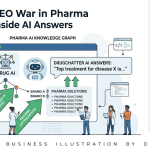
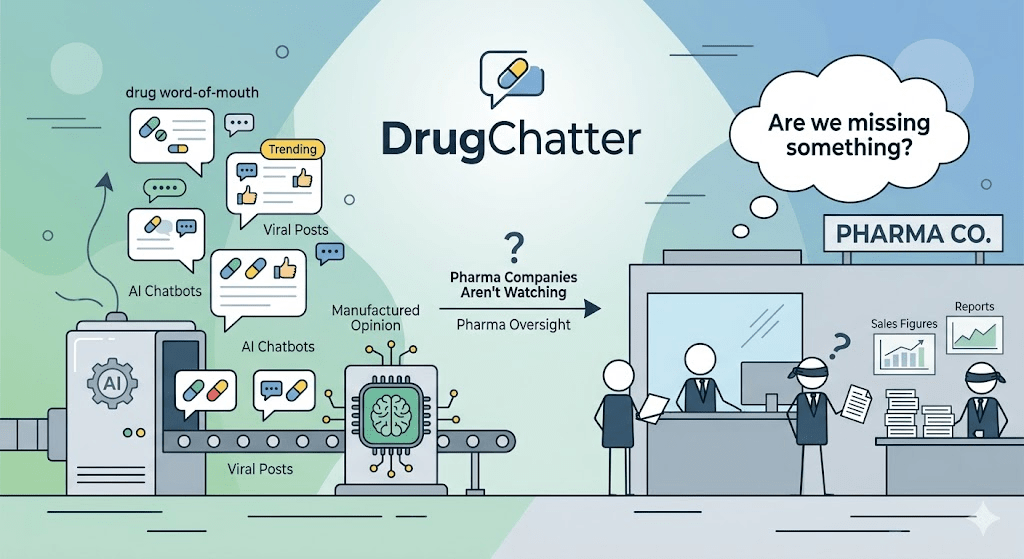
This is synthetic word-of-mouth — AI-generated content that shapes drug perception, brand preference, and patient behavior at scale, produced entirely outside the pharmaceutical company’s visibility or control. And it is happening right now, across every major AI platform, for every drug category.
The question is not whether AI is influencing drug conversations. It is whether your brand team knows what is being said.
What ‘Synthetic Word-of-Mouth’ Actually Means for Drug Brands
Word-of-mouth has always been the most trusted form of drug information for patients. A friend’s experience with a medication, a pharmacist’s off-the-cuff comment, a physician’s aside — these informal channels carry disproportionate influence over prescription decisions and adherence behavior.
AI has not replaced that dynamic. It has industrialized it.
When ChatGPT tells 10 million users per day that ‘Ozempic is primarily a diabetes drug, not a weight-loss drug,’ it is producing the same conversational signal that word-of-mouth generates — except at a scale no organic social network can match, with no originating human source, and with a tone that reads as authoritative rather than anecdotal.
That is the operational definition of synthetic word-of-mouth: AI-generated content that mimics the format, tone, and perceived authority of peer-to-peer drug information, delivered through conversational interfaces to patients, caregivers, and clinicians.
Why This Is Different From Social Listening
Pharma companies have invested heavily in social listening tools over the past decade. They monitor Reddit’s r/diabetes, r/antidepressants, and condition-specific communities. They track Twitter mentions and patient forums like PatientsLikeMe. They flag adverse event signals from Facebook groups.
AI-generated drug content breaks that model in two ways.
First, there is no originating human voice to trace. A Reddit post about Mounjaro nausea comes from a patient with a verifiable experience. A ChatGPT response about Mounjaro nausea is a statistical reconstruction of many sources — some accurate, some outdated, some from contexts the model cannot correctly distinguish. Monitoring tools built for human social signals cannot parse this difference without specific AI-query infrastructure.
Second, AI outputs are dynamic and query-dependent. The same platform may return a different answer to ‘Is Jardiance safe for elderly patients?’ depending on how the question is phrased, which model version is active, and what retrieval-augmented sources are in context that week. This is not a static content problem — it requires ongoing, systematic query monitoring to detect drift.
How Patients Are Actually Asking AI About Their Medications
Patient query behavior in AI systems differs significantly from search engine behavior. Google queries tend to be short and fragment-based (‘ozempic cost,’ ‘metformin side effects’). AI queries are conversational and layered.
Common patient AI query patterns in drug-related conversations include:
- ‘I’m on [Drug A] and my doctor wants to switch me to [Drug B]. Should I be worried?’
- ‘What happens if I miss a dose of [Drug]?’
- ‘My insurance won’t cover [Brand Drug] — is the generic the same?’
- ‘Can I take [Drug] if I also take [OTC supplement]?’
- ‘I read that [Drug] causes [Side Effect] — is that true?’
Each of these query types produces a different AI response pattern — and each carries distinct brand risk or opportunity for the pharmaceutical manufacturer. The interaction query (‘Can I take X with Y?’) is where hallucination risk is highest. The generic equivalence query is where brand erosion is most measurable.
How Often ChatGPT, Gemini, and Claude Mention Branded Drugs — and How They Compare
Not all AI platforms produce the same drug brand behavior. ChatGPT, Gemini, Claude, and Perplexity each have distinct tendencies shaped by their training data, retrieval architecture, and system-level instructions about medical advice.
ChatGPT’s Drug Mention Patterns: What OpenAI’s Model Gets Right and Wrong
ChatGPT (GPT-4o and its predecessors) tends to name branded drugs more frequently than generic equivalents in clinical comparison queries. In weight-loss medication queries, for example, Ozempic and Wegovy consistently outperform semaglutide in brand name mention rates — a pattern that reflects the outsized media coverage of the Novo Nordisk brand rather than clinical differentiation.
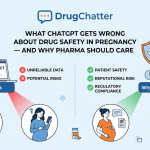
GPT-4o also has a documented tendency to present drug efficacy claims without citing the clinical trial basis or noting limitations of the evidence base. A 2024 analysis by researchers at the University of California San Francisco found that ChatGPT provided complete and accurate drug information in only 35% of tested medication queries. In the remaining 65%, responses contained outdated information, missed contraindications, or stated drug properties without appropriate qualification.
That creates an asymmetric situation for pharma brand teams: ChatGPT may mention your drug positively in a comparison query, but the supporting clinical framing may be inaccurate, incomplete, or based on trial data that has since been superseded.
How Perplexity AI Cites Drug Sources — and Why It Changes Brand Risk
Perplexity operates differently from ChatGPT in ways that matter for pharmaceutical monitoring. Its retrieval-augmented generation (RAG) architecture means it actively cites sources alongside responses. For brand teams, this is both a transparency advantage and a new risk vector.
When Perplexity answers a drug question, the answer reflects the quality of the retrieved source as much as the model’s underlying knowledge. If Drugs.com, WebMD, or the prescribing information from a drug’s FDA label is retrieved and cited, the answer is likely to be reasonably accurate. If a Reddit thread, a health blogger’s post, or an outdated clinical review is retrieved, the quality drops — and the brand is potentially exposed to misinformation delivered with citation authority.
Perplexity’s citation behavior means pharmaceutical companies can audit the specific sources driving AI answers about their drugs. That is actionable competitive intelligence that does not exist in ChatGPT’s closed-response format.
Claude’s Approach to Drug Recommendations: More Cautious, Still Influential
Anthropic’s Claude applies more explicit hedging to drug-related queries than ChatGPT. It consistently recommends consulting a healthcare provider and declines to make direct recommendation statements in clinical comparison queries. This makes Claude less likely to hallucinate specific dosing claims, but it does not eliminate brand influence — it just shifts it to a different pattern.
Claude tends to use brand names when discussing well-known drug categories but defaults to generic names in technical clinical discussions. In GLP-1 receptor agonist queries, Claude typically names both semaglutide and Ozempic/Wegovy but frames efficacy in terms of drug class rather than brand differentiation. For brand teams at Novo Nordisk or Eli Lilly, that framing has implications for how AI positions Ozempic relative to tirzepatide (Mounjaro/Zepbound) in a head-to-head comparison.
Do LLMs Recommend Generic Drugs More Often Than Branded Equivalents?
The short answer is: it depends on the category, the query framing, and the recency of training data.
For drugs with long-established generic equivalents — metformin, lisinopril, atorvastatin — AI models overwhelmingly default to generic names. This is clinically appropriate and reflects formulary and cost realities. But it also means branded reformulations of these drugs (extended-release versions, combination products) frequently get zero AI share-of-voice in cost-focused queries.
For newer drug classes with significant patent protection — SGLT2 inhibitors, GLP-1 agonists, PCSK9 inhibitors — the brand picture is more complex. AI models trained on data through 2023-2024 reflect the period when branded drug marketing was dominant in media coverage. Mounjaro and Ozempic benefit from this asymmetry. Lesser-marketed branded drugs in the same class — Trulicity (dulaglutide), for instance — receive proportionally less AI mention despite comparable clinical profiles.
That is not neutrality. It is a systematic distortion of AI share-of-voice that tracks marketing spend and media coverage rather than clinical merit.
Can AI Hallucinations Trigger FDA Safety Risk? The Regulatory Exposure Pharma Isn’t Tracking
This is the question that should be driving pharmaceutical regulatory affairs teams to pay attention to AI outputs — and most are not yet asking it systematically.
FDA’s current framework for adverse event reporting does not specifically address AI-generated drug misinformation as a pharmacovigilance signal. But the regulatory logic points toward eventual inclusion. FDA has expanded its social media and online monitoring guidance multiple times, most recently extending voluntary adverse event reporting guidance to cover patient-reported outcomes from digital channels.
AI hallucinations about drug safety sit in an uncomfortable regulatory position: they influence patient behavior, they can be documented as discrete outputs, and they are repeatable across users — yet they originate from no identifiable human reporter and carry no manufacturer responsibility flag.
Real Examples of AI Drug Misinformation That Could Trigger Regulatory Attention
Several documented AI drug misinformation patterns carry direct regulatory risk:
Incorrect contraindication omissions: AI models frequently omit boxed warnings when describing drug safety profiles. A 2023 study in JAMA Internal Medicine found that ChatGPT failed to mention FDA black box warnings in a majority of drug-specific safety queries. For drugs like fluoroquinolone antibiotics (which carry a black box warning for tendon rupture and peripheral neuropathy), this is not a minor omission — it is the kind of information gap that FDA warning letters to manufacturers specifically address.
Off-label use descriptions presented as standard care: AI models regularly describe off-label drug uses in response to patient queries without flagging the regulatory status of those uses. When a model describes low-dose naltrexone as a treatment for fibromyalgia without noting that FDA has not approved this indication, it is producing the kind of off-label promotion that pharma companies’ marketing teams are prohibited from conducting. The content is identical — only the source differs.
Dosing errors: Outdated dosing information persists in AI training data and emerges in response to dose queries. If ChatGPT recommends a dosing regimen that reflects pre-2022 prescribing practices for a drug whose label has since been updated, a patient acting on that information faces real harm risk — and the manufacturer has no visibility into the interaction.
How FDA Is (and Isn’t) Thinking About AI Drug Misinformation
FDA’s Office of Prescription Drug Promotion (OPDP) issued a draft guidance in 2014 on internet and social media promotion and has been slow to extend that framework to AI-generated content. The agency’s Digital Health Center of Excellence has focused primarily on AI in drug development and clinical decision support rather than patient-facing AI outputs.
However, OPDP’s core standard — that drug information provided to patients should be accurate, balanced, and not misleading — is content-neutral. If AI outputs are demonstrably shaping patient drug decisions, the question of whether FDA considers those outputs a manufacturer responsibility is live, not settled.
The EMA has moved slightly faster on this framing. Its 2023 reflection paper on AI in drug regulation flagged AI-generated patient information as a gap requiring attention, though it stopped short of establishing specific requirements.
The absence of a specific rule is not the same as the absence of risk. Pharmaceutical legal and regulatory teams monitoring FDA enforcement trends should be auditing what AI says about their drugs before OPDP develops the framework to hold them accountable for it.
Could an AI Hallucination Generate a Real Adverse Event Report?
Yes — and this is not a theoretical edge case.
The adverse event reporting pathway (MedWatch, in the U.S.) does not require a physician reporter or a verified clinical interaction. Patient-submitted adverse event reports are accepted and tracked. If a patient asks an AI about drug side effects, receives an inaccurate or exaggerated response, stops their medication, and experiences a health event as a result — that sequence can generate a downstream adverse event report in which the AI interaction is an invisible contributing factor.
Pharmacovigilance teams are not currently screening for this signal pattern. They have no standard query in signal detection for ‘discontinuation related to AI-provided information.’ Building that capability requires first establishing what AI is actually saying about your drugs — which requires systematic monitoring of AI outputs, not one-time spot checks.
Tracking AI Share-of-Voice: How Pharma Brand Teams Can Measure What They’re Missing
Share-of-voice is a standard metric in pharmaceutical brand management. Marketing teams track it across paid media, earned media, physician detailing mentions, and pharmacy pull-through data. None of those measurement frameworks currently captures AI share-of-voice — the proportion of relevant AI-generated drug discussions in which your brand appears, compared to competitors.
This is a measurement gap with real competitive consequences.
What AI Share-of-Voice Measurement Actually Requires
Measuring AI share-of-voice is structurally different from measuring search engine rank or social media mention volume. It requires:
- A defined query library that mirrors how patients, caregivers, and clinicians actually ask about your drug category
- Systematic execution of those queries across multiple AI platforms (ChatGPT, Gemini, Claude, Perplexity, and AI-embedded search like Microsoft Copilot)
- Response logging and brand mention extraction from each output
- Competitive benchmarking against key brand competitors across the same query set
- Temporal tracking to detect response drift as model versions change or retrieval sources update
The last point is often underestimated. AI model outputs are not static. A query run in March 2024 may produce a materially different brand mention pattern than the same query run in March 2025 — because the model version changed, because retrieval sources were updated, or because the model was fine-tuned on new data that shifted its drug category knowledge. Tracking AI share-of-voice is a continuous monitoring requirement, not a one-time audit.
Comparing Ozempic vs Wegovy AI Mentions: A Case Study in Brand Architecture Complexity
Novo Nordisk’s dual-brand architecture for semaglutide — Ozempic (diabetes indication) and Wegovy (weight management indication) — creates an instructive share-of-voice complexity in AI outputs.
AI models trained predominantly on 2022-2023 media data associate Ozempic with weight loss because that is when Ozempic’s off-label weight-loss use dominated media coverage. Wegovy — which carries the FDA-approved weight management indication — receives less AI mention in weight-loss queries despite being the regulatory-appropriate brand. For Novo Nordisk’s brand team, this is an inversion of intended AI share-of-voice that cannot be corrected through traditional media spend.
The mechanism matters: AI models are not misremembering. They are accurately reflecting the information environment that existed during their training period. Correcting that pattern requires either waiting for model retraining on current data, or actively seeding accurate information through channels that AI retrieval systems index — publisher content, clinical reference databases, structured product information on regulatory agency websites.
How Eli Lilly Is Positioned in AI Drug Conversations About Mounjaro and Zepbound
Eli Lilly’s tirzepatide — marketed as Mounjaro for diabetes and Zepbound for obesity — represents a case where AI share-of-voice reflects genuine clinical differentiation rather than just marketing volume.
Tirzepatide’s dual GIP/GLP-1 mechanism produced Phase 3 SURMOUNT trial results that were covered extensively in mainstream medical media, which feeds AI training data. As a result, AI models across platforms tend to describe tirzepatide’s efficacy claims with relative accuracy — it outperforms semaglutide in head-to-head weight loss trials, and AI outputs reflect this.
However, Eli Lilly faces a different AI monitoring challenge: brand name disambiguation. In clinical queries, ‘Mounjaro’ and ‘Zepbound’ get mentioned as separate drugs by AI models that do not consistently explain the shared active ingredient. Patients asking about switching from Ozempic to Zepbound may not receive AI responses that connect Zepbound to the broader tirzepatide clinical story — which includes Mounjaro trial data. That fragmentation is a brand intelligence risk that AI monitoring can surface.
What Physician Query Patterns in AI Tell Drug Brand Teams
Physician AI use for drug information is growing faster than most pharmaceutical companies have modeled in their commercial planning. A 2024 survey by the American Medical Association found that 38% of physicians reported using AI assistants for drug information queries at least monthly, up from 17% in 2022.
Physician AI queries differ from patient queries in structure and stakes. Physicians ask about mechanism, trial data, contraindications, and drug-drug interactions with a precision that surfaces the specific knowledge gaps in AI model training data.
What Happens When Physicians Ask AI About Drug Interactions
Drug interaction queries are one of the highest-risk domains for AI hallucination. The pharmacokinetic and pharmacodynamic complexity of drug-drug interactions requires current, precise clinical data that changes as new safety signals emerge. AI training data has a cutoff — and the drug interaction knowledge landscape changes continuously.
A physician asking Claude or ChatGPT about an interaction between a new anticoagulant and a common antibiotic may receive a response that reflects the interaction profile as it was understood 18 months ago. If FDA issued a Drug Safety Communication updating that interaction profile in the intervening period, the AI response may be not just incomplete but actively misleading to a clinician making a prescribing decision.
Pharmaceutical medical affairs teams have a role here that they are not yet systematically filling: monitoring what AI says about their drug’s interaction profile and identifying gaps between current label language and current AI output.
Are AI Models Giving Physicians Accurate Clinical Trial Data?
The clinical trial knowledge problem in AI is more subtle than outright hallucination. AI models often correctly name a trial — EMPEROR-Reduced, DECLARE-TIMI 58, DAPA-HF — but misattribute specific endpoints or describe outcomes with an accuracy level that masks key nuances.
For SGLT2 inhibitors, where multiple drugs in the class (Jardiance/empagliflozin, Farxiga/dapagliflozin, Invokana/canagliflozin) have different cardiovascular and renal outcome trial results with clinically meaningful differences, AI conflation of trial results across brands is a documented problem. Brand teams at Boehringer Ingelheim/Lilly (Jardiance) and AstraZeneca (Farxiga) should be specifically monitoring AI responses to cardiovascular outcome queries to detect whether their clinical differentiation is preserved in AI-generated answers.
Patient Sentiment in AI Responses: Detecting Emerging Drug Concerns Before They Trend
Traditional patient sentiment analysis tracks what patients write on forums, post on Reddit, or submit through patient advocacy channels. AI-generated drug content creates a new layer: the sentiment that AI systems synthesize from all those sources and feed back to the next patient who asks.
This creates a feedback loop. Negative patient sentiment about a drug circulates on Reddit and patient forums. AI training data incorporates that sentiment. Future AI responses about the drug reflect a negative sentiment signal — even if the patient forum discussion was unrepresentative of the broader patient experience or based on product from a now-discontinued manufacturer.
How Reddit AI Citations Shape Drug Brand Perception
Reddit has become a significant source of patient drug information, and its influence on AI outputs is disproportionate to its clinical credibility. Subreddits like r/tirzepatide, r/loseit, r/bipolar, and r/ChronicPain generate high volumes of first-person drug experience reports that are indexed, publicly accessible, and included in AI training data.
The content quality on pharmaceutical subreddits is highly variable. Posts reporting severe adverse events, off-label use protocols, and cost workaround strategies sit alongside medically accurate content with no quality filter. AI models trained on this data may produce responses that weight Reddit’s negative signal asymmetrically — because adverse event reports are more distinctive and emotionally salient than ‘this drug is working fine for me’ posts, they register more strongly in the model’s learned associations.
For a drug like Invega Sustenna (paliperidone palmitate), where Reddit discussions about involuntary psychiatric medication generate significant emotional content, the AI-mediated version of that brand sentiment may systematically skew negative relative to clinical evidence of efficacy.
Pharmaceutical brand teams monitoring AI outputs can detect this pattern specifically — by comparing AI sentiment tone in drug queries against clinical evidence sentiment and pharmacy dispensing data. The gap between what AI says and what clinical data shows is a measurable brand risk indicator.
How to Identify Emerging Drug Concerns in AI Before FDA Signals Them
One underexplored application of AI drug monitoring is early signal detection. Patient forums and social media have historically surfaced drug safety signals before formal pharmacovigilance systems — the rofecoxib (Vioxx) cardiovascular signal appeared in online patient communities before FDA’s formal VIGOR trial analysis triggered the 2004 withdrawal.
AI outputs can serve as an aggregated signal layer. If AI models begin consistently associating a drug with a specific adverse event in response to patient safety queries — even if no formal FDA signal has been issued — that pattern may reflect an emerging consensus in the underlying data sources that the model is synthesizing.
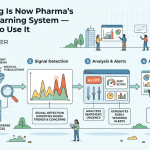
Pharmaceutical safety teams running systematic AI query monitoring are positioned to detect this pattern before it trends on social media, before it generates formal adverse event report volumes, and potentially before FDA’s signal detection algorithms flag it. That is a genuine pharmacovigilance advantage — if the monitoring infrastructure exists to capture it.
Tools like DrugChatter’s AI monitoring platform are designed to surface exactly this pattern: systematic tracking of how AI describes your drug’s safety profile, with temporal drift detection to flag when AI responses change in ways that may signal an emerging narrative shift.
AI-Driven Off-Label Drug Discussions: Monitoring a Compliance Minefield
Off-label drug use is legal — physicians can prescribe any approved drug for any indication they judge appropriate. But pharmaceutical manufacturers cannot promote off-label uses, and FDA’s OPDP enforcement is clear on that boundary.
AI does not share that restriction. When a patient asks ChatGPT whether low-dose aspirin helps prevent Alzheimer’s disease, the model answers. When a Reddit user asks Claude whether berberine works the same as metformin, Claude engages with the comparison. When a caregiver asks Perplexity about using a benzodiazepine for long-term anxiety management, Perplexity cites sources.
What AI Says About Ozempic’s Off-Label Weight-Loss Use — and Why It Matters for Novo Nordisk
Ozempic’s off-label weight-loss use is the highest-profile pharmaceutical AI compliance case currently active. FDA approved Ozempic for type 2 diabetes, not for weight management — that indication belongs to Wegovy. But AI platforms consistently respond to weight-loss queries with Ozempic recommendations, reflecting the media environment in which the drug became a cultural phenomenon before its weight-loss brand was fully established.
Novo Nordisk cannot instruct AI platforms to correct this. The company has no mechanism to flag AI responses about Ozempic’s weight-loss use as off-label promotion the way it would flag an inaccurate detail aide. What it can do is monitor the extent and framing of the off-label AI discussion, document what patients and physicians are receiving, and use that intelligence to inform regulatory conversations about AI-mediated drug promotion.
The monitoring requirement is also a legal preservation issue: if FDA eventually takes enforcement action related to AI-generated off-label drug promotion, manufacturers who have documented proactive monitoring are positioned differently than those who cannot demonstrate awareness.
Compounded Drug Mentions in AI: A Regulatory Exposure Beyond Brand Control
Compounded semaglutide — pharmacy-prepared versions of the active ingredient in Ozempic and Wegovy — became a significant FDA enforcement issue in 2023 and 2024 when compound pharmacies began marketing it as a lower-cost alternative during drug shortages.
AI platforms handled this inconsistently. Some models mentioned compounded semaglutide as an option in cost-focused queries without noting FDA’s concerns about compound pharmacy quality and the legal restrictions on compounding during shortage declarations. Others accurately flagged the regulatory complexity.
For Novo Nordisk’s brand and legal teams, the AI compounding discussion represented a brand integrity and liability risk: AI was effectively directing some patients toward unapproved alternatives without distinguishing the regulatory status of those alternatives from the approved product. Monitoring that specific AI behavior — compounded drug mentions adjacent to brand drug queries — is a direct regulatory intelligence function.
Drug Patent Expiration and AI Generic Substitution Recommendations
Generic substitution is one of the most commercially consequential events in a branded drug’s lifecycle. When a drug loses patent exclusivity, generic entry typically captures 80-90% of dispensing volume within 12 months. AI is now a channel through which that substitution pressure arrives before patent expiration, through patient queries about cost and equivalence.
How AI Responds to ‘Is There a Generic for [Brand Drug]?’ Queries
These queries are high-frequency and commercially critical. When a patient asks ChatGPT ‘Is there a generic for Eliquis?’ — a direct oral anticoagulant that lost market exclusivity in 2026 — the answer shapes whether that patient asks their physician or pharmacist to explore switching.
AI responses to generic availability queries vary significantly by platform and query framing. In testing generic availability queries for drugs with complex patent situations — authorized generics, first-filer exclusivities, court-ordered early entry — AI models frequently produce oversimplified answers that either delay or accelerate the patient’s understanding of actual market availability.
For pharmaceutical brand teams, monitoring AI generic substitution messaging before patent expiration provides lead time for patient and physician education campaigns. If AI is already telling patients a generic is coming before authorized generic launch, that is intelligence the brand team can act on — rather than discovering it through unexpected Rx volume drops.
Resources like DrugPatentWatch provide the patent landscape data that should inform this monitoring, combining patent expiration timelines with AI output tracking to build a forward-looking commercial risk map.
Are AI Models Aware of First-Wave Generic Entry and Authorized Generics?
This is where AI generic knowledge gets reliably unreliable. First-wave generic exclusivity periods, authorized generic agreements, and AG market dynamics are commercially complex and frequently changing. AI models trained through a fixed cutoff cannot know which generic manufacturer won first-filer status in a patent challenge, whether an authorized generic deal is in place, or what current pharmacy pricing looks like.
For drugs in the 180-day exclusivity window, AI models may describe a generic market that is legally inaccurate for the current moment — either telling patients a true generic is available when only an authorized generic is, or describing competitive pricing dynamics that do not reflect current pharmacy bench pricing.
Brand teams for drugs approaching loss of exclusivity should have specific AI monitoring protocols for these query types — not to prevent generic substitution, which is legally protected, but to ensure that the information driving patient switching decisions is at least accurate.
AI Monitoring as a Pharmacovigilance Tool: Building the Surveillance Infrastructure
The International Council for Harmonisation’s E2D guideline on post-approval safety data management was written for a world in which patient reports came through physicians, pharmacists, and patient advocacy organizations. AI-generated drug content does not fit that framework — yet it is increasingly influencing the patient experiences that eventually generate adverse event reports.
Can AI Outputs Be Formally Incorporated Into Pharmacovigilance Workflows?
This is an active methodological question in pharmaceutical safety science. Several research groups and pharmaceutical companies are exploring whether AI output monitoring can serve as a leading indicator for adverse event signal emergence.
The methodological challenge is establishing causality direction. If an AI model frequently mentions a specific adverse event for a drug, does that reflect a genuine emerging signal from training data, or does it merely reflect disproportionate media coverage of a case that is not statistically significant in actual patient populations? Distinguishing AI signal amplification from genuine pharmacovigilance signal requires pairing AI output monitoring with traditional adverse event database analysis and social listening data.
Pharmaceutical companies that build this triangulation capability — AI output + adverse event database + patient forum signal — will be positioned to detect safety signals faster and with more contextual richness than those relying on any single data source.
Building a Query Library for AI Pharmacovigilance Monitoring
A practical AI pharmacovigilance monitoring workflow starts with a structured query library organized by signal type:
- Safety-focused queries: ‘What are the serious side effects of [Drug]?’ / ‘[Drug] liver damage / kidney damage / heart risk’
- Comparative safety queries: ‘Is [Drug A] safer than [Drug B]?’
- Discontinuation queries: ‘Reasons to stop taking [Drug]’ / ‘Can I stop [Drug] suddenly?’
- Symptom attribution queries: ‘I think [Drug] is causing [Symptom] — is that possible?’
- FDA action queries: ‘Has [Drug] been recalled?’ / ‘Is [Drug] under FDA investigation?’
Each query type produces a different AI response pattern, and each maps to a different pharmacovigilance concern. Running this query library systematically — weekly, across four or more platforms — generates a dataset that safety teams can analyze for narrative drift, hallucination frequency, and emerging concern clustering.
‘Pharmaceutical companies have traditionally monitored social media for adverse event signals. The next frontier is monitoring what AI synthesizes from that social media data — because that synthesis is what reaches the next 10 million patients who ask an AI about their medication.’— IQVIA Digital Health Intelligence, 2024 Industry Survey on AI-Mediated Patient Information
How to Set Up AI Brand Monitoring: A Practical Workflow for Pharma Brand Teams
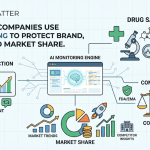
The infrastructure for AI drug brand monitoring is not as complex as it sounds. The core workflow requires four components: a query library, a monitoring cadence, response logging, and analysis protocols.
Step One: Build a Query Library That Mirrors Real Patient and Physician Behavior
Effective AI monitoring starts with queries that reflect real-world usage, not idealized information-seeking. Patient query patterns differ by drug category, disease area, and patient population. The query library for an oncology drug looks different from the query library for an antidepressant or a GLP-1 agonist.
Sources for building a realistic query library include:
- Google Search Console data for your branded drug terms (what queries are driving traffic to your PI or website)
- Patient forum analysis — the actual language patients use to describe symptoms, concerns, and drug comparisons
- Medical affairs call center logs — common HCP questions about drug use and safety
- Reddit and patient community monitoring for query patterns that differ from formal medical language
Step Two: Execute Queries Systematically Across Platforms
Monitoring one AI platform is not sufficient. ChatGPT, Gemini, Claude, Perplexity, and Microsoft Copilot each have distinct response characteristics for drug queries. A drug that receives accurate representation in ChatGPT may be misrepresented in Gemini if Google’s retrieval sources index different reference material.
Platform-specific monitoring should also account for model version variations. GPT-4o and GPT-4-turbo produce different response patterns for drug queries. Claude 3.5 Sonnet and Claude 3 Opus have different hedging behaviors. Tracking model version alongside query response is necessary for interpreting temporal drift in brand mention patterns.
Step Three: Log and Code Responses for Brand Intelligence
Response logging requires structured coding across several dimensions:
- Brand mention: Did the response name your drug?
- Mention sentiment: Positive, neutral, negative, or mixed?
- Clinical accuracy: Does the response accurately reflect current labeling?
- Competitive mention: Which competitor drugs were named, and in what context?
- Hallucination flag: Did the response include demonstrably inaccurate clinical claims?
- Off-label content: Did the response discuss unapproved uses?
At scale, this coding requires AI-assisted analysis — using a model to analyze model outputs. DrugChatter’s monitoring platform automates this workflow, applying structured coding protocols to AI drug responses across platforms and generating brand intelligence reports that map to standard pharmaceutical commercial metrics.
Step Four: Connect AI Monitoring to Commercial Decision-Making
AI monitoring data has value only if it connects to decisions. The natural integration points for AI brand intelligence in pharmaceutical commercial organizations are:
- Brand planning: AI share-of-voice benchmarks as inputs to annual brand planning alongside traditional SOV metrics
- Medical affairs: AI clinical accuracy audits as inputs to gap analysis for medical education priorities
- Regulatory affairs: AI off-label content monitoring as inputs to OPDP risk assessment
- Safety: AI adverse event signal monitoring as an additional channel in pharmacovigilance workflow
- Market access: AI generic substitution messaging monitoring as a leading indicator for LOE commercial planning
The Competitive Intelligence Dimension: What AI Monitoring Reveals About Competitor Drugs
AI drug monitoring is not only a brand protection tool — it is a competitive intelligence function. The same systematic query monitoring that reveals how AI represents your drug also reveals how AI represents your competitors’ drugs, with the same granular coding for clinical accuracy, sentiment, and mention frequency.
How to Use AI Query Data to Map Competitor Brand Positioning
In comparison queries — ‘Jardiance vs Farxiga,’ ‘Dupixent vs Rinvoq,’ ‘Keytruda vs Opdivo’ — AI responses function as a synthetic competitive landscape map. They reflect the aggregate information environment that patients and physicians encounter across clinical literature, medical media, patient forums, and manufacturer-sponsored content.
The interesting competitive intelligence emerges from the gap analysis. Where AI presents a competitor drug more favorably than clinical evidence supports, there is a correctable information environment problem. Where AI presents your drug’s clinical differentiation accurately, there is an opportunity to amplify that framing through channels that feed AI retrieval systems — medical publisher content, clinical registry entries, structured data on drug reference platforms.
This is not about manipulating AI. It is about ensuring accurate clinical information exists in the sources AI retrieves — which is a legitimate medical affairs function that has always existed for search engine optimization and medical education materials.
Detecting When a Competitor’s Drug Safety Issue Appears in AI Outputs
Monitoring AI competitive mentions also surfaces competitive safety signals. If a competitor drug’s AI sentiment shifts negative across multiple platforms over a monitoring period — increasing association with adverse events, emerging patient concern language, more frequent safety hedge language — that pattern may precede a formal FDA signal, a class action filing, or a competitor-driven media cycle.
For drugs in the same therapeutic class, competitor safety signals create commercial opportunities that require rapid commercial response. AI monitoring can provide earlier warning of those patterns than traditional competitive intelligence channels.
Key Takeaways
- AI platforms are generating drug recommendations, safety descriptions, and brand comparisons at scale — outside any regulatory oversight framework and without pharmaceutical company visibility or input.
- AI share-of-voice is a measurable commercial metric distinct from search engine SEO and social media monitoring. It requires systematic query execution across ChatGPT, Gemini, Claude, Perplexity, and Microsoft Copilot.
- AI hallucinations about drug safety — missed black box warnings, outdated dosing, inaccurate interaction profiles — create patient harm risk and potential regulatory exposure for manufacturers who cannot demonstrate proactive monitoring.
- Novo Nordisk’s Ozempic/Wegovy brand architecture is the clearest current example of AI share-of-voice inversion: the off-label brand dominates AI weight-loss queries while the FDA-approved brand (Wegovy) underperforms its regulatory standing.
- AI generic substitution messaging is a leading commercial indicator for drugs approaching loss of exclusivity — brands should be monitoring this signal 18-24 months before patent expiration, not after.
- Patient forum content (Reddit, PatientsLikeMe) disproportionately shapes AI drug sentiment through training data, making AI outputs a synthetic aggregation of patient-reported experience that may not reflect the median patient.
- AI pharmacovigilance monitoring — tracking what AI says about adverse events and cross-referencing with adverse event database signals and social listening — is an emerging safety surveillance function with real early-detection potential.
- Building an AI drug monitoring workflow requires four components: a realistic query library, multi-platform execution, structured response coding, and integration with commercial decision-making processes.
Frequently Asked Questions
What is pharmaceutical AI share-of-voice and how is it different from traditional brand monitoring?
Pharmaceutical AI share-of-voice measures how frequently and favorably a drug brand appears in AI-generated responses to relevant clinical and patient queries, compared to competitors in the same class. It differs from traditional brand monitoring in two ways: the content being measured is generated by AI rather than humans, and the measurement requires systematic query execution rather than passive mention tracking. A drug can have high social media mention volume and low AI share-of-voice — or vice versa — because AI training data weighting does not directly mirror social media recency.
Can an AI hallucination about a drug create legal liability for the manufacturer?
No clear legal precedent exists for manufacturer liability arising from AI-generated drug misinformation. However, the risk framing for legal teams is not liability for the AI output itself — it is the evidentiary question of whether a manufacturer that failed to monitor AI representations of its product exercised adequate pharmacovigilance due diligence. As FDA’s digital monitoring frameworks evolve and as product liability litigation increasingly cites AI-mediated patient decisions, proactive monitoring documentation becomes a risk management asset. Manufacturers who can demonstrate systematic awareness are better positioned than those who cannot.
How often should pharmaceutical companies run AI drug monitoring queries?
The minimum viable cadence for meaningful AI drug monitoring is weekly across the primary platforms for drugs in competitive or high-sensitivity categories. Monthly monitoring is acceptable for established brands in stable categories with low adverse event or competitive activity. Event-triggered monitoring — following FDA safety communications, competitor label updates, class action filings, or significant media events — should supplement the scheduled cadence. Model version updates on major AI platforms (GPT-4o, Gemini 2.0, Claude 3.5) should trigger an immediate comparison query run to detect response drift.
Do AI models recommend biosimilars the way they recommend generic drugs?
AI behavior around biosimilar recommendations differs from generic drug recommendations, and the difference reflects the complexity of the biosimilar regulatory pathway. For established small-molecule drugs, AI models typically default to generic names in clinical discussions because the clinical equivalence is settled. For biologics with biosimilar competition — adalimumab (Humira) vs. its biosimilars, for example — AI responses are more variable and tend to preserve brand name usage more often than in small-molecule generic queries. AI models also inconsistently address interchangeability designations, which have direct pharmacy substitution implications that differ by state law.
What is the single highest-priority AI monitoring use case for a pharmaceutical brand team with limited resources?
Clinical accuracy monitoring for adverse event and contraindication information. This has the highest regulatory risk profile and the clearest measurable outcome — the gap between what AI says about your drug’s safety and what your current FDA-approved label states. For drugs with black box warnings, post-market safety restrictions, or recent REMS program additions, AI accuracy in describing those elements should be the first monitoring priority. Everything else — share-of-voice, competitive benchmarking, generic substitution tracking — can be layered in as resources allow. The safety accuracy gap is both the highest-risk and the easiest to measure concretely.