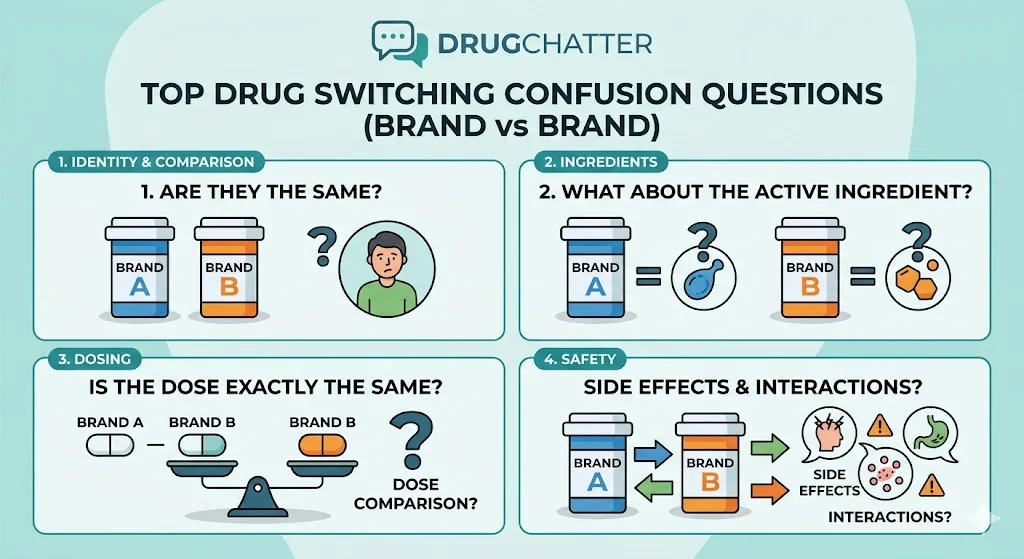
There are two kinds of drug-switching confusion: the kind that comes from real pharmacology, and the kind that comes from the way the industry names things. The second kind is the one that keeps showing up in the inbox—especially when the question is basically, “Is this the same drug, just a different name?”
Below are some of the most common brand vs. brand (and “wait, are these interchangeable?”) questions—along with the DrugChatter answers that try to cut through the fog.
1) “Is this the same product under a different label?”
Cost questions are often the gateway drug to switching confusion: when the price changes, people assume the product changed too. Sometimes it did. Sometimes it didn’t. Sometimes the “same” drug is being sold under a different arrangement, and the patient is the one who has to notice.
2) “Is this brand name actually the same medicine?”
These are the questions that sound small—until you realize they’re about identity. In practice, “brand vs. brand” confusion often boils down to: different packaging, different manufacturer, different formulation, different release profile… and sometimes the same active ingredient. The only safe answer is the one that checks the details.
Switching confusion isn’t always about whether the drug is “the same.” It’s also about whether the patient’s body is reacting to a change in dose, formulation, timing, or tolerability. When people ask these questions, they’re often trying to decide whether the new brand is the culprit—or whether the symptoms were always going to show up.
4) “Are the brands interchangeable—or is this a trap?”
When patents, licensing, and “generic-ness” enter the conversation, brand switching stops being a cosmetic change and becomes a regulatory and manufacturing question. That’s where “brand vs. brand” confusion can turn into “brand vs. not-quite-the-same.”
5) The meta-question: “What should I do when the brand changes?”
Drug switching is one of those topics where the right move is usually boring: confirm the active ingredient, confirm the dose and formulation, and ask the prescriber or pharmacist whether the substitution is truly equivalent for your situation. The questions above show why people keep asking—because the system makes it easy to wonder whether the new box is the same medicine you were already tolerating.
If you want to go deeper, click through the specific answers linked above and look for the details: active ingredient, strength, formulation, and what “switching” actually means in that particular case.