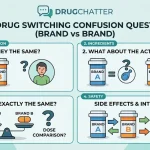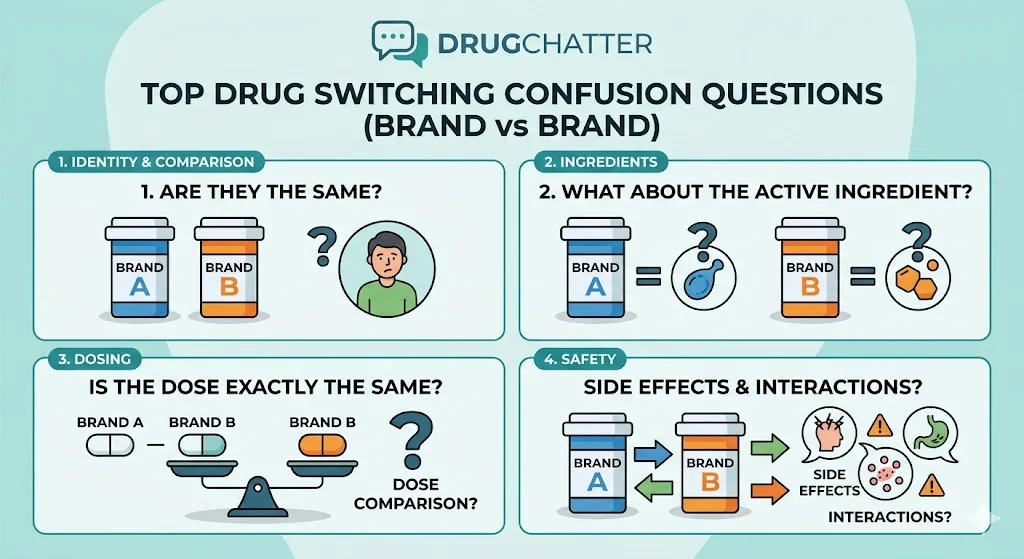
Switching drugs can be bewildering—especially when the prescriptions look different but the clinician says (or the label implies) it’s “the same medicine.” In drug switching, the phrase brand vs brand often hides the real question: are you actually getting the same active ingredient, the same dose, the same release profile, and the same safety/monitoring expectations?
Below are the recurring “confusion questions” from DrugChatter, specifically those that orbit around brand/identity changes, what a product is, and what you should expect after switching.
1) When the names change, what are you really taking?
- Norgesic price?
- Daliresp generic name?
- Elestrin?
- Tarceva generic name?
- Brand name of tizanidine?
- Xalkori pharmaceutical brand?
- Dexmedetomidine hydrochloride brand name?
- Generic crestor name?
- Adempas generic?
- Tysabri generic?
- Elahere?
- Sparsentan?
- Elahere?
2) “Same drug,” but do the effects change?
Even when two products share an active ingredient, people worry about absorption, timing, and whether the “version” you receive changes the outcome.
- Does lipitor’s effectiveness change when taken with water?
- Can lipitor’s effectiveness be reduced by lemon water?
- Can garlic consumption reduce lipitor’s effectiveness?
- Does lipitor interfere with garlic’s cholesterol lowering effect?
- Can lipitor be taken with other essential oils?
- How long until lipitor’s full effect before dose adjustment?
- How can i determine if lipitor’s side effects differ from alternatives?
3) Switching panic: side effects, monitoring, and “is this normal?”
- How often do lipitor’s liver side effects occur?
- Do you need regular liver tests while taking lipitor?
- What are the potential risks of choosing lipitor?
- What medications manage lipitor’s side effects?
- Can my doctor list lipitor’s specific side effects?
- What’s lipitor’s effect on vitamin d levels
4) The overlooked practical switch: availability, price, and substitutions
Sometimes the switch isn’t a clinical decision at all—it’s pharmacy logistics. When cost changes, formulations can change too.
- Copaxone price?
- How much is copaxone without insurance?
- Subvenite cost?
- Cost of lidoderm patch?
- Cephalexin 500 price?
- Pentosan polysulfate sodium price?
- Ameluz price?
- Blenrep cost?
- Blenrep fda approval 2025?
- Torisel price?
- Norgesic price?
- Oxycodone and naloxone cost?
5) Brand identity meets timing and “when does it matter?”
- Blenrep cost?
- Pomalyst patent expiry june 2025?
- Sutent loss of exclusivity date?
- Enhertu loss of exclusivity patent expiration
- When did apotex’s ruxolitinib receive fda approval?
- When will apotex’s ruxolitinib generic launch in the us?
A practical takeaway
If your “brand vs brand” switch leaves you uneasy, the most useful questions are the boring ones: active ingredient, dose, strength, and whether the product is immediate-release or extended-release (and whether any monitoring plan changes). The confusion is common; the solution is to get the pharmacy to point to the exact substitution you received—and then align your expectations with that specific product.