There are two kinds of medication questions: the ones that are really about pharmacology, and the ones that are really about trust. “Is this the same drug?” sits right in the middle—especially when a pharmacy swaps a brand for a generic, or when a patient wonders whether a “different” version changes how the medicine behaves.
Below are some of the most common brand-vs-generic substitution confusion questions—along with the answers from DrugChatter. (Not medical advice; if you’re switching, ask your prescriber or pharmacist what they expect to change—and what they don’t.)
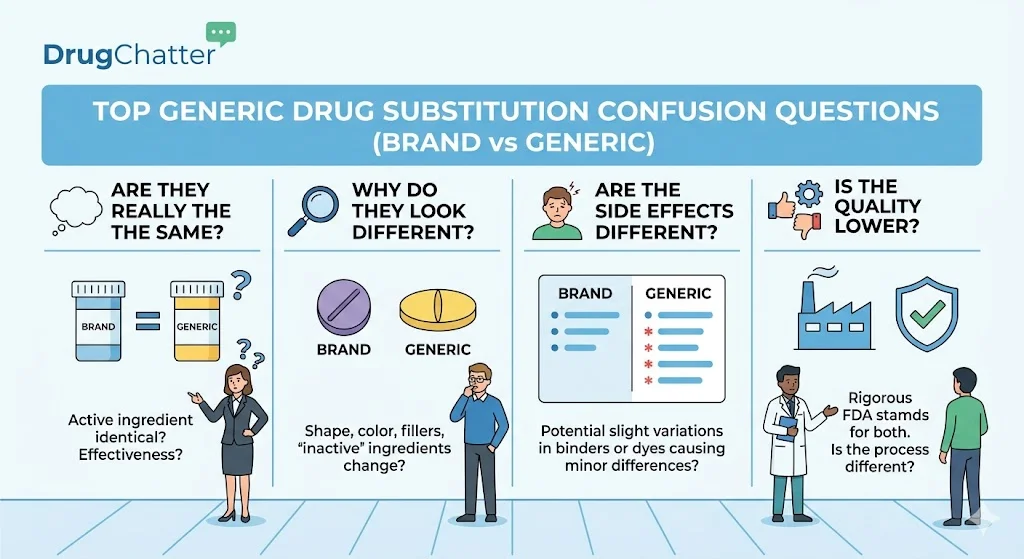
When people ask about brand vs generic, they’re usually trying to answer one of three questions: (1) will it work the same, (2) will it cause the same side effects, and (3) will it be the same product in the real world (formulation, excipients, and supply chain). The links above hit those concerns from multiple angles—especially where approval details and formulation specifics matter.
If you’re facing a substitution, the safest move is to ask your pharmacist whether the active ingredient and dosing are identical, and whether there are any formulation differences that could matter for your situation.