A quiet tour through how drugs escape their instructions—and what that says about modern demand
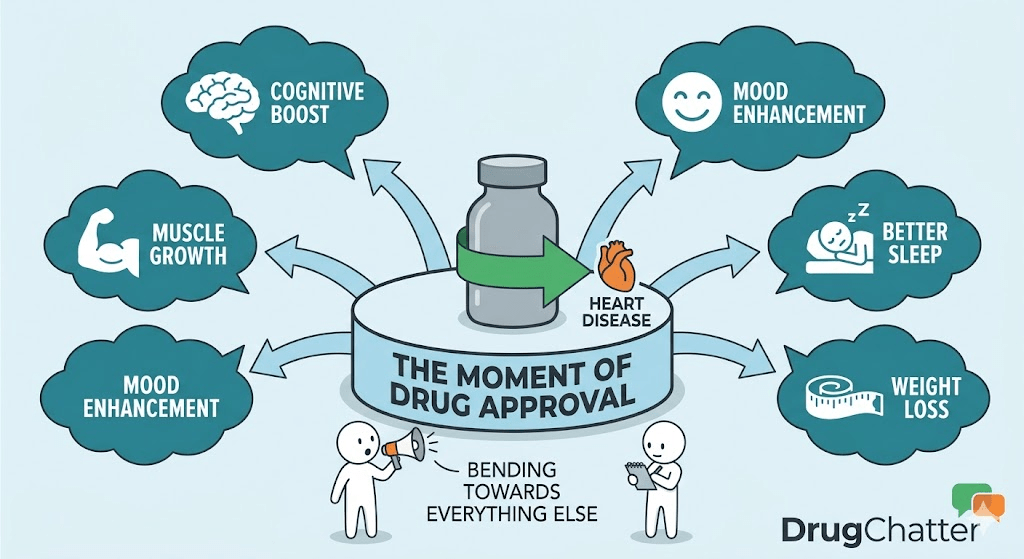
There’s a peculiar irony in pharmacology: the moment a drug is approved for one thing, the real-world conversation immediately starts bending it toward everything else.
Not because regulators are asleep at the wheel, but because biology is messy, patients are variable, and physicians—especially in oncology, immunology, neurology, and primary care—are constantly probing the edges of what’s possible.
What emerges is a shadow system of “emerging demand”: off-label use, borderline use, misunderstood mechanisms, and interaction anxieties that never quite make it into the original label.
Below is a curated set of DrugChatter questions that map that landscape—less as isolated curiosities, and more as signals of where clinical practice keeps pushing past the paperwork.
1. Toxicity is not theoretical—especially in immunotherapy
Checkpoint inhibitors like Yervoy (ipilimumab) are a textbook case of drugs whose benefits come bundled with genuinely serious risks. Questions about mortality aren’t academic here—they reflect real clinical vigilance.
This is the modern immunotherapy paradox: turning the immune system up often means accepting that sometimes it overshoots in ways that are not reversible by dose adjustment alone.
2. “Approved for X” rarely ends the story
Antimicrobials and antivirals are especially prone to repurposing logic—because clinicians don’t treat labels, they treat pathogens and symptoms.
Adderall (amphetamine mixed salts) also shows the reverse phenomenon: labeled for ADHD, but constantly questioned in terms of appetite suppression, cognitive enhancement, and general performance effects.
Praluent (alirocumab) sits in a newer class where “use” is already inherently layered—baseline therapy, adjunct therapy, and sometimes statin replacement depending on tolerance and risk profiles.
7. The quiet explosion: supplements, alcohol, and interaction anxiety
A striking subset of questions isn’t about drugs alone—but about everything around them.
The pattern is consistent: patients increasingly view drugs not as isolated agents, but as part of an interacting chemical ecosystem.
8. The broader signal: demand is upstream of labeling
Across antihypertensives, antivirals, immunotherapies, antidepressants, and supplements, one thing stands out:
Off-label use is not a deviation from “normal” drug use.
It is normal drug use, observed from a regulatory angle.
The label is static. Biology is not. Clinical practice lives in the gap.
And that gap is where most emerging demand actually lives.
Final thought
If there’s a single thread connecting aspirin timing, Yervoy toxicity, Lipitor-food interactions, and Ozempic side effects, it’s this: modern pharmacology is less about prescribing a molecule and more about managing a system.
Off-label use is just what happens when that system refuses to stay within its original instructions.