Artificial intelligence is beginning to change not only how patients search for information about medicines, but also how journalists research them.
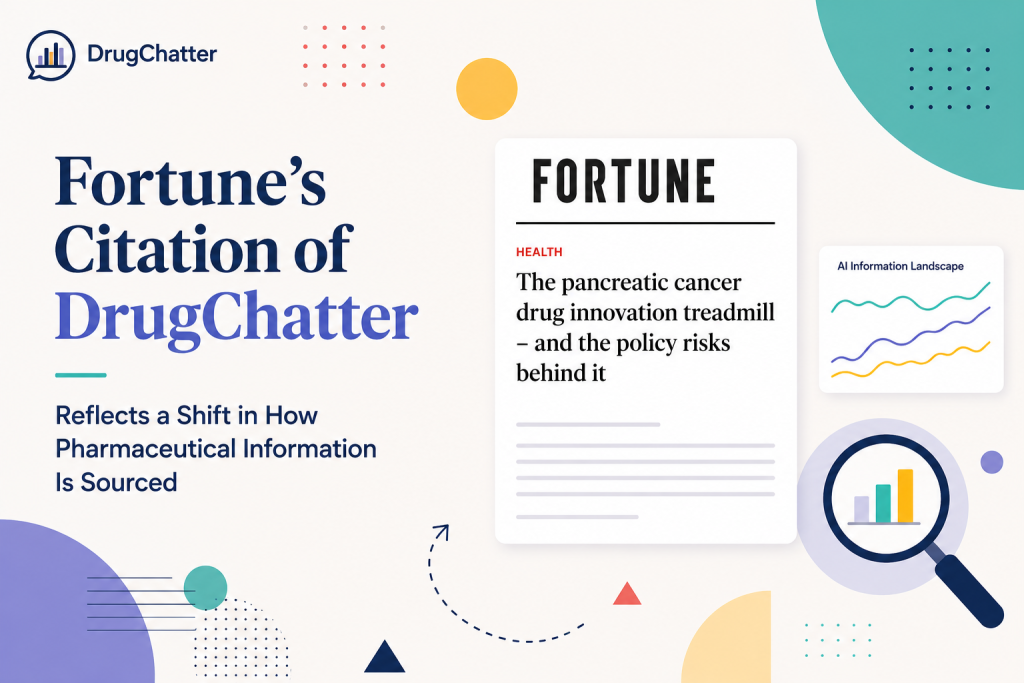
A recent Fortune analysis of pancreatic cancer drug development cited DrugChatter as one of its sources while examining the clinical promise of daraxonrasib and the policy environment surrounding pharmaceutical innovation. The article focused on how a targeted therapy produced encouraging survival data in pancreatic cancer and argued that sustained investment in drug development remains critical to future breakthroughs.
The citation is notable because it illustrates a broader change in information discovery. As AI-powered search tools become more capable, they are increasingly being incorporated into professional research workflows alongside traditional sources such as FDA documents, scientific literature, company disclosures, and conference presentations.
AI Is Becoming Part of the Research Stack
For decades, pharmaceutical research followed a familiar pattern: search the medical literature, review regulatory filings, examine prescribing information, and consult primary studies.
Today, many users begin with an AI system.
That includes patients trying to understand a diagnosis, physicians seeking a quick summary, investors researching biotechnology companies, consultants evaluating competitive landscapes, and journalists gathering background on complex therapies.
The speed of AI comes with a tradeoff. Large language models can produce authoritative-sounding answers that may omit important context, rely on outdated information, or fail to distinguish between approved indications, investigational uses, and preliminary clinical findings.
As a result, transparency about sources has become increasingly important.
Evidence Matters More Than Fluency
One consequence of generative AI is that the quality of an answer is no longer judged solely by how well it reads.
Instead, users increasingly want to know where the information originated.
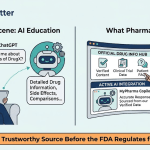
Can the statement be traced to FDA labeling? A peer-reviewed publication? A clinical trial? A company press release? A regulatory filing?
This emphasis on attribution is gradually changing expectations for AI systems used in healthcare and life sciences.
Rather than replacing primary sources, AI is increasingly expected to organize and summarize them while making those sources visible.
A New Category of Monitoring
The growing role of AI introduces another challenge for pharmaceutical companies.
Historically, organizations monitored news coverage, social media, physician discussions, and traditional media to understand how their products were being described.
Generative AI adds another channel.
Patients now ask AI systems whether a medicine is appropriate for them. Physicians use AI to summarize literature. Analysts use it to compare therapies. Journalists use it to accelerate background research.
Each interaction creates another opportunity for accurate information—or for errors to propagate.
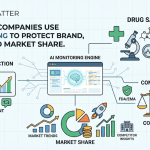
That has given rise to a new category of monitoring focused on understanding how AI systems characterize medicines, compare products, summarize clinical evidence, and describe safety information.
An Early Signal
A single citation does not establish a trend.
However, when a major business publication references an AI-based pharmaceutical information platform, it offers an early indication that AI tools are becoming part of mainstream research workflows rather than remaining consumer-facing novelties.
The more consequential question is not whether AI will participate in pharmaceutical research.
It is how organizations will ensure that the information AI produces remains accurate, current, and grounded in evidence.
As AI becomes another intermediary between pharmaceutical data and the people who rely on it, the provenance of those answers may prove as important as the answers themselves.