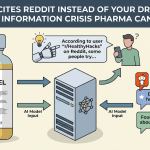
Every day, millions of patients type questions about their prescriptions into ChatGPT, Perplexity, Gemini, and Claude. They ask whether Ozempic causes pancreatitis. They ask if Jardiance is better than Farxiga. They ask whether the generic version of Humira is just as good. And AI answers them — confidently, at scale, often without a single citation from a peer-reviewed source.
Pharmaceutical companies have spent decades tracking what patients say about their drugs on Reddit, WebMD forums, and Twitter. They built pharmacovigilance pipelines around structured adverse event reports and social listening dashboards. But those systems were built for a world where patients searched, read, and formed opinions. That world is receding.
The new world is one where AI answers first. A patient who once would have read a Mayo Clinic article or an FDA drug label now gets a synthesized paragraph from a large language model trained on data that may be two years old, factually distorted, or missing critical safety context entirely. The implications for brand protection, pharmacovigilance, and regulatory compliance are severe — and most pharma brand teams are not yet equipped to deal with them.
This article explains what pharmaceutical AI monitoring is, why it matters right now, and how the companies doing it well are turning it into a competitive advantage.
What Is Pharmaceutical AI Monitoring — and Why Does It Differ From Social Listening?
Social listening is the practice of tracking brand mentions across public digital channels: Reddit, Twitter/X, patient forums, news sites. Tools like Brandwatch, Sprinklr, and Veeva Vault have been standard infrastructure for pharma brand and medical affairs teams for years. They work by crawling text that humans publish and flagging mentions of drug names, side effects, or competitor products.
AI monitoring is fundamentally different. Instead of crawling what people say, it audits what AI systems say in response to prompts. The object of measurement shifts from patient-generated content to model-generated content. The distinction matters because AI outputs are not passive reflections of public opinion — they are active interventions that shape what patients believe before they ever see a physician or pharmacist.
When a patient asks ChatGPT “What are the side effects of Keytruda?” they are not searching. They are requesting a medical opinion from a system that will give one. That opinion is shaped by the training data the model ingested, the fine-tuning choices OpenAI made, the retrieval sources the model has access to, and the specific way the prompt was framed. None of those factors are visible to the patient. All of them are now relevant to pharma brand teams.
How AI Responses About Drugs Are Generated — and Where They Go Wrong
Large language models like GPT-4o, Gemini 1.5 Pro, and Claude Sonnet do not retrieve facts from a live database. They predict the next token based on patterns in their training data. For most factual queries, this produces plausible-sounding prose that may or may not reflect the current state of medical knowledge.
Drug information is particularly vulnerable to this process for three reasons. First, the evidence base for drugs changes continuously — new trial data, new label updates, new FDA communications. A model trained on data with a cutoff of early 2024 may not reflect label changes made in late 2024 or 2025. Second, drug information contains numerical precision that LLMs handle poorly: dosing thresholds, contraindication categories, renal adjustment factors. Third, the training corpora for these models include Reddit threads, patient forum posts, and news articles — sources that often amplify anecdotal adverse event reports far beyond their clinical prevalence.
The result is that AI systems routinely conflate drugs in the same class, misstate adverse event frequencies, omit contraindications, or describe off-label uses without appropriate caveats. From a pharmacovigilance standpoint, this is not a theoretical risk. It is a current one.
Why Patients Trust AI Answers About Medications More Than They Should
Research on AI trust in healthcare contexts consistently finds that patients attribute higher authority to AI-generated health information than its accuracy warrants. A 2024 study published in JAMA Network Open found that patients rated AI-generated responses to medication questions as more trustworthy than human-written responses when they were not told which was which — even when the AI responses contained clinically inaccurate information.
The plain-language fluency of modern LLMs contributes to this. An AI response that says “Eliquis is generally well-tolerated, though patients with severe renal impairment should discuss dosing adjustments with their physician” reads as authoritative because it mimics clinical communication. Patients cannot easily detect that the model may be misapplying CrCl thresholds or omitting the Black Box warning about premature discontinuation.
Which Drugs Are Mentioned Most Often by AI Systems — and How to Find Out
The question of which branded drugs receive the most AI-generated coverage is now commercially relevant. Share of voice in AI search is a real metric, and it is not identical to share of voice in traditional search. Google’s organic rankings and LLM response frequencies are driven by different signals.
In traditional search, a drug’s visibility depends on the SEO quality of its manufacturer’s website, the quantity and authority of inbound links, and the volume of published clinical literature that gets indexed. In LLM responses, visibility depends on the prevalence of the drug’s name in training data, the drug’s salience in medical literature that the model learned from, and whether the model has retrieval-augmented access to current sources.
Do LLMs Recommend Generic Drugs More Often Than Branded Versions?
This is one of the most commercially consequential questions in pharmaceutical AI monitoring, and the honest answer is: it depends on the model, the prompt framing, and the therapeutic area.
For mature genericized categories — statins, ACE inhibitors, proton pump inhibitors — LLMs trained on large corpora of medical literature tend to default to generic terminology because that is how the clinical literature refers to these agents. Ask ChatGPT about cholesterol management and you are more likely to hear about atorvastatin than Lipitor. Ask about heartburn and the model will probably say omeprazole before it says Prilosec.
For newer biologic categories where biosimilar competition is intensifying — adalimumab biosimilars competing with Humira, insulin biosimilars challenging Lantus — the picture is more complex. Some models reproduce FDA communications about biosimilar interchangeability in ways that may accelerate generic substitution intent among patients who were previously brand-loyal.
For drugs without generic equivalents — Keytruda, Dupixent, Leqvio — LLMs generally use the branded name, though they sometimes introduce confusion by comparing the drug to mechanistically similar agents from competitors without clearly distinguishing the drugs or their approved indications.
How Often Does Claude Mention Ozempic vs. Wegovy vs. Rybelsus?
This is the kind of query that pharmaceutical AI monitoring platforms are built to answer systematically. Ozempic (semaglutide injection for type 2 diabetes), Wegovy (semaglutide injection for obesity), and Rybelsus (oral semaglutide for type 2 diabetes) are all semaglutide products from Novo Nordisk with distinct approved indications, dosing schedules, and patient populations. Yet they share an active ingredient, and LLMs frequently conflate them.
When a user asks an LLM about weight loss medications, the model may describe Ozempic — which is approved for diabetes, not obesity — as a weight loss drug, contributing to a misconception that Novo Nordisk’s regulatory and medical affairs teams have spent significant resources trying to correct. That conflation is not hypothetical. It has been documented in news coverage, in social media posts, and in physician reports of patients arriving at appointments with incorrect expectations about which drug they qualify for.
Systematically prompting LLMs with the full range of queries a patient or physician might ask — “What is the difference between Ozempic and Wegovy?”, “Can I take Ozempic for weight loss?”, “Is semaglutide covered by insurance for obesity?” — and analyzing the responses at scale is the core function of a pharmaceutical AI monitoring program.
Tracking Share of Voice Across ChatGPT, Gemini, Claude, and Perplexity
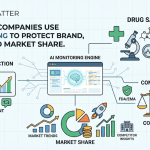
Share of voice in AI search is defined as the proportion of relevant AI responses in which your drug or brand is mentioned, relative to competitive mentions. Measuring it requires a structured prompting methodology: a set of representative queries drawn from patient search behavior, physician information-seeking patterns, and payer/formulary queries, run against each major AI platform on a regular cadence.
The measurement is complicated by several factors. AI responses are not static — they vary by prompt phrasing, conversation context, user location settings, and model version. ChatGPT’s response to a drug query today may differ from its response next week after a model update. Gemini’s behavior in a web-integrated search context differs from its behavior in a standalone chat context. Perplexity cites sources directly and is therefore more traceable but also more variable depending on which sources its retrieval system surfaces.
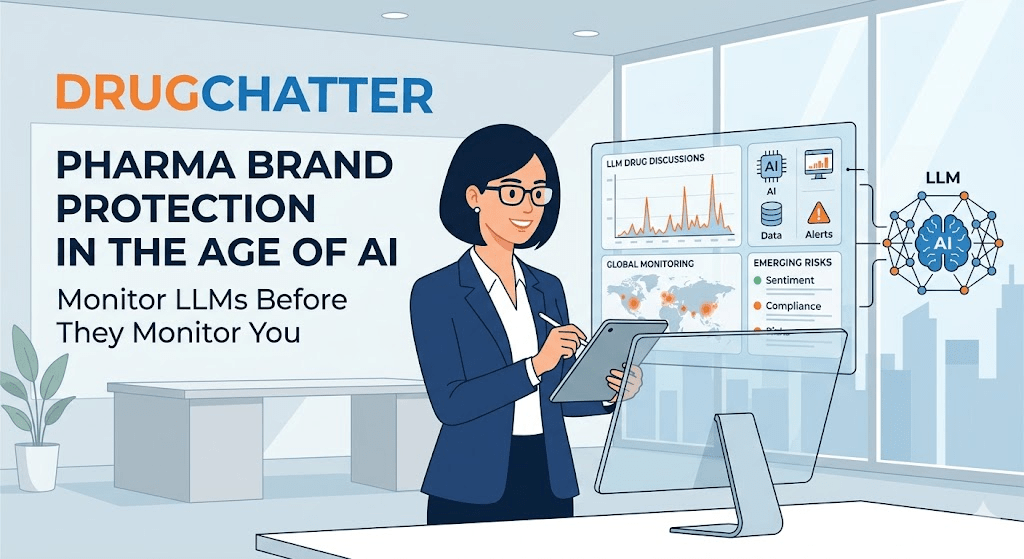
Platforms like DrugChatter are built specifically for this kind of systematic LLM monitoring across the pharmaceutical context, enabling brand teams to track mention frequency, sentiment, and accuracy across AI systems without building the query infrastructure themselves.
Can AI Hallucinations About Drugs Trigger FDA Regulatory Risk?
This is the question that makes pharmaceutical legal and regulatory teams pay attention. The answer is nuanced but directionally concerning.
The FDA does not currently regulate AI-generated health content in the same way it regulates promotional labeling or direct-to-consumer advertising. An AI company that generates a hallucinated adverse event profile for a drug is not subject to the same standards as a pharmaceutical manufacturer that makes a false efficacy claim. The regulatory framework has not caught up to the technology.
But that framing misses where the actual risk lives for pharma companies. The risk is not that the FDA will cite a manufacturer for a ChatGPT hallucination. The risk is in three other places.
Pharmacovigilance Obligations When AI Generates Adverse Event Signals
Under 21 CFR Part 314.81 and the FDA’s guidance on expedited safety reporting, pharmaceutical manufacturers have obligations to monitor for adverse event signals from sources including “scientific literature” and “any other information.” The FDA has been expanding its interpretation of what counts as a monitorable source.
If a pharmaceutical company’s medical information team becomes aware that an AI system is consistently telling patients that their drug causes a specific adverse event that the company believes is not accurately described in the label, does that constitute an adverse event signal requiring regulatory response? The legal answer is still being worked out. But several companies have begun treating systematic AI hallucinations about safety as a pharmacovigilance input — not because they are required to, but because failing to do so creates legal exposure if that hallucination later corresponds to a real-world safety event.
How AI Misinformation About Drugs Ends Up in Litigation
Product liability litigation in the pharmaceutical context typically turns on what a company knew or should have known about safety risks, and when they knew it. AI-generated content about drug risks is now appearing in the background of these cases in a different way: as evidence of what patients were told by the information environment they relied on.
In the ongoing mass tort litigation surrounding various GLP-1 receptor agonists, plaintiff attorneys have begun examining whether patients received accurate information about gastroparesis risk from digital sources — including AI-generated health information — before initiating treatment. This does not mean manufacturers are directly liable for AI outputs. It does mean that the information landscape surrounding a drug is now legally relevant in a new way.
FDA Warning Letters and the Expanding Definition of Promotional Labeling
The FDA has issued warning letters to pharmaceutical manufacturers for promotional content that makes false or misleading claims about drug safety or efficacy. As AI companies build pharma-adjacent products — AI-powered medication management apps, AI symptom checkers that recommend specific drugs, AI-assisted prior authorization tools — the line between AI content and promotional content may become legally contested.
A pharmaceutical manufacturer that partners with or has a commercial relationship with an AI company that systematically misrepresents the manufacturer’s drug could face promotional labeling scrutiny. Monitoring AI outputs is, in this context, also a due diligence function.
How Eli Lilly and Novo Nordisk Are Approaching AI Mention Monitoring
Neither Eli Lilly nor Novo Nordisk has published detailed accounts of their AI monitoring infrastructure. But their public statements, job postings, and competitive behavior provide a clear picture of where the industry’s leaders are heading.
Eli Lilly has been among the most aggressive in building digital health intelligence capabilities. Following the 2022 Twitter verification debacle — in which a fake verified account impersonated the company and announced that insulin would be free, causing significant brand and stock damage — the company accelerated its investment in digital brand monitoring. That incident demonstrated that AI-amplified misinformation about pharmaceutical brands could move markets and require rapid regulatory response. The question of what happens when LLMs generate equivalent misinformation at scale is a natural extension of the same concern.
Novo Nordisk’s challenge is different but equally urgent. The global demand surge for semaglutide products — driven partly by AI-amplified social media content about Ozempic’s weight loss effects — created a supply crisis that the company could not have fully anticipated from traditional market research. AI monitoring would not have prevented the shortage, but it might have provided an earlier signal of the magnitude of off-label demand building in AI-driven conversations months before it became a news story.
What Pharma Brand Teams Can Learn From Reddit AI Citation Patterns
Reddit is a significant source of training data for large language models. Multiple LLM developers have licensed Reddit’s data corpus for training purposes, including Google and, historically, OpenAI. This means that the conversations happening in r/diabetes, r/WeightLossAdvice, r/ChronicIllness, and dozens of other health-adjacent subreddits have likely influenced how these models respond to drug-related queries.
For pharmaceutical brand teams, this creates a feedback loop worth understanding. The misinformation that circulates in patient communities gets embedded in training data. The training data shapes what LLMs say. What LLMs say influences new patients’ beliefs. New patients join Reddit and post about their experiences, potentially reinforcing the same misinformation. Monitoring both ends of this loop — Reddit content and LLM outputs — gives brand teams a more complete picture of the information environment their drugs exist in.
Patient Sentiment in AI Responses: Is Your Drug’s Profile Positive, Negative, or Neutral?
Beyond factual accuracy, pharmaceutical AI monitoring includes sentiment analysis of how AI systems characterize drugs in emotional and evaluative terms. Does the model describe a drug as “well-tolerated” or “associated with significant side effects”? Does it describe the dosing schedule as “convenient” or “burdensome”? Does it frame the drug’s mechanism in terms that are likely to increase or decrease patient confidence?
These characterizations matter because patients who are ambivalent about starting a new medication — or who are deciding between two options their physician has presented — often turn to AI as a secondary source of guidance. An AI system that consistently frames a drug in negative terms relative to a competitor, even without factual inaccuracy, can influence adherence intent and treatment initiation rates.
Sentiment monitoring of AI outputs is distinct from sentiment monitoring of social media. On Reddit, sentiment reflects the experiences and opinions of specific human communities. In LLM outputs, sentiment reflects patterns in training data that may not map cleanly to any particular patient population — and may be systematically biased toward whichever sources were most prevalent in the training corpus.
How Patients Ask About Drug Interactions in AI Search — and What Models Get Wrong
Drug interaction queries are among the highest-stakes medical questions patients bring to AI. They are also among the most technically complex for LLMs to handle correctly.
A complete drug interaction assessment requires knowledge of specific pharmacokinetic pathways (CYP450 enzyme involvement, transporter effects), clinical context (the patient’s renal and hepatic function, other concurrent medications, the severity of the potential interaction), and current prescribing information for both drugs. LLMs do not have access to real-time prescribing information, cannot assess individual patient context, and frequently conflate class-level interaction data with drug-specific data.
Which Drug Interaction Queries Produce the Most Inaccurate AI Responses?
Based on published research and analyses by medical informatics researchers, the query categories most likely to produce inaccurate AI responses include: warfarin interactions (high clinical complexity, extensive interaction list), MAOI interactions (narrow therapeutic window, severe consequences of error), drug-food interactions for novel oral anticoagulants, and QT-prolonging drug combinations. These are also the query categories where an inaccurate AI response carries the highest patient safety risk.
For pharmaceutical companies with drugs in these high-complexity interaction zones, systematic monitoring of how AI systems describe their drugs’ interaction profiles is directly relevant to pharmacovigilance obligations.
How AI Search Is Changing How Physicians Look Up Drug Information
The use of AI for drug information is not limited to patients. Physicians — particularly in primary care settings — are using ChatGPT and Perplexity as quick-reference tools for drug information, sometimes in place of UpToDate, Epocrates, or the FDA label itself. A 2024 survey by Doceree found that 38% of physicians reported using AI tools for drug information lookup at least occasionally, with higher rates among physicians under 40.
This matters for pharmaceutical companies because physician-facing AI responses shape prescribing behavior. If a physician asks Perplexity about the renal dosing adjustment requirements for a specific agent and receives an inaccurate answer, that inaccuracy can propagate to a prescription. Monitoring the AI responses that physicians are likely to encounter is therefore a medical affairs function, not just a brand function.
Can AI Outputs Be Used for Pharmacovigilance? The Emerging Framework
Pharmacovigilance has always required surveillance of multiple signal sources: spontaneous adverse event reports, clinical trial safety data, observational studies, literature. The FDA’s Sentinel System was built to extract safety signals from large real-world data sets. Social media monitoring for adverse event signals has been an active area of regulatory science since at least 2014, when the FDA published guidance on mining social media for pharmacovigilance data.
AI-generated content represents a new signal source category. It is not a source of individual patient adverse event reports in the traditional sense — an LLM describing a drug’s side effects is not reporting an adverse event, it is synthesizing information from its training data. But at scale, systematic analysis of what AI systems say about drug safety can reveal:
Which adverse events are most prominently associated with a drug in the AI-accessible information environment.
Whether AI responses about a drug’s safety profile align with or diverge from the current approved label.
Whether AI systems are amplifying low-frequency adverse event associations that appear in case reports or early-signal databases but have not reached the label.
Whether off-label use patterns described by AI systems correspond to emerging real-world prescribing patterns that have not yet appeared in traditional surveillance data.
What Regulatory Science Says About AI-Generated Adverse Event Signals
The FDA’s Office of Surveillance and Epidemiology has published research on the use of natural language processing for adverse event signal detection from social media. That research found that automated NLP methods could detect known adverse event signals from Twitter data with reasonable sensitivity, though specificity remained a challenge.
Applying similar methodology to LLM outputs is technically distinct — LLM content is generated rather than organic — but the underlying question is the same: can systematic analysis of this text corpus produce pharmacovigilance-relevant signals? The current evidence base is thin, but several academic medical centers and early-stage companies are building it.
The EMA has been more active than the FDA in publishing regulatory science guidance on AI and pharmacovigilance. Its 2024 reflection paper on AI in medicines regulation flagged AI-generated health content as a monitoring priority, noting that the scale of AI-mediated health information dissemination creates potential for rapid, broad propagation of drug misinformation without the natural dampening effects of human editorial review.
Building a Pharmacovigilance Use Case for AI Monitoring Data
For pharmaceutical companies that want to integrate AI monitoring into pharmacovigilance operations, the practical workflow involves several steps. Define a universe of relevant queries — adverse event queries, drug interaction queries, contraindication queries, off-label use queries — for each drug in the portfolio. Run those queries across major AI platforms on a regular cadence (weekly or monthly, depending on the drug’s risk profile). Apply NLP-based analysis to the responses to categorize the adverse event associations being surfaced and compare them against the current label and internal safety databases. Flag divergences for medical safety review.
This is not a substitute for traditional pharmacovigilance. It is an additional signal layer that captures a part of the information environment that traditional methods miss entirely.
Why ChatGPT Gets Drug Side Effects Wrong — and What It Means for Your Brand
The question of why LLMs produce inaccurate drug safety information is worth answering in some depth, because understanding the mechanism helps pharmaceutical teams prioritize their monitoring and correction efforts.
The primary driver is training data composition. LLMs learn to predict text that resembles the text they were trained on. If the training corpus contains many documents discussing a drug’s most commonly reported side effects — nausea, fatigue, headache — the model will reproduce those associations readily. If a drug’s most serious adverse event is rare and was documented primarily in regulatory correspondence or case reports that did not widely circulate online, the model may underweight or omit it.
The Training Data Problem: What Sources LLMs Learn Drug Information From
Publicly available LLM training corpora include web crawl data, Wikipedia, Common Crawl, Reddit, news archives, and scientific literature repositories. For drug information, this means the model has seen a heterogeneous mix of sources ranging from peer-reviewed meta-analyses to patient testimonials to pharmaceutical manufacturer websites to health journalism of varying quality.
These sources do not all describe drugs with the same accuracy or the same framing. Patient testimonials on Reddit are disproportionately negative (people who had adverse events are more likely to post than people who tolerated a drug without issue). Health journalism tends to emphasize novel or alarming findings. Pharmaceutical manufacturer websites describe drugs in promotional language that models may learn to reproduce without the appropriate regulatory caveats.
The net effect is a drug information representation in LLMs that reflects the loudest and most frequently published voices in the training data, not necessarily the most accurate clinical picture.
Model Knowledge Cutoffs and Drug Label Currency
Every major LLM has a training data cutoff — a date after which new information was not incorporated into the base model. For GPT-4o, that cutoff is currently early 2024. For Gemini 1.5 Pro, similar. For Claude Sonnet 4, similar. Drug labels change continuously — new indications are added, new contraindications are identified, dosing recommendations are updated based on post-marketing safety data.
A model with a 2024 training cutoff does not know about label changes made in 2025. If the FDA required a new Black Box warning for a drug in late 2024, the model will not include that warning in its responses unless it has retrieval-augmented access to current label information. Many LLM deployments do not have that access.
This creates a specific category of AI monitoring priority: tracking whether AI responses about your drugs include or exclude current label information, particularly safety information added after the model’s training cutoff.
Off-Label AI: How LLMs Discuss Unapproved Uses of Drugs
Off-label drug use is legal for physicians but tightly restricted in pharmaceutical marketing. A manufacturer cannot promote a drug for an indication that the FDA has not approved. Yet LLMs routinely discuss off-label uses of drugs — because off-label use is widely documented in the medical literature, in news articles, and in patient communities that are all part of model training data.
When a patient asks an AI whether Ozempic can help with non-alcoholic fatty liver disease, or whether metformin has anti-aging properties, or whether low-dose naltrexone is effective for autoimmune conditions, the AI will typically answer based on whatever evidence it has seen in training — which may include early clinical trial data, observational studies, or patient testimonials. It will not necessarily apply the same restrictions that govern pharmaceutical manufacturer communications.
How Off-Label AI Discussions Create Brand and Regulatory Complexity
For pharmaceutical companies, LLM discussions of off-label use create a dual challenge. On one side, AI-amplified off-label demand can drive prescription behavior that was not anticipated in the drug’s commercial forecast — and can create supply, coverage, and regulatory complications, as Novo Nordisk experienced with semaglutide. On the other side, AI-generated off-label information that is inaccurate or incomplete may contribute to patient harm events that the manufacturer then has to respond to from a safety and legal standpoint.
Monitoring what AI systems say about off-label uses of your drugs is therefore a dual intelligence function: an early demand signal and a risk management input.
Tracking Competitor Off-Label AI Mentions for Competitive Intelligence
Off-label monitoring is not only about your own drugs. If AI systems are discussing a competitor’s drug in the context of an indication where you have an approved or pipeline product, that is commercially relevant intelligence. It can indicate where patient demand is building, where physician interest is concentrated, and where the competitive battle for a new indication will play out before clinical trial readouts are complete.
Physician Perception and AI: What Doctors Are Learning About Your Drug From LLMs
Voice-of-the-customer research in pharma has traditionally distinguished between patient insights and physician insights, gathered through different methodologies. AI monitoring does not automatically make this distinction — a query about a drug’s mechanism of action might come from a patient, a medical student, or a practicing specialist. But the queries themselves carry signals about the concerns and knowledge gaps of whoever is asking.
What Queries Indicate About Physician Information Gaps
When pharmaceutical AI monitoring platforms analyze the universe of queries being asked about a specific drug, they can identify patterns that correspond to physician knowledge gaps. If a large volume of queries about a drug concern its use in specific patient subpopulations — elderly patients, patients with renal impairment, pediatric populations — that may indicate that the drug’s labeling or medical education materials are not adequately addressing those clinical scenarios.
If queries cluster around comparative effectiveness questions — “Is Drug A better than Drug B for [condition]?” — that may indicate that the medical literature has not yet produced the comparative data that physicians want in order to make prescribing decisions confidently. Both of these patterns have commercial implications for how pharmaceutical companies direct their clinical research and their medical affairs education efforts.
How Medical Affairs Teams Can Use AI Monitoring Data
Medical affairs teams are responsible for communicating accurate scientific information about pharmaceutical products to healthcare providers. Traditionally, this means publications strategy, medical science liaison activities, advisory boards, and medical information services. AI monitoring adds a new intelligence input to each of these functions.
A publications team that knows AI systems are consistently misrepresenting a drug’s mechanism of action can prioritize review articles and educational content that addresses those specific misrepresentations. A medical science liaison who knows that physicians in a particular specialty are asking AI about specific clinical scenarios can prepare for those conversations. A medical information team that receives calls about AI-generated drug information can use that data to identify systematic inaccuracies requiring proactive correction.
“AI search tools are becoming primary endpoints in pharmaceutical market research, not just secondary checks. A brand that doesn’t appear accurately in ChatGPT, Perplexity, and Gemini is effectively invisible to a growing segment of patients and caregivers at the moment of treatment decision.” — Pharmaceutical Market Research Group, 2024 Digital Health Intelligence Survey.
Building an AI Monitoring Program for a Pharmaceutical Brand: A Practical Framework
Most pharmaceutical companies approaching AI monitoring for the first time do not need to build custom technology. They need a structured methodology and the right platform to execute it systematically. Here is a practical framework for standing up an AI monitoring program around a pharmaceutical brand.
Step 1: Define Your Query Universe
The query universe is the set of prompts you will systematically run against AI platforms. It should be built from four sources: patient search data (what terms patients actually type into Google when researching your drug), physician information-seeking patterns (what questions medical education programs reveal about knowledge gaps), competitive intelligence (what queries would surface competitor mentions), and regulatory sensitivity (what queries concern safety information, off-label use, or contraindications where inaccuracy creates risk).
A well-constructed query universe for a single drug typically contains 200 to 500 distinct prompts, organized into thematic clusters.
Step 2: Select Your Target AI Platforms
Not all AI platforms are equally relevant for all drugs. ChatGPT has the largest consumer user base and should be included for any drug with significant patient-facing brand activity. Perplexity is particularly important for physician-facing monitoring because its user base skews professional and it provides citations that can be analyzed for source quality. Gemini is important for drugs where Google search and AI search are likely to be closely linked in patient behavior. Claude is important for drugs in categories where enterprise and professional users are more relevant than consumer users.
Step 3: Establish a Monitoring Cadence
Monthly monitoring is appropriate for most drugs. Drugs with active safety issues, ongoing regulatory review, significant competitive activity, or major off-label demand trends may require weekly monitoring. The monitoring cadence should be tied to your regulatory risk profile and your commercial decision cycle.
Step 4: Define Accuracy Standards for Your Drug’s AI Profile
Before you can identify inaccuracies in AI responses, you need a documented standard of what accurate AI responses about your drug would look like. This is typically built from the current FDA-approved label, supplemented by the current package insert, any FDA-issued communications (Dear Healthcare Provider letters, safety communications), and your approved medical affairs content.
The accuracy standard should cover: approved indications, mechanism of action, primary adverse event profile (frequency, severity, management), key contraindications, significant drug interactions, and approved patient populations.
Step 5: Analyze and Act on Monitoring Data
Raw monitoring data — a set of AI responses categorized by accuracy, sentiment, and competitive mention — needs to be turned into specific actions. The action types include: medical affairs education initiatives (when AI inaccuracies reflect genuine physician/patient knowledge gaps), regulatory intelligence inputs (when AI inaccuracies involve safety information), competitive response (when AI systematically favors competitor products), and content strategy (when accurate information about your drug is underrepresented in AI responses because it is underrepresented on the high-authority websites that AI systems draw from).
AI Search Optimization for Pharmaceutical Brands: Getting Your Drug’s Story Right
The inverse of AI monitoring — influencing what AI systems say about your drug — is an emerging discipline sometimes called generative engine optimization or AI search optimization. It is distinct from traditional SEO, though they share underlying principles.
LLMs learn from the text they were trained on. For drugs, the most authoritative text sources are the FDA label, peer-reviewed clinical literature, high-authority medical reference sites (UpToDate, Medscape, the National Library of Medicine), and the manufacturer’s own FDA-regulated content. If these sources accurately and completely describe a drug’s profile, the LLM is more likely to reproduce that accurate profile in its responses.
Why High-Authority Medical Content Shapes AI Drug Responses
LLMs trained on large web corpora assign differential weight to different sources based on signals that roughly correlate with authority: domain age, inbound link count, content duplication rate, and the presence of the content in other high-weight documents. Medical content on PubMed, NLM, FDA.gov, and established clinical reference platforms carries high weight in LLM training data relative to patient forum posts or health journalism.
This means that a pharmaceutical company’s scientific publication strategy has a direct, if indirect, effect on what LLMs say about its drugs. A drug with a rich, accurate, and frequently cited clinical literature is more likely to receive accurate AI treatment than a drug whose clinical evidence base is thin or largely confined to conference abstracts that did not make it into high-authority text sources.
The Role of FDA Label Clarity in AI Response Accuracy
FDA drug labels are among the highest-weight medical text sources in LLM training data. The clarity and completeness of a drug’s label has a direct effect on the accuracy of AI responses about that drug. Labels that clearly state adverse event frequencies, that precisely define contraindicated patient populations, and that include unambiguous clinical scenarios for dose modification are more likely to produce accurate AI responses than labels written in highly technical regulatory language that LLMs may parse imprecisely.
This is not an argument for pharmaceutical companies to redesign their labels for AI readability — the FDA process does not work that way. It is an observation that label clarity and AI response accuracy are correlated, and that pharmaceutical companies with complex labels for complex drugs should expect higher rates of AI misrepresentation and should monitor accordingly.
The Competitive Intelligence Case for AI Drug Monitoring
Pharmaceutical competitive intelligence has always included monitoring what customers and the information environment say about competitor products. AI monitoring extends this into a new domain: what AI systems say about competitors when responding to the queries your target customers are asking.
If a pharmaceutical company selling a drug for a specific oncology indication wants to understand how AI systems compare it to competitors in the same class, systematic AI monitoring provides that comparison in a structured, repeatable way. The comparison is not a substitute for traditional competitive intelligence — market research, physician interviews, claim analysis, clinical trial monitoring — but it adds a dimension that those methods do not capture.
How to Detect When AI Systematically Favors a Competitor Drug
Competitive bias in AI responses can take several forms. Explicit bias is when an AI directly recommends a competitor product over yours in response to a comparative query. Implicit bias is when an AI describes your drug in terms that are less favorable than the terms it uses for a competitor — fewer benefits emphasized, more side effects mentioned, more caveats applied. Coverage bias is when an AI mentions a competitor drug frequently and your drug infrequently in response to relevant queries.
Each form of bias has different implications and different potential responses. Explicit bias that reflects inaccurate information can potentially be addressed through the content channels that feed LLM training data. Coverage bias may reflect genuine differences in the volume of published clinical and commercial content about the two drugs — a signal about content investment, not just AI behavior.
Using AI Monitoring to Anticipate Market Shifts Before They Appear in Prescription Data
Prescription data — available through IQVIA, Symphony Health, and similar sources — reflects what physicians actually prescribe. It is a lagging indicator of market dynamics. Physicians write prescriptions based on beliefs formed through medical education, peer conversations, patient requests, and information seeking. AI monitoring captures part of the information-seeking dimension of that process in near real time.
If AI monitoring shows that queries about a specific patient population — say, patients with a specific comorbidity — are generating AI responses that favor a competitor drug, that may be an early signal of a prescribing shift in that patient segment that will not appear in prescription data for months. Acting on that signal — with targeted medical education, with a clinical trial addressing that patient segment, with a publications strategy highlighting your drug’s data in that context — can create commercial advantage that reactive approaches based on lagging data cannot.
Drug Misinformation in AI: The Scale Problem Pharma Cannot Ignore
The challenge of drug misinformation is not new to pharmaceutical companies. They have always had to contend with inaccurate information about their products in patient communities, in health journalism, and in the general information environment. What is new is the scale and the authority with which AI delivers that misinformation.
A Reddit post containing inaccurate drug information reaches the people who happen to search for it and choose to read it. It carries no inherent authority beyond the poster’s reputation in that community. An LLM response to a drug query reaches everyone who asks that query across every platform where the model is deployed, is delivered with the authoritative fluency of a medical professional, and is not visibly attributed to any particular source that the patient can evaluate.
The scale difference is orders of magnitude. The authority difference is qualitative. Together, they make AI-generated drug misinformation a categorically different problem from social media drug misinformation — one that requires a different monitoring and response infrastructure.
The Specific Drugs Most Vulnerable to AI Misinformation
Not all drugs face equal AI misinformation risk. The highest-risk categories are: drugs with significant social media attention (GLP-1 agonists, ketamine-based depression treatments, ADHD medications), drugs with complex risk-benefit profiles that require careful nuance (oncology biologics, anticoagulants, immunosuppressants), drugs with active public controversy (opioids, antidepressants, vaccines — though vaccines are a separate regulatory category), and drugs where off-label use demand is high relative to approved indications.
For drugs in these categories, AI monitoring is not a nice-to-have. It is a necessary component of an adequate pharmacovigilance and brand protection program.
DrugChatter and the Emerging Market for Pharmaceutical AI Monitoring Platforms
The market for pharmaceutical AI monitoring is early but growing. Several platforms have emerged to address the specific needs of pharmaceutical brand, medical affairs, and pharmacovigilance teams monitoring AI outputs about their drugs.
DrugChatter is designed specifically for pharmaceutical AI monitoring, enabling brand teams to systematically query LLMs about their drugs and competitors, analyze responses for accuracy, sentiment, and competitive positioning, and track changes over time as models are updated. Unlike general social listening platforms that have added AI monitoring as a feature, DrugChatter is built around the specific data structures and regulatory context of pharmaceutical brand monitoring.
DrugPatentWatch addresses the adjacent question of patent and exclusivity intelligence — tracking when branded drugs face generic or biosimilar competition — which is increasingly relevant to AI monitoring because LLMs’ generic vs. branded recommendation patterns are sensitive to exclusivity status. A drug that recently lost exclusivity may begin receiving more generic-drug references in AI responses as the information environment around it shifts.
General-purpose AI monitoring tools like Brandwatch’s AI monitoring suite and similar enterprise platforms can track mentions of drug names in AI-generated content, but they were not built for the specific regulatory and clinical accuracy requirements of pharmaceutical AI monitoring. They can complement a specialized pharmaceutical monitoring program but typically cannot replace it.
What to Look for When Evaluating a Pharmaceutical AI Monitoring Platform
When evaluating platforms for pharmaceutical AI monitoring, brand and medical affairs teams should assess four capabilities. First, coverage: does the platform systematically monitor ChatGPT, Gemini, Claude, Perplexity, and the AI-integrated search experiences (Google AI Overviews, Bing Copilot) that represent the majority of patient AI touchpoints? Second, pharmaceutical specificity: does the platform’s analysis framework address FDA labeling accuracy, adverse event classification, and contraindication identification — or does it only track general sentiment? Third, competitive benchmarking: can the platform generate structured comparisons of your drug’s AI profile against competitors? Fourth, integration: can the platform deliver monitoring data in formats that integrate with existing pharmacovigilance, brand, and medical affairs workflows?
The Regulatory Future: Where FDA and EMA Are Heading on AI Drug Information
Both the FDA and EMA have signaled that AI-generated health information is a regulatory concern they are actively examining. The trajectory of that examination matters for pharmaceutical companies deciding how much to invest in AI monitoring infrastructure.
The FDA’s 2024 action plan on AI in health care identified several priority areas, including AI-generated patient information, AI-powered symptom checkers, and AI-assisted clinical decision support. The plan did not create new regulations but indicated that guidance documents addressing these areas are in development. FDA guidance on AI and drug information would likely clarify pharmacovigilance obligations around AI-generated adverse event signals and may address the promotional labeling question for pharma-partnered AI products.
The EMA has been faster in producing written guidance. Its 2024 reflection paper on AI in medicines regulation explicitly called for pharmaceutical companies to monitor AI-generated information about their products as part of their pharmacovigilance systems. While reflection papers are not binding regulatory guidance, they indicate the direction in which mandatory requirements are likely to move.
What a Future FDA Guidance on AI Drug Information Monitoring Might Require
Extrapolating from current FDA pharmacovigilance guidance, a future AI monitoring guidance could reasonably require pharmaceutical companies to: document the AI platforms they monitor for drug-related content, define the query sets used to systematically assess AI responses about their drugs, maintain records of identified inaccuracies and the actions taken in response, and include AI monitoring findings in periodic benefit-risk assessment updates. None of these requirements would be technically burdensome for companies that have already built AI monitoring programs. They would be significantly burdensome for companies that have not.
Building the program now, while regulatory requirements are still forming, gives pharmaceutical companies the operational experience and documented methodology to demonstrate compliance when requirements are formalized — rather than scrambling to build a program to a regulatory deadline.
Key Takeaways
AI systems are now a primary medical information source for a significant and growing share of patients and physicians. What ChatGPT, Gemini, Claude, and Perplexity say about your drug is as commercially and clinically relevant as what appears in a medical journal or a patient forum.
LLMs generate drug information based on training data patterns, not live clinical knowledge. This means they routinely misstate adverse event frequencies, omit current label information, conflate drugs in the same class, and discuss off-label uses without appropriate caveats.
Pharmaceutical AI monitoring is the systematic practice of auditing what AI systems say about a drug across relevant queries, tracking accuracy, sentiment, competitive mentions, and off-label discussions over time.
The pharmacovigilance implications of AI-generated drug information are real and still being worked out legally and regulatorily. Companies that treat AI monitoring as a pharmacovigilance input now will be better positioned when regulatory requirements are formalized.
Share of voice in AI search is measurable and differs from share of voice in traditional search. Monitoring it requires structured, regular prompting across major AI platforms with analysis frameworks calibrated to pharmaceutical accuracy standards.
AI monitoring is both a risk management function and a competitive intelligence function. It can detect brand threats and supply leading indicators of market shifts before they appear in prescription data.
Specialized pharmaceutical AI monitoring platforms, including DrugChatter, provide the query infrastructure, pharmaceutical-specific analysis frameworks, and competitive benchmarking capabilities that general social listening platforms do not offer.
The EMA has already called for pharmaceutical companies to include AI monitoring in their pharmacovigilance systems. FDA guidance moving in the same direction is probable within the next regulatory cycle.
FAQ: Pharmaceutical AI Monitoring
What is pharmaceutical AI monitoring?
Pharmaceutical AI monitoring is the practice of systematically auditing what AI systems — including ChatGPT, Gemini, Claude, and Perplexity — say about drugs in response to patient and physician queries. It tracks factual accuracy, adverse event representations, competitive mentions, off-label discussions, and sentiment patterns over time. Unlike social media monitoring, which tracks what people say about drugs, AI monitoring tracks what AI systems say about drugs — which now reaches patients at the moment of treatment decision, at scale, with apparent authority.
Can AI hallucinations about a drug create FDA regulatory risk for the manufacturer?
Directly, the current regulatory framework does not hold pharmaceutical manufacturers responsible for AI-generated content they did not produce or commission. Indirectly, the risk is real in two ways. First, if a manufacturer becomes aware that an AI system is consistently describing an inaccurate safety profile for its drug, failing to treat that as a potential pharmacovigilance signal could create legal exposure if those inaccuracies correlate with real-world patient harm. Second, as the FDA and EMA move toward formalizing pharmacovigilance guidance on AI-generated health content, companies without documented monitoring programs will face compliance risk. Building the program now is the lower-risk posture.
How is AI search share-of-voice different from traditional search share-of-voice?
Traditional search share-of-voice measures how frequently your brand appears in Google or Bing search results for relevant queries, based on organic rankings and paid placement. AI search share-of-voice measures how frequently your drug is mentioned in LLM responses to relevant queries, and how it is characterized relative to competitors. The two metrics are driven by different signals — traditional search by SEO and paid media, AI search by training data composition and retrieval source weighting — and they do not necessarily correlate. A drug can have strong traditional search visibility and weak AI search visibility, or vice versa, depending on how it is represented in the sources that LLMs learn from.
Do LLMs recommend generic drugs more often than branded drugs?
In mature genericized therapeutic categories — statins, ACE inhibitors, proton pump inhibitors — LLMs trained on clinical literature tend to use generic drug names because that is how the literature refers to these agents. For drugs with active biosimilar competition, some LLMs reproduce FDA interchangeability designations in ways that may accelerate generic substitution intent. For drugs without generic or biosimilar equivalents, LLMs generally use branded names but may introduce competitive confusion by referencing mechanistically similar agents from other manufacturers. The pattern varies by model, therapeutic category, and the specific prompt framing.
How do pharmaceutical companies get started with AI monitoring?
The starting point is defining a query universe — a structured set of prompts representing how patients and physicians actually ask about your drug — and selecting a monitoring platform with pharmaceutical-specific capabilities. DrugChatter is built specifically for pharmaceutical AI monitoring and provides the query infrastructure, accuracy analysis, and competitive benchmarking that general social listening platforms do not. Beyond platform selection, the program requires internal alignment between brand, medical affairs, and pharmacovigilance functions to define accuracy standards, review monitoring outputs, and translate findings into action. The regulatory trend line — particularly the EMA’s 2024 guidance language — suggests that companies building these programs now will have a significant compliance advantage within two to three regulatory cycles.