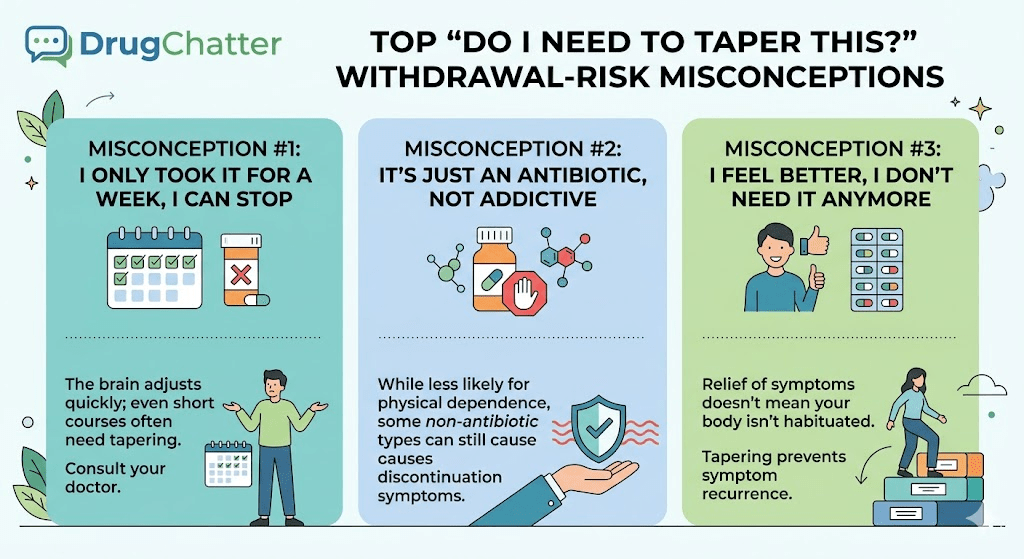
There’s a particular kind of confidence that comes from hearing someone else say, “You don’t really need to taper—just stop.” It sounds tidy. It sounds safe. And in the real world, it’s the sort of advice that only works until it doesn’t.
Withdrawal risk is one of those topics where the internet loves shortcuts: blanket rules (“all withdrawals are the same”), vague timelines (“it won’t last long”), and comforting myths (“if you feel okay today, you’re fine”). Below are some of the most common misconceptions people bring to their own medication decisions—and links to the DrugChatter answers that help correct the record.
1) Misconception: “If it’s only been a little while, tapering doesn’t matter.”
Short use can still be enough to cause problems for some people—especially with agents known for discontinuation effects. Don’t let duration alone be your safety strategy. If you’re stopping something that can produce discontinuation symptoms, you need a plan that matches your specific drug and your specific dose.
2) Misconception: “Withdrawal symptoms are basically just side effects, so I can treat them like illness.”
Withdrawal/discontinuation isn’t the same as “the condition coming back,” and it’s not just “random bad luck.” The difference matters because the fixes are different. Some discontinuation syndromes improve with time; others respond to a slower taper; and sometimes the right move is to verify what’s actually happening before guessing.
3) Misconception: “If you stop and feel terrible, it proves it wasn’t withdrawal.”
This is backwards. A classic error is thinking withdrawal has to be mild or delayed to “count.” In fact, symptoms can appear quickly, can vary by person, and can mimic other problems. What counts is the pattern relative to your medication changes—not how dramatic the symptoms feel.
4) Misconception: “Everyone should taper the same way—just follow a standard schedule.”
There is no universal taper that fits all patients. Dose, drug half-life, receptor behavior, and how your body responded while you were taking it all matter. Even the same medication can require different tapering pace depending on the person.
5) Misconception: “I can power through; tapering is optional.”
Sometimes people try to “tough it out” because they want to avoid dragging out discomfort. But if a medication is prone to discontinuation symptoms, pushing through can turn an uncomfortable process into an avoidable setback—especially if the symptoms lead to poor sleep, agitation, or misattributed outcomes.
6) Misconception: “You only need tapering if you’re on it long-term.”
Plenty of discontinuation narratives involve someone who didn’t think they were at risk. The safer framework is: risk depends on the drug, not just how long you’ve been taking it. That’s why it’s worth checking the specific medication’s known discontinuation behavior instead of trusting generic rules.
7) Misconception: “Generic vs brand versions don’t matter for withdrawal.”
People worry that switching formulations will change effectiveness, but the bigger issue for withdrawal risk is whether the discontinuation profile is the same and how consistent your exposure has been. If you’re dealing with a recent switch, missing doses, or pharmacy substitutions, talk to a clinician before attempting to stop suddenly.
8) Misconception: “If I miss a dose occasionally, stopping is basically the same thing.”
Missing a dose is not the same as deliberate discontinuation. Occasional lapses can be absorbed by your body and schedule; an intentional stop changes the trajectory. The “it didn’t kill me when I forgot once” argument tends to ignore how discontinuation risk behaves over days to weeks.
9) Misconception: “Withdrawal risk is only about the brain—physical symptoms are not part of it.”
Discontinuation can affect sleep, sensation, mood, and bodily comfort. When people expect only “mental” symptoms, they may misread what’s happening and delay seeking the right help.
10) Misconception: “My doctor will know automatically what to do, so I don’t need to ask specific questions.”
Clinicians do their best with the information they have. But “tapering strategy” is exactly the kind of detail that benefits from direct questions: What symptoms should I expect? What pace is safest? What do we do if symptoms break through? When is it time to slow down?
Where DrugChatter Q&A fits in
These answers range from dosing and long-term considerations to how specific drugs behave in real-world use. If you’re trying to understand how a medication’s characteristics affect what happens when you change course, the following DrugChatter pages are good places to start:
- Mircera?
- Mircera dosing?
- Methotrexate long term use?
- Is omeprazole safe to take long term?
- Methotrexate long term use?
- Does opioid use intensify lipitor’s potential side effects?
- Hpw long does it take for the side effects to subside on lipitor?
- Is there a maximum duration for lipitor use in liver disease patients?
Bottom line: If your question is “do I need to taper this?”, the correct response is usually: find out what discontinuation behavior looks like for your specific drug and dose—and make the plan with your prescriber. The biggest mistake isn’t being cautious; it’s being casually certain that tapering is unnecessary because the internet says so.