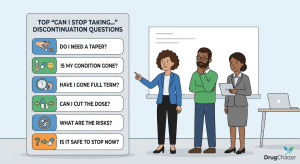
There are two kinds of medication questions: the ones you ask when you’re starting, and the ones you ask when you’re stopping. Stopping, it turns out, is where the body starts bargaining—where “I feel fine” meets “but the label says otherwise,” and where a missed dose turns into a plan.
Below are some of the most common “can I stop taking…” discontinuation-adjacent questions—especially the ones that show up when people are finishing a course, feeling better, or trying to simplify their lives. (As always: if you’re thinking about stopping, it’s worth checking with your prescriber—particularly for drugs where rebound or withdrawal is a real concern.)
1) “Can I stop after I finish the antibiotics?”
Finishing a course is one thing; changing the rules around alcohol is another. If you’re wondering about what you can do after finishing antibiotics, this is the kind of question that tends to come up right at the finish line:
2) “Can I stop taking it if the side effects are annoying?”
Side effects are the siren song of discontinuation. Sometimes they’re harmless and transient; sometimes they’re the body waving a flag. For example, people often ask whether what they’re feeling is temporary:
And then there’s the muscle-problem question—the one that can’t be answered with optimism alone:
3) “If I stop, will the problem come back?”
Rebound is the ghost in the machine. Pain returning after stopping is a classic example of why “I’m better now” isn’t always the end of the story:
Similarly, people worry about how long it takes for a medication’s effects to fade once it’s stopped—because “withdrawal length” is often less about dramatic symptoms and more about how long the body takes to re-equilibrate:
4) “Can I stop taking it if I’m changing my routine—diet, supplements, or other meds?”
Sometimes the discontinuation question is really a substitution question: “If I change everything else, can I stop?” The trouble is that the drug may not be the only variable. Interactions and absorption can matter, and people often ask about how other things affect effectiveness—because if effectiveness changes, stopping feels “logical.”
- How does eating affect lipitor’s effectiveness?
- How does lipitor’s effectiveness change with high fat diets?
- Does higher fiber intake affect lipitor’s potency?
- Can iron supplements reduce lipitor’s efficacy in any way?
- Can lipitor’s effectiveness be affected by potassium salt substitutes?
- Does garlic supplement intake affect lipitor’s optimal dosage?
- Is a doctor’s consultation needed before combining lipitor and herbal supplements?
5) “Can I stop taking it if I’m drinking alcohol / taking other substances?”
Alcohol questions are often framed as “can I take X with alcohol,” but they’re really about whether the whole regimen is safe enough to continue. If you’re trying to decide whether to keep going—or whether to pause—this is the kind of context that matters:
- Can i drink alcohol while taking lexapro?
- Pregabalin and alcohol?
- How does alcohol alter brain cells with moderate use?
6) “Can I stop taking it if I’m switching to something else?”
Sometimes people don’t stop a drug so much as they replace it—switching brands, adjusting dosing, or changing what they take alongside it. That’s still discontinuation-adjacent, because the body notices changes.
- Can lipitor’s dosage be adjusted for liver health?
- Can lipitor’s liver risks be reduced with monitoring?
7) The quiet discontinuation question: “Is this even the right drug for me?”
When people feel uncertain, they often ask whether the medication is doing what it’s supposed to do—or whether another option would be better. That’s not exactly “can I stop,” but it’s the same impulse: get to a regimen that feels safer and more predictable.
- Which drug lipitor or crestor provides better long term protection against heart disease?
- What’s the price gap between lipitor and pravastatin?
Bottom line
“Can I stop taking it?” is rarely a single question. It’s a bundle of concerns: rebound, side effects, interactions, and whether the medication’s job is done. The most useful discontinuation move is often not stopping—it’s clarifying what stopping would do.
If you want, tell me which specific medication you mean (and what “stop” looks like in your case: finished course, tapering, missed doses, side effects, or feeling better). I can help you map the discontinuation risk and the questions to ask your clinician.