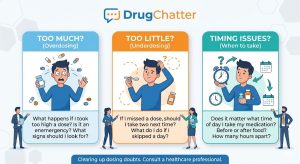
There are two kinds of dosing confusion: the kind that comes from misunderstanding a label, and the kind that comes from living in the real world—missed doses, schedule changes, food and drink, other meds, and the occasional “I thought it was okay.” The questions below are the ones people keep asking when they’re trying to get the dose right and the dose, somehow, keeps getting complicated.
1) “Too much” dosing: when the body pays the bill
Sometimes the problem isn’t that someone takes the wrong drug—it’s that they take the right drug at the wrong intensity. That can mean stacking, doubling, or simply pushing dose timing around until the pharmacology stops cooperating.
2) “Too little” dosing: when you don’t get the effect you expected
Under-dosing is the quiet failure mode. It can look like “the medicine isn’t working,” when the real issue is that the dose is being blunted by timing, food, other substances, or physiology.
Timing is where good intentions go to die. Some medicines are forgiving; others are not. Even when the dose is correct, the schedule can change absorption, peak effect, and side-effect risk.
4) The “dose is the same, but the person isn’t” problem
Even perfect timing can fail if the dose doesn’t match the patient’s biology—age, liver function, body weight, diet, and concurrent meds can all shift what “the same dose” really means.
People don’t take medicines in a vacuum. Travel, missed refills, switching therapies, and adding new drugs all create dosing “edge cases.” The questions below are basically the checklist of those moments.
Dosing confusion usually isn’t about stupidity—it’s about complexity. The safest move is to treat dosing instructions like engineering specs: follow the schedule, don’t improvise with food/drink or “helpful” supplements, and ask before combining or changing doses. If you’re unsure, the questions above are a good map of the exact places people get tripped up.