In 2023, a patient in a Reddit thread described asking ChatGPT about Ozempic dosing. The AI told her it was “generally safe to double the dose if weight loss had stalled.” That’s wrong. It’s also the kind of answer that, if believed, could land someone in an emergency room — and create a regulatory headache for Novo Nordisk that no press release can fix.
That scenario, increasingly common as millions of patients and physicians turn to AI for medical guidance, is exactly why a new category of competitive intelligence has emerged: monitoring what large language models say about your drugs.
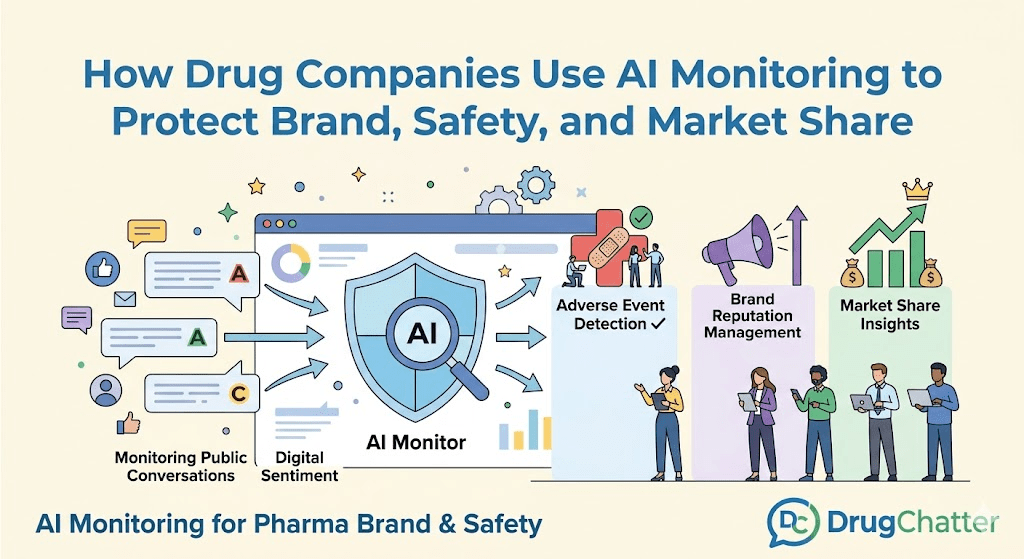
This isn’t web scraping. It isn’t social listening in the traditional sense. It’s something newer and stranger — systematically querying AI systems to see how they represent your brand, your competitors’ brands, drug safety profiles, dosing instructions, and patient concerns. The outputs inform regulatory risk, brand strategy, pharmacovigilance, and market positioning simultaneously.
Pharma has always tracked what patients and physicians say about drugs. Now it has to track what machines say too.
Why AI Search Has Become a Drug Information Channel Pharma Can’t Ignore
The numbers are hard to dispute. As of late 2024, ChatGPT had over 200 million active weekly users. Perplexity was fielding over 100 million queries a month. Google’s AI Overviews were appearing in a majority of health-related searches. A Wolters Kluwer survey found that 54% of patients had used an AI chatbot for health information — and that most of them didn’t verify the answers with a clinician.
“Patients increasingly arrive at clinical encounters with AI-generated information about their medications — and a disturbing portion of it is inaccurate or out of context.” — Journal of the American Medical Informatics Association, 2024
That’s the structural problem. AI systems aren’t just a fringe information source anymore. They’re sitting between pharmaceutical companies and the patients and providers those companies need to reach. And unlike a Google search result, where the brand team can at least see what page is ranking, an AI answer is a black box. The system synthesizes training data, applies its own weighting, and delivers a confident-sounding response with no clear source trail.
For drug companies, the competitive intelligence implications are significant. If ChatGPT consistently recommends a competitor’s product when someone asks “What’s the best GLP-1 for weight loss?” — that’s share-of-voice erosion that no traditional media buy can counteract. If Claude describes your drug’s side effect profile inaccurately, that shapes patient and physician perception in ways that take months to surface in traditional market research.
How Patients Actually Ask About Drugs in AI Search
The query patterns matter because they reveal what patients are trying to solve — and where AI answers are filling a vacuum. Based on public data from Perplexity’s trending topics and analysis of AI health query patterns, the most common drug-related question types break into four buckets:
Dosing and administration questions (“Can I take metformin at night?” / “Is 10mg of Ozempic too much?”)
Side effect and interaction questions (“What happens if I drink alcohol on Eliquis?” / “Does Wegovy cause hair loss?”)
Comparative efficacy questions (“Is Mounjaro better than Ozempic?” / “Humira vs Skyrizi for psoriasis”)
Cost and access questions (“Is there a cheaper alternative to Dupixent?” / “Is Ozempic covered by Medicare?”)
Each category represents a different risk and intelligence surface. Dosing questions carry immediate safety risk if answered incorrectly. Comparative questions determine share-of-voice in a way that directly affects prescribing intent. Cost and access questions are increasingly driving generic substitution recommendations from AI systems — a trend that branded drug manufacturers are only beginning to quantify.
What Physicians Are Asking AI — and Why It Differs From Patient Queries
Physician AI usage skews toward clinical decision support. A 2024 survey by Doceree found that 38% of U.S. physicians had used ChatGPT or a similar tool during clinical workflow in the prior month, primarily for differential diagnosis support and drug interaction checking. Physicians ask more specific questions: mechanism of action, clinical trial outcomes, dosing in renal impairment, off-label protocols.
That creates a different monitoring problem. A patient asking “Does Keytruda work for lung cancer?” and getting a partly wrong answer is a communication and pharmacovigilance issue. A physician asking “What’s the correct pembrolizumab dosing for TMB-high non-small cell lung cancer in a patient with mild renal impairment?” and getting a confidently wrong answer is a patient safety issue with potential liability implications.
Pharmaceutical medical affairs teams are beginning to treat AI search the same way they’ve treated physician forums like Doximity — as a source of signal about how their products are being discussed, questioned, and misrepresented among clinical audiences.
Why Perplexity, ChatGPT, Gemini, and Claude Answer the Same Drug Question Differently
Not all AI systems are created equal in their drug information accuracy, and understanding the differences matters for monitoring strategy. Each platform reflects a different training corpus, knowledge cutoff, retrieval approach, and content policy.
Perplexity retrieves live web content and cites sources, which means its drug answers are more current but also more susceptible to surface-level web quality variations. ChatGPT’s base models operate from training data with a fixed cutoff, which means they may be confidently wrong about drugs approved or relabeled after that cutoff. Gemini integrates Google Search, giving it more current retrieval but also weighting content the way Google’s algorithm does — which may not align with clinical evidence hierarchy. Claude applies specific content policies around health information that, in some cases, produce more cautious and caveated answers than the clinical situation warrants.
A monitoring program that queries only one platform is missing the variation that matters for understanding how patients and physicians in different contexts are receiving information about your drugs.
Can AI Hallucinations Trigger FDA Regulatory Risk?
The regulatory question is unresolved, but it isn’t theoretical. The FDA’s framework for drug promotion and adverse event reporting was built around a world where promotional content comes from identifiable human sources — salespeople, marketers, medical affairs professionals. AI systems don’t fit that model cleanly.
The operative risk surfaces are two:
First, if an AI system produces promotional-sounding content about a drug — including claims not reflected in the approved label — and that content traces back to materials the manufacturer produced (training data, published studies the company sponsored, promotional websites), the FDA could argue the manufacturer has constructive responsibility for it. This argument has never been tested in enforcement, but FDA’s 2023 draft guidance on AI-generated promotional content flagged the general issue.
Second, adverse event reporting. FDA regulations require manufacturers to report adverse events they “become aware of” — language the agency has interpreted broadly. If a company is monitoring AI outputs and encounters a detailed patient account of an adverse experience relayed through an AI chatbot exchange, does that trigger a reportable adverse event? The legal answer is probably yes, depending on the specifics. That means monitoring programs can create reporting obligations as a byproduct of running them.
Real FDA Warning Letters That Foreshadow AI Risk
The FDA has issued over 50 warning letters related to online drug promotion since 2015, many of them addressing incomplete risk disclosure, misleading comparative claims, and off-label promotion in digital contexts. None specifically address AI yet — but the precedents are instructive.
In 2021, FDA warned Acceleron Pharma for a website that presented efficacy data without adequate risk information, even though the format (a web-based tool) made presenting that information difficult. The agency’s position: the format doesn’t excuse the omission. That logic, applied to AI search, suggests FDA would hold manufacturers responsible for correcting AI-generated misinformation about their products if they had the means to do so and didn’t act.
In 2022, the agency issued guidance on social media drug promotion that specifically noted that “third-party platforms presenting drug information” don’t relieve manufacturers of responsibility for corrections when they’re aware of the inaccuracy. AI search results are third-party content — but the question of manufacturer awareness is exactly what an AI monitoring program creates.
Off-Label Drug Discussions in AI: Where the Risk Concentrates
Off-label is where AI monitoring becomes most legally sensitive for manufacturers. LLMs routinely discuss off-label uses because their training data includes medical literature, patient forums, and clinical practice discussions where off-label use is frequently documented.
Querying ChatGPT about “tirzepatide for PCOS” — an off-label use — returns detailed mechanistic explanations and anecdotal outcome data. Querying Perplexity about “low-dose naltrexone for autoimmune disease” surfaces research summaries and patient testimonials. These aren’t answers Eli Lilly or Mallinckrodt manufactured, but they’re answers about their products.
The competitive intelligence dimension: tracking which off-label uses AI is amplifying helps manufacturers anticipate where physician and patient interest is concentrating — which informs label expansion decisions, clinical trial prioritization, and medical affairs communication strategy years before formal data is available.
How AI Handles Black Box Warnings — and When It Gets Them Wrong
Black box warnings are the most serious safety communication FDA issues. They’re required to appear prominently in prescribing information and in any promotional material. AI systems handle them inconsistently — sometimes omitting them entirely, sometimes attributing them to the wrong drug, and sometimes correctly citing them but without the clinical context that makes them meaningful for decision-making.
Testing across major AI platforms reveals that warnings added close to or after a model’s training cutoff are the most commonly missed. When Ozempic received its updated labeling regarding ileus risk in 2023, AI systems trained before that update continued to describe the drug’s gastrointestinal side effect profile without mentioning it. Patients researching the drug after the label change — but consulting an AI trained before it — received outdated safety information with no indication anything was missing.
For pharmaceutical safety teams, this is a concrete monitoring priority: querying AI systems for black-box-relevant content after every label update, and tracking how quickly the updated information propagates into AI answers as retrieval-augmented systems update their underlying content.
Tracking Share of Voice Across ChatGPT, Gemini, Claude, and Perplexity
Share-of-voice in AI search is not the same as share-of-voice in traditional paid or earned media. There’s no impression count, no CPM, no click-through rate. What there is: the relative frequency with which an AI system mentions, recommends, or frames a particular drug when responding to a query in its therapeutic category.
Tools like DrugChatter are specifically built to quantify this — running systematic queries across AI platforms and measuring brand mention rates, framing valence (positive, neutral, negative), and side-effect attribution patterns. The methodology is closer to mystery shopping than web analytics.
How Often Does Claude Mention Ozempic vs. Wegovy?
This is a real question pharma brand teams are paying people to answer. Ozempic (semaglutide for diabetes) and Wegovy (semaglutide for obesity) are the same molecule in different dose forms, approved for different indications, with different pricing and coverage profiles. How an AI system distinguishes — or conflates — them directly affects patient understanding of appropriate use.
In informal testing, Claude, ChatGPT, and Gemini all show a tendency to mention Ozempic more frequently than Wegovy in general weight loss queries, even though Wegovy carries the approved obesity indication. This reflects training data composition — Ozempic has generated substantially more media coverage, social discussion, and published literature volume, so the models’ probabilistic outputs weight toward it. For Novo Nordisk’s brand team, that’s a measurable share-of-voice problem for Wegovy that has nothing to do with its paid media budget.
Mounjaro vs. Ozempic: Who Wins the AI Recommendation Battle?
The GLP-1 competitive landscape is the most actively monitored AI search space in pharma right now. Eli Lilly’s tirzepatide (Mounjaro for diabetes, Zepbound for obesity) vs. Novo Nordisk’s semaglutide products is the most commercially significant drug rivalry of the decade, and both companies are watching what AI systems say about it.
The complicating factor: LLMs draw on training data with a knowledge cutoff that may predate recent trial readouts, label changes, or formulary decisions. A Gemini model trained through early 2023 might recommend Ozempic as the leading GLP-1 without knowing Zepbound had been approved or that SURMOUNT-5 trial data showed tirzepatide superiority in head-to-head weight loss outcomes. Outdated AI recommendations can perpetuate competitive disadvantage even after clinical evidence has shifted.
Do LLMs Recommend Generic Drugs More Often Than Branded Drugs?
The evidence suggests yes, with nuance. LLMs trained on medical literature and consumer health content — both of which skew toward cost-conscious recommendations — tend to recommend generic substitution when asked about drug costs. Asking “Is there a cheaper version of Humira?” consistently returns detailed discussions of adalimumab biosimilars across every major AI platform. That’s clinically accurate, but the framing often doesn’t capture the pharmacokinetic and immunogenicity differences that a prescriber would weigh.
For branded drug manufacturers, this creates a specific monitoring requirement: tracking how aggressively AI systems are routing patients toward generics or biosimilars, and whether the clinical nuances that justify branded pricing are being captured in those recommendations. If they’re not, that’s a medical affairs communication gap — and potentially a real-world switching trigger.
Which Drugs Are Most Frequently Mentioned by AI Systems?
Across publicly available analysis of AI health query responses, the most mentioned branded drugs cluster predictably: Ozempic, Humira, Eliquis, Keytruda, Dupixent, Jardiance, and Xarelto appear with high frequency because they have large patient populations, high media visibility, and extensive published literature. Their high mention rates are both an advantage (they’re top-of-mind) and a risk (more AI surface area means more opportunity for misinformation).
Newer drugs — particularly in oncology and rare disease — appear less frequently even when they’ve displaced older agents in clinical practice. If a new lung cancer drug has better outcomes than pembrolizumab in certain populations but was approved after an AI system’s knowledge cutoff, the AI will recommend the older agent. That’s a share-of-voice problem with no traditional marketing solution.
How AI Search Share of Voice Translates to Prescribing Behavior
The causal chain between AI recommendation frequency and actual prescribing behavior is not yet established in peer-reviewed literature. But the mechanisms are plausible and the directional logic is consistent with what research on consumer health information behavior already shows: patients who arrive at clinical encounters with a specific drug in mind influence prescribing outcomes. Studies in the direct-to-consumer advertising literature consistently find that patients who ask about a drug by name are more likely to receive a prescription for it.
If AI systems function as a form of ambient DTC — generating drug awareness and preference among patients who then advocate for specific medications with their physicians — the share-of-voice implications for pharmaceutical commercial strategy are substantial. That hypothesis is driving the investment in monitoring infrastructure today, ahead of the academic evidence base that will eventually validate or complicate it.
What Pharma Brand Teams Can Learn From Reddit AI Citations
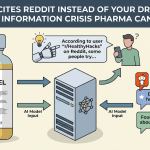
Reddit has become the training data backbone for consumer health AI outputs. OpenAI’s 2023 deal with Reddit for training data access formalized what was already happening informally — LLMs had been trained on Reddit patient communities, drug-specific subreddits (r/Ozempic, r/ChronicPain, r/breastcancer), and health forums at scale.
That means what patients say on Reddit doesn’t just shape other patients’ opinions. It shapes what AI systems say when anyone, anywhere, asks about those conditions and drugs. The pharmacovigilance implications are direct: adverse events discussed on r/Eliquis eventually appear in AI answers about Eliquis side effects. Patient experiences described on r/Dupixent inform how Claude answers questions about dupilumab tolerability.
How Patient Forum Data Flows Into AI Drug Answers
The pathway isn’t linear or traceable in real time, but the pattern is consistent. High-engagement Reddit posts — particularly those describing unexpected side effects, dosing confusion, or treatment failures — generate reply threads, cross-posts, and citations that amplify them across the web. When that content enters LLM training data, it gets weighted by the volume and engagement of the original discussion, not by its clinical accuracy.
A viral r/Ozempic thread about “Ozempic face” — the term for facial fat loss associated with rapid weight loss — generated hundreds of media articles and became a fixture in AI answers about Ozempic side effects. That’s a clinically legitimate concern, but the AI framing often lacks the nuance that “Ozempic face” is a consequence of weight loss generally, not a specific pharmacological effect of semaglutide. That distinction matters for patient decision-making.
Drug company social listening teams that monitor Reddit can now treat their findings as a leading indicator of future AI content — rather than just a current-sentiment measure. That’s a meaningful intelligence upgrade.
Emerging Patient Concerns Before They Trend: The Early Warning Use Case
This is where AI monitoring produces the highest-value intelligence that doesn’t exist anywhere else. A pharmaceutical company monitoring AI outputs systematically can detect when a new side-effect concern — or a competitor claim — is beginning to appear in AI answers before it surfaces in traditional pharmacovigilance reports, before it trends on social media, and before it reaches the prescriber.
The mechanism: AI outputs about a drug are a composite of the web’s current discussion of that drug, filtered through the model’s training data and retrieval mechanisms. When a new safety concern starts gaining traction — in patient forums, in preprint literature, in clinical trial reports — AI answers begin incorporating it faster than traditional surveillance systems detect it. Monitoring those answers provides an early signal.
Real-world example: concerns about suicidality signals for GLP-1 drugs began appearing in AI answers and Perplexity citations in mid-2023, months before FDA issued its safety communication requesting data from manufacturers in January 2024. A company monitoring AI outputs for GLP-1 products would have had months of lead time on that regulatory development.
Patient Sentiment Analysis in AI Outputs: Beyond Simple Positive and Negative
Traditional sentiment analysis in pharmaceutical social listening is a blunt instrument — positive, negative, neutral, classified by keyword or simple classifier. AI output monitoring surfaces richer sentiment information because AI systems synthesize patient sentiment from multiple sources and present it in natural language that captures nuance.
A patient asking an AI “Is Dupixent worth it?” and receiving an answer that says “Most patients report significant improvement in eczema symptoms, though injection site reactions are frequently mentioned as a downside, particularly in the first month of treatment” — that answer encodes more sentiment information than a keyword count of “good” vs. “bad” in a social media dataset. Monitoring and classifying those AI-synthesized sentiment summaries over time gives brand teams a richer picture of how patient experience is being represented — and where patient concern is concentrated.
Can AI Outputs Be Used for Pharmacovigilance? The Regulatory Reality
The FDA’s 2024 draft guidance on AI in pharmacovigilance recognized that AI-generated content could contain reportable adverse event information — and that the traditional criteria for reportability (identifiable patient, identifiable reporter, suspect drug, adverse event) could in principle be met by an AI-mediated account of a patient experience.
In practice, most AI outputs don’t meet those criteria because they aggregate and synthesize rather than relay specific individual accounts. But the edge cases are real. If a patient enters their personal medication history and adverse experience into a ChatGPT conversation, and ChatGPT’s response incorporates that information into its answer, and a pharmaceutical company is monitoring those outputs — that’s a complicated situation from a reporting standpoint.
The Four-Element Reportability Test Applied to AI Content
FDA’s minimum criteria for an ICSR (Individual Case Safety Report) are: an identifiable patient, an identifiable reporter, a suspect drug, and an adverse event. AI outputs fail most of these criteria most of the time — they don’t identify patients, they don’t identify individual reporters, and they generally describe adverse event patterns rather than specific incidents.
Where it gets complicated: AI systems with memory or personalization features, or systems where the user’s specific experience is incorporated into the AI’s response, could produce outputs that are much closer to reportable territory. As AI health tools become more personalized — a trend evident in products like Amazon’s Alexa Health, which has pursued clinical partnerships — the line blurs further.
Pharmaceutical regulatory affairs teams are beginning to draft internal guidance on AI output monitoring and pharmacovigilance obligations. The companies doing this work now are building institutional knowledge that will matter when FDA inevitably formalizes its position.
How AI Monitoring Programs Create Compliance Risk — and How to Manage It
Here’s the paradox: a robust AI monitoring program generates awareness of adverse events, off-label discussions, and safety concerns that the company might not otherwise have encountered. That awareness creates reporting obligations. The alternative — not monitoring — creates legal exposure if something surfaces later and the company can’t demonstrate it exercised reasonable diligence.
The pragmatic resolution most regulatory counsels recommend is documented intent and scope. Define in writing what the AI monitoring program is for (brand intelligence, safety signal detection, competitive analysis), what triggers a pharmacovigilance workflow, and what happens with AI-sourced safety information. That structure allows monitoring to proceed without creating an automatic reporting pipeline out of every AI output that mentions a side effect.
EMA and International Regulatory Perspectives on AI Drug Information
The European Medicines Agency has taken a more structured approach to AI in pharmacovigilance than FDA, publishing a reflection paper in 2023 on the use of AI/machine learning in signal detection. The EMA’s framework emphasizes that AI is a supplemental tool for signal detection, not a replacement for human pharmacovigilance assessment — and that data quality is the primary determinant of AI surveillance utility.
For multinational pharmaceutical companies, AI monitoring programs need to account for regulatory variation across markets. What FDA considers a reportable adverse event sourced from digital media may differ from EMA’s interpretation. And AI systems themselves vary in their content policies and training data composition across markets — a European-facing deployment of Gemini may answer the same drug question differently than a U.S.-facing one, reflecting content regulation differences between markets.
How Eli Lilly and Novo Nordisk Monitor AI Mentions — What’s Actually Known
Neither company has published detailed methodology, but their actions are revealing. Eli Lilly’s 2023 investment in Evidation Health — a real-world evidence and patient data platform — reflected a broader push toward digital health signal monitoring that encompassed social media and patient-reported outcomes. Novo Nordisk’s partnerships with IQVIA and its investment in digital health infrastructure similarly reflect the recognition that drug information no longer flows through controlled channels.
Both companies maintain large medical information teams that respond to unsolicited medical inquiries — a function that’s increasingly being expanded to cover AI-mediated inquiry. When a patient asks ChatGPT a question about Ozempic and then calls Novo Nordisk’s medical information line with a follow-up, that conversation surfaces what AI told them. Medical information teams at large pharma companies have become an indirect AI monitoring channel by default.
What Pfizer, AstraZeneca, and J&J Are Doing Differently
Larger companies with more complex portfolios are approaching AI monitoring differently from GLP-1-focused pure-plays. Pfizer’s digital intelligence team — part of its commercial analytics organization — has explicitly included AI search outputs in competitive intelligence monitoring since at least 2023, according to job descriptions and conference presentations from that period. AstraZeneca has discussed AI output monitoring in the context of its oncology portfolio, where the complexity of treatment sequencing decisions makes AI misinformation particularly dangerous.
Johnson & Johnson’s Janssen division faced a specific AI monitoring challenge with Stelara (ustekinumab) as its biosimilar entry approached in 2023-2024. AI systems that hadn’t been updated with current market access information were sometimes still recommending Stelara without acknowledging cheaper biosimilar options — a nuanced share-of-voice situation that Janssen’s team needed to track as the competitive dynamic shifted. Whether that silence was strategically advantageous or a liability depended on how FDA chose to interpret manufacturer obligations around awareness of AI content — a question that still hasn’t been definitively answered.
Smaller Biotech Companies and the AI Monitoring Gap
For a company with one or two approved drugs and no dedicated digital intelligence infrastructure, AI monitoring looks like an expensive luxury. It isn’t. Small-cap biotechs are arguably more exposed to AI misinformation risk than large pharma, because they have less brand equity to buffer a misleading AI narrative, fewer resources to correct it, and smaller medical affairs teams to detect it early.
The emergence of purpose-built tools has changed the economics. DrugChatter is designed specifically for pharmaceutical drug AI monitoring — tracking brand mentions, sentiment, and comparative recommendations across AI platforms at a cost structure accessible to mid-market pharma and biotech companies, not just top-20 manufacturers. The competitive intelligence use case — knowing what AI says about your drug relative to competitors — is as valuable for a $500M revenue specialty pharma company as it is for Pfizer.
How Specialty Pharma Uses AI Monitoring for Rare Disease Drugs
Rare disease drugs face a specific AI information challenge: low query volume means the AI training data is thin, which means answers are more likely to draw on case reports, advocacy organization content, and patient forum posts rather than robust clinical trial literature. For drugs like nusinersen (Spinraza) for spinal muscular atrophy or eculizumab (Soliris) for paroxysmal nocturnal hemoglobinuria, the patient communities are small but intensely engaged — and their forum discussions carry disproportionate weight in AI training data relative to their clinical significance.
Monitoring AI outputs for rare disease drugs gives medical affairs teams visibility into how patient advocacy communities’ narratives are being amplified through AI answers — and where clinical accuracy has been displaced by anecdote.
AI Citation Sources: Where LLMs Actually Get Their Drug Information
The question of sourcing matters because it determines the accuracy distribution of AI drug answers, and because understanding source weighting helps manufacturers think about where to invest in authoritative content creation.
Based on Perplexity’s citation transparency (which shows sources more explicitly than most AI systems), the hierarchy of drug information sourcing in AI outputs looks approximately like this: clinical trial publications and meta-analyses (high weight, high accuracy), FDA prescribing information and drug labels (high weight, generally accurate for approved indications), major medical center content (Mayo Clinic, Cleveland Clinic, WebMD — high weight, variable accuracy), patient forums and news articles (moderate weight, lowest accuracy), and Wikipedia (lower weight but consistent presence).
Why AI Drug Answers Are Only as Good as Their Training Data
Training data quality varies significantly by therapeutic area and drug recency. Oncology drugs approved in the last two years, rare disease drugs with limited published literature, and combination regimens are all areas where AI answer accuracy degrades. The mechanism is straightforward: if the training corpus is thin, the model relies more heavily on adjacent content — general oncology literature, patient forum posts, clinician commentary — and accuracy falls.
Manufacturers in those categories need to think about AI not just as a monitoring target but as a content strategy challenge. Publishing clear, searchable, authoritative content — clinical trial summaries, prescribing support materials, patient education resources — creates the training data substrate that future LLM versions will draw on. It’s a long-cycle investment, but the alternative is leaving the content vacuum to be filled by whatever patient forum discussion and media coverage exists.
How AI Search Differs From Google SEO — and Why the Rules Have Changed
Traditional pharmaceutical SEO focused on ranking branded and unbranded content for specific search queries. The target was a link on a Google SERP page. AI search changes the target: the goal now is to be the source that AI systems cite or synthesize from when answering a question about your drug.
That means content strategy shifts from keyword density and backlink acquisition to E-E-A-T (Experience, Expertise, Authoritativeness, Trustworthiness) signals that AI systems use to weight sources. It means publishing in formats that AI systems can parse cleanly: structured data markup, clear factual statements, authoritative attribution. It means ensuring that label information, trial summaries, and safety data are in formats and locations that AI retrieval systems can access and weight appropriately.
DrugPatentWatch’s structured drug patent and exclusivity data has become a reference source for AI systems answering generic entry questions precisely because the data is clean, structured, and authoritative. That’s the model pharmaceutical manufacturers should be studying for their own content strategy.
Can Manufacturers Influence What AI Systems Say About Their Drugs?
Yes, within limits — and those limits matter. Manufacturers can influence AI outputs through the same content channels that influence retrieval-augmented AI systems generally: publishing high-quality, structured, authoritative content on domains that AI systems weight heavily (FDA.gov cross-references, peer-reviewed publications, institutional medical center pages). They can work with medical publishers and clinical guideline organizations to ensure their drugs are accurately represented in the content that AI systems treat as authoritative.
What manufacturers cannot do — and should not attempt — is directly manipulating AI model outputs through adversarial techniques, prompt injection, or undisclosed partnerships with AI providers to weight their products preferentially. That path leads to regulatory and reputational consequences that no competitive intelligence benefit justifies.
The legitimate channel is content: accurate, authoritative, accessible content that AI systems cite because it deserves citation. The monitoring function — understanding where current AI answers are inaccurate — identifies the specific gaps that content strategy should address.
Why ChatGPT Gets Drug Side Effects Wrong — and What That Costs
Inaccurate side effect information from AI systems has three direct costs: patient harm if a side effect goes unreported because a patient was told it wasn’t associated with their drug; brand damage when a drug is incorrectly associated with a side effect it doesn’t cause or rarely causes; and competitive disadvantage when a drug’s side effect profile is overstated relative to a competitor’s in AI answers.
ChatGPT’s error profile in drug information skews toward errors of omission and temporal outdatedness rather than outright fabrication. It may not mention a black box warning added after its training cutoff. It may not distinguish between adverse events reported in clinical trials and those that emerged in post-market surveillance. It may not capture the dose-dependence of a side effect that matters clinically.
Documented Cases of AI Drug Misinformation and Their Impact
A 2023 JAMA Network Open study tested ChatGPT on 25 common drug interaction questions and found it answered correctly 70% of the time — meaning it was wrong about one in three interactions. For drug interactions that can cause serious harm (anticoagulants, QT-prolonging drugs, narrow therapeutic index drugs), a 30% error rate is clinically unacceptable.
A separately published analysis of AI answers about cancer drug immunotherapy found that 42% contained inaccuracies about approved indications, with the most common error being description of drugs as indicated for tumor types where they were not approved, based on promising but non-confirmatory early-phase data. From a manufacturer’s perspective, that’s unsolicited off-label promotion that the company neither authorized nor benefits from controlling.
The reputational cost is harder to quantify but plausible. If a patient researches a drug using AI, encounters an AI answer that describes severe side effects inaccurately or disproportionately, and declines to initiate a potentially beneficial therapy as a result — that’s a real harm. It’s also an adherence and uptake problem that traditional marketing attribution systems would never trace back to AI search.
Hallucinated Clinical Trial Data: The Most Dangerous AI Drug Error
Fabricated clinical trial citations are among the most dangerous outputs AI systems produce about drugs. Because LLMs generate plausible-sounding text, they can produce confident summaries of clinical trials that don’t exist, or that do exist but with different results than described. For oncology drugs where clinical trial data is the primary evidence base for prescribing decisions, a hallucinated trial summary could genuinely affect a clinical decision.
This has happened. A 2023 case documented by researchers at the University of Washington found that when asked to summarize clinical trial evidence for a specific chemotherapy combination, ChatGPT produced a detailed “summary” of a Phase III trial that had not been conducted. The trial name, sample size, and outcome data were fabricated — but the response was formatted identically to how the AI summarized real trials.
For manufacturers, this creates an obligation to monitor not just what AI says about real trials, but whether AI is inventing trial evidence for their drugs — which could create phantom safety or efficacy profiles that contradict the approved label.
Building a Pharma AI Monitoring Program: Workflow and Infrastructure
Pharmaceutical companies approaching AI monitoring for the first time face a practical question: what does a monitoring program actually look like operationally?
The mature model — which a handful of large pharma companies are now running — has four components: systematic query execution, output tagging and classification, pharmacovigilance triage, and brand intelligence reporting.
Query Design: What to Ask AI Systems and How Often
Query libraries for AI drug monitoring should map to how real users ask about drugs, not how the company describes its own products. That means unbranded category queries (“best medication for Type 2 diabetes”), branded queries (“how does Jardiance work”), comparative queries (“Jardiance vs Farxiga”), side-effect queries (“Jardiance kidney risk”), access queries (“is Jardiance covered by Medicare”), and off-label queries (“Jardiance for heart failure with preserved ejection fraction”).
Frequency depends on resources and risk profile. For actively promoted products in competitive markets, weekly or biweekly systematic querying across major platforms (ChatGPT, Gemini, Claude, Perplexity, Bing Copilot) is appropriate. For drugs approaching biosimilar or generic entry — where share-of-voice dynamics are shifting quickly — more frequent monitoring captures the inflection.
Output Classification: Tagging AI Drug Answers for Intelligence Value
Raw query outputs need to be classified to be actionable. A practical taxonomy:
Safety accuracy: correct / partially correct / incorrect / omission of required safety information
Pharmacovigilance flag: yes / no (based on specificity of adverse event description)
This classification framework allows the monitoring output to flow to different internal teams: safety signals to pharmacovigilance, competitive framing to brand strategy, indication accuracy issues to medical affairs, source quality to content strategy.
AI Monitoring Integration With Traditional Drug Safety Surveillance
AI monitoring shouldn’t replace traditional adverse event surveillance — it should extend it. The signal-to-noise ratio in AI outputs is lower than in structured pharmacovigilance data sources, and the regulatory status of AI-sourced adverse events is ambiguous. But as an early warning system that feeds human review and traditional reporting workflows, AI monitoring adds a dimension that no existing surveillance system captures.
The companies building this integration are treating AI monitoring as a supplemental surveillance layer — comparable in function to the social media monitoring programs that became mainstream in pharmacovigilance after FDA’s 2014 guidance on social media drug promotion. That guidance took years to develop into enforceable standards. AI-specific guidance is earlier in that cycle, which means companies that build infrastructure now are ahead of the regulatory curve.
Measuring ROI on Pharmaceutical AI Monitoring Programs
ROI on AI monitoring is measurable across four categories: risk avoidance (regulatory actions not triggered because AI misinformation was detected and corrected before becoming a regulatory issue), competitive intelligence value (market decisions informed by AI share-of-voice data), pharmacovigilance efficiency (safety signals detected faster than traditional surveillance), and content strategy optimization (knowing which drug topics have the largest AI accuracy gaps guides content investment).
The risk avoidance category is the hardest to quantify — you’re counting things that didn’t happen. The competitive intelligence category is the easiest: if AI monitoring reveals that a competitor’s drug is preferred in 65% of AI responses to category queries, and that data informs a brand investment that improves that ratio, the ROI calculation is relatively direct. Tools like DrugChatter are building the longitudinal tracking infrastructure that makes those before-and-after comparisons possible.
The Competitive Intelligence Playbook: Turning AI Monitoring Into Strategic Action
The most sophisticated use of pharmaceutical AI monitoring isn’t defensive — it’s intelligence-driven offense. Companies that monitor AI outputs systematically are generating insights that inform decisions across commercial, medical affairs, regulatory, and pipeline strategy.
Using AI Share-of-Voice Data to Inform Brand Strategy
If AI consistently positions a competitor’s drug as first-line and yours as second-line in a category where clinical guidelines don’t actually establish that hierarchy, that’s a correctable problem — but only if you know about it. The correction pathway runs through content: publishing authoritative comparison content, ensuring clinical trial summaries are current and accessible, partnering with medical societies whose content AI systems weight heavily.
Share-of-voice metrics from AI monitoring can also reveal geographic and demographic variation. AI systems show different answer patterns depending on query phrasing, and phrasing patterns differ by patient population. Spanish-language GLP-1 queries return different results than English-language queries. “What’s the best diabetes medication” asked in clinical framing returns different results than the same question in lay framing. A monitoring program that captures this variation gives brand teams granular intelligence about where share-of-voice gaps exist.
Physician Perception of Your Drug in AI: The Medical Affairs Intelligence Gap
Medical affairs teams have historically tracked physician perception through advisory boards, speaker programs, and medical education interactions. AI monitoring adds a passive intelligence channel: what questions are physicians asking AI about your drug, and what answers are they getting?
Systematically querying AI systems with physician-oriented questions (mechanism of action, clinical trial design, head-to-head data, dosing in special populations) surfaces the answer landscape that physicians encounter when they use AI for clinical decision support. If that landscape is inaccurate or missing key information, medical affairs has an identified gap to address — through publications, medical education, and congress presence.
Tracking Competitor Drug Mentions Across AI Platforms
AI monitoring isn’t just about your own drugs. Tracking competitor mention rates, framing, and accuracy across AI platforms gives competitive intelligence teams data that no traditional market research methodology captures. You can know that ChatGPT recommends your competitor’s drug 60% of the time when patients ask about your therapeutic category, and that it consistently frames your drug’s side effect profile as worse than clinical trial data supports — and you can know this before it’s reflected in prescribing data or market share.
That lead time is valuable. Traditional market research — IMS data, prescription tracking, survey-based brand health — lags reality by months. AI monitoring operates in near-real time. The competitive intelligence team that acts on an AI share-of-voice problem in Q1 is ahead of the one that detects it in Q3 market research.
Pipeline Intelligence: What AI Reveals About Future Competitive Threats
AI systems discuss pipeline drugs — Phase III candidates, breakthrough therapy designations, FDA advisory committee outcomes — often with more detail than brand teams track in traditional competitive intelligence workflows. Monitoring what AI says about competitor pipeline drugs surfaces information about market positioning, physician anticipation, and patient awareness that informs go-to-market strategy for your own portfolio.
When AI consistently describes a Phase III pipeline drug as “likely to become first-line” in a category where you have an approved product, that’s competitive intelligence worth having before the drug is approved — not after.
LLM Search Optimization for Pharma: What’s Legitimate and What Isn’t
The SEO industry is already debating “LLM optimization” — the attempt to influence what AI systems say about a brand or product. For pharmaceutical companies, the question has a specific ethical dimension: the goal of LLM optimization in pharma should be accuracy, not promotional advantage. Getting an AI system to represent your drug’s approved indication and safety profile correctly isn’t manipulation — it’s a legitimate public health interest.
The line gets complicated when the goal shifts from accuracy to preference — trying to get AI to recommend your drug over a competitor’s when clinical evidence doesn’t clearly support that preference. That kind of LLM influence campaign would raise the same ethical and regulatory issues as any other form of promotional activity. The industry needs to develop standards for this distinction, and the companies that engage with it thoughtfully now will have more influence over what those standards look like.
Content Strategy for AI Visibility: What Pharmaceutical Marketers Need to Build Now
Pharmaceutical content teams that want their drugs represented accurately in AI search outputs should focus on four content priorities:
Structured prescribing information: FDA label content in formats (JSON-LD, schema markup) that AI retrieval systems can parse and attribute clearly
Authoritative plain-language summaries: patient-facing clinical trial summaries that are accurate, complete, and hosted on high-authority domains
Head-to-head data clarity: clear, accessible summaries of comparative trial data that AI systems can retrieve when answering category comparison queries
Post-market safety communications: ensuring REMS documents, risk communications, and label updates are indexed and accessible in formats that AI retrieval systems weight appropriately
This is content strategy as patient safety infrastructure — a framing that should help pharma marketing and medical affairs teams align around the investment.
The Future of AI Drug Monitoring: Agentic AI, Multimodal Queries, and What Comes Next
The AI search landscape is moving fast enough that monitoring infrastructure built today will need to adapt continuously. Three developments are shaping what pharma AI monitoring needs to handle next.
Multimodal AI queries. Patients are increasingly attaching medication photos, describing symptoms with voice, and using AI to interpret lab results. The question “what does this pill do?” asked with an image is a different monitoring challenge than a text query. AI systems that process images and audio are expanding the information surface that pharmaceutical monitoring programs need to cover.
Agentic AI in healthcare. AI systems that take actions — scheduling appointments, retrieving pharmacy information, interfacing with electronic health records — are beginning to enter clinical workflow. When an AI agent retrieves drug information as part of an automated workflow, the monitoring and liability questions become more complex than they are for passive chatbot responses.
Regulatory formalization. FDA, EMA, and other regulatory bodies are developing AI-specific guidance that will formalize what pharmaceutical manufacturers are expected to do about AI-generated drug information. Companies that have been monitoring AI outputs and building institutional knowledge will be positioned to comply with new requirements without building from scratch. Companies that haven’t will face a compressed timeline to develop infrastructure under regulatory pressure.
Key Takeaways
AI search systems have become a primary drug information channel for both patients and physicians, with the majority of queries receiving answers that pharmaceutical companies have no visibility into without active monitoring.
AI hallucinations about drug safety profiles, dosing, and clinical trial data create real regulatory, pharmacovigilance, and reputational risk — not hypothetical ones.
Share-of-voice in AI search is measurable and commercially significant. Knowing that a competitor’s drug is recommended 60% more often than yours in AI responses is competitive intelligence with real strategic value.
Reddit and other patient forums function as the upstream training data for AI drug answers — making social listening a leading indicator of future AI content about your drugs.
Pharmacovigilance programs that don’t include AI monitoring have a blind spot. AI-mediated patient reports can contain reportable adverse event information, and early safety signals appear in AI outputs before they surface in traditional surveillance.
Off-label drug discussions in AI are extensive and largely unmonitored by manufacturers. They represent both a risk surface and an early signal of therapeutic interest that has competitive intelligence value.
The companies building AI drug monitoring infrastructure now — using purpose-built tools like DrugChatter — are ahead of regulatory formalization that will eventually require this capability across the industry.
Content strategy for AI requires a different framework than traditional SEO — prioritizing authoritative, structured, E-E-A-T-compliant content that AI retrieval systems weight heavily when generating drug answers.
Frequently Asked Questions
What is pharmaceutical AI monitoring and why do drug companies need it?
Pharmaceutical AI monitoring is the systematic practice of querying AI systems like ChatGPT, Gemini, Claude, and Perplexity to track how those systems represent a company’s drugs — including brand mentions, safety information, competitive framing, and off-label discussions. Drug companies need it because AI search has become a primary information channel for patients and physicians, AI outputs about drugs are frequently inaccurate, and those inaccuracies have direct consequences for brand perception, pharmacovigilance, and regulatory risk. Without active monitoring, manufacturers are blind to how their products are being described in the channel that is replacing traditional search for millions of users.
Can AI-generated drug information trigger FDA adverse event reporting requirements?
Potentially, in specific circumstances. FDA’s minimum reporting criteria — identifiable patient, identifiable reporter, suspect drug, and adverse event — are rarely all met by generic AI outputs, which aggregate rather than relay individual patient accounts. But as AI health tools become more personalized and as users share specific personal health information with AI systems, the line between AI output and a reportable ICSR blurs. Pharmaceutical companies running AI monitoring programs should have documented pharmacovigilance triage protocols for AI-sourced content that define what triggers a reporting workflow and what doesn’t.
How do you measure share of voice in AI search for pharmaceutical brands?
AI share-of-voice measurement involves running systematic, structured queries across major AI platforms — ChatGPT, Gemini, Claude, Perplexity, Bing Copilot — and coding the outputs for brand mention frequency, recommendation preference, framing valence, and accuracy. Purpose-built tools like DrugChatter automate this process, delivering comparative share-of-voice metrics across platforms and over time. Unlike web analytics, AI SOV monitoring has no impression or click data — the metric is presence, framing, and relative mention rate compared to competitor drugs in the same therapeutic category.
Do LLMs recommend branded drugs or generics more often?
In cost-sensitive query contexts — when patients ask about drug affordability, insurance coverage, or cheaper alternatives — LLMs consistently recommend generic and biosimilar options, reflecting the cost-conscious framing of the medical literature and consumer health content that constitutes most training data. For clinical efficacy and dosing queries, AI systems more often refer to branded drugs by commercial name, particularly for drugs with high media visibility. Manufacturers of branded drugs should monitor how aggressively AI is routing patients toward generics, and whether the clinical nuances that justify branded prescribing are being accurately represented alongside those recommendations.
What types of AI drug misinformation pose the highest risk to pharmaceutical companies?
Four categories warrant the highest concern: hallucinated clinical trial data (fabricated efficacy or safety summaries that contradict or invent trial results); outdated safety information (AI answers that predate label changes, black box warning additions, or post-market safety communications); incorrect dosing instructions (particularly for narrow-therapeutic-index drugs where dosing errors cause harm); and inaccurate indication framing (describing a drug as approved for an indication where it isn’t, or vice versa). Each creates a different risk profile — patient safety, regulatory exposure, liability, and brand — but all require active monitoring rather than reactive response to detect early enough to matter.