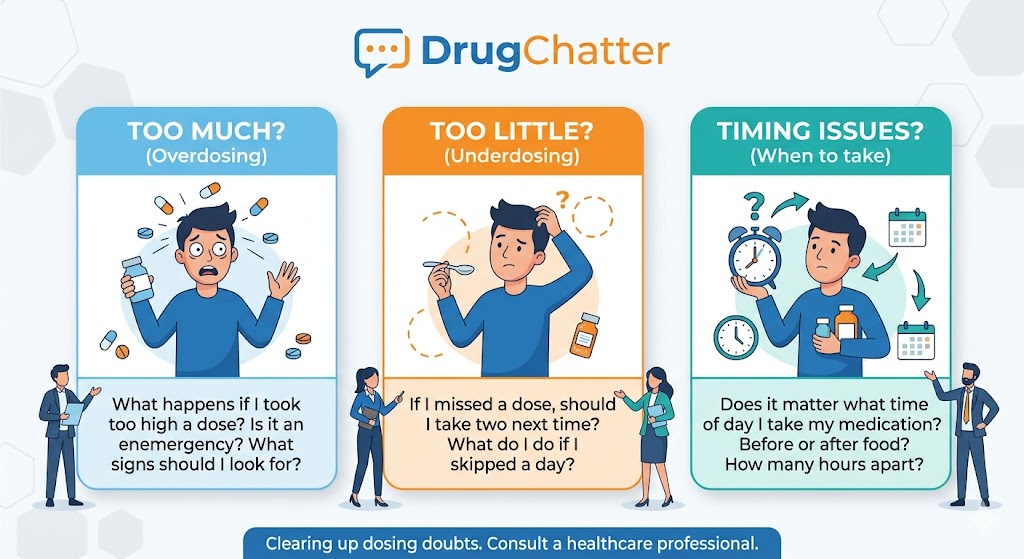
There are two kinds of dosing confusion: the kind that comes from misunderstanding the label, and the kind that comes from trying to “optimize” treatment with well-meaning tweaks—supplements, foods, timing, or dose changes. The trouble is that many drugs don’t forgive improvisation. A small change can mean “less effective,” “more side effects,” or both.
Below are some of the most common too much / too little / timing questions people ask—along with the DrugChatter answers that help translate the confusion into something actionable.
Too much (or too high a dose): when side effects start talking back
- “Is dizziness a common side effect of increased lipitor dosage?” — https://www.drugchatter.com/chat/49409/is-dizziness-a-common-side-effect-of-increased-lipitor-dosage
- “Can lipitor’s dosage affect the risk of liver damage?” — https://www.drugchatter.com/chat/63028/can-lipitor’s-dosage-affect-the-risk-of-liver-damage
- “How long until lipitor induced muscle strains fully heal?” — https://www.drugchatter.com/chat/14513/how-long-until-lipitor-induced-muscle-strains-fully-heal
- “How do advil’s long term side effects differ between users?” — https://www.drugchatter.com/chat/47428/how-do-advil’s-long-term-side-effects-differ-between-users
- “What are advil’s recommended dosage limits daily?” — https://www.drugchatter.com/chat/55987/what-are-advil’s-recommended-dosage-limits-daily
Too little (or the wrong “dose strategy”): when the treatment under-delivers
- “How does ezetimibe enhance statin’s cholesterol lowering effect?” — https://www.drugchatter.com/chat/51079/how-does-ezetimibe-enhance-statin’s-cholesterol-lowering-effect
- “How does ezetimibe’s role in obstructing fatty food digestion?” — https://www.drugchatter.com/chat/16123/what’s-ezetimibe’s-role-in-obstructing-fatty-food-digestion
- “Is lipitor effective for lowering cholesterol?” — https://www.drugchatter.com/chat/17615/is-lipitor-effective-for-lowering-cholesterol
- “How does lipitor’s effectiveness change with advanced age?” — https://www.drugchatter.com/chat/38203/how-does-lipitor’s-effectiveness-change-with-advanced-age
- “How crucial is a low fat diet for lipitor’s full potential?” — https://www.drugchatter.com/chat/3445/how-crucial-is-a-low-fat-diet-for-lipitor’s-full-potential
Timing: the “I took it when I remembered” problem
- “Can i skip a dose of lamictal?” — https://www.drugchatter.com/chat/6881/can-i-skip-a-dose-of-lamictal
- “What’s the recommended timeframe to resume lipitor?” — https://www.drugchatter.com/chat/61523/what’s-the-recommended-timeframe-to-resume-lipitor
- “How long does lyrica intensify alcohol’s effects?” — https://www.drugchatter.com/chat/48704/how-long-does-lyrica-intensify-alcohol’s-effects
- “Can chlorine in pools reduce lipitor’s effectiveness?” — https://www.drugchatter.com/chat/42438/can-chlorine-in-pools-reduce-lipitor’s-effectiveness
“It’s not the dose—it’s what I paired it with”: interactions that mimic dosing errors
Sometimes the dose isn’t wrong; the context is. Foods, supplements, and other meds can change absorption or metabolism, effectively turning your “standard dose” into something stronger or weaker.
- “How does taking antacids affect lipitor’s effectiveness?” — https://www.drugchatter.com/chat/48078/how-does-taking-antacids-affect-lipitor’s-effectiveness
- “What’s the recommended lipitor dosage with grapefruit juice?” — https://www.drugchatter.com/chat/51824/what’s-the-recommended-lipitor-dosage-with-grapefruit-juice
- “How does taking antacids affect lipitor’s effectiveness?” — https://www.drugchatter.com/chat/48078/how-does-taking-antacids-affect-lipitor’s-effectiveness
- “Does lemon water affect lipitor’s efficacy?” — https://www.drugchatter.com/chat/20350/does-lemon-water-affect-lipitor’s-efficacy
- “Does alcohol consumption affect lipitor’s recommended dosage?” — https://www.drugchatter.com/chat/26788/does-alcohol-consumption-affect-lipitor’s-recommended-dosage
- “Are there any adverse effects when mixing lipitor and bp meds?” — https://www.drugchatter.com/chat/61617/are-there-any-adverse-effects-when-mixing-lipitor-and-bp-meds
- “What’s the interaction between lipitor and oj?” — https://www.drugchatter.com/chat/39193/what’s-the-interaction-between-lipitor-and-oj
- “Is lipitor’s efficacy altered by consuming probiotics?” — https://www.drugchatter.com/chat/35207/is-lipitor’s-efficacy-altered-by-consuming-probiotics
- “Can beetroot juice enhance lipitor’s effectiveness?” — https://www.drugchatter.com/chat/39273/can-beetroot-juice-enhance-lipitor’s-effectiveness
- “Can i take Omega-3 with my heart medication?” — https://www.drugchatter.com/chat/17882/can-i-take-omega-3-with-my-heart-medication
When dosing depends on the rest of your regimen
- “What’s the starting lipitor dose with warfarin?” — https://www.drugchatter.com/chat/17574/what’s-the-starting-lipitor-dose-with-warfarin
- “Can aspirin’s interaction with blood thinners be managed?” — https://www.drugchatter.com/chat/26400/can-aspirin’s-interaction-with-blood-thinners-be-managed
- “What’s the recommended lipitor dosage adjustment with opioids?” — https://www.drugchatter.com/chat/17874/what’s-the-recommended-lipitor-dosage-adjustment-with-opioids
The practical takeaway
If you’re thinking about changing dose, skipping doses, or “boosting” effectiveness with supplements/foods, start by checking whether the drug is sensitive to timing or interactions. When in doubt, ask your clinician or pharmacist before you treat your regimen like a DIY experiment.
And if your question is one of the ones above, the fastest path through the fog is to read the corresponding DrugChatter answer via the links.