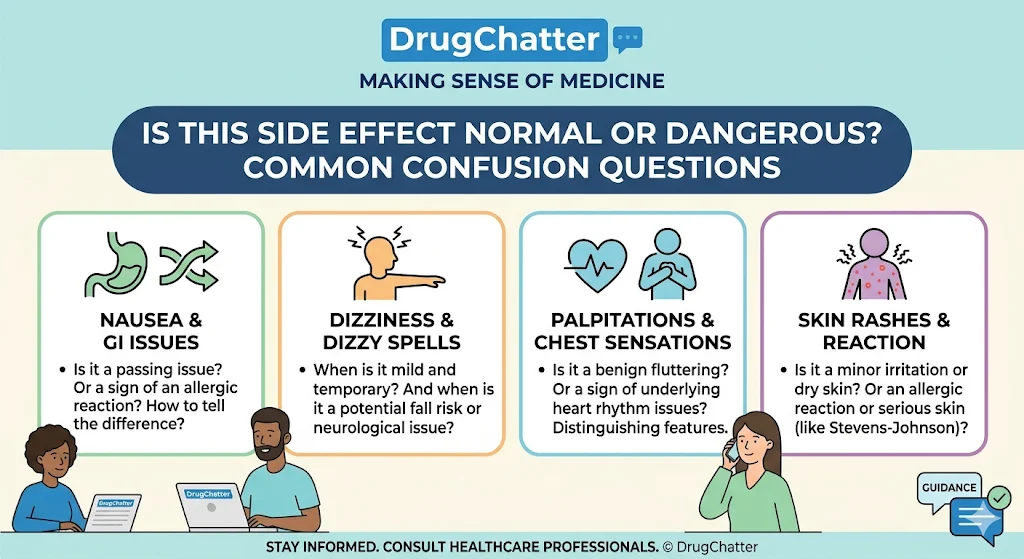
There’s a particular kind of panic that shows up in the inboxes and comment sections: “Is this normal or dangerous?” It’s the same question, dressed in different clothes—muscle aches, liver worries, weird timing with food, interactions with supplements, the whole parade. And because the stakes are real, the right move is rarely to guess. It’s to sort the symptom into the bucket it belongs in, then decide whether you need reassurance, a dose tweak, or urgent medical attention.
Below are some of the most common “normal vs dangerous” confusions people bring to DrugChatter—along with the corresponding answers. Use them as a map, not a diagnosis.
1) Muscle pain: the classic “statin scare”
Muscle symptoms are one of the first things people notice with Lipitor, and the uncertainty is brutal: sometimes it fades; sometimes it’s a warning sign. The key is timing and severity—plus what your clinician thinks after labs and risk review.
- When can I expect Lipitor’s muscle pain to typically decrease?
- Who sought medical help for Lipitor’s muscle cramps?
- Can exercise help reverse Lipitor muscle damage?
2) Liver enzymes: “Is this just a lab blip?”
People hear “liver enzymes” and assume catastrophe. But sometimes the story is more nuanced: monitoring, dose considerations, and whether underlying liver disease is in the picture.
- Does Lipitor’s effect on liver enzymes ever require dosage adjustments?
- How does Lipitor’s long term use affect liver health?
- Can Lipitor dosage increase liver disease risk?
- Can liver disease reduce Lipitor’s efficacy?
- Does alcohol consumption affect Lipitor’s liver safety?
- What’s Lipitor’s impact on drinking alcohol?
3) “Is it the real drug—or the generic?”
Another anxiety loop: if the side effects show up, are you sure it’s the same risk profile? People want reassurance that switching brands won’t change the rules.
- Are generic Lipitor’s side effects similar?
- Lipitor vs generic options?
- Can generics reduce Lipitor’s high cost?
4) Interactions: when the “side effect” is really a collision
Sometimes the symptom isn’t “normal” for the medication—it’s what happens when two things don’t play nicely. That’s why people ask about antidepressants, herbs, vitamins, minerals, and even specific foods.
- Why can t certain antidepressants be taken with Lipitor?
- Is a doctor’s consultation needed before combining Lipitor and herbal supplements?
- Can certain herbs heighten Lipitor’s side effects?
- Zinc interactions with drugs?
- Can iron interfere with Lipitor’s cholesterol lowering ability?
- How does iron affect Lipitor’s drug metabolism?
- Are there any known food drug interactions with Lipitor?
- Any side effects when mixing Lipitor and orange juice?
- How does lime juice impact Lipitor’s drug absorption?
- Does consuming guacamole decrease Lipitor’s effectiveness?
- Does strawberry consumption enhance Lipitor’s cholesterol lowering effect?
- Does avocado affect Lipitor’s required dosage?
- What’s the ideal dairy intake with Lipitor?
- How does dairy affect Lipitor’s potency in most people?
- Are there any risks associated with combining Lipitor and vitamin D?
- What’s the evidence for Lipitor vitamin D heart benefits?
5) Timing and dosing: “I took it wrong—did I break something?”
Sometimes the question is really about routine: snacks, meals, and whether the schedule matters for absorption or side effects.
- How long before Lipitor should snacks be eaten?
- What’s the recommended time gap between turkey and Lipitor?
- Is controlling meal portions part of Ozempic’s dosage plan?
- Do you change meal plans due to Ozempic’s effects?
6) The “normal” question for other drugs, too
Not every confusion is about Lipitor. People ask similar “normal vs dangerous” questions across the board—pain relievers, diabetes meds, antibiotics, and more.
- Does body weight affect Advil’s long term side effects?
- It’s Advil a?
- Is it safe to drink alcohol with Advil?
- What’s the safe gap between Advil and antibiotics?
- How is Advil’s formula more effective in reducing inflammation?
- Can fish oil supplements negate Lipitor’s effects?
- What evidence supports Vascepa’s ability to improve lipids beyond statins?
- Is Vascepa’s effect sustained alongside high fat diets?
- Does Vascepa’s effectiveness vary by generic’s quality?
So what’s the takeaway?
When you’re staring at a new symptom and asking whether it’s “normal or dangerous,” the most useful question is not the one you’re asking—it’s the one you should ask your clinician: “Given my history, my dose, and my other meds/supplements, where does this symptom fit?”
These DrugChatter answers won’t replace medical advice, but they can help you stop guessing and start comparing your situation to something concrete.