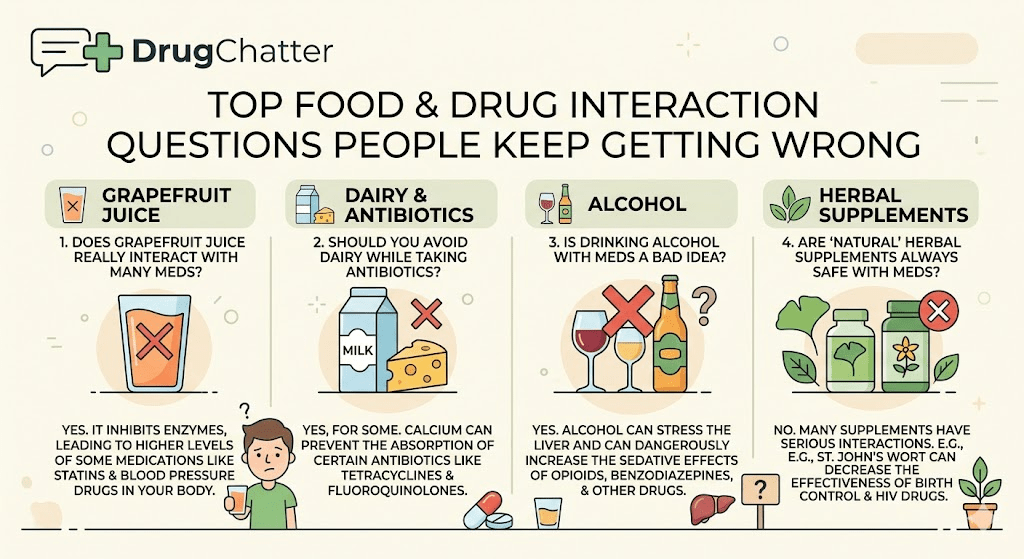
Some questions show up like clockwork: the same confusion, the same “can I just…?” impulse, and the same pattern of people trying to solve a medication problem with vibes instead of specifics. Here are the top food-and-drug interaction questions people keep getting wrong—along with the DrugChatter answers they should read before they wing it.
1) “Should I eat before taking Advil / ibuprofen?”
Yes, this one matters—because ibuprofen can be rough on the stomach, and “empty stomach” is not a neutral choice. People often ask it in slightly different ways, as if the wording changes the physiology.
- Should i eat before taking advil?
- Is it okay to take ibuprofen on an empty stomach?
- Is it ok to take advil on an empty stomach?
- What happens if i take ibuprofen on an empty stomach?
- What happens when you take ibuprofen on an empty stomach?
- Can ibuprofen be taken on an empty stomach?
- Eat before ibuprofen?
- How much should i eat before taking ibuprofen?
- Should ibuprofen be taken with food?
- How long after eating can you take ibuprofen?
- Can i take tums and ibuprofen?
- Is coated ibuprofen better for your stomach?
2) “How much can I take?” (Because food timing isn’t the only risk)
People focus on whether they ate, but then forget the dose math. Stomach irritation and bleeding risk don’t care that you had a snack.
- How many advil can you take in a day?
- How much advil per day?
- Advil for arthritis side effects?
- Advil adverse effects?
- What is the side effects of advil?
- Advil for arthritis side effects?
3) “Can I mix ibuprofen with other common meds?”
Here’s where people get sloppy: they treat “OTC” like it means “no interactions.” It doesn’t.
- What drugs should not be taken with ibuprofen?
- Can you take methotrexate with ibuprofen?
- Can you take ibuprofen while taking methotrexate?
- What should you avoid while taking methotrexate?
- Can i take tylenol with blood thinners?
- Is it safe to take tylenol and advil together?
- How long after ibuprofen can i take aspirin?
- Aspirin food interactions?
- Aspirin and liver toxicity?
- Aspirin side effects?
- Does tylenol make you bleed more?
- Can tylenol cause liver problems?
- Doxycycline interactions with ibuprofen?
- Can you take advil while on doxycycline?
4) “Alcohol + pain meds” (The question that never stops)
People ask whether it’s “bad” as if the answer is a single yes/no. The real issue is risk stacking: stomach irritation, bleeding, and liver stress.
- Is it bad to mix alcohol and advil?
- Can you take advil after you drink?
- Can you take an advil while drinking?
5) “Ezetimibe: what foods do I need to avoid?”
People remember the drug name but forget the “food” part of the interaction story.
- What to avoid when taking ezetimibe?
- What foods to avoid while taking ezetimibe?
- Ezetimibe and alcohol?
- Does ezetimibe cause constipation?
- Ezetimibe adverse effects?
6) “Statins and the stuff around them” (especially grapefruit)
Grapefruit is the classic, but people ask it like it’s a one-off curiosity rather than a known interaction pattern.
- How long after taking lipitor can you eat grapefruit?
- Lipitor how long to lower cholesterol?
- Can lipitor cause fatty liver?
- Lipitor effects on liver?
- Serious side effects of lipitor?
- Side effects of lipitor 40 mg?
- Does lipitor cause muscle aches?
- Dangers of lipitor?
- Lipitor symptoms?
- Does lipitor make you sleepy?
- Will lipitor make you sleepy?
- Atorvastatin brain fog?
- Is there a way to mitigate lipitor’s effect on rem sleep?
- Does lipitor help lower triglycerides?
- Does lipitor help with weight loss?
- Lipitor blood sugar?
- Is lipitor better than atorvastatin?
- Lipitor or crestor?
- Lipitor crestor?
- Can i take amoxicillin and atorvastatin together?
- Can i take ramipril and atorvastatin at the same time?
7) “Omega-3 / Vascepa: what’s the difference?”
People ask about Vascepa like it’s just another supplement, then wonder why the answers don’t match.
- Omega 3 vs vascepa?
- Does vascepa lower cholesterol?
- Does vascepa lower blood pressure?
- Vascepa 1gm dosage?
- Vascepa price without insurance?
- Vascepa other names?
8) “Niacin: too much of a good thing?”
Supplements and “vitamins” get treated like they can’t hurt you. They can.
9) “Methotrexate: what should I avoid?”
This is one of the most dangerous categories when people improvise. Food and drink can be part of the risk picture, but the bigger issue is the interaction web.
- What should you avoid while taking methotrexate?
- Can you take methotrexate with ibuprofen?
- Can you take ibuprofen while taking methotrexate?
10) “Allergic reactions and rashes: is it the drug or something else?”
People often ask after symptoms appear, but the right move is to know what to watch for and when to stop.
- Allergic reactions to ibuprofen?
- Allergy to ibuprofen?
- How to treat allergic reaction to ibuprofen?
- Does ibuprofen cause a rash?
- Can ibuprofen make you itchy?
- Ibuprofen and itching?
- Can ibuprofen help with itching?
Bottom line
Food timing, dose limits, and interaction partners all matter—and they don’t cancel each other out. If you’re asking one of the questions above, you’re already halfway to the right answer. The next step is to read the specific DrugChatter response for your situation.