There’s a particular kind of misunderstanding that shows up again and again in the real world of prescriptions and “natural” add-ons: the belief that if something is sold over the counter—or labeled as a vitamin, herb, or supplement—it can’t meaningfully interact with a prescription. That’s not just wrong; it’s how people end up surprised by side effects, reduced effectiveness, or both.
Below are some of the most common supplement + prescription interaction misunderstandings—using real questions and answers from DrugChatter as our guide.
1) “If it’s OTC, it can’t change how my prescription works.”
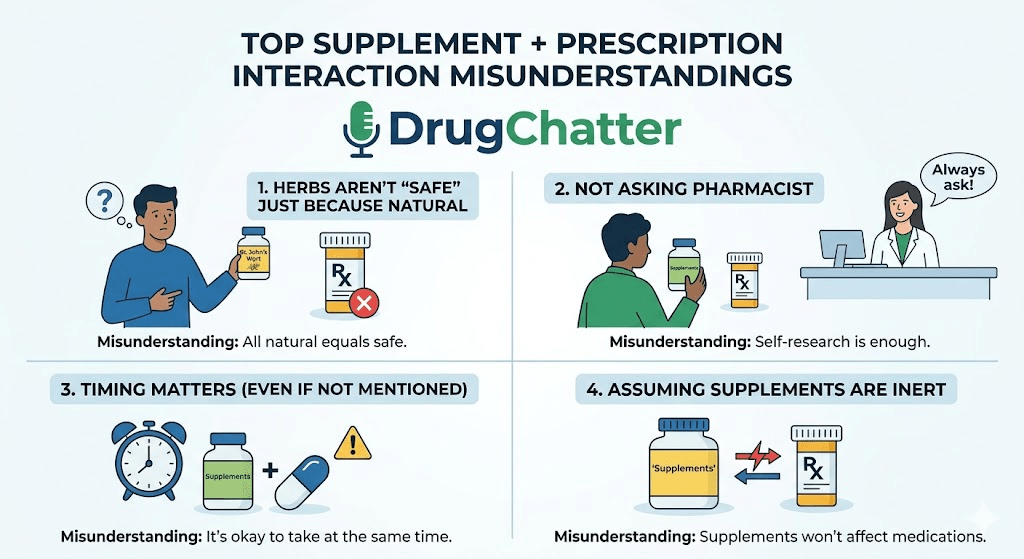
OTC doesn’t mean inert. Many “harmless” products can alter absorption, metabolism, or tolerability. Even within the same drug class, the details matter—dose timing, co-administered meds, and patient-specific factors can all shift outcomes.
For example, people often assume cholesterol meds are “set and forget,” but the practical reality is that diet, timing, and other substances can change what you get out of them. See: What’s the recommended meal timing for lipitor?
2) “I can just take supplements with my statin—no need to adjust.”
This is the myth that refuses to die. Supplements can be active, concentrated, and—sometimes—chemically inconvenient for drug absorption or liver handling. The safest assumption is that you should review them the same way you’d review another medication.
4) “If I take my statin, I don’t have to worry about other ‘health’ products.”
People often treat supplements as a separate universe from prescriptions. But the body doesn’t. If you’re taking a prescription, you’re also taking the environment it creates—enzymes, transporters, and liver workload included.
That’s why it’s worth asking about vitamins and other add-ons that might interact:
5) “Herbs are different—like they’re exempt from drug interactions.”
Herbs can be potent. And potency is exactly what makes interactions possible. One of the most common examples is St. John’s wort, which people sometimes treat like a harmless mood tea.
6) “Timing doesn’t matter; I’ll just take everything whenever.”
Timing is not a cosmetic detail. It can determine whether a drug is absorbed, delayed, or blunted. This is especially true when you’re dealing with absorption-sensitive medications and nutrient-heavy supplements.
7) “If my prescription is working, supplements can’t be the problem.”
Sometimes the problem isn’t that the prescription stops working—it’s that side effects show up, or tolerability changes. Supplements can shift the risk profile even if the headline benefit remains.
For instance, people worry about muscle symptoms and liver issues with statins, and those concerns can be influenced by what else is being taken:
That’s another common trap: people assume the only lever is the prescription dose. But if a supplement is contributing to side effects or changing exposure, the plan may require adjusting the supplement (or the schedule), not just the prescription.
9) “I can ‘replace’ my prescription with supplements and lifestyle.”
Sometimes the misunderstanding is framed as empowerment: “Why not just do the natural thing?” But for many conditions, supplements and lifestyle changes are adjuncts—not substitutes. The right question is whether the supplement approach can match the prescription’s effect for your specific risk profile.
10) “I’ll figure it out later if something feels off.”
By the time you “figure it out,” you may already have paid the price in side effects or reduced benefit. The better approach is to treat supplements like medications: list them, review them, and ask what to change.
The body doesn’t care whether a pill came from a pharmacy shelf or a supplement aisle. If you’re taking a prescription, assume interactions are possible—then verify. The questions above are a reminder that the most dangerous misunderstanding isn’t ignorance; it’s confidence.
If you want to reduce risk quickly, bring your full supplement list to your clinician or pharmacist and ask the blunt question: Should i adjust any supplement dosages with lipitor?—and then apply the same logic to every other prescription you take.