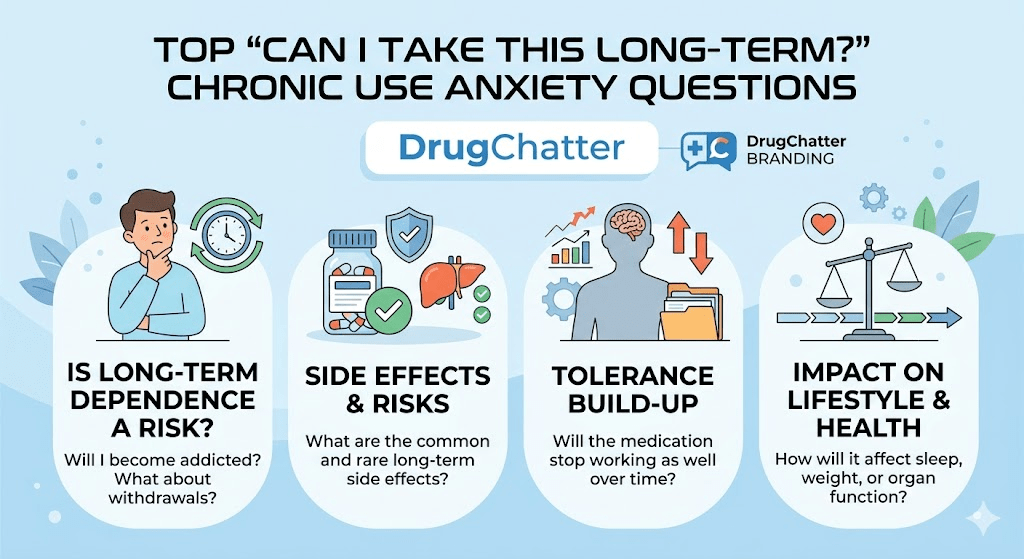
There’s a particular kind of worry that shows up when a medication stops being a short-term fix and starts being a long-term companion: Can I take this for years? Will it stop working? Will it quietly start doing something worse? The questions below are the ones that keep coming back—especially when people are trying to live normally while also staying safe.
1) “Can this drug’s effectiveness change if I take it with other medications?”
Combination therapy is where long-term plans get stress-tested. If you’re on a chronic regimen, it’s reasonable to ask whether another drug could blunt (or amplify) the effect.
2) “If I’m taking it for a long time, what monitoring matters?”
Long-term use isn’t just about tolerating side effects—it’s also about watching the right signals early, before they become problems.
3) “Does my age change how I should take it?”
Chronic-use anxiety often includes the fear that “my body is different now” (or always was). Dose and safety can shift with age, kidney function, and other factors.
- Are there age related factors affecting tigecycline dosage?
- Can methotrexate dosage be adjusted for elderly with kidney decline?
- Can sapropterin dosage vary based on patient’s age?
4) “What if I’m on a statin—does long-term use come with muscle risk?”
Muscle symptoms are one of the most common worries with long-term cholesterol treatment, and they get more complicated when other substances enter the picture.
- Can lipitor and st john’s wort interactions cause muscle damage?
- Is lipitor’s impact on muscle recovery a common side effect?
- Can lipitor minimize workout induced muscle damage?
- Is there a muscle protective role for lipitor post workout?
5) “Can long-term statin use affect energy, mood, or cognition?”
When people ask about chronic use, they often mean: Will I feel different over time? That includes energy levels, depression, and memory concerns.
- Have you experienced changes in energy levels since taking lipitor?
- Have you experienced depression while taking lipitor?
- What is lipitor’s effect on memory loss in seniors?
6) “If I stop—does long-term benefit disappear?”
Stopping a long-term medication can feel like stepping off a moving walkway. People want to know whether the risk returns quickly or gradually.
7) “Does alcohol change how well the medication works (or how safe it is)?”
Alcohol is the chronic-use anxiety accelerant: it’s common, it’s social, and it’s easy to underestimate. People want to know whether alcohol affects efficacy, metabolism, or side-effect risk.
- Does alcohol consumption affect statin efficacy in lowering cholesterol?
- Does lipitor’s effectiveness decrease with any alcohol?
- How does alcohol impact prescription drug metabolism?
- Does alcohol affect muscle recovery?
- Can alcohol impair hydration recovery after workouts?
- Are there ways to slow alcohol induced liver disease?
8) “What about interactions with common supplements and foods?”
Long-term anxiety isn’t only about prescriptions. It’s also about the daily stuff—herbs, berries, turmeric, cinnamon, and the “healthy” foods people assume are automatically safe.
- Interferes lipitor with cinnamon’s cholesterol lowering impact?
- How do lipitor and turmeric compare in lowering cholesterol?
- Can lipitor’s effectiveness be affected by berries?
- Does lipitor’s effectiveness vary with avocado intake?
- Can certain fats worsen lipitor’s side effects more than others?
- Does lipitor dosage depend on broccoli intake?
9) “If I’m taking it long-term, do I need to worry about vaccines or immune effects?”
For immune-modulating therapies, chronic use can raise practical questions about timing and protection.
- Do patients need booster shots following cosentyx related immunizations?
- How long should i wait to get live vaccines after cosentyx?
- What’s the influence of cosentyx on body’s response to inactive vaccines?
- Does mmr vaccine affect cosentyx’s efficacy?
10) “Can long-term use change appetite, weight, or daily functioning?”
These are the questions that sound small until you live with the answer.
- Can lipitor cause increased cravings?
- Is weight loss a common lipitor side effect?
- Can lipitor use cause daytime sleepiness?
11) “Does dose escalation increase risk?”
Long-term plans often include dose adjustments. People want to know what changes when the dose changes.
12) “What if I’m pregnant—or planning to be?”
Chronic-use anxiety becomes sharper when pregnancy is in the picture, because the stakes feel personal and immediate.
- Can alcohol related cognitive damage in unborn children be minimized?
- How do pregnancy vitamins reduce alcohol’s impact on fetus?
- How does prenatal alcohol exposure impact children’s cognitive development?
13) “Can I take it with painkillers or other everyday meds?”
Long-term medication schedules collide with short-term “I just need something for this” decisions—especially with NSAIDs.
- Can lipitor increase ibuprofen’s risk of stomach ulcers?
- Can i take advil for expected menstrual cramps?
- Are there advil alternatives for stomach safety?
- What’s the risk of overdosing on advil?
14) “Does diet alone replace the medication—or change the outcome?”
People want control. Sometimes the answer is “diet helps,” but the medication still matters; sometimes the answer is “not quite.” Either way, it’s worth asking directly.
- Is lipitor’s effect on cholesterol matchable through diet alone?
- Can diet alone match aspirin’s benefits for heart health?
- Can natural supplements lower cholesterol like lipitor?
15) “If I take it long-term, will it interfere with other treatments?”
Chronic use is rarely in a vacuum. People want to know whether the medication will step on the toes of something else they need.
Bottom line
Long-term medication anxiety usually isn’t irrational—it’s just under-informed. The best way to calm it is to ask the practical questions: interactions, monitoring, dose changes, lifestyle collisions (especially alcohol), and what happens if you stop. If you’re worried, start with the links above and bring the concerns to your clinician. That’s how “can I take this long-term?” turns from dread into a plan.