There’s a particular kind of dread that comes with chronic medication: the pill is small, the label is big, and the future feels—somehow—both inevitable and unknown. So you do what everyone does: you start Googling. You look for reassurance. You look for permission. You look for the one sentence that will make the anxiety stop.
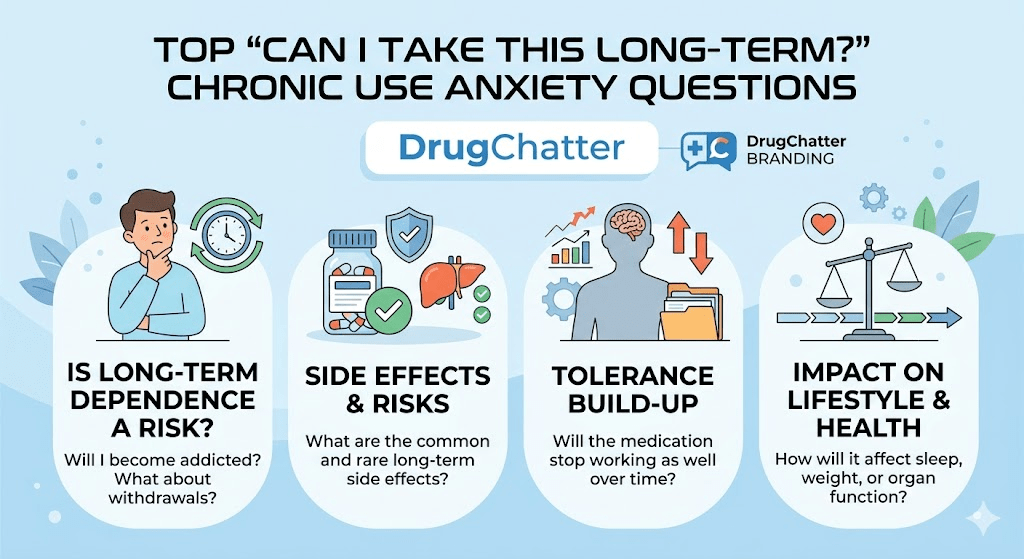
Below are some of the most common “can I take this long-term?” worries, distilled from real DrugChatter questions. The theme is consistent: people aren’t asking whether a drug works in the short run—they’re asking whether it’s safe to keep going, what to watch for, and what “long-term” even means in practice.
1) “Is this drug safe to keep taking for years?”
That’s the core question, and it shows up in many forms—sometimes as a specific side effect, sometimes as a lab-test worry, sometimes as a simple “how long can I stay on this?”
2) “What if I’m taking it and something weird happens?”
Long-term use anxiety often spikes when the body does something unexpected. Sometimes it’s a symptom that could be unrelated. Sometimes it’s a warning sign. Either way, the question becomes: is this a known issue, and should I be worried?
3) “Do I need monitoring if I’m on this long-term?”
When you’re on chronic therapy, the anxiety doesn’t just ask “is it safe?”—it asks “how will I know?” Monitoring is the practical antidote to uncertainty: labs, follow-ups, and clear thresholds for action.
4) “Can I combine it with other stuff—especially sleep aids or supplements?”
Chronic-use anxiety gets worse when you’re also juggling other medications, OTC products, or “just to help me sleep” add-ons. The fear is usually: will the combination make things riskier over time?
5) “Will lifestyle changes change the long-term payoff?”
Sometimes the anxiety isn’t about safety—it’s about effectiveness. People wonder whether habits can improve outcomes, or whether certain foods/drinks will blunt the benefit.
7) “Is this drug the same thing as the generic/other name?”
Long-term anxiety often includes a paperwork problem: different names, different formulations, different packaging. People worry that “other name” means “different drug,” and that uncertainty can be its own stressor.
Even if a medication is fine on its own, long-term anxiety asks: what happens when my regimen changes? New prescriptions, new supplements, new “temporary” meds that become permanent.
Chronic-use anxiety doesn’t disappear because you read one answer. It eases when you turn uncertainty into a plan: what to monitor, what symptoms matter, what interactions to avoid, and what follow-up schedule makes sense for your situation.
If you’re asking “can I take this long-term?” you’re already doing the right thing—just make sure the next step is a conversation with your clinician, armed with the specific concerns you found above.