Top supplement + prescription interaction misunderstandings
There’s a particular kind of confidence that shows up in the pharmacy aisle: the belief that a “natural” product can’t possibly interfere with a prescription. Or that if something helps one lab value (or feels soothing), it must be safe to stack with whatever your clinician prescribed.
DrugChatter’s Q&A archive is full of the same recurring theme: people don’t usually ask, “Can this interact?” They ask variations of, “Will this make my prescription weaker?” or “Is there a time gap?” or “Does this specific food/drink/supplement change the effect?” The answers often come down to one hard truth: pharmacology doesn’t care whether the other thing came in a bottle, a tea bag, or a tablet.
1) “If it’s generic, it’s basically the same—so interactions must be the same too.”
Generic substitution is often close, but “close” isn’t the same as “identical,” and potency/behavior can vary by formulation and patient factors. The misunderstanding is that any difference is purely academic—especially when people start layering other products on top.
- Does generic tigecycline’s potency match branded version s?
- How do the effects of atorvastatin on hmg coa reductase compare to lipitor’s generic in terms of potency?
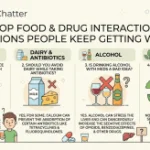
2) “A food or drink can’t possibly change a prescription’s effectiveness.”
Sometimes the interaction is about absorption, sometimes metabolism, sometimes timing. Either way, the “it’s just lemon water / wine / berries” mindset is a classic way to accidentally change exposure.
- Can lipitor’s effectiveness be reduced by lemon water?
- Does lipitor’s efficacy change with pinot grigio?
- Can berries increase lipitor’s cardiovascular benefits?
- Do berries interfere with lipitor’s cholesterol lowering action?
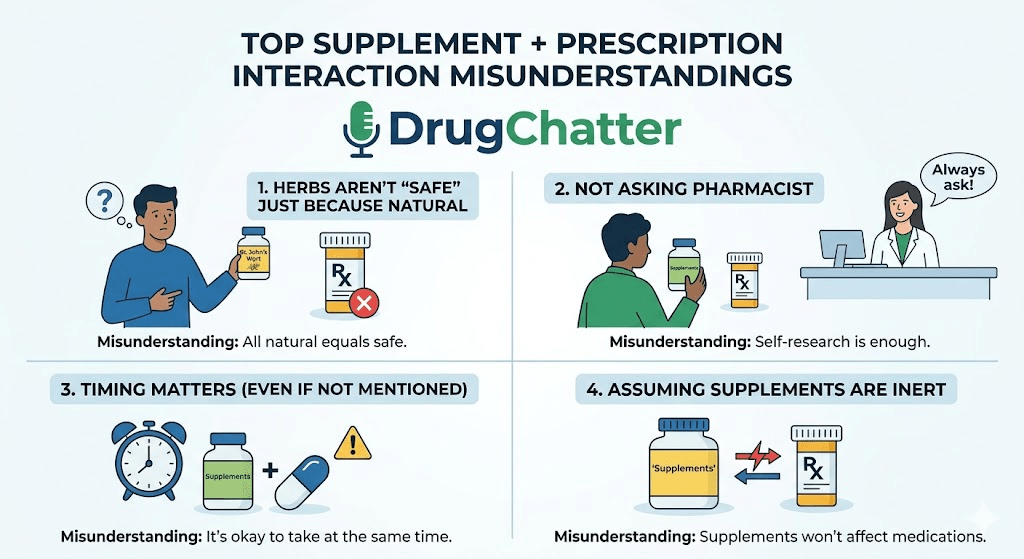
3) “If I take it at a different time, the interaction goes away.”
Timing can help with some absorption-related issues, but it’s not a universal solvent. People often assume a time gap fixes everything—when the real mechanism might be enzyme inhibition, transporter effects, or downstream physiology.
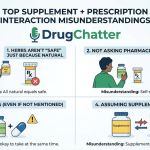
4) “Herbs and ‘wellness’ supplements are harmless because they’re not drugs.”
This is the misunderstanding that causes the most avoidable surprises. St John’s wort, for example, is famous for changing how other medications behave—so the question isn’t whether it’s “natural,” but whether it meaningfully alters metabolism.
5) “Painkillers and blood thinners are a simple ‘yes/no’—and supplements don’t belong in the conversation.”
When people think about interactions, they often focus on prescription-to-prescription. But supplements can matter too—especially when the prescription is already in the “bleeding risk” neighborhood.
6) “If I feel dizzy, it’s probably unrelated.”
Side effects and interactions can overlap. Dizziness can be benign—or it can be a clue that drug levels, blood pressure, or nervous-system effects are shifting.
7) “Cholesterol meds are only about cholesterol.”
Even when the goal is lipid control, the real-world questions are often about what else changes the effect: other agents, timing, and competing mechanisms.
- Are there any factors that might impact lipitor’s effect on lipid metabolism?
- How does lipitor’s duration differ with various antidepressants?
- Can lipitor interact with common painkillers?
- How does lipitor’s cholesterol reduction resemble antibiotics bacterial killing?
8) “Supplements are ‘just for support’—so they don’t need to be disclosed.”
Clinicians can’t manage what they don’t know about. The practical misunderstanding is that supplements are optional background noise. In reality, they can be active ingredients with real pharmacologic consequences.
What to do instead (the boring, effective approach)
- Bring the supplement label (or a photo) to your pharmacist/doctor—don’t rely on memory.
- Ask about mechanism, not vibes: “Does this affect absorption, metabolism, or bleeding risk?”
- Don’t assume timing fixes everything. If the interaction is metabolic, a time gap may not help.
- Check the exact question you’re asking—DrugChatter’s threads show how specific the answers can be.
If you want a quick starting point, pick one of the interaction-style questions above and read it like a checklist: what you’re trying to change (effectiveness, timing, side effects) is usually exactly what the interaction will target.