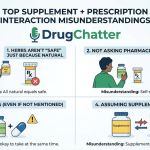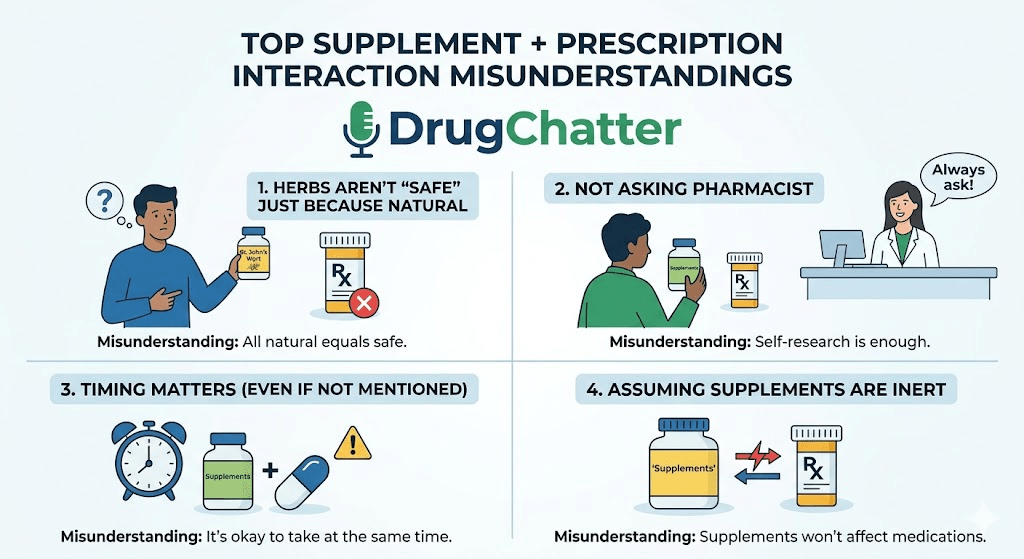
Every week, someone writes in with the same story: a “harmless” add-on—vitamins, herbs, OTC pain relievers, even pool chemicals—meets a prescription, and suddenly the plan goes sideways. The trouble is that most of the most common interaction misunderstandings aren’t about chemistry; they’re about assumptions.
Here are the recurring myths, paired with the DrugChatter answers that tackle them head-on.
1) “If it’s OTC, it can’t matter.”
OTC doesn’t mean inert. It means “not dispensed by a pharmacist,” which is a very different thing. People routinely assume that common painkillers or everyday meds can be layered onto chronic therapy without consequences.
- Can you take ibuprofen and penicillin at the same time?
- What’s the maximum frequency for 325mg aspirin intake?
2) “Natural means safe—especially with cholesterol drugs.”
Cholesterol therapy is where “natural” myths really take off. People want the reassurance that garlic, pool water, or diet tweaks won’t interfere. Sometimes the issue isn’t a direct interaction so much as expectations: what you think you’re getting vs. what the drug is actually doing.
- How does garlic interact with lipitor’s cholesterol lowering ability?
- Can chlorine in pools reduce lipitor’s effectiveness?
- How do these pain meds affect lipitor’s efficacy?
- Can otc options match lipitor’s efficacy in managing high cholesterol?
- How does high fat intake impact lipitor’s efficacy?
3) “Timing fixes everything.”
People often believe that if they separate doses by a few hours, the interaction disappears. Sometimes that’s true; often it’s not. The body doesn’t always cooperate with our schedules—especially when absorption, metabolism, or side-effect overlap is involved.
- What’s the waiting time for dairy after lipitor?
- Is lipitor’s side effect reversal immediate upon recovery?
4) “Expired medication is basically the same medication.”
Expiration dates aren’t decorative. Potency can drift, and for some drugs the risk isn’t just “less effective,” it’s “unpredictable.”
5) “Kidney disease changes nothing about dosing.”
When kidneys are impaired, the usual assumptions about “standard” dosing can fail. That’s not a supplement problem—it’s a physiology problem. But it’s a common misunderstanding that shows up in the same conversations.
6) “Vaccines and biologics don’t mix—so you just wait forever.”
Another myth: that you must avoid everything indefinitely. The real question is timing and immune context, not blanket fear.
7) “Drug classes are just labels—so interactions are rare.”
People hear “class” and think it’s academic. In reality, class often predicts metabolism, receptor effects, and side-effect overlap. If you don’t know the class, you can’t reliably predict the interaction risk.
- Ranolazine class?
- Usan stem sartan angiotensin ii receptor antagonists?
- Usan stem pril angiotensin converting enzyme inhibitors?
8) “If it’s a prescription, it’s automatically safe with everything else.”
Prescriptions can interact with each other too—especially when they share metabolic pathways or amplify the same adverse effects. The “supplement” part of the misunderstanding is often just the entry point; the real issue is polypharmacy.
- Can ozempic and metformin dosages be adjusted concurrently?
- Evaluate the parkinson’s disease company azilect on off rescue?
- Stiripentol and fenfluramine interaction?
9) “Ivermectin/antifungals/antibiotics are all the same kind of ‘thing,’ so the interaction story is simple.”
Different drugs can look similar on a shelf but behave very differently in the body. That’s why people get surprised when a “generic” or “common” product turns out to have a complicated interaction profile.
- Ivermectin 1 cream generic?
- Why is noxafil so expensive?
- Why is tigecycline ineffective against certain bacteria?
10) The “I didn’t take anything new” problem
Sometimes the interaction comes from something you didn’t think counted: a cream, a coupon-driven substitution, a formulation change, or an ingredient you didn’t realize was active.
Bottom line
The safest interaction strategy isn’t “avoid supplements” or “separate doses and hope.” It’s to treat every add-on—OTC, herbal, topical, diet, and timing changes—as a real variable in your regimen. If you’re unsure, bring the exact product name (and dose) to your clinician or pharmacist and ask the boring question: what could this change?
If you want to go deeper, start with the specific DrugChatter answers linked above—because the misunderstandings are predictable, but the details are not.