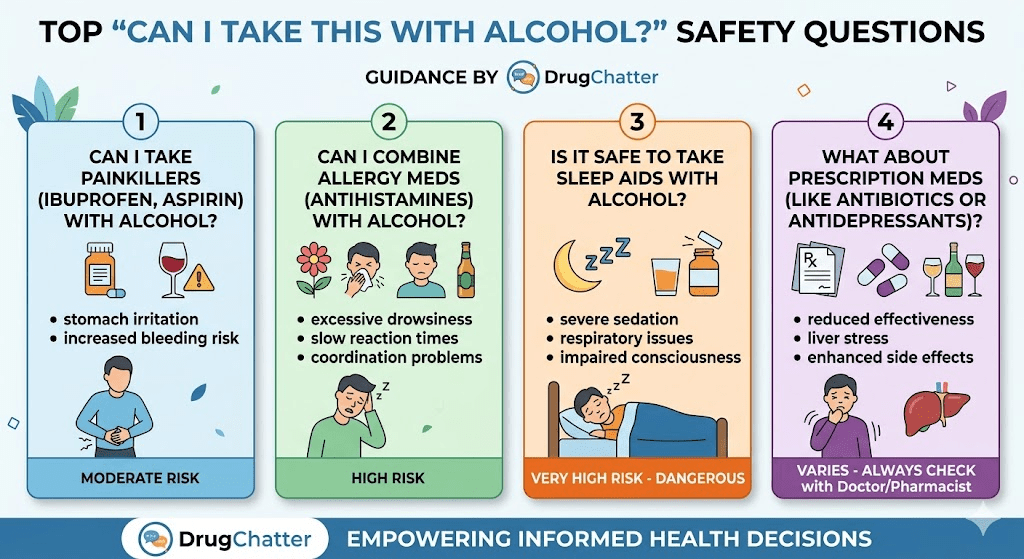
Alcohol is the universal solvent. It dissolves inhibitions, plans, and—sometimes—drug safety. If you’re taking prescription medicines (especially the ones that already come with a laundry list of warnings), the real question isn’t whether alcohol is “bad” in the abstract. It’s whether it’s a bad pairing for your specific drug, at your dose, with your liver, and with your other medications.
Here are some of the drug safety and interaction questions people ask most often on DrugChatter—each with a link to the discussion where the details are laid out.
Antibiotics: the “warnings” category that tends to include alcohol
Blood thinners and statin cross-talk (because alcohol isn’t the only variable)
Drugs that can tug on blood pressure, metabolism, or “how you feel”
- Prednisone raise blood pressure?
- What’s the effect of lipitor on elderly’s fitness?
- Can lipitor interactions increase risk of dizziness?
Antifungal and infection meds: metabolism and the “don’t irritate the liver” crowd
- Sporanox market?
- Can tigecycline cause liver enzyme abnormalities in patients?
- Does tigecycline’s effect on liver differ in elderly?
- How do excipients influence tigecycline’s elimination?
Oral diabetes medicines and the “alcohol + glucose” problem
Hormones and cancer therapies: when alcohol can be the least of your worries
Heart rhythm, rate control, and “do I feel off?” side effects
Central nervous system meds: where alcohol can quietly amplify risk
What to do with this: a practical checklist before the “just one drink” decision
- Check your exact drug and dose (and whether it’s extended-release or not).
- Look for liver warnings if you’ve been told to monitor liver enzymes or avoid alcohol.
- Consider the “double hit” effects: alcohol plus sedating, blood-pressure, or glucose-lowering drugs is where surprises happen.
- If the drug comes with serious warnings, don’t improvise—ask your clinician or pharmacist.
Alcohol-drug guidance is rarely one-size-fits-all. Still, the pattern is consistent: the more a medication affects your liver, brain, blood sugar, heart rate, or bleeding risk, the more alcohol needs to be treated as a genuine variable—not background noise.
If you want, tell me the exact medication name(s), dose, and why you’re taking them, and I can help you narrow down the safety questions that matter most.