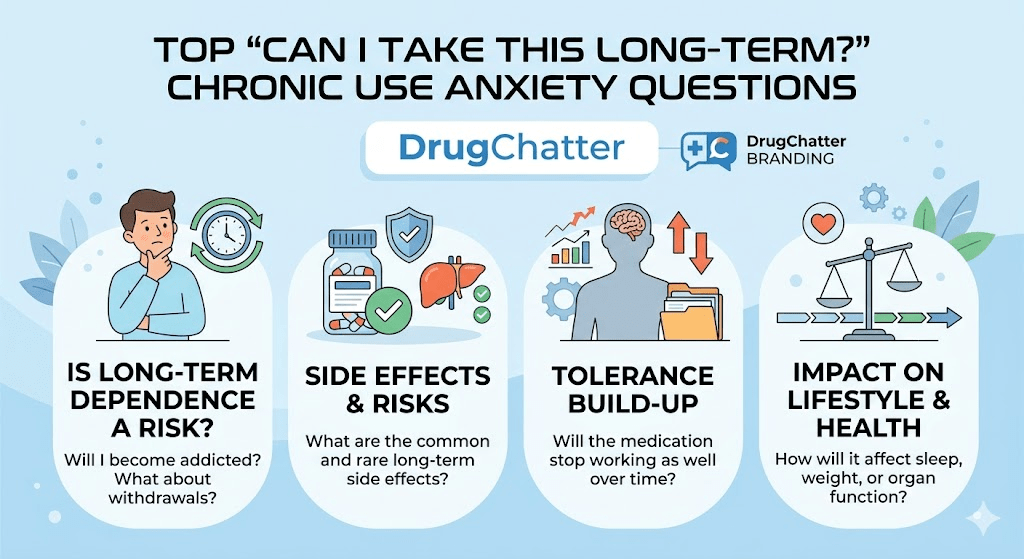
There’s a particular kind of worry that shows up when a prescription stops being a short-term fix and starts looking like a lifestyle. It’s not just “Will it work?”—it’s “Can I take this long-term without paying some hidden price?”
Below are the kinds of chronic-use anxiety questions people bring to DrugChatter, along with the corresponding answers. (Not medical advice—just a map of what readers are asking and what the discussion covers.)
1) The classic combo fear: “Can I take this long-term… with something else?”
2) The “my body is changing” worry: long-term meds and other ongoing conditions
3) The “it’s not just the drug—it’s the supplements” anxiety
- Is a doctor’s consultation needed before combining lipitor and herbal supplements?
- Can multivitamins increase methotrexate’s effectiveness?
4) The “timing and stacking” question that comes up when treatment becomes routine
5) The “I’m on it for a while—what happens to side effects?” question
6) The “long-term use means long-term consequences” anxiety (jaw, bones, etc.)
7) The “mental health” version of the question
8) The “I’m taking it chronically—does it interact with my other chronic meds?” question
9) The “how long is long?” question that often hides behind pricing, availability, and access
10) The “will this still be around?” anxiety (exclusivity, patents, and generics)
- Sutent loss of exclusivity date?
- Camptosar patent expiration year?
- What’s the status of apotex’s ruxolitinib anda filing in us?
- Will entresto’s generic version be available soon?
- Memantine patent?
11) The “is it safe to keep going?” question that shows up in many forms
- Marcaine hydrochloride preservative free?
- Trospium mechanism of action?
- Rozerem mechanism of action?
The bottom line: chronic-use anxiety is often less about one scary side effect and more about uncertainty—uncertainty about interactions, organ effects, timing, and whether the plan will still make sense months or years down the road.
If you’re asking “Can I take this long-term?” the most useful next step is usually the boring one: bring your exact regimen (including supplements and “as needed” meds) to your clinician and ask what monitoring should look like over time.