FDA-approved drug labeling is one of the most carefully negotiated documents in modern medicine. Every word is litigated, every contraindication placed in a precise order. Then an AI reads it, summarizes it in two sentences, and gets it wrong in ways no human editor would. What happens next is a problem the industry has not yet figured out how to solve.
The Gap Between What a Label Says and What AI Repeats
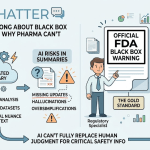
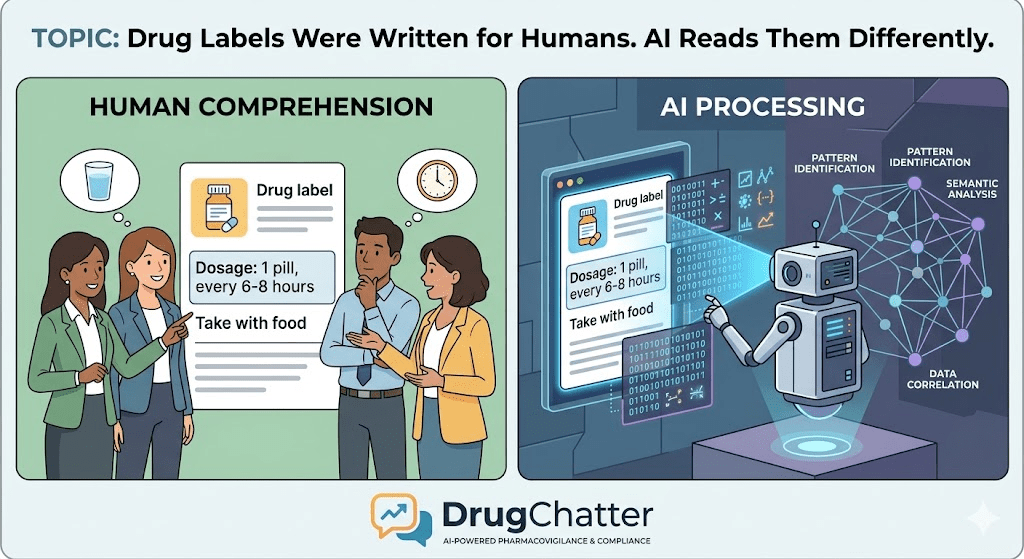
Drug labels work because trained pharmacists, physicians, and regulatory professionals know how to read them. A “Boxed Warning” at the top of the prescribing information is not optional reading. It is the highest level of FDA caution, reserved for risks that can cause serious injury or death. The structure is intentional: black box warnings appear first, then indications, then dosing, then adverse reactions. Human readers with clinical training understand that hierarchy.
Large language models do not read that way. They read everything at once, weight sections probabilistically based on training data, and generate summaries that reflect the frequency of language in their training corpus rather than the regulatory importance of each section. When a model has seen ten thousand Reddit threads describing a drug’s side effects alongside a handful of official label documents, the Reddit threads shape the output more than the label does.
This is not a hypothetical failure mode. It is a documented, reproducible problem with measurable consequences for pharmaceutical companies, patients, and regulators.
How LLMs Actually Process Prescribing Information
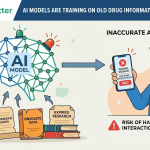
When ChatGPT, Gemini, Claude, or Perplexity responds to a question about a specific drug, it is not retrieving the current FDA label. It is generating a response based on patterns learned from training data that may include outdated label versions, patient forum discussions, news articles, and medical literature. The model has no mechanism to distinguish a 2018 prescribing information document from a 2024 updated label that added a new safety warning.
Label changes after post-marketing safety reviews are exactly the kind of updates that AI systems miss most reliably. The FDA’s labeling change database shows that hundreds of labels are updated annually, often in response to adverse event signals from pharmacovigilance. A model trained before those changes treats the old language as authoritative.
A physician asking an AI assistant about the contraindications for a drug whose label was updated six months ago may receive guidance based on the prior version. That physician has no way to know the information is stale. The AI does not flag its own knowledge gaps at the section level.
Why AI Summaries Bury Boxed Warnings
Ask any major LLM to describe Isotretinoin and there is a high probability it mentions the drug’s effects on severe acne before it mentions iPLEDGE, the FDA’s mandatory Risk Evaluation and Mitigation Strategy (REMS) program that exists specifically because the drug causes serious birth defects. The REMS program requires monthly pregnancy tests, two forms of contraception, and a locked distribution system. It is not a footnote. It is the entire regulatory architecture around the drug.
AI systems consistently underweight REMS requirements in their responses because REMS programs are a small fraction of the total training data volume on any given drug. The conversational internet talks mostly about efficacy and common side effects. The regulatory apparatus gets far less coverage. The model’s probability distribution reflects that imbalance.
The same pattern holds for Clozapine, which requires mandatory absolute neutrophil count monitoring due to the risk of agranulocytosis, and for Thalidomide (Thalomid), which has its own REMS due to severe teratogenicity. In both cases, AI systems trained on general internet data will often produce responses that lead with the drug’s therapeutic uses rather than its most dangerous properties.
Can AI Hallucinations About Drugs Trigger FDA Risk?
The question of whether AI-generated misinformation about a drug creates regulatory exposure for the drug’s manufacturer is genuinely unsettled. The FDA has not yet issued definitive guidance on third-party AI outputs and manufacturer liability. But the agency has shown it is paying attention.
FDA Commissioner Robert Califf has publicly stated that AI-generated health misinformation is among the agency’s priority concerns. The FDA’s Digital Health Center of Excellence has been examining AI in clinical decision support. And the agency’s existing framework around “misleading” promotional content, which covers materials a manufacturer does not create but benefits from, could theoretically extend to AI outputs that systematically misrepresent a product’s risk profile.
The Promotional Content Analogy and Its Limits
Under current FDA regulations, manufacturers are responsible for promotional materials they sponsor, control, or cause to be disseminated. Third-party AI outputs do not obviously fit that framework. A drug company does not sponsor ChatGPT’s training data. It does not control what OpenAI, Google, or Anthropic include in their models.
But the question is not purely passive. If a manufacturer’s own website, press releases, and investor materials are part of the training corpus for major LLMs, and those materials emphasize a drug’s benefits while minimizing risks, the manufacturer may have indirectly influenced what the AI says. That argument has not been litigated. It will be.
More immediately, if a patient is harmed following AI-generated advice that was factually wrong about a drug’s contraindications, and that patient can show they relied on the AI’s response, product liability theory could draw in the manufacturer even without a direct causal line to the AI’s error. The legal theory is novel. Novelty does not mean implausibility.
Real FDA Warning Letters That AI Systems Still Get Wrong
The FDA maintains a public database of warning letters to pharmaceutical manufacturers. Many involve misrepresentation of safety data in promotional materials: understating adverse event frequencies, omitting contraindications, or promoting off-label uses. These are precisely the errors that AI systems reproduce at scale.
In 2023, the FDA sent warning letters to several companies related to drug promotion on social media, citing inadequate risk communication. In those cases, the social media posts were created by humans working for the companies. An AI reproducing the same inadequate risk communication at scale across millions of patient queries is a structurally different problem, but the underlying regulatory concern is the same.
The FDA’s Office of Prescription Drug Promotion (OPDP) has explicitly noted that the channel of distribution does not alter the regulatory requirement for accurate and balanced drug information. That principle has no reason not to apply to AI-mediated information.
How Often Claude Mentions Ozempic vs. Wegovy — and Why That Gap Matters
Ozempic (semaglutide 0.5mg/1mg/2mg) and Wegovy (semaglutide 2.4mg) contain the same active ingredient at different doses and are approved for different indications. Ozempic is approved for type 2 diabetes management. Wegovy is approved for chronic weight management. They are not interchangeable by label, though both are prescribed by physicians who understand the distinction.
AI systems frequently conflate them. A query about “semaglutide for weight loss” will often produce responses that reference Ozempic as a weight loss drug, which reflects its actual widespread off-label use but misrepresents its regulatory status. Novo Nordisk, which manufactures both products, has a direct competitive interest in AI systems distinguishing the two correctly, because Wegovy commands a different reimbursement pathway, a different patient assistance program, and a different promotional strategy.
When an AI recommends Ozempic for weight loss instead of Wegovy, it may be directing a patient toward a product that their insurer will not cover for that indication, or toward a prescriber conversation that results in off-label prescribing rather than the on-label pathway Novo Nordisk has spent significant resources building.
Share of Voice Across ChatGPT, Gemini, and Perplexity: What It Means for Novo Nordisk and Eli Lilly
The emergence of GLP-1 receptor agonists as a major drug class has created one of the most visible AI share-of-voice battlegrounds in pharmaceutical history. Tirzepatide (Mounjaro for diabetes, Zepbound for obesity) from Eli Lilly competes directly with semaglutide-based products from Novo Nordisk for AI-generated recommendations in a category where millions of patients are asking AI systems which drug they should ask their doctor about.
AI share of voice in this context means something specific: when a patient types “best GLP-1 for weight loss” into ChatGPT, Gemini, Perplexity, or Microsoft Copilot, which drug gets named first, which gets named at all, and what language surrounds each mention. This is not traditional search advertising. No pharmaceutical company can buy a top placement in an LLM’s response. The output reflects training data, which reflects the internet, which reflects media coverage, patient forum activity, physician publications, and clinical trial reporting.
Tools like DrugChatter are designed specifically to monitor these AI-generated drug mentions at scale, tracking how often specific branded and generic drugs are referenced across major AI platforms, what sentiment surrounds those mentions, and how accurately the AI characterizes each drug’s indications, dosing, and safety profile.
Do LLMs Recommend Generic Drugs More Often Than Branded Products?
The evidence suggests yes, and the mechanism is straightforward. Generic drugs have been on the market longer, have more total internet coverage, appear in more cost-comparison discussions, and are mentioned more frequently in the patient forums and health journalism that dominate LLM training data. When a patient asks an AI about a drug class, the AI will often lead with the generic where one exists, or with the most commonly discussed brand, which is not always the most recently approved or best-in-class product.
For pharmaceutical companies launching new branded drugs into categories with established generics, this creates a measurable disadvantage in AI-mediated discovery. A physician’s assistant asking an AI to quickly summarize treatment options for moderate-to-severe plaque psoriasis may receive a response that leads with older biologics or generic options rather than the newest approved therapies, simply because the newer approvals are underrepresented in training data.
The gap closes over time as post-launch coverage accumulates in the training corpus, but the lag can be months to years depending on the model’s training and update cycle. For drugs that need early market penetration to establish formulary position, this lag is commercially significant.
What Pharma Brand Teams Can Learn From How Patients Ask AI About Their Drugs
Patient queries to AI systems reveal what patients actually want to know, as opposed to what prescribers tell them or what labels legally require. The gap between those two things is the space where AI monitoring delivers its most useful competitive intelligence.
Patients asking AI systems about drugs tend to lead with three question types. They ask about side effects in casual language (“does X make you tired,” “will Y cause hair loss”). They ask about drug interactions with specific other medications they are already taking. And they ask about cost, insurance coverage, and what to do if they cannot afford their prescription. None of those questions map cleanly to FDA label sections. All of them reflect real patient decision-making.
The Side Effect Language Gap: Why Patients and Labels Use Different Words
FDA labels describe adverse events using standardized medical terminology. MedDRA coding terms, frequency thresholds, and system organ class groupings structure the adverse reaction sections. A patient does not ask about “alopecia” or “telogen effluvium.” They ask if a drug will make their hair fall out. They do not ask about “insomnia.” They ask if they will have trouble sleeping.
When an AI interprets a label’s adverse reaction section and translates it for a patient query, it is performing a lossy translation under no regulatory obligation to be accurate. The AI may consolidate rare and common adverse events without noting frequency. It may omit adverse events that appear only in the clinical trial data tables. It may use the casual language but apply the wrong drug’s data.
Pharmaceutical companies that monitor AI responses to patient-language queries about their drugs can identify exactly where the label’s adverse event language fails to translate into AI-generated patient communication. That intelligence has direct applications in patient education materials, medical affairs content strategy, and digital health program design.
Off-Label Use Discussions in AI: A Pharmacovigilance Signal You Are Not Collecting
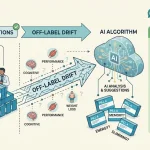
AI systems are unusually willing to discuss off-label drug use. Unlike a pharmacist who may decline to recommend a drug for an unapproved indication, or a physician who documents off-label use carefully to manage liability, an AI will often describe common off-label uses without any of those guardrails.
This creates a pharmacovigilance signal that most pharmaceutical companies are not systematically collecting. When an AI tells a patient that Drug X is “commonly used off-label for condition Y” and that patient then reports an adverse event while using Drug X for condition Y, the AI-mediated off-label discussion is part of the causal chain. Drug safety teams need to understand what off-label uses their products are being associated with in AI responses, because those associations shape real-world use.
Ketamine-based therapies, GLP-1s used for addiction treatment, and beta-blockers used for performance anxiety are all drug classes with active off-label AI discussions that are entirely disconnected from the manufacturers’ official communications.
“Patients increasingly use AI tools as their first point of consultation before speaking to a healthcare provider. In a 2024 survey by the Alliance of Community Health Plans, 38% of respondents reported using an AI chatbot to research their prescription medications in the prior six months, with 22% reporting they changed their behavior based on the AI’s response.”— Alliance of Community Health Plans, Consumer Health AI Survey, 2024
How Patients Ask About Drug Interactions in AI Search
Drug-drug interaction queries are among the highest-risk AI questions for patient safety, and among the most common. Patients managing multiple chronic conditions are often taking five or more medications simultaneously. They ask AI systems about interaction risks using the actual drug names, the generic names, the street names, and sometimes descriptions (“the little blue pill my doctor gave me for blood pressure”).
The accuracy of AI-generated drug interaction information varies significantly by drug pair and by AI system. For well-studied, high-profile interactions — warfarin and NSAIDs, MAOIs and SSRIs, fluoroquinolones and QT-prolonging drugs — major AI systems are generally accurate. For less-studied interactions, interactions involving newer drugs, or interactions between a drug and a supplement or herbal product, accuracy degrades quickly.
Supplement and Herbal Interactions: AI’s Most Reliable Blind Spot
The FDA requires drug manufacturers to characterize clinically relevant drug-drug interactions in prescribing information. It does not require comprehensive drug-supplement interaction tables. That regulatory gap becomes a patient safety gap in AI responses, because patients frequently ask about interactions between their prescription drugs and common supplements: St. John’s Wort, fish oil, magnesium, melatonin, and vitamin D.
AI systems that confidently answer “no known interactions” for a drug-supplement pair are often drawing on the absence of published data rather than documented safety. The distinction between “not studied” and “safe” is one that label language makes explicit but AI language generation does not reliably preserve.
Pharmaceutical medical affairs teams should specifically query their drugs against common supplements in major AI systems as part of any AI monitoring program. The results will frequently surface interaction claims — in both directions, over-claiming and under-claiming — that require a documented response strategy.
What AI Systems Say About Overdose and Toxicity
Toxicity and overdose queries are handled inconsistently across AI systems. Some platforms have implemented specific guardrails around medication overdose information, recognizing the intersection with suicide prevention. Others have not. For pharmaceutical companies, the relevant question is not just whether the AI refuses to answer but whether, when it does answer, it accurately reflects the drug’s actual toxicity profile, established antidotes, and emergency management protocols.
Acetaminophen toxicity is a well-documented example. AI systems often correctly note that acetaminophen overdose causes liver damage. They are less reliable on the delayed presentation of hepatotoxicity, the treatment window for N-acetylcysteine, and the critical importance of seeking emergency care even when symptoms are not immediately apparent. A patient who overdoses, feels well initially, and asks an AI whether they need to go to the hospital may receive an inadequate answer with severe consequences.
Tracking AI Mentions After FDA Label Updates: A Pharmacovigilance Gap
The FDA’s labeling change database is public. Every label update is logged, timestamped, and categorized. What is not tracked is how quickly AI systems reflect those changes in their generated responses. The lag between a label update and the point at which major AI systems reliably generate responses consistent with the new label can be substantial — and during that period, the AI is actively giving patients and potentially clinicians outdated safety information.
This lag is a direct pharmacovigilance concern. When the FDA requires a new contraindication to be added to a drug’s label, it is because post-marketing data showed a previously unrecognized risk. The FDA’s goal is for that new information to reach prescribers and patients quickly. An AI system trained on data predating the label update works against that goal, with reach that may exceed traditional communication channels.
Case Study: How Rapidly Do AI Systems Incorporate New REMS Requirements?
REMS programs represent the FDA’s highest-level post-marketing safety interventions. When a REMS is added or modified, it reflects a serious safety concern identified after approval. The FDA communicates REMS updates through MedWatch, the agency’s safety communication system. Healthcare providers who receive MedWatch alerts will know about the change. An AI system whose training data does not include post-REMS-update content will not.
Pharmacovigilance teams that systematically query AI systems about their drugs after each label update can create a documented record of the gap between regulatory action and AI dissemination. That record has legal and regulatory value. It demonstrates that the manufacturer was monitoring AI representations of their product, and it creates an evidence base for any future FDA inquiry into AI-mediated safety communication.
Building a Post-Label-Update AI Monitoring Protocol
A practical AI monitoring protocol following a label update includes four steps. First, document the exact language of the new safety information at the time of the update. Second, query major AI systems (ChatGPT, Gemini, Claude, Perplexity, Microsoft Copilot) using the most common patient and physician queries related to the updated information. Third, record the AI responses verbatim, noting the date and AI system version where discernible. Fourth, establish a monitoring cadence — weekly queries for the first three months post-update, monthly thereafter — to track when AI responses begin to reflect the updated label.
This protocol has applications beyond pharmacovigilance. It documents the duration of AI-mediated misinformation following a label update, which has implications for patient communication strategy and potentially for litigation defense.
“The FDA label is a regulatory document that tells the truth about a drug. AI tells a probabilistic story about what the internet says about a drug. Those are not the same thing.”
AI Hallucination Monitoring: Detecting Fabricated Clinical Trial Data
AI hallucinations in the drug context are not limited to getting approved indications wrong or mischaracterizing side effect frequencies. They extend to the fabrication of clinical trial data: non-existent studies, invented efficacy numbers, and fake citations that look real because they follow the format of real citations. This is not a rare edge case. It is a reproducible failure mode across major AI systems, particularly for drugs with complex trial histories or drugs where the user prompts the AI to “cite sources.”
A pharmaceutical company whose drug is cited in a fabricated clinical trial — cited as showing an efficacy that the actual trials did not demonstrate — faces a specific problem. The fabricated data may be better or worse than the actual trial results. If the AI invents a higher response rate than the Phase III trial showed, and a prescriber makes a treatment decision based on that invented number, the manufacturer may face liability for a clinical outcome driven by data they never generated.
Which Drugs Are Most Frequently Hallucinated About by AI?
Drugs with the highest hallucination rates in AI outputs share several characteristics. They are drugs with complex, multi-indication histories where the same molecule appears in many different contexts. They are drugs where off-label use is widespread and documented in informal online communities. They are drugs that appear in large numbers of patient forum posts that contain anecdotal efficacy and safety claims. And they are drugs where the brand-to-generic transition has generated confusion about naming conventions.
Bupropion is a clear example: approved for major depressive disorder, smoking cessation, and seasonal affective disorder, with widespread off-label use for ADHD and weight management, sold under multiple brand names (Wellbutrin, Zyban, Aplenzin), and discussed extensively on Reddit, patient forums, and mental health communities. AI systems have a high hallucination rate for bupropion dosing, drug interactions, and off-label efficacy claims, because the training data is large, diverse, and contains substantial anecdotal content alongside the clinical literature.
How Eli Lilly and Novo Nordisk Monitor AI Mentions
Both companies have publicly acknowledged the importance of digital monitoring for their GLP-1 portfolios, though neither has disclosed the specific tools or methodologies they use for AI-specific monitoring. What is known from industry reporting and conference presentations is that both companies have expanded their social listening operations to include AI-generated content, and both have medical information teams with protocols for responding to AI-mediated patient inquiries.
The practical challenge for large pharmaceutical companies with multi-product portfolios is not whether to monitor AI mentions but how to do it at scale. A company with forty or fifty approved products needs a systematic approach to querying each product across multiple AI systems, tracking sentiment and accuracy over time, and routing findings to the appropriate internal teams — medical affairs, pharmacovigilance, brand marketing, regulatory affairs, and legal.
Platforms built specifically for pharmaceutical AI monitoring, including DrugChatter, address this scaling problem by automating query generation, response capture, and trend analysis across AI platforms, providing a continuous monitoring infrastructure rather than ad-hoc spot checks.
Physician Perception in AI Search: What Medical Affairs Teams Are Missing
Physicians use AI tools differently from patients, but they use them. Surveys from 2024 show that a majority of U.S. physicians use AI tools for at least one clinical or administrative task weekly, with clinical decision support and drug information lookup being among the most common use cases. What those physicians receive from AI systems shapes prescribing decisions in ways that medical affairs teams have not yet built systematic monitoring for.
The physician’s query pattern is different from the patient’s. A physician might ask “first-line options for treatment-naive moderate psoriatic arthritis” or “compare IL-17 inhibitors for axial spondyloarthritis.” These queries require AI systems to rank drugs within a class, characterize head-to-head data, and accurately represent guideline recommendations. All three of those tasks are areas of AI weakness when the drug class is competitive and the literature is recent.
How AI Ranks Competing Drugs Within a Therapeutic Class
AI ranking of drugs within a class reflects training data composition, not clinical superiority or guideline recommendation. A drug that received heavy media coverage when it launched will tend to appear earlier and more prominently in AI responses than a drug that launched more quietly despite superior clinical data. Drugs that are discussed positively in patient forums will be described with different language than drugs with active online criticism, regardless of their actual safety and efficacy profiles.
Medical affairs teams that benchmark how their drug is ranked against competitors in AI responses to common physician queries can identify specific content gaps: claims AI systems make about competing drugs that overstate their efficacy, claims made about the medical affairs team’s own drug that understate its differentiation, and guideline citations that are outdated or inaccurate.
Each of those gaps maps to a content strategy opportunity. Scientific publications, medical education content, and clinical resource updates that accurately characterize a drug’s position in the treatment algorithm will eventually influence AI training data. Companies that recognize this and invest accordingly will see their AI share-of-voice improve over time relative to competitors that do not.
What AI Systems Say About Generic Substitution Rates
When a physician asks an AI system about a branded drug that has a generic equivalent, the AI frequently recommends or implies the generic as a cost-saving alternative, sometimes without being asked. This automatic generic recommendation is embedded in the AI’s training from years of health journalism, formulary guidance, and pharmacoeconomic literature emphasizing generic drug substitution.
For pharmaceutical companies with branded products facing generic competition, monitoring what AI systems say about generic equivalents is as important as monitoring what they say about the branded drug itself. If AI systems are telling physicians and patients that the generic is interchangeable when there are documented clinical differences — as is the case for narrow therapeutic index drugs like lithium, warfarin, and levothyroxine — the manufacturer has a clear interest in correcting the record through AI-accessible content.
Building an AI Drug Monitoring Stack: What Pharma Teams Need in 2025
The components of an effective pharmaceutical AI monitoring program are now well enough understood that a practical framework exists, even though most large pharmaceutical companies have not yet fully implemented one.
The core components are query design, response capture, analysis, and action. Query design means creating a systematically comprehensive list of all the ways patients, physicians, pharmacists, payers, and journalists might ask an AI system about a drug. Response capture means querying those questions regularly across all major AI platforms and storing the responses in a way that allows longitudinal analysis. Analysis means evaluating responses for accuracy, sentiment, competitive positioning, and pharmacovigilance signals. Action means routing findings to the right internal teams with a documented response protocol.
Query Design for Pharma AI Monitoring: Going Beyond Brand Name Searches
A brand-name search is the beginning of a drug monitoring query library, not the end. An effective library includes the generic name, the drug class name, common misspellings of the brand and generic names, associated conditions (querying the condition rather than the drug), associated symptoms (querying symptoms that the drug treats or causes), and comparison queries (“X vs Y” for each competitor).
It includes queries in patient language and in clinical language. It includes queries that reflect common misconceptions. And it includes adversarial queries — queries designed to elicit AI responses in contexts where hallucination is most likely, such as requests for specific clinical trial numbers, dosing for unusual patient populations, and interaction questions for polypharmacy scenarios.
Can AI Outputs Be Used for Pharmacovigilance Reporting?
The FDA requires manufacturers to monitor patient and healthcare provider feedback for potential adverse events and to submit Individual Case Safety Reports (ICSRs) when a potential adverse event is identified. The traditional channels for this monitoring are spontaneous reporting systems, clinical trial data, medical literature, and patient support programs.
AI-generated content creates a new category of potential signal source. When an AI tells a patient that Drug X can cause Symptom Y, and that interaction is not in the label, two possibilities exist: the AI hallucinated the interaction, or the interaction exists in the training data because it has been discussed in patient forums or published case reports. Both scenarios warrant investigation by the drug safety team.
A systematic program of querying AI systems about a drug’s adverse events and comparing those responses to the existing label can surface novel safety signals that may warrant formal pharmacovigilance follow-up. This is not currently standard practice in the industry. Given the scale at which patients are now using AI for drug information, it should be.
How to Detect AI Citation Sources for Drug Information
Some AI systems, particularly Perplexity and the newer versions of ChatGPT with search capabilities, cite sources for their drug information responses. Analyzing those citations tells pharmaceutical companies something important: which sources AI systems treat as authoritative for information about their drugs.
If a drug’s AI citations consistently reference a competitor’s clinical comparison paper, a critical media piece, or an outdated guideline that has been superseded, the company knows exactly where to direct its content strategy. Creating high-quality, accurate, citable content that answers the questions AI systems are being asked — and making that content easily accessible to AI crawlers — is the pharmaceutical equivalent of search engine optimization for the AI era.
DrugPatentWatch, for example, is a source that AI systems draw on for patent expiration data, which directly affects AI responses about generic availability. Companies that understand which sources shape AI outputs about their products can develop targeted content strategies to ensure those sources contain accurate information.
Voice-of-the-Customer Intelligence From AI Queries: A Competitive Advantage
The aggregate pattern of what patients and physicians ask AI systems about a drug class is a continuous voice-of-the-customer study that runs 24 hours a day, at a scale no pharma company could replicate with traditional market research. The queries themselves, not just the AI responses, contain intelligence about unmet needs, treatment concerns, competitive perceptions, and patient experience gaps.
When patients consistently ask AI systems “why does my doctor keep switching my [drug class] medication,” that is a retention signal. When they ask “is [Drug X] covered by Medicare Part D,” that is a formulary positioning signal. When they ask “what is the difference between [Drug A] and [Drug B]” using a competitor’s drug as the reference point, that is a competitive positioning signal.
Pharma brand teams that capture and analyze the structure of AI queries about their therapeutic categories are, in effect, running a continuous digital ethnography of patient and physician decision-making. The strategic value of that data, properly analyzed, is substantial.
Sentiment Analysis in AI Drug Responses: What the Language Reveals
AI-generated drug descriptions carry embedded sentiment. A drug described as “effective but with a challenging side effect profile” is positioned differently than one described as “generally well-tolerated.” These phrasings are not random. They reflect the aggregate sentiment of the training data — the language that appeared most frequently in published literature, media coverage, and online patient discussion about each drug.
Sentiment monitoring in AI responses tracks how this language evolves over time. A drug that was described neutrally in early AI training data may accumulate negative sentiment as patient forum discussions of side effects accumulate. A drug that initially generated skeptical AI descriptions may improve in sentiment as long-term outcomes data is published and covered in medical media.
Understanding the sentiment trajectory allows brand teams to develop targeted educational content that addresses the specific concerns driving negative AI sentiment, rather than producing generic positive messaging that does not address the actual patient questions shaping the AI narrative.
Patient Forum Data and AI Training: The Feedback Loop
Patient forums — Reddit’s r/ChronicPain, r/Diabetes, r/Psoriasis, and dozens of condition-specific communities — are disproportionately represented in AI training data relative to peer-reviewed clinical literature, because they are publicly accessible, voluminous, and linguistically natural. An AI system trained on general internet data will have read thousands of Reddit threads about patient experiences with specific drugs and a much smaller number of clinical trial reports.
This creates a feedback loop. Patient forum sentiment shapes AI outputs. AI outputs shape new patient expectations. New patients post about their experiences on patient forums based partly on those expectations. Those posts eventually enter AI training data. The loop is slow — model training cycles are measured in months to years — but it is real, and it means that pharmaceutical companies with active patient community engagement programs are indirectly influencing their future AI share-of-voice.
Medical Misinformation at Scale: When AI Gets Dosing Wrong
Dosing errors are the highest-risk category of AI drug misinformation because the harm pathway is direct and short. A patient who receives incorrect information about a drug’s approved indications might ask their doctor the wrong question. A patient who receives incorrect information about dosing might take the wrong dose.
AI systems make dosing errors in reproducible patterns. They confuse adult and pediatric dosing. They conflate immediate-release and extended-release formulations with different dosing intervals. They apply dosing from one indication to another when a drug is approved at different doses for different conditions. And they do not reliably ask for the patient context — weight, renal function, hepatic function, age — that would be necessary to provide accurate individualized dosing guidance.
The Extended-Release Formulation Problem
Many drugs are approved in both immediate-release and extended-release formulations with different dosing frequencies. Metformin IR is dosed twice or three times daily with meals. Metformin ER is dosed once daily. Bupropion IR (Wellbutrin) is dosed three times daily. Bupropion XL is dosed once daily. Misapplying the dosing schedule — taking an IR drug once daily or an ER drug three times daily — can result in subtherapeutic levels or toxicity.
AI systems queried about drug dosing frequently omit the formulation distinction or apply the wrong formulation’s dosing schedule. This is a predictable error because the training data contains far more general drug information than formulation-specific prescribing guidance, and the model may default to whichever dosing description appeared most frequently in training.
Renal and Hepatic Dose Adjustment: The AI Blind Spot for Vulnerable Patients
The patients at highest risk of drug dosing errors are those with renal or hepatic impairment, who require dose adjustment for drugs cleared by affected pathways. FDA labels contain explicit dose adjustment guidance for these populations. AI systems regularly omit this guidance, generating responses that present standard adult dosing without noting the adjustments required for the vulnerable populations for whom dosing errors are most dangerous.
Patients with chronic kidney disease, a population that frequently manages multiple medications and is therefore more likely to use AI for drug information, are systematically underserved by AI systems that cannot personalize dosing guidance based on renal function. Pharmaceutical companies whose drugs require renal dose adjustment have a particular interest in monitoring whether AI systems are communicating that requirement accurately.
The Regulatory Future: Where FDA, EMA, and ICH Are Heading on AI Drug Information
Regulatory frameworks for AI in healthcare are developing simultaneously at multiple agencies. The FDA has published a discussion paper on artificial intelligence in drug development and submitted comments to AI governance processes. The EMA has published a reflection paper on the use of artificial intelligence in the lifecycle of medicines. ICH is working on harmonized guidelines for AI use in clinical trial design and regulatory submissions.
None of these frameworks directly addresses the question of AI-generated patient-facing drug information. That gap is likely to be filled over the next regulatory cycle. The most probable regulatory development is not a rule specifically targeting AI chatbots but an extension of existing pharmacovigilance frameworks to require manufacturers to monitor AI-generated information about their products as part of their post-marketing surveillance obligations.
EMA’s Digital Health Strategy and What It Means for Pharmaceutical AI Monitoring
The EMA’s digital health strategy explicitly recognizes the role of patient-generated digital data and AI-mediated health information in the European medicines lifecycle. The EMA has been more explicit than the FDA in naming AI-generated health misinformation as a patient safety concern and in calling for industry engagement with digital health monitoring.
For pharmaceutical companies with EU-approved products, the EMA framework suggests that AI drug information monitoring will eventually be expected as part of the risk management plan. Companies that build monitoring capabilities now will be better positioned when explicit guidance arrives than companies that wait for the requirement before acting.
ICH E2E and the Pharmacovigilance Planning Framework
ICH E2E, which governs pharmacovigilance planning for new drug applications, requires manufacturers to document a pharmacovigilance plan that identifies safety concerns and describes how they will be monitored post-approval. The guidance was written before AI-generated drug information existed as a meaningful safety signal source. Its principles — systematic surveillance of drug safety information from multiple sources, proactive rather than reactive monitoring — apply directly to AI monitoring.
Regulatory affairs teams revising post-marketing surveillance protocols for the current digital environment should explicitly address AI-generated drug information as a signal source within their E2E planning frameworks. This positions the company well for regulatory inspection and reflects a genuine commitment to patient safety in the current information environment.
Key Takeaways
- AI systems do not read drug labels the way trained clinicians do. They weight sections probabilistically, not by regulatory importance, which means boxed warnings and REMS requirements are systematically underrepresented in AI-generated drug information.
- Label updates do not automatically propagate to AI responses. The lag between an FDA label change and accurate AI representation of that change can be months or years, creating a documented patient safety gap that pharmaceutical companies should be monitoring systematically.
- AI share-of-voice in therapeutic categories is not purchased through advertising — it is earned through the quality, volume, and accessibility of accurate published content. Brand teams that understand this can develop content strategies that improve their AI representation over time.
- Generic drug bias in AI responses is structural and persistent. It reflects training data composition, not clinical equivalence. For drugs where brand-generic differences are clinically meaningful, AI monitoring and targeted content strategy are the primary tools available to manufacturers.
- Off-label AI discussions represent an unmonitored pharmacovigilance signal. Drug safety teams should be systematically querying AI systems about off-label uses of their products and comparing the results to their existing safety monitoring data.
- The regulatory framework for pharmaceutical AI monitoring is developing at FDA, EMA, and ICH simultaneously. Companies that build AI monitoring infrastructure now will be ahead of compliance requirements that are likely to formalize within the next regulatory cycle.
- Tools like DrugChatter provide the systematic, scaled monitoring infrastructure that pharmaceutical AI oversight requires — tracking brand mentions, sentiment, accuracy, and competitive positioning across AI platforms in real time.
Frequently Asked Questions
Does an AI system that inaccurately describes a drug’s side effects create legal liability for the drug’s manufacturer?
Current product liability law does not clearly establish manufacturer liability for inaccuracies in third-party AI outputs. However, the legal theory connecting manufacturer-published content that enters AI training data to downstream AI misrepresentations is plausible and has not been conclusively litigated. Manufacturers whose promotional materials, label content, and published data are sources for AI training may face increasing legal scrutiny as AI-related adverse event cases develop. The more defensible posture is proactive monitoring and correction rather than waiting for case law to clarify liability.
How often do AI systems update their drug information when an FDA label changes?
There is no guaranteed update timeline. Major AI systems retrain on a schedule that is not publicly disclosed and varies by model. Retrieval-augmented systems (like Perplexity or ChatGPT with web search) can access current web content but are not specifically designed to prioritize FDA labeling databases. The safest assumption for pharmaceutical companies is that AI systems may not reflect a label update for six to eighteen months after it occurs, and monitoring is the only way to know the actual lag for any specific drug.
What types of drug queries produce the highest AI hallucination rates?
Queries that ask AI systems to produce specific numeric data — clinical trial response rates, exact adverse event frequencies, specific pharmacokinetic parameters — generate the highest hallucination rates. Queries about drugs that are approved under multiple names for multiple indications also produce high hallucination rates due to naming confusion in training data. Queries about recent drug approvals or recent label updates are at high risk because the training data may predate the relevant information entirely.
Can pharmaceutical companies influence what AI systems say about their drugs?
Directly, no. Pharmaceutical companies cannot pay to influence AI-generated drug descriptions the way they can purchase search advertising or fund medical education. Indirectly, yes: high-quality, publicly accessible, citable content — peer-reviewed publications, clinical practice guidelines, pharmacoeconomic analyses, medical education materials — enters AI training data over time and shapes future model outputs. Companies that consistently produce accurate, accessible, search-optimized content about their drugs will see that reflected in AI share-of-voice over successive model training cycles.
How should a pharmaceutical company structure an AI drug monitoring program?
An effective program has four functional components. First, a systematic query library covering brand names, generic names, common patient-language queries, physician queries, and competitive comparison queries for each product. Second, regular monitoring cadence across all major AI platforms — at minimum ChatGPT, Gemini, Claude, Perplexity, and Microsoft Copilot — with documented response capture. Third, internal routing protocols that direct pharmacovigilance signals to drug safety, accuracy concerns to medical affairs, competitive intelligence to brand strategy, and regulatory questions to regulatory affairs. Fourth, a response framework that documents what the company knows about AI representations of its products, which supports both proactive correction efforts and regulatory defensibility. Platforms like DrugChatter are purpose-built to handle the first two components at the scale required for multi-product pharmaceutical portfolios.