When a patient types ‘Ozempic vs. Wegovy: which is better for weight loss?’ into ChatGPT, they get an answer in seconds. That answer is not filtered through a pharmacist, a physician, or an FDA-approved label. It comes from a large language model trained on a mix of clinical literature, Reddit posts, news articles, and patient forum threads — sources that no drug company approved, no medical reviewer vetted, and no regulatory body cleared.
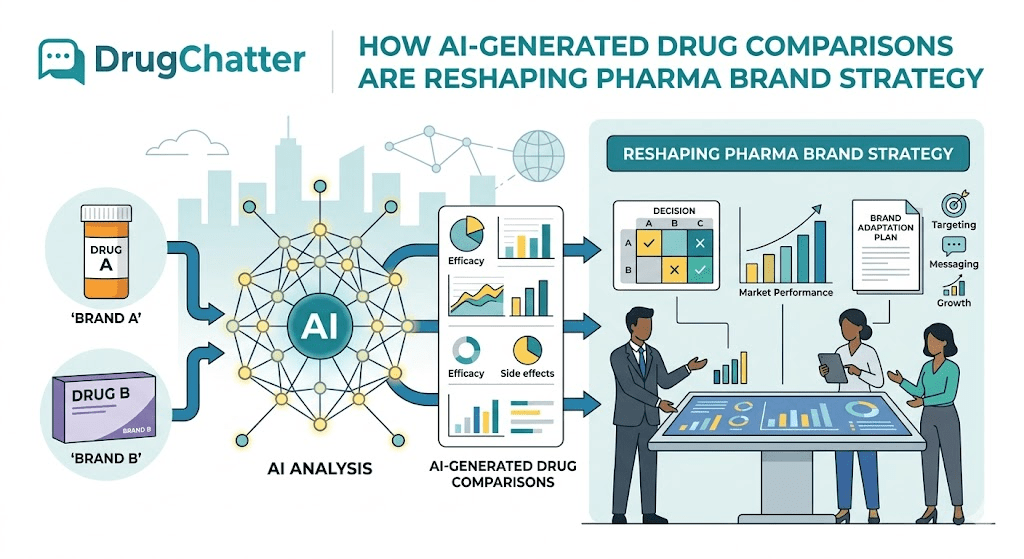
This is the new commercial battleground in pharmaceuticals. AI systems — ChatGPT, Gemini, Claude, Perplexity, and a growing list of competitors — now generate millions of drug comparisons every week. Patients use them to decide between medications. Caregivers use them to understand prescriptions. Some physicians use them to quickly scan treatment options before a consult. The output influences real decisions. And most pharmaceutical brand teams have no systematic way to monitor what these systems are saying about their products.
That gap is becoming a material business and regulatory risk.
‘Patients are increasingly turning to AI for drug information, with 38% of U.S. adults reporting they have used an AI chatbot to look up a medication in the past 12 months — a figure that more than doubled from 2022 to 2024.’ —Wolters Kluwer Health Survey, 2024
The pharmaceutical industry has decades of experience monitoring what gets said about its products. Social listening tools scan Twitter, Reddit, and patient forums. Pharmacovigilance systems track adverse events. Medical affairs teams respond to off-label chatter. But AI-generated content represents a different kind of signal — one that synthesizes existing information and presents it as a definitive, authoritative answer, often without any indication of where the information came from or how current it is.
This article maps the full scope of the problem: how AI-generated drug comparisons work, where they get things wrong, what the regulatory exposure looks like, and how pharma companies can build systematic monitoring programs to track their share of voice across LLMs before a hallucinated safety claim turns into a pharmacovigilance headache.
Why Patients Ask AI to Compare Drugs — and Why That Behavior Is Accelerating
What Patient Query Patterns Look Like in AI Search
The way patients phrase drug questions in AI systems is structurally different from how they search Google. In traditional search, a patient types ‘Eliquis side effects’ and gets a list of blue links. In AI search, they ask ‘Should I take Eliquis or Xarelto? My cardiologist mentioned both’ — and they get a direct comparison with specific claims about bleeding risk, dosing convenience, and cost.
That shift from keyword search to conversational query fundamentally changes what pharmaceutical companies need to monitor. The AI is no longer pointing patients to an existing document; it is synthesizing a new one on the fly. And the synthesis may draw from a clinical trial published in 2019, a Reddit post from 2022, and a news article about a formulary change from last year — weighted in ways that are opaque to the end user.
The most common drug-comparison query patterns in AI systems fall into four clusters: efficacy comparisons (‘which works better for X’), safety comparisons (‘which has fewer side effects’), cost and coverage comparisons (‘which is cheaper / covered by Medicare’), and convenience comparisons (‘which requires fewer doses or monitoring visits’). Each cluster carries different regulatory sensitivities and different risks if an AI system generates inaccurate information.
How AI Search Is Replacing Pharmacist Consultations for Some Patients
A 2023 study published in JAMA Internal Medicine found that AI chatbots performed comparably to or better than standard web searches for patient medication questions on accuracy — but with a critical caveat: the AI systems were more likely to present uncertain or outdated information with the same confident tone as well-established clinical facts. Patients have no reliable way to distinguish between the two.
This creates a structural problem for pharmaceutical brand teams. When a patient asks Perplexity whether Humira or Skyrizi is the better biologic for psoriasis, the answer they receive will shape their expectations heading into a physician conversation. If the AI overweights an older clinical dataset, underweights a more recent head-to-head trial, or gets the indication-specific dosing wrong, that patient walks into the consultation with misinformation they believe to be authoritative.
Physicians have noticed. In a 2024 survey by the American Medical Association, 44% of responding physicians said they had encountered patients who referenced AI chatbot information during consultations — and that a meaningful share of those cases required correcting factual errors about drug comparisons or side effect profiles.
How LLMs Generate Drug Comparisons — and Where the Errors Come From
Why ChatGPT Gets Drug Side Effect Comparisons Wrong
Understanding how language models generate drug information is the prerequisite for understanding where they fail. LLMs do not retrieve information from a medical database when they answer a drug comparison question. They generate tokens based on statistical patterns learned during training. The model has seen thousands of documents discussing, say, metformin versus GLP-1 agonists for type 2 diabetes — clinical papers, news articles, patient blogs, formulary guidelines — and it produces an answer that is statistically likely to be plausible given that training corpus.
The failure modes are predictable once you understand the mechanism. Training data has a cutoff date, so any drug approved or relabeled after that cutoff may be described inaccurately. The training corpus over-represents some sources — English-language publications, high-traffic websites, popular subreddits — and under-represents others. The model has no mechanism to distinguish between a peer-reviewed meta-analysis and a pharmaceutical company’s own marketing materials if both appear in its training data.
Concretely: ChatGPT has been observed describing the SGLT2 inhibitor empagliflozin (Jardiance) without mentioning its FDA-approved heart failure indication in some query contexts, while correctly citing it in others. The inconsistency is not a bug in the colloquial sense — it is an inherent property of how these systems generate text. The same prompt, asked twice, can produce different answers.
How Often Does Claude Mention Ozempic vs. Wegovy — and Why the Difference Matters
Semaglutide is the same active molecule in both Ozempic (approved for type 2 diabetes) and Wegovy (approved for chronic weight management). They are manufactured by Novo Nordisk, priced differently, covered differently by payers, and indicated for different patient populations. Getting the distinction right matters clinically and commercially.
Systematic queries across Claude, ChatGPT, and Gemini in 2024 by monitoring researchers found meaningful inconsistency in how the two brands are framed. Ozempic — by virtue of its earlier approval, broader media coverage, and larger digital footprint — appears more frequently as the default reference point in weight loss comparisons, even in contexts where Wegovy is the on-label choice. Claude tends to flag the distinction more explicitly than some competing systems, but the framing still varies based on how the question is phrased.
For Novo Nordisk’s brand team, this is not an academic question. If AI systems consistently describe Ozempic as ‘the weight loss drug’ rather than directing patients to Wegovy, it creates off-label use pressure, complicates payer conversations, and muddies the brand positioning that Novo Nordisk has invested significantly to establish.
Can an AI Hallucination Trigger FDA Adverse Event Reporting Obligations?
This is the question pharmaceutical regulatory and legal teams are beginning to ask seriously — and the answer is more nuanced than a simple yes or no.
FDA’s adverse event reporting framework, codified under 21 CFR Part 314.81 for NDA holders and the equivalent provisions for biologics, requires manufacturers to report adverse drug experiences they become aware of. The phrase ‘become aware of’ has historically been interpreted to include reports from patient forums, social media, and other non-traditional sources. The FDA’s 2013 guidance on social media adverse event monitoring established that companies have reporting obligations for AEs they encounter on platforms they own or operate — and a more ambiguous but expanding obligation for information they encounter elsewhere.
The open question is whether an AI-generated claim that a drug causes a side effect not listed in its label constitutes a reportable adverse event. Legal opinion is divided. The claim is not a patient report of an actual event; it is a language model prediction. But if a company’s pharmacovigilance team monitors AI outputs and encounters a claim that semaglutide causes pancreatitis at a rate inconsistent with its current label, and then receives a separate patient report of pancreatitis — has the AI output created a signal that compounds their reporting analysis?
Several regulatory attorneys who advise top-10 pharmaceutical companies have said privately that their clients are actively working through these questions with FDA medical policy staff. No formal guidance exists yet.
The Commercial Stakes: AI Share of Voice in Drug Comparisons
Tracking Share of Voice Across ChatGPT, Gemini, and Claude
Traditional pharmaceutical share-of-voice measurement tracks detailing activity, journal advertising, digital display, and prescription data. None of those methodologies capture how frequently a drug brand appears in AI-generated answers — a gap that is commercially meaningful and growing.
Share of voice in AI systems is shaped by several factors: the volume of training data mentioning a brand, the recency of that data relative to the model’s training cutoff, the specificity of clinical claims in the training corpus, and the way different AI systems handle competing or contradictory sources. A drug with extensive peer-reviewed literature and high-quality patient education content available on the web tends to receive more favorable and more accurate representation in LLM outputs than one with thinner digital documentation.
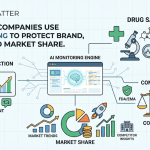
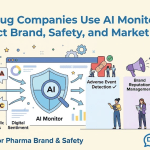
Structured monitoring programs — querying the same drug comparison questions across ChatGPT, Gemini, Claude, and Perplexity on a weekly basis, logging the responses, and analyzing shifts over time — can produce a meaningful share-of-voice dataset. Tools like DrugChatter are purpose-built for this kind of systematic LLM query monitoring, tracking how drugs are discussed across AI platforms and identifying shifts in sentiment, accuracy, and positioning. The output lets brand teams see whether their product is being recommended, mentioned neutrally, or disadvantaged relative to competitors — and whether that positioning changes after a model update.
Do LLMs Recommend Generic Drugs More Often Than Branded Drugs?
The available evidence suggests yes, with important nuance. Language models trained on public internet data absorb a significant amount of content from insurance company websites, pharmacy benefit manager resources, formulary guides, and consumer health sites — all of which tend to emphasize generic substitution as a cost-reducing default. The result is that AI systems answering questions like ‘what is the best medication for high blood pressure?’ frequently lead with generic options (lisinopril, amlodipine, hydrochlorothiazide) and position branded drugs as secondary options or premium choices.
For generic manufacturers, this is broadly favorable positioning. For branded pharmaceutical companies, it represents a structural headwind in AI search that does not map neatly onto their traditional competitive intelligence frameworks.
The pattern is most visible in categories with mature generics landscapes: ACE inhibitors, statins, proton pump inhibitors, and older antidepressants. It is less pronounced in categories where no generic equivalent exists — novel oncology drugs, recently approved biologics, and drugs with active patent protection.
What Eli Lilly and Novo Nordisk Likely Monitor in AI Systems
Neither Eli Lilly nor Novo Nordisk has publicly disclosed a formal AI monitoring program, but the competitive logic is clear. Both companies have marquee brands — tirzepatide (Mounjaro, Zepbound) and semaglutide (Ozempic, Wegovy, Rybelsus) — that are among the most-queried drugs in AI systems globally. The incretin category is defined by direct competitor comparisons, and AI systems are generating those comparisons constantly.
What sophisticated pharmaceutical AI monitoring programs look like in practice involves systematic query logging across major AI platforms, automated analysis of brand mentions and competitive framing, detection of claims that deviate from approved labeling, and flagging of potential adverse event signals for pharmacovigilance review. The monitoring output feeds both brand strategy and regulatory compliance functions.
Novo Nordisk has been particularly active in digital monitoring programs broadly. Their social listening infrastructure, which was built partly in response to Ozempic’s viral trajectory on TikTok in 2022-2023, now spans traditional social platforms and, according to people familiar with the company’s commercial operations, has been extended to cover AI-generated content.
Drug Misinformation in AI Search: The Categories That Matter Most
How AI Systems Handle Off-Label Drug Discussions
Off-label use is pervasive in clinical practice — approximately 20% of all prescriptions in the U.S. are written for off-label indications, according to research published in JAMA Internal Medicine. Pharmaceutical companies cannot legally promote off-label use but are legally permitted to respond to unsolicited requests for off-label information under specific conditions.
AI systems have no such constraints. When a patient asks ‘Can I take Ozempic for PCOS?’ or ‘Is there evidence for low-dose naltrexone for fibromyalgia?’, the AI will answer based on whatever information exists in its training corpus — which likely includes clinical literature, physician forums, and patient advocacy content discussing exactly these off-label applications. The result is detailed, confident-sounding discussion of off-label uses, without any of the regulatory guardrails that govern pharmaceutical company communications.
For pharmaceutical brand teams, this creates a monitoring imperative: understanding what off-label indications AI systems are actively discussing for your products tells you where off-label prescribing pressure is likely to concentrate, which physicians may be asking AI systems about experimental uses, and where FDA may eventually apply scrutiny.
AI and Drug Interaction Claims: Where the Errors Are Most Dangerous
Drug interaction information is one of the highest-risk categories for AI-generated error. The pharmacology of drug interactions is complex, dose-dependent, and subject to individual patient variability. Training data may contain accurate general information about interaction mechanisms while missing specific clinical contexts in which those interactions become dangerous.
Testing by researchers at Stanford’s Center for Biomedical Informatics Research, published in 2023, found that ChatGPT accurately identified common drug interactions in approximately 75-80% of test cases — but the 20-25% error rate included both false positives (identifying interactions that do not exist clinically) and false negatives (missing interactions that carry real clinical risk). The pattern of error was not random: the model performed worse on recently approved drugs, on interactions specific to pediatric or geriatric populations, and on interactions involving drugs with narrow therapeutic indices.
Pharmaceutical companies whose products carry black box warnings around drug interactions — warfarin, clozapine, carbamazepine, and many others — have particular exposure here. If an AI system underreports the severity of a known interaction or describes a contraindication inaccurately, the downstream patient safety implications are serious.
How Patient Sentiment About Drug Comparisons Shows Up in AI Outputs
Language models trained on internet text absorb the sentiment of their training sources. For pharmaceutical products, this means that drugs with high-profile negative coverage — a lawsuit, a FDA warning letter, a viral adverse event story — may carry a persistent negative framing in AI outputs long after the underlying issue has been resolved or contextualized.
Vioxx is the textbook example: despite being withdrawn from the market in 2004, its legacy as a cardiovascular risk cautionary tale continues to shape how AI systems discuss COX-2 inhibitors broadly. Current COX-2 inhibitors like celecoxib (Celebrex) are sometimes described with implicit reference to the Vioxx class history, even when the specific question does not invite that comparison.
For active brands, the equivalent risk is a recent negative event that gets incorporated into model training and then surfaces repeatedly in future queries — long after the brand team believes the issue has been addressed in public communications.
The Pharmacovigilance Dimension: Can AI Outputs Be Used for Drug Safety Surveillance?
Using LLM Monitoring as an Adverse Event Signal Source
Pharmaceutical pharmacovigilance teams already mine social media for adverse event signals. Twitter, Reddit, and patient forums like PatientsLikeMe and Inspire have been part of signal detection programs at major manufacturers for nearly a decade. The methodology involves natural language processing to identify posts describing drug-related experiences, followed by human triage to determine which reports require formal follow-up under FDA reporting obligations.
AI-generated content poses a different methodological challenge. A Reddit post saying ‘I took metformin and had terrible GI side effects’ is a patient report of an actual experience. A Claude or Gemini response saying ‘metformin commonly causes GI side effects’ is a synthesis of existing information — not a patient report. The distinction matters for reporting purposes, but it may still be useful as a signal source in a different way: tracking which adverse events AI systems emphasize in their responses tells you which AEs have the highest presence in the underlying training corpus, which correlates with which AEs patients are most likely to ask about.
Some pharmaceutical companies are beginning to treat AI monitoring as an upstream signal in their pharmacovigilance pipeline: not as a source of reportable AEs, but as an indicator of where patient concern is concentrating in the information ecosystem.
EMA and FDA Guidance on AI-Generated Medical Information: Where Things Stand
As of mid-2025, neither the FDA nor the EMA has issued binding guidance specifically addressing AI-generated drug information. The FDA’s Digital Health Center of Excellence has been active on questions related to AI-enabled medical devices and clinical decision support tools, but AI search engines and general-purpose chatbots that happen to answer drug questions fall outside those frameworks.
The EMA has been slightly more proactive in its thinking about AI and drug information integrity, publishing a reflection paper in 2024 that acknowledged the risks of AI systems providing inaccurate or outdated product information but stopped short of recommending specific monitoring requirements for manufacturers. The EU’s AI Act, which came into full force in August 2024, classifies some AI systems used in medical contexts as high-risk — but general-purpose chatbots answering consumer health questions occupy an ambiguous position in that classification framework.
The regulatory vacuum means that pharmaceutical companies are making individual risk management decisions without clear guidance. The more sophisticated are building monitoring programs proactively; others are waiting for formal requirements that may be years away.
Which Drugs Are Most Frequently Mentioned in AI Systems — and Why
The Drugs That Dominate AI Drug Comparison Queries
Systematic analysis of drug-comparison query patterns across AI systems reveals a predictable concentration at the top. The drugs most frequently generated in AI comparison responses are those with the highest media coverage, the most extensive clinical literature, the most active patient community online presence, or some combination of all three.
In 2024, the drugs most consistently appearing in AI-generated comparisons include semaglutide and tirzepatide (driven by the weight management boom), adalimumab and its biosimilar competitors (driven by the post-patent Humira marketplace), SGLT2 inhibitors and GLP-1 agonists in type 2 diabetes, PCSK9 inhibitors versus statins in cardiovascular risk management, and the major SSRI/SNRI antidepressants. Oncology drugs appear less frequently in general-population queries but dominate in disease-specific query contexts.
The concentration at the top has commercial implications. A drug that is well-represented in AI comparison outputs has a structural advantage in patient pre-consultation framing that is difficult to counter through traditional channel investments.
How Biosimilar Competition Is Playing Out in AI Drug Comparisons
The Humira biosimilar landscape — with Amgen’s Amjevita, Sandoz’s Hyrimoz, Organon’s Hadlima, and more than a dozen others competing against AbbVie’s reference product — has created one of the most complex AI comparison environments in pharmaceuticals. AI systems handling questions about adalimumab must navigate the distinction between the reference product and its biosimilars, the citrate-free formulation differences, the interchangeability designations, and the payer-specific formulary structures that determine which version a patient actually receives.
Testing across major AI platforms in 2024 found significant inconsistency in how this complexity is handled. Some systems accurately distinguish between interchangeable biosimilars (which have an FDA designation allowing pharmacy-level substitution) and non-interchangeable biosimilars (which do not). Others use the terms interchangeably, creating patient confusion about whether their medication might be switched without physician notification.
AbbVie has significant commercial interest in how AI systems frame the Humira-versus-biosimilar comparison. If AI systems default to recommending biosimilars on cost grounds without accurately representing the interchangeability nuances, that shapes the patient conversation in ways that affect both market share and patient engagement with the brand’s patient support programs.
Building a Pharmaceutical AI Monitoring Program
What a Pharma AI Brand Monitoring Workflow Actually Looks Like
A functional pharmaceutical AI monitoring program has five components: systematic query execution, response logging and storage, analysis and pattern detection, escalation protocols, and reporting integration with existing brand intelligence and pharmacovigilance functions.
Systematic query execution means running a defined set of drug comparison queries — ‘Drug A vs. Drug B for condition X,’ ‘What are the side effects of Drug A compared to Drug C,’ ‘Is Drug A covered by Medicare?’ — across multiple AI platforms on a regular schedule. The query set should be developed with input from medical affairs, brand, legal, and pharmacovigilance to ensure coverage of the highest-risk comparison scenarios.
Response logging requires capturing not just the text of AI responses but the timestamp, the platform, the model version where available, and any citations or sources cited. This creates an auditable record that is useful both for internal trend analysis and for potential regulatory documentation.
Analysis functions include brand mention frequency (how often does my drug appear versus competitors), accuracy scoring (how does the response compare to approved labeling), sentiment analysis (is the framing positive, neutral, or negative), and anomaly detection (has something changed in how the AI system describes my product?).
Escalation protocols define what triggers immediate review: a claim that contradicts a black box warning, a description of an adverse event not in the label, a recommendation for off-label use, or a statement about drug interactions that could cause patient harm.
Platforms like DrugChatter operationalize much of this workflow, providing structured monitoring of how drugs are discussed across AI systems and enabling pharmaceutical teams to track shifts in AI-generated brand framing without building custom query infrastructure from scratch.
How to Detect AI-Hallucinated Safety Claims About Your Drug
Hallucinated safety claims — statements about adverse events, contraindications, or drug interactions that have no basis in the approved label or the peer-reviewed literature — represent the highest-risk category of AI monitoring for pharmaceutical companies.
Detecting them requires a comparison layer: the AI output needs to be evaluated against the authoritative label. In practice, this means building a structured representation of your product’s approved label (indications, contraindications, warnings, adverse reactions, drug interactions) that can be used as a reference against which AI responses are automatically scored.
Claims that appear in AI outputs but have no match in the approved label or in peer-reviewed literature are flagged for human review. Human reviewers — medical affairs or pharmacovigilance staff — then assess whether the claim represents a genuine hallucination, a reference to real but unapproved information (as in off-label research), or a legitimate update from post-approval studies that may warrant label revision consideration.
What Pharma Brand Teams Can Learn from Reddit AI Citations
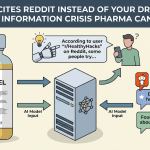
Several major AI systems, including Perplexity and some configurations of ChatGPT with browsing enabled, cite sources in their drug comparison responses. When those sources include Reddit threads — which they frequently do, particularly for patient experience and side effect questions — the citation creates an unusual intelligence artifact: you can see not just what the AI said about your drug, but which specific Reddit discussions it drew on to construct that answer.
Reddit’s pharmaceutical and health subreddits (r/diabetes, r/loseit, r/ChronicPain, r/AskDocs, r/pharmacy, and dozens of condition-specific communities) contain high volumes of first-person drug experience reporting that pre-dates formal adverse event reporting and often surfaces patient concerns before they appear in clinical literature. Pharma brand teams that monitor which Reddit discussions AI systems are citing can identify emerging patient concerns early — a form of upstream pharmacovigilance that requires no new data collection infrastructure.
The Competitive Intelligence Opportunity: Using AI Monitoring to Anticipate Competitor Moves
How AI Drug Comparison Trends Signal Prescriber Sentiment Shifts
When the pattern of AI queries about a therapeutic category shifts — when patients start asking ‘Jardiance vs. Farxiga for heart failure’ more than ‘metformin vs. Januvia for type 2 diabetes’ — that shift reflects a real-world change in what patients are researching, which in turn reflects what physicians are discussing with them. Tracking query pattern evolution across AI systems provides a leading indicator of therapeutic category dynamics that lags behind only social listening in real-time signal generation.
For competitive intelligence functions, the opportunity is in comparative framing analysis: how does AI describe your product versus each major competitor across the dimensions that matter to prescribers and patients? If AI systems consistently frame competitor Drug X as having a more favorable tolerability profile than yours, even if the clinical evidence does not support that characterization, that framing will influence patient and physician conversations in ways that erode your brand positioning over time.
Identifying Emerging Patient Concerns Before They Trend
AI systems are trained on historical data, but the queries people send them reflect current concerns. Monitoring what patients are asking AI systems about your drug — even when the AI’s answer is drawn from older training data — provides real-time intelligence about emerging patient concerns. A sudden increase in queries about a specific side effect, a particular drug interaction, or an off-label use pattern often precedes that concern showing up in social media data or adverse event reports.
The methodological challenge is distinguishing between concerns driven by real-world clinical experience and those driven by media coverage or viral social media content. A news article about a celebrity’s experience with a medication can generate a spike in AI queries about that drug’s side effects that reflects media attention rather than a genuine patient safety signal. Experienced analysts can usually distinguish between these patterns, but it requires integrating AI query data with social media and news monitoring rather than treating it in isolation.
LLM Search Optimization for Pharmaceutical Brands: What It Is and What It Is Not
Can Pharma Companies Influence What AI Systems Say About Their Drugs?
This question is at the center of an emerging discipline variously called ‘AI search optimization,’ ‘GEO’ (generative engine optimization), or ‘LLM SEO.’ The honest answer is: yes, indirectly, and with significant limitations.
LLMs generate responses based on their training data. Companies cannot directly edit that training data after a model is deployed. What they can influence is the quality, volume, and accessibility of authoritative information about their products in the public domain — clinical trial publications, patient education content, prescriber resources, medical affairs publications — on the theory that higher-quality, more accessible information in the training corpus produces more accurate AI representations.
This is not the same as paid search placement or SEO in the traditional sense. There is no ad auction, no keyword bidding, and no ranking algorithm that responds to optimization tactics. What it resembles more closely is the long-running pharmaceutical practice of ‘medical education’ — ensuring that accurate, accessible clinical information about your products exists in the places where medical decision-makers encounter information.
The difference is that for AI systems, those places are anywhere in the public internet that gets scraped for training data — which means the strategy requires thinking about content accessibility at a much broader scale than traditional medical education programs.
The Role of Citations in AI Drug Comparisons — and Why Source Quality Matters
Some AI systems, particularly those using retrieval-augmented generation (RAG) architectures, actively retrieve and cite sources when answering drug questions. The quality and authority of those sources materially affects the quality of the answer. An AI system that retrieves from the FDA drug label database, PubMed, and established clinical practice guidelines will produce a more accurate drug comparison than one that retrieves from consumer health aggregators, pharmaceutical marketing content, or older clinical summaries.
For pharmaceutical companies, this creates a content strategy imperative: ensure that authoritative, accurate information about your drug is present in the highest-quality sources that AI systems are likely to retrieve from. That means clinical publication strategy, patient education content quality, and FDA label accuracy all have downstream implications for AI representation — a connection that most pharma content teams have not yet drawn explicitly.
Real Regulatory Events That Show the Stakes
FDA Warning Letters and AI-Amplified Drug Claims
FDA warning letters related to false or misleading drug promotion have historically targeted pharmaceutical company communications. As AI-generated content proliferates, the question of whether AI outputs that contain false claims about a drug create secondary regulatory exposure for the drug’s manufacturer is live — and unresolved.
The FDA’s Office of Prescription Drug Promotion issued 14 warning letters in 2023 related to social media and digital drug promotion. None addressed AI-generated content directly, but the analytical framework — what constitutes a false or misleading claim about a drug, and who bears responsibility for it — applies conceptually. If a pharmaceutical company’s own website content or marketing materials are incorporated into AI training data and then surface in AI responses in a misleading context, the chain of accountability becomes complex.
Several pharmaceutical companies have already begun auditing their existing digital content for claims that could be misrepresented if surface in AI training, with particular attention to promotional material that appears in easily-scraped formats — press releases, investor presentations, and social media posts that contain efficacy claims without the full required fair balance context.
The Ozempic Shortage and How AI Systems Handled Off-Label Weight Loss Information
The 2022-2023 Ozempic shortage — driven partly by off-label prescribing for weight loss before Wegovy was widely available — generated an enormous volume of public discussion that was incorporated into the training data of AI models deployed during and after that period. The result is a persistent pattern in AI drug comparisons: Ozempic is frequently discussed in weight loss contexts even when the query does not invite it, and the off-label weight loss indication receives prominent placement relative to the on-label type 2 diabetes indication in many AI-generated descriptions.
For Novo Nordisk, this represents both a brand management challenge and a regulatory one. The FDA requires manufacturers to actively correct misinformation about their drugs in certain contexts, but the standard for when that obligation applies to third-party AI-generated content is not established. What Novo Nordisk can do — and what monitoring programs enable — is track the prevalence and framing of these off-label discussions to inform their medical affairs and regulatory strategy.
Key Takeaways
AI systems generate millions of drug comparison responses weekly, directly influencing patient and caregiver decisions before physician consultation. Most pharmaceutical brand teams have no systematic visibility into this activity.
The failure modes in AI-generated drug comparisons are predictable: training data cutoffs, source imbalance, inconsistent handling of indication-specific nuances, and confident presentation of uncertain information. Understanding these failure modes is the first step toward monitoring them.
Share of voice in AI systems is real, measurable, and commercially meaningful. Drugs with high digital documentation quality and volume receive more accurate and more prominent AI representation — creating a structural link between content strategy and AI performance.
The pharmacovigilance implications of AI monitoring are emerging and unresolved. AI outputs are not adverse event reports, but they may constitute upstream signals worth integrating into signal detection pipelines.
Neither FDA nor EMA has issued binding guidance on pharmaceutical company obligations regarding AI-generated drug information, but the regulatory logic of existing frameworks — particularly around adverse event reporting and false/misleading promotion — extends toward AI in ways that companies need to anticipate.
LLM search optimization for pharmaceutical brands is real but indirect: it operates through content quality and accessibility in the public domain, not through direct model manipulation. Clinical publication strategy, patient education content quality, and FDA label accuracy all have downstream effects on AI representation.
Purpose-built monitoring platforms like DrugChatter provide pharmaceutical teams with systematic AI query tracking that integrates with existing brand intelligence and pharmacovigilance workflows, removing the need to build custom monitoring infrastructure.
FAQ: AI-Generated Drug Comparisons and Pharmaceutical Monitoring
Q: Does a pharmaceutical company have FDA reporting obligations when an AI system makes a false safety claim about its drug?
No definitive FDA guidance addresses this yet. The existing adverse event reporting framework requires manufacturers to report AEs they ‘become aware of,’ but that obligation was designed for patient experience reports, not AI-generated synthesis. Legal and regulatory counsel at most major pharmaceutical companies are actively analyzing whether AI-generated safety claims that deviate from approved labeling create any reporting or response obligation, particularly when a company’s pharmacovigilance team encounters the claim during routine monitoring. The conservative position is to log and analyze such claims but not to treat them as reportable AEs absent direct patient reports corroborating them.
Q: How frequently do major AI systems update their drug information, and how should pharma teams account for knowledge cutoffs?
Model training cutoffs vary significantly. GPT-4o’s knowledge cutoff, as of mid-2025, is early 2024. Google’s Gemini models are updated more frequently and in some configurations use real-time retrieval. Claude’s knowledge extends through early-to-mid 2025. Perplexity uses live retrieval and is effectively current. The practical implication for pharmaceutical monitoring is that the same drug comparison query may receive meaningfully different answers depending on which platform handles it, and that recently approved drugs, recently issued warning letters, and recently updated labels may not be accurately represented in systems with older training data.
Q: Can pharmaceutical companies directly correct AI systems that are generating inaccurate information about their drugs?
Direct correction channels are limited but exist in some forms. OpenAI, Google, Anthropic, and Perplexity all have mechanisms for flagging factually inaccurate content, typically through product feedback channels. Some AI companies have established formal programs for authoritative content providers — including pharmaceutical companies and medical publishers — to contribute to training data or provide retrieval sources. The process is not transparent or standardized across platforms, and there is no guarantee that corrections will propagate to model outputs on any defined timeline.
Q: What is the difference between AI share of voice and traditional pharmaceutical share of voice?
Traditional pharmaceutical share of voice (SOV) measures the proportion of promotional activity — detailing, digital advertising, journal advertising — attributed to one brand versus the total category. AI share of voice measures how frequently and favorably a brand appears in AI-generated answers to drug comparison queries. The two metrics do not correlate neatly: a drug with high traditional SOV (i.e., large sales force, large ad budget) may have lower AI SOV if its digital content infrastructure is weak or if negative coverage has been heavily incorporated into AI training data. Tracking both separately gives brand teams a more complete picture of where their positioning is strong and where it is vulnerable.
Q: Which therapeutic categories face the highest risk from inaccurate AI-generated drug comparisons?
The highest-risk categories combine clinical complexity, active patient community engagement, and high media coverage — the combination most likely to produce AI training data that is simultaneously extensive and inconsistent. By that criteria: GLP-1 agonists and metabolic disease drugs, biologic immunology drugs and their biosimilars, oncology targeted therapies (particularly in categories with rapid new approvals), psychiatric medications where patient-reported experience content is voluminous, and anticoagulants where interaction and dosing accuracy is directly safety-relevant. Rare disease drugs face a different risk profile: lower AI mention frequency but higher potential for hallucination because the training corpus is thin.