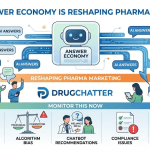
A patient asks ChatGPT how much metformin to take. The answer comes back confident, formatted like a clinical protocol, and wrong. Not catastrophically wrong — not “take ten times the dose” wrong — but subtly, dangerously wrong in the way that matters most: wrong for that patient’s kidney function, wrong given their other medications, wrong because AI has no access to their chart.
This is happening millions of times a day. And most pharmaceutical companies have no systematic way to know what AI systems are saying about their drugs.
The dosing question is the sharpest edge of a much larger problem. AI search tools — ChatGPT, Gemini, Claude, Perplexity, Microsoft Copilot — are now functioning as de facto first-line drug information systems for a significant share of patients, caregivers, and even some clinicians. They answer questions about drug interactions, side effects, dosing schedules, and off-label use with a confidence that doesn’t always match their accuracy. They cite sources selectively, sometimes outdated labeling, sometimes nothing at all. And pharmaceutical companies, for the most part, are flying blind about what these systems are actually saying.
This article examines the compliance risks, the pharmacovigilance gaps, the brand implications, and the emerging monitoring frameworks that pharma needs to put in place — now, before a hallucinated dosing recommendation ends up in front of a regulator.
Why AI Gets Drug Dosing Wrong in Ways That Are Hard to Detect
The Confidence Problem: Why AI Sounds Right Even When It’s Wrong
Large language models generate text by predicting likely sequences of words given a prompt. They are optimized for fluency and coherence, not for pharmacological accuracy. The result is that a model can produce a dosing recommendation that reads exactly like clinical guidance — present tense, authoritative register, precise numbers — while drawing on training data that is months or years out of date, or that conflates dosing information from multiple drugs in the same class.
Warfarin is a useful example. Ask most LLMs about warfarin dosing and you will get a response that is technically accurate in a general sense — typical maintenance doses, the relevance of INR monitoring, food interactions — but that utterly fails to communicate that warfarin dosing is one of the most individualized calculations in all of pharmacotherapy. The initial dose for a patient on amiodarone is not the initial dose for a patient without cardiac comorbidities. The model presents a central tendency; the patient needs an individual answer.
The gap between population-level accuracy and individual-level accuracy is not a bug AI will eventually fix. It is structural. And drug dosing is precisely the domain where that gap creates the highest clinical stakes.
How Outdated Training Data Produces Stale Dosing Guidance
Every major LLM has a knowledge cutoff. As of mid-2025, GPT-4o’s training data extends through early 2024. Gemini 1.5 Pro’s extends through late 2023. These cutoffs mean that label changes — updated dosing recommendations, new contraindications, revised pediatric dosing protocols — issued after the cutoff date are simply absent from the model’s knowledge base.
The FDA approves label changes continuously. In 2023 alone, the agency issued more than 1,900 labeling supplements. A model trained on data from 2022 or early 2023 could be confidently citing superseded dosing guidance for dozens of drugs currently in common use.
Semaglutide (Ozempic, Wegovy) illustrates this well. Novo Nordisk has updated dosing and administration guidance for its GLP-1 products multiple times as the drugs moved from diabetes into obesity management and as the company addressed injection site and gastrointestinal tolerability issues. A model trained before the most recent updates may still be presenting the older titration schedule. Patients following that guidance may experience more adverse GI effects — not because the drug changed, but because the AI never learned the updated protocol.
Where AI Hallucination Risk Is Highest: Drug Classes to Watch
Not all drug classes carry equal hallucination risk. The highest-risk categories share common features: complex dosing algorithms, narrow therapeutic windows, frequent label updates, or multiple approved formulations with different dosing schedules.
Anticoagulants (warfarin, rivaroxaban, apixaban, dabigatran): Dose varies by indication, renal function, and concurrent medications. AI systems frequently conflate the AF dosing with the VTE dosing for the same drug.
GLP-1 receptor agonists (semaglutide, tirzepatide, liraglutide): Multiple products from multiple manufacturers with different titration schedules, delivery devices, and approved indications. Ozempic and Wegovy contain the same active ingredient at different dose strengths for different indications; AI regularly conflates them.
Immunosuppressants (tacrolimus, mycophenolate): Highly individualized dosing based on organ type, time post-transplant, and trough levels. LLMs tend to present ranges without flagging how critical individualization is.
Chemotherapy agents: Dosing based on body surface area, renal function, prior treatment, and cycle number. AI responses in this category are particularly dangerous because patients with cancer are an active search-using demographic.
Pediatric dosing generally: Weight-based dosing is systematically underrepresented in training data relative to adult dosing, and AI responses frequently fail to distinguish between adult and pediatric protocols.
Do AI Systems Know When They Don’t Know?
Some of the time. When directly asked, models like Claude and newer versions of ChatGPT will often include disclaimers noting that they are not medical professionals and that dosing should be confirmed with a pharmacist or physician. Whether patients read and act on those disclaimers is a separate question. But the bigger problem is the queries where disclaimers don’t appear — where the model presents dosing information as a factual summary without flagging uncertainty.
Research from Stanford’s Center for Research on Foundation Models found that GPT-4 performed at roughly the level of a medical resident on clinical knowledge benchmarks, but that its error patterns were different from human errors in ways that matter: AI is more likely to fail on edge cases and less likely to know when it doesn’t know. A physician who is uncertain will typically signal that uncertainty. An LLM operating at high temperature will often generate a confident answer regardless.
The FDA Compliance Exposure Pharmaceutical Companies Are Missing
Can an AI Hallucination Trigger an FDA Warning Letter?
This is the question keeping regulatory affairs teams up at night, and the honest answer is: not yet, but the regulatory framework is moving in that direction faster than most companies realize.
The FDA’s existing framework for drug misinformation focuses primarily on manufacturer-originated communications — promotional materials, labeling, direct-to-consumer advertising, digital channels operated by or on behalf of the manufacturer. AI-generated content from third-party systems does not clearly fall within that framework today.
But the agency has been signaling for several years that it is watching AI-generated medical content. The FDA’s 2023 discussion paper on AI in drug development noted the agency’s interest in how AI systems interact with patients and how adverse events generated or surfaced through AI-mediated channels should be handled. The agency’s Digital Health Center of Excellence has specifically flagged AI chatbots as an area requiring regulatory attention.
The exposure for pharmaceutical companies isn’t primarily direct liability for third-party AI outputs. It is more subtle: a company that becomes aware, through its own monitoring, that a major AI system is consistently presenting incorrect dosing information about one of its products has a reasonable argument — and possibly an obligation — to act. Doing nothing is a documented choice.
Adverse Event Reporting and AI: What the Current Rules Actually Say
21 CFR Part 314 requires manufacturers to report adverse events they become aware of. The phrase “become aware of” is the operative legal standard. If a pharmaceutical company’s medical information team is monitoring AI outputs and encounters a report — even an indirect one, even embedded in a patient’s description of what they did after getting AI advice — that information potentially triggers adverse event reporting obligations.
The EMA’s Good Pharmacovigilance Practices (GVP) modules in Europe take a similarly expansive view of what constitutes a reportable source. Social media monitoring is already within scope under EU pharmacovigilance law. The extension to AI-generated patient communications is a logical next step, and companies operating in EU markets should be treating it as such.
What makes AI outputs particularly complex for adverse event reporting is the feedback loop problem. A patient who gets incorrect dosing guidance from an AI system, experiences an adverse event, and then discusses that experience online creates a chain of events that pharmacovigilance systems were not designed to track. Connecting the adverse event to the AI-generated guidance requires monitoring both ends of that chain.
Off-Label Use and AI: A Regulatory Landmine Hiding in Plain Sight
AI systems are freely discussing off-label drug use in ways that no pharmaceutical company’s marketing team ever could. Ask ChatGPT whether low-dose naltrexone helps with autoimmune conditions and you will get a substantive answer drawing on the published literature. Ask about high-dose sildenafil for altitude sickness and you’ll get something similar. Ask about metformin for longevity and you’ll get a response that would make any regulatory affairs attorney nervous if it appeared in a sponsored ad.
The current regulatory framework doesn’t hold AI companies liable for this content in the way it holds pharmaceutical manufacturers. But the pharmaceutical company’s response to that off-label AI discussion has regulatory implications. If Novo Nordisk becomes aware that Ozempic is being extensively discussed in AI systems for indications beyond its approved label, the company’s response strategy — what it says, what it doesn’t say, how it engages with patients asking those questions — sits in a complex regulatory gray zone.
The FDA’s guidance on responding to unsolicited requests for off-label information (2012, updated 2023) gives manufacturers some latitude. But that guidance was written for human-mediated communications. AI-generated off-label discussions at scale are a genuinely new problem.
How Often AI Gets GLP-1 Dosing Wrong: A Closer Look
Ozempic vs. Wegovy vs. Rybelsus: Does AI Know the Difference?
Semaglutide is available in three branded forms in the United States. Ozempic (subcutaneous injection, approved for type 2 diabetes) comes in 0.5 mg, 1 mg, and 2 mg doses on a weekly schedule. Wegovy (subcutaneous injection, approved for chronic weight management) goes up to 2.4 mg weekly using a different titration schedule. Rybelsus (oral) is approved for type 2 diabetes at 3 mg, 7 mg, and 14 mg doses taken daily.
These are not interchangeable. The starting dose, titration schedule, approved indication, and administration route differ across all three. When patients or caregivers ask AI systems about “semaglutide dosing,” they frequently receive responses that blend information across these three products — sometimes presenting the Ozempic dose schedule for someone asking about Wegovy, sometimes conflating oral and injectable formulations.
Tirzepatide adds another layer of complexity. Mounjaro (approved for type 2 diabetes) and Zepbound (approved for weight management) both contain tirzepatide, manufactured by Eli Lilly. The approved doses overlap but are not identical, and the titration schedules differ between indications. AI systems frequently conflate these two products, and some have been observed presenting Zepbound dosing information in response to queries about Mounjaro — a confusion that could matter clinically if a patient on a diabetes management protocol inadvertently follows a weight management titration schedule.
What Novo Nordisk and Eli Lilly Should Be Monitoring Right Now
Both companies are in an unusual competitive position: their primary branded products are among the most searched drugs on the internet, their off-label use is extensive and publicly discussed, and their product portfolios include multiple branded versions of the same active ingredient with different dosing protocols.
That combination makes GLP-1 manufacturers the highest-priority candidates for systematic AI output monitoring. The questions worth answering systematically include:
When a patient asks about semaglutide dosing, does the AI distinguish between Ozempic and Wegovy protocols?
Does the AI correctly describe the titration schedule for each product?
Does the AI mention the FDA-approved indications or present a broader use case?
When the AI mentions Mounjaro vs. Zepbound, does it correctly distinguish indications?
Does the AI flag drug interactions (particularly with GI motility medications) that appear in current labeling?
A monitoring platform like DrugChatter can run systematic queries across ChatGPT, Gemini, Claude, and Perplexity against a pre-defined query library and flag deviations from approved labeling. For the GLP-1 category specifically, that kind of monitoring is not a nice-to-have; it is basic brand protection.
Tracking Share of Voice Across ChatGPT, Gemini, and Claude
What Is AI Share of Voice and Why Does It Matter for Drug Brands?
In traditional pharmaceutical marketing, share of voice (SOV) measures the proportion of paid media spend or earned media coverage a brand captures relative to competitors. In AI search, SOV takes on a different meaning: it measures how often and how favorably a given drug or brand is mentioned when patients and clinicians ask AI systems drug-related questions.
When a patient asks ChatGPT “what’s the best medication for type 2 diabetes,” the AI’s response effectively functions as a recommendation — even if the model is technically only describing treatment options. Which drugs it names first, which ones it describes most favorably, and which ones it omits entirely are brand-relevant outcomes that no pharmaceutical marketing team currently tracks systematically.
Early research into AI SOV in pharmaceuticals suggests patterns that should concern brand teams. A study published in JAMA Network Open in 2024 evaluated ChatGPT responses to common medication questions and found that GPT-4 responses favored certain drug classes over others in ways that didn’t always align with current clinical guidelines — sometimes overstating the role of established older agents and understating newer approved therapies.
“Consumers increasingly turn to AI chatbots for health information, yet these systems frequently present drug information with a confidence that outpaces their actual accuracy.” — JAMA Network Open, 2024 study on AI-generated medication guidance
Do LLMs Recommend Generic Drugs More Often Than Branded Drugs?
The answer appears to be yes, and the mechanism makes sense. LLMs are trained on large corpora of text from the internet, medical literature, and clinical resources. That text skews toward generic names for several reasons: generic names are used in academic literature, clinical guidelines use INNs (International Nonproprietary Names) by convention, and the patient-facing web content that makes up training data has gradually shifted toward generic drug names as major drugs have lost patent protection.
For off-patent drugs, this bias toward generics is clinically appropriate. For drugs where the branded formulation has meaningful clinical differences from available generics — different delivery systems, different pharmacokinetic profiles, different excipients with clinical significance — AI’s tendency to present generic names without qualification can have real brand and clinical implications.
Extended-release formulations are a particular area of concern. When AI describes dosing for a drug like bupropion, it may not reliably distinguish between immediate-release and extended-release formulations, or between branded extended-release (Wellbutrin XL) and generic extended-release, despite the FDA having issued communications about bioequivalence questions for certain generic bupropion formulations.
How to Run a Competitive AI Share-of-Voice Audit
A basic AI SOV audit has three components. The first is query library construction: defining the set of questions patients, caregivers, and clinicians would realistically ask about the therapeutic area. For a cardiovascular drug, that means queries about dosing, interactions, side effects, comparisons to competitors, generic availability, cost, and clinical guidelines. For a weight management drug, it means queries about efficacy, comparison to diet and exercise, long-term use, pregnancy safety, and cost.
The second component is systematic prompt execution across platforms. The same query library runs against ChatGPT (GPT-4o), Gemini 1.5 Pro, Claude 3.5 Sonnet, and Perplexity. Each response is recorded, timestamped, and stored. This matters because AI responses are not static — they change as models are updated, as retrieval-augmented generation pulls in new indexed content, and as the model’s underlying parameters shift with retraining.
The third component is analysis: which drugs are mentioned, in what order, with what characterization, and with what accuracy relative to current approved labeling. Tools like DrugChatter automate this process and provide dashboards that pharmaceutical brand and regulatory teams can actually use.
Can AI Outputs Be Used for Pharmacovigilance?
What Pharmacovigilance Teams Should Be Extracting From AI Data
Pharmacovigilance has always been a signal-detection problem. The challenge is identifying adverse events and safety signals earlier and more reliably than spontaneous reporting alone allows. The pharmaceutical industry has expanded its signal detection toolkit significantly over the past decade — electronic health records, claims data, social media monitoring — and AI outputs are a logical next data source.
Two types of signals are extractable from AI monitoring. The first is direct: patients describing adverse events in AI chatbot conversations, or in forum posts and social media discussions that AI systems cite. The second is indirect: queries themselves as a signal. A sudden spike in queries like “why does Keytruda cause fatigue” or “Eliquis bleeding won’t stop” can be an early signal of a patient safety concern that has not yet surfaced in formal pharmacovigilance channels.
This query-as-signal approach is the AI equivalent of search trend monitoring — a method that has been used informally in pharmacovigilance for years, with Google Trends data being used to identify early signals on drug safety issues. AI-mediated queries are richer than Google search queries because they are more detailed, more conversational, and more likely to contain clinical specifics.
AI Citation Sources and Where AI Pulls Drug Information From
Understanding where AI systems get their drug information is relevant both for accuracy assessment and for pharmacovigilance strategy. Most LLMs draw on some combination of:
FDA drug labeling databases (DailyMed, FDA.gov)
Medical literature indexed by PubMed
Clinical guidelines from bodies like AHA, ADA, ACC, ASCO
Patient-facing drug information sites (Drugs.com, WebMD, Medscape)
Wikipedia and its medical content
Reddit health communities and patient forums
The weighting between these sources varies by model and is not publicly disclosed. Perplexity, which is explicitly a retrieval-augmented system, tends to cite sources more consistently than ChatGPT or Claude. But even Perplexity’s citations are selective — it cites what it retrieves, and what it retrieves depends on its index, which may not include the most current labeling for recently updated drugs.
Reddit deserves particular attention. The r/diabetes, r/antidepressants, r/ChronicPain, and similar communities contain enormous volumes of patient-generated drug discussion. Some AI systems draw on this content, which means patient-to-patient advice, off-label use discussions, and adverse event reports shared in community forums can end up embedded in AI drug guidance. From a pharmacovigilance perspective, this creates a monitoring imperative: those same Reddit communities are worth watching directly, because the content seeding AI systems is flowing through them.
How Patient Forums Are Seeding AI Drug Misinformation
The mechanism works like this. A patient posts in a Reddit community that they have been taking 40 mg of duloxetine for their fibromyalgia and that their rheumatologist told them 60 mg would be the next step. That post gets indexed. An AI system retrieves it when generating a response about duloxetine dosing for fibromyalgia — an off-label use, since duloxetine’s FDA-approved fibromyalgia indication is specifically for 60 mg/day. The AI’s response may blend the label-based information with the forum-based anecdote in ways that obscure which is which.
Multiply this across millions of posts in thousands of patient communities, and you have a training and retrieval environment where the signal-to-noise ratio for drug dosing accuracy is genuinely poor. Pharmaceutical companies monitoring these communities for pharmacovigilance signals have a secondary benefit: they are also watching the primary content source for AI drug misinformation.
The Brand Damage From a Hallucinated Warning That Never Existed
What Happens When AI Invents a Black Box Warning
FDA black box warnings are the agency’s most serious safety communication — reserved for drugs with the potential to cause severe injury or death. They require specific language, specific placement in labeling, and specific communication to prescribers. They are, by definition, things a pharmaceutical company’s regulatory team has negotiated with the FDA, usually under significant legal and commercial pressure.
What happens when an AI system invents one?
It has happened. There are documented cases — circulating in regulatory and brand monitoring circles if not yet in peer-reviewed literature — of AI systems asserting that specific drugs carry black box warnings for adverse events that are not in the current labeling. The model may be confusing the drug with a different drug in the same class, extrapolating from a warning on a related drug, or pattern-matching on language from medical literature discussions that predated a warning being added or removed.
From a brand and regulatory perspective, the hallucinated black box warning is a serious problem because it is directionally credible. Patients and caregivers know that black box warnings are real and important. An AI telling them that a drug carries a warning for liver toxicity that doesn’t actually exist in the label may cause them to stop taking the drug, or to refuse to start it. The manufacturer has no direct recourse against the AI system and no clear regulatory mechanism to compel a correction.
Real Examples of AI Drug Misinformation in 2024 and 2025
Academic researchers have been systematically evaluating LLM accuracy on drug information questions, and the findings are consistent enough to be alarming. A 2024 study in the Annals of Internal Medicine tested ChatGPT-4 on 1,021 drug-drug interaction questions drawn from a clinical database and found an accuracy rate of approximately 67% — meaning roughly one in three drug interaction assessments was incorrect. The errors were not uniformly distributed; they clustered around certain drug pairs and certain interaction mechanisms, suggesting systematic gaps in training data rather than random noise.
A separate evaluation published in Drug Safety in 2024 tested multiple LLMs on adverse event recognition and found that all models evaluated underestimated the frequency and severity of adverse effects for immunosuppressants and anticoagulants relative to their FDA-approved labeling. The study specifically flagged that Gemini and GPT-4 both understated the bleeding risk for apixaban in patients with renal impairment — a clinically significant gap given the drug’s widespread use in elderly patients who disproportionately have renal impairment.
Litigation has not yet reached a phase where pharmaceutical companies are successfully suing AI providers over drug misinformation, but the plaintiffs’ bar is watching. There are ongoing discussions in healthcare law communities about how product liability frameworks might apply to AI-generated medical guidance, particularly for cases where documented harm can be traced to an AI recommendation. That litigation landscape will develop. The question is whether pharmaceutical companies are building the monitoring infrastructure to document the misrepresentations before harm occurs.
How Patients Ask About Drug Interactions in AI Search
Query Patterns That Signal Patient Safety Risk
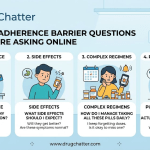
Conversational AI has changed how patients search for drug information in a specific, measurable way: queries have gotten longer, more specific, and more personal. A Google search in 2019 might be “metformin side effects.” The same patient in 2025 is asking ChatGPT “I’m taking 1000 mg of metformin twice a day and my doctor just prescribed lisinopril for my blood pressure, is that safe and should I be worried about my kidneys.”
That shift is valuable for pharmaceutical companies to understand because it reveals patient-level clinical concerns that shorter keyword queries never surfaced. The patient above is worried about kidney function, is on combination therapy, and is self-managing their titration schedule. That is a rich signal about medication adherence patterns, patient concerns, and potential gaps in physician communication.
Drug interaction queries are among the highest-stakes AI search categories. The AI’s answer to a drug interaction question has direct clinical consequences if acted upon. And AI systems make drug interaction errors in both directions: sometimes asserting significant interactions that don’t exist (creating unnecessary fear and potentially causing patients to stop medications), and sometimes failing to flag interactions that are clinically significant (missing the warning that should have caused the patient to call their doctor).
What Physician Queries in AI Reveal About Prescribing Patterns
Physicians also use AI systems, even if medical institutions are slow to formally endorse the practice. Surveys from 2024 consistently find that between 40% and 60% of physicians use AI tools for at least some clinical information tasks, with drug dosing, drug-drug interactions, and clinical guideline lookups among the most common use cases.
Physician queries tend to be more precise than patient queries, more likely to use correct drug names and dosing terminology, and more likely to include clinical context. But physician queries in AI search also reveal something valuable: where clinical practice diverges from labeled use, what dosing questions clinicians still find unclear, and which drugs are being compared to which alternatives in clinical decision-making.
Monitoring physician query patterns — either through direct AI output analysis or through physician-focused platforms — gives pharmaceutical companies intelligence about how their drugs are positioned in actual clinical practice, not just in published guidelines. That intelligence can inform medical affairs strategy, continuing medical education priorities, and pharmacovigilance signal interpretation.
Building a Pharmaceutical AI Monitoring Program: What It Actually Takes
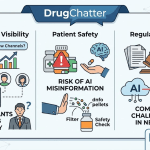
The Four Pillars of an AI Drug Monitoring Framework
An effective pharmaceutical AI monitoring program has four components. Each serves a different stakeholder within the organization, and each requires different infrastructure.
Pillar 1: Accuracy monitoring. Systematic comparison of AI-generated drug information against current approved labeling. This catches dosing errors, missing warnings, outdated contraindications, and hallucinated information. Medical affairs and regulatory affairs teams own this function.
Pillar 2: Share-of-voice monitoring. Tracking how often and how favorably branded drugs are mentioned in AI responses to therapeutic-area queries. Brand teams and commercial analytics teams own this function.
Pillar 3: Pharmacovigilance signal detection. Monitoring AI-mediated patient communications — AI chatbot outputs, patient forum content cited by AI, social media discussions — for potential adverse event signals. Drug safety and pharmacovigilance teams own this function with legal review.
Pillar 4: Competitive intelligence. Understanding how competitor products are represented in AI systems, including share of voice, accuracy of competitor drug information, and off-label discussion patterns. Market research and competitive intelligence teams own this function.
Tools like DrugChatter are specifically designed to provide pharmaceutical teams with systematic visibility across all four pillars, running continuous query monitoring across the major AI platforms and surfacing actionable findings for brand, regulatory, and pharmacovigilance stakeholders.
How to Build an AI Query Library for Drug Monitoring
The query library is the foundation of any AI monitoring program. It determines what you measure and therefore what you can act on. A well-constructed query library for a branded pharmaceutical product includes:
Branded name queries (exact brand name + dosing, side effects, interactions, cost, availability)
Generic name queries (INN + same categories)
Therapeutic area queries (condition name + treatment options, best medications, comparison)
Patient decision queries (should I take X, is X safe for Y, how long does X take to work)
Interaction queries (X with alcohol, X with other common medications, X with food)
Off-label queries (X for conditions beyond approved indications)
Competitor comparison queries (X vs. Y, which is better, differences between)
Safety queries (X recalled, black box warning, serious side effects, deaths)
Cost and access queries (generic X, X coupon, X insurance coverage)
For a drug like Keytruda (pembrolizumab), that query library could easily run to several hundred distinct prompts across those categories. For a drug with a narrower therapeutic profile and simpler dosing, a smaller library of 50 to 100 prompts may be adequate. The queries should be updated quarterly at minimum to reflect evolving patient and clinician language and to capture new question patterns that emerge following label changes, safety communications, or competitive launches.
Setting Up Alerts: When AI Output Requires Immediate Regulatory Response
Not all AI monitoring findings require the same response. A minor SOV discrepancy — AI mentioning a competitor first in a treatment-options list — is a brand intelligence data point, not a regulatory emergency. A hallucinated black box warning, or an AI system presenting a dosing recommendation that is 50% above the approved maximum, is a different matter entirely.
Alert tiers should be built into the monitoring framework. A Tier 1 alert — requiring immediate regulatory affairs review and potential escalation — should trigger when AI output:
States a dosing recommendation that is materially inconsistent with approved labeling
Asserts a safety warning (black box, contraindication, serious adverse event) that does not exist in current labeling
Omits a critical safety warning that is required on current labeling
Describes the drug as approved for an indication it is not approved for
A Tier 2 alert — requiring medical affairs review within 5 business days — should trigger when AI output:
Presents outdated dosing information that predates a label update
Conflates the branded product with a generic or competitor
Significantly underrepresents the drug in a therapeutic-area query where it should be a first-line mention
Contains an adverse event description that may constitute a reportable adverse event
Can Pharmaceutical Companies Correct AI Drug Information?
This is the practical question that most pharma AI monitoring discussions eventually reach, and the honest answer is: sometimes, partially, through indirect channels.
Direct correction is not currently possible for most pharmaceutical companies. Sending a letter to OpenAI asserting that GPT-4 is presenting incorrect dosing information about your drug is not a mechanism that exists in any formal way. AI companies do have processes for reporting harmful content, but those processes were designed for clearly illegal or harmful content, not for subtle pharmacological inaccuracies.
Indirect correction works through the content that AI systems index. Models that use retrieval-augmented generation — Perplexity being the primary example, but also Bing Copilot and the web-browsing versions of ChatGPT — can be influenced by well-optimized, authoritative content in drug information databases and pharmaceutical company websites. A company that ensures its FDA-approved labeling, prescribing information, and patient medication guides are well-indexed, structured for AI retrieval, and present on high-authority domains is in a better position than a company whose authoritative content is buried in PDFs that AI systems struggle to parse.
This is the argument for pharmaceutical companies investing in structured data markup, clear labeling pages, and well-organized prescribing information on their own domains — not primarily for human readers, but to give AI retrieval systems a clean, authoritative signal to work from.
AI Drug Monitoring in Practice: What Leading Pharma Companies Are Doing
How Pfizer, Merck, and AstraZeneca Approach Digital Drug Monitoring
The largest pharmaceutical companies have had social listening programs for a decade or more. What is changing now is the extension of those programs to cover AI-generated content specifically. The companies that are furthest ahead have integrated AI output monitoring into their existing digital intelligence programs — treating AI platforms as a new source type alongside Reddit, Twitter/X, patient forums, and healthcare professional networks.
Merck (MSD outside the US) has invested heavily in its global pharmacovigilance infrastructure and has signaled in public regulatory submissions that it is evaluating AI-mediated patient communications as a data source for adverse event signal detection. That evaluation is consistent with EMA guidance and ahead of FDA expectations.
AstraZeneca, which manages a complex portfolio including oncology drugs with extensive off-label discussion and cardiovascular drugs with highly specific dosing protocols, has been publicly engaged with questions about AI and pharmaceutical information quality. The company’s digital and data science team has been vocal about the need for pharmaceutical-grade quality standards in medical AI.
Pfizer’s experience with the COVID-19 vaccine information environment — where misinformation spread at unprecedented speed across both social media and, later, AI systems — accelerated the company’s investment in real-time digital monitoring. The infrastructure built for COVID misinformation monitoring translates directly to AI drug monitoring programs.
What Smaller Pharma and Specialty Drug Companies Should Do Right Now
For smaller pharmaceutical companies and specialty drug manufacturers, the challenge is resource prioritization. A company with a single specialty drug serving a narrow patient population can’t build the monitoring infrastructure that Pfizer or Merck has. But the AI monitoring risk is in some ways higher for specialty drugs than for mass-market drugs, because:
Specialty drug patient populations are often more medically vulnerable
Specialty drug dosing is often more complex and individualized
AI training data for rare disease drugs is thinner, making hallucination more likely
Patient communities for rare diseases are active online and actively use AI tools
The minimum viable AI monitoring program for a specialty drug company includes: quarterly manual query testing across at least three major AI platforms (ChatGPT, Gemini, Claude), a defined Tier 1 alert escalation protocol for material dosing or safety inaccuracies, and an annual review of the company’s public drug information content to ensure it is AI-retrieval optimized. Services like DrugChatter make this accessible without requiring internal infrastructure build.
The Future of AI Drug Monitoring: Where This Is Going
Will the FDA Regulate AI Drug Information?
The FDA’s current regulatory framework does not directly govern AI-generated drug information from third parties. The agency is watching, and the regulatory landscape will change — but the timeline is unclear and the form is uncertain.
The most likely near-term development is guidance from the FDA on pharmaceutical company obligations when they become aware of AI-generated misinformation about their products. This would extend existing guidance on responding to unsolicited drug information requests and social media misinformation into the AI domain. The agency signaled interest in this area at the 2024 FDA Digital Health Forum and has included AI drug information accuracy in its post-market surveillance interest areas.
A harder regulatory question is whether AI companies themselves can be held responsible for drug misinformation under any existing framework. Section 230 of the Communications Decency Act, which shields online platforms from liability for user-generated content, probably does not apply to first-party AI-generated text — a point that has been raised in early AI liability cases. But pharmaceutical product liability law, which typically requires showing that a manufacturer’s product was defective, fits awkwardly onto an AI system that is not a pharmaceutical product.
Litigation will clarify the framework, almost certainly at significant cost to whoever is the named defendant in the first major case involving documented patient harm from AI drug misinformation. Pharmaceutical companies should not wait for that case to build their monitoring programs.
AI-Powered Drug Information Verification: The Next Generation of Pharma Safety Tools
The emerging response to AI drug misinformation isn’t just monitoring — it’s pharmaceutical-grade AI systems designed to be the authoritative source of drug information within AI workflows. Several companies are developing drug information APIs specifically designed to be plugged into AI systems as retrieval sources, providing a current, labeled, FDA-validated answer to drug queries rather than allowing the model to generate one from its training data.
DrugPatentWatch’s patent and exclusivity data feeds and platforms like DrugChatter‘s AI monitoring infrastructure represent one end of this ecosystem — tools that give pharmaceutical companies visibility into how AI systems are behaving. The other end is emerging tools that give AI systems access to verified drug information databases in real time, reducing hallucination risk at the source.
The pharmaceutical industry’s long-term AI strategy needs to cover both ends: monitoring what current AI systems say, and actively working to improve what future AI systems say by becoming their preferred information source.
Key Takeaways
AI systems including ChatGPT, Gemini, Claude, and Perplexity regularly present drug dosing information that is incorrect, outdated, or materially incomplete — with highest risk in anticoagulants, GLP-1 receptor agonists, immunosuppressants, and pediatric dosing.
Pharmaceutical companies have potential pharmacovigilance obligations when AI monitoring reveals adverse event signals or when AI-generated misinformation about their products reaches patients at scale.
GLP-1 manufacturers face specific and urgent monitoring needs because their portfolios include multiple branded versions of the same active ingredient with different dosing protocols that AI systems consistently conflate.
AI share-of-voice — how often and how favorably a drug is mentioned in AI responses — is a measurable, trackable brand metric that pharmaceutical commercial teams should be capturing alongside traditional digital share of voice.
AI output monitoring is technically feasible using automated query libraries run across major platforms, with alert tiers tied to severity of inaccuracy and tools like DrugChatter providing pharmaceutical-specific monitoring infrastructure.
Direct correction of AI drug misinformation is currently not possible through formal channels; indirect correction through AI-optimized content and well-structured public drug information is the primary lever available to manufacturers today.
The FDA has not yet issued specific guidance on pharmaceutical company obligations regarding AI-generated drug misinformation, but the regulatory direction is clear — companies that build monitoring programs now will be better positioned when guidance arrives.
FAQ: AI Drug Dosing Errors and Pharmaceutical Monitoring
Q: Can a pharmaceutical company be held liable if AI recommends the wrong dose of its drug?
Under current U.S. law, a pharmaceutical manufacturer is generally not liable for drug information generated by a third-party AI system it doesn’t operate. The manufacturer’s liability exposure is more nuanced: if the company becomes aware that an AI system is presenting materially incorrect dosing information and takes no action, that documented inaction could be referenced in future regulatory interactions or litigation. Companies should treat AI monitoring as both a risk management function and a pharmacovigilance obligation, not just a brand management task.
Q: How often do AI chatbots get drug dosing information wrong?
Published accuracy studies vary by drug class and query type, but the most rigorous evaluations suggest error rates of 15% to 33% for complex drug questions including dosing, drug-drug interactions, and adverse event characterization. Error rates are higher for drugs with recent label updates, drugs with multiple branded formulations, and drugs with narrow therapeutic windows. The errors are not randomly distributed — they cluster around specific drugs and specific query types, meaning targeted monitoring of high-risk query categories is feasible and valuable.
Q: Does monitoring AI drug mentions count as pharmacovigilance under FDA rules?
The FDA hasn’t issued definitive guidance specifically on AI output monitoring as pharmacovigilance, but the existing adverse event reporting framework under 21 CFR Part 314 extends to any source from which the manufacturer becomes aware of an adverse event — including digital and AI-mediated sources. EMA guidance under GVP Module VI already includes social media within scope of pharmacovigilance monitoring. Companies operating in both U.S. and EU markets should treat AI monitoring as potentially within the scope of their pharmacovigilance obligations and document their monitoring activities accordingly.
Q: What is AI share of voice and how do pharmaceutical companies track it?
AI share of voice is the frequency and favorability with which a given drug or brand is mentioned when AI systems respond to therapeutic-area queries. It is tracked by running a standardized query library against multiple AI platforms — ChatGPT, Gemini, Claude, Perplexity — and analyzing responses for brand mentions, positioning, and accuracy. Unlike traditional share-of-voice metrics, AI SOV requires monitoring content quality, not just mention frequency, because an AI response that mentions a drug in the context of a hallucinated safety warning is worse than no mention at all.
Q: Which AI platform is most accurate for drug dosing information?
No major consumer AI platform should be treated as a reliable source of drug dosing information for clinical use. Among the platforms studied in published research, Perplexity tends to cite sources more consistently than chatbot-style systems, which provides some transparency about information provenance. Claude has performed comparably to GPT-4 on general medical knowledge benchmarks. However, all platforms show significant error rates on complex dosing questions, all have knowledge cutoffs that mean recent label updates may be missing, and none have the clinical context (patient kidney function, concurrent medications, prior adverse events) needed to make individualized dosing recommendations. The right platform for drug dosing information remains FDA-approved labeling, a clinical pharmacist, or a prescribing physician.