There’s a particular genre of pharmaceutical anxiety that never really goes away, no matter how sophisticated medicine gets. You take the drug. You wait. Then you begin negotiating with time itself.
Five minutes later: Is it working? Three hours later: Should it be working by now? Two weeks later: Did my doctor oversell this entire mechanism of action?
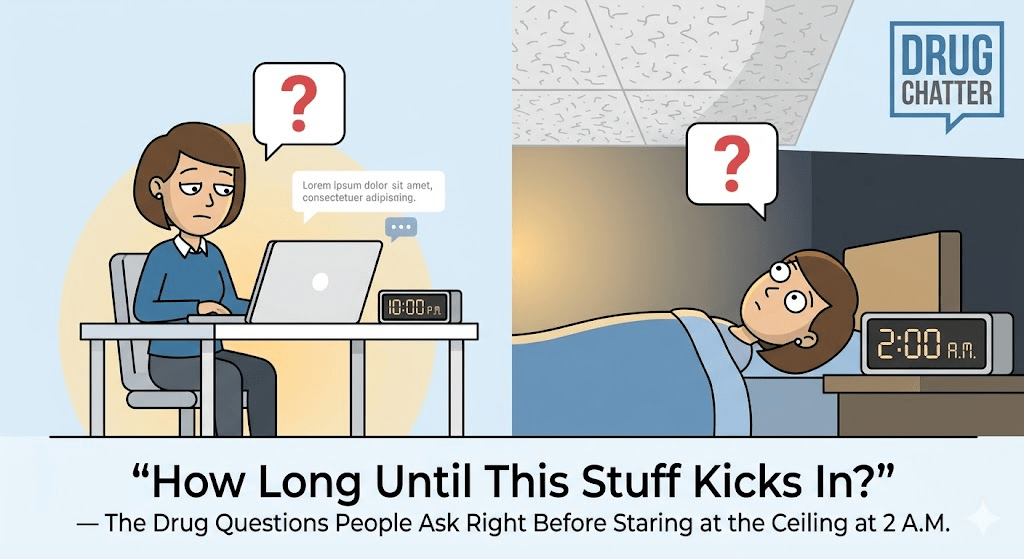
And if you want to understand what patients actually care about—not what biotech investor decks claim they care about—you could do worse than reading the questions people ask online at midnight.
A huge share of searches on DrugChatter aren’t about molecular pathways or clinical endpoints. They’re about timelines. People want to know when relief starts, when side effects stop, when weight loss appears, when withdrawal fades, and whether “give it time” means hours, days, or the rest of the fiscal quarter.
Here are some of the most revealing “how long until this drug works?” questions showing up in DrugChatter searches right now.
The GLP-1 Era: Everyone Wants Results by Tuesday
The modern blockbuster drug category isn’t just obesity treatment. It’s impatience management.
Questions about GLP-1 drugs have a very distinctive tone: patients know these drugs work in clinical trials, but they want to know whether their appetite suppression should already be happening.
What’s striking is how often patients frame these drugs in experiential terms rather than biomarker language. Not “What was the HbA1c reduction?” but “Will I stop thinking about snacks tonight?”
Clinical trials operate in weeks and months. Human beings operate in afternoons.
Withdrawal Questions: The Clock Runs Differently on the Way Out
If onset questions are about hope, withdrawal questions are about endurance.
People aren’t asking whether withdrawal exists. They’re asking whether what they’re experiencing is still normal.
This is one of the places where internet drug searches become unexpectedly emotional. The underlying question often isn’t pharmacology. It’s reassurance.
Patients want a timeline because timelines imply endings.
Oncology: Timing Becomes Existential
Cancer drug searches are different. Even seemingly technical questions carry obvious emotional weight.
Oncology patients often end up becoming accidental experts in scheduling logic: cycles, infusion windows, nadirs, observation periods, washouts.
You can see patients trying to map time itself into survivability.
Autoimmune Drugs: The Era of “Please Wait 12 Weeks”
Biologics generate a special kind of frustration because many of them work slowly while carrying immediate warnings, injection logistics, and insurance paperwork.
The challenge here is that psychiatric effects are hard to quantify in real time. Patients often end up performing continuous self-surveillance:
Am I calmer? Sleepier? Numb? Better? Worse? Different?
And naturally, they turn to search.
Supplements and “Natural” Therapies: The Eternal Maybe
The supplement category produces some of the most unintentionally revealing searches because users are often trying to apply pharmaceutical expectations to products that rarely have pharmaceutical-grade evidence.
A lot of these questions boil down to a very modern expectation: if something is worth taking, it should produce observable results quickly enough to survive the attention span of the average smartphone user.
Biology, unfortunately, did not agree to these terms.
Timing Is the Real Side Effect
One thing becomes clear after reading enough of these searches: patients don’t experience drugs the way regulators or pharmaceutical companies describe them.
Patients experience drugs temporally.
Not “efficacy.” Not “safety profile.” Not “mechanism.”
Instead:
How long until I feel different?
How long until this side effect stops?
How long until I know this was a mistake?
How long until I can stop worrying?
That’s the real hidden dataset inside online drug questions. Not just what people take—but how people wait.