Three vendors control most of the case-processing market that keeps adverse event reports moving from intake to FDA submission. Oracle Argus, Veeva Vault Safety, and ArisGlobal LifeSphere each claim the inside track on AI, and each is shipping agent-based features on a different clock. Picking wrong means a multi-year contract, a validation cycle, and a safety team stuck with the wrong workflow.
This is a straightforward comparison for teams choosing a case-processing and signal-detection system in 2026: deployment model, BI integration, audit trail support, AI roadmap, and where each vendor is reportedly gaining or losing ground. Every figure below is attributed to its source, because market-share numbers in this category disagree by double digits depending on who is counting.
Oracle Argus, Veeva Vault Safety, and ArisGlobal LifeSphere in One Paragraph
Oracle Argus is the incumbent. It runs case processing for a large share of global pharma and, according to Oracle, originates more than 70% of drug individual case safety reports and over 90% of vaccine ICSRs submitted to the FDA since 2017. Veeva Vault Safety is the cloud-native challenger, built on the same Vault platform as Veeva’s CRM and regulatory products, betting on agentic AI to close the gap. ArisGlobal LifeSphere is the specialist: a safety-first platform with native signal-detection tooling and a customer base that skews toward mid-size and modernizing safety operations.
Cloud vs On-Premise: Where Each Platform Actually Runs
Deployment model shapes everything downstream, from patch cycles to who you call when case intake breaks at 2 a.m.
Is Oracle Argus Cloud or On-Premise?
Both, and that is the point of friction. Oracle now markets Argus as Safety One, described as a cloud-enabled solution built on Oracle Cloud Infrastructure with AI woven into intake, case management, signal detection, and regulatory workflows. But a large share of the existing installed base still runs Argus on-premise or through a hosted third party, a legacy of nearly three decades of deployments at large pharma. Support quality tracks the hosting model: Oracle-hosted customers get full vendor support, while on-premise instances lean on internal IT or a systems integrator.
Is Veeva Vault Safety Cloud-Native?
Yes, with no on-premise option at all. Vault Safety runs on the same multitenant Vault Platform as Veeva’s other applications, meaning Safety, RIM, Quality, and CRM share one security and architecture layer. That single-platform design is Veeva’s core sales pitch against both Argus and LifeSphere: once data lands in Vault, any Vault application, and now any Vault AI agent, can use it under one permission model instead of stitching together point-to-point integrations.
How ArisGlobal LifeSphere Handles Deployment
LifeSphere is offered as a cloud platform, and ArisGlobal has pushed further into cloud-native territory for smaller and mid-size pharma companies specifically, pairing lower infrastructure overhead with faster onboarding than a legacy Argus migration typically allows. The company says it now works with more than 220 life sciences companies, CROs, and health authorities, including the FDA, Health Canada, and China’s NMPA.
Case Processing and Intake: Where the Daily Work Happens
How Argus Handles Case Intake
Argus centers on structured case receipt, triage, MedDRA coding, and narrative generation, with workflow automation that Oracle-aligned service partners say can cut manual case-processing effort by half or more. The scale is real: Oracle reports over 400 direct PV customers and close to 100 net-new customers added in the past year, on top of supporting more than 100,000 clinical trials.
What Veeva’s AI Agents Change About Intake
Veeva’s answer to case intake is agentic rather than purely workflow-based. The company’s AI Agent program, announced in October 2025, began shipping commercial-side agents for CRM and PromoMats in December 2025, running on Anthropic and Amazon models through Amazon Bedrock inside Vault’s existing validated environment. Safety and Quality agents are next on the roadmap, targeted for April 2026, aimed at AI-assisted intake and narrative generation. Veeva cites a 50% reduction in case-processing time from these features, and says Vault SafetyDocs already compresses PV system master file generation from hours down to under 30 minutes.
LifeSphere’s Approach to Serial Case Assessment
ArisGlobal’s intake story runs through LifeSphere Clarity, which uses AI to cluster cases by medical similarity so reviewers see patterns across a case series instead of reading reports one at a time. ArisGlobal says this cuts serial case assessment time by up to 40%. The company frames it as closing what a 2022 life sciences industry survey found: 70% of biopharmaceutical professionals reported a maturity gap in how efficiently they process safety signal analytics.
“70% of biopharmaceutical professionals indicated a maturity gap in the efficiency of safety signal analytics processing,” according to the 2022 industry report ArisGlobal cites in its LifeSphere Clarity launch materials.
Signal Detection: Built-In Dashboards vs Bolt-On Analytics
Does Oracle Argus Have Native Signal Detection?
Not inside Argus itself. Oracle pairs Argus with a separate product, Empirica, for data mining and signal detection at scale across large, disparate safety data sets. That two-product structure is Argus’s main disadvantage against LifeSphere in this category: signal work happens in an adjacent Oracle tool rather than a single native module.
What Is Vault Safety Signal?
Vault Safety Signal is Veeva’s dedicated signal detection and management module inside the same Vault Safety application used for case processing, with additional features expected through 2026. Because it sits on the shared Vault platform, signal output can flow directly into RIM and Quality without a separate integration project.
Why LifeSphere Clarity Claims Faster Signal Assessment
This is ArisGlobal’s strongest ground. Beyond Clarity, the company’s Advanced Signals module, powered by its NavaX AI layer, claims 80% faster signal assessment and a 40-50% reduction in false positives at one of its largest reported deployments, alongside literature-review automation that flags relevant publications for signal validation and aggregate reporting. LifeSphere also ships native dashboards for signal detection and KPI tracking out of the box, according to a 2025 comparison of PV software vendors, rather than requiring a connected BI tool.
BI Tool Integration: Power BI, Tableau, and Native Dashboards
Can You Connect Power BI to Oracle Argus?
Yes. Argus Analytics extracts case data into a predefined data mart and exposes it through Oracle’s own BI layer, but Argus is also documented as supporting external BI tools including Power BI and Tableau for teams that want safety data alongside clinical and operational data in one dashboard. That flexibility is useful for organizations that already standardized on Microsoft or Salesforce-adjacent BI stacks, though it means an extra integration layer to validate and maintain.
Does Veeva Vault Safety Need External BI Tools?
Less often. Veeva ships pre-built visualizations for compliance metrics and operational insight directly inside Vault, reducing the need for a bolt-on BI tool for standard reporting, though larger organizations still connect Power BI or Tableau for cross-system analytics that span beyond Safety.
Why ArisGlobal Bets on Native Dashboards Instead
LifeSphere leans hardest into native visualization, treating signal-detection dashboards and KPI tracking as core product rather than an integration point. For safety teams whose primary reporting need is inside PV itself, that reduces the validation burden of a connected third-party BI layer. For teams that need PV data blended with commercial or supply-chain data, it means more custom export work.
Audit Trails and ALCOA+ Compliance Across All Three
How Each Platform Supports Inspection Readiness
All three platforms log every case action, and all three market themselves around inspection readiness, but the architecture differs. Argus’s newer cloud releases use a multitenant architecture that one 2026 analyst review scored highly for data integrity, citing it as a benchmark for inspection-ready audit trails. Veeva’s advantage is that every AI agent action, not just human edits, runs inside the same GxP-validated Vault environment with a full audit trail, so agent-assisted work does not require separate validation outside the platform. ArisGlobal’s audit and compliance story leans on E2B(R3) reporting support and ongoing cloud updates aimed at keeping pace with FDA and international regulatory formats.
What ALCOA+ Actually Requires From a Safety Database
ALCOA+ requires that case data be attributable, legible, contemporaneous, original, and accurate, plus complete, consistent, enduring, and available on demand. In practice that means every field edit, coding change, and reviewer sign-off needs a timestamp and a named user, retrievable years later during an inspection. This is table stakes for all three vendors, and it is also why safety teams rarely switch platforms lightly. Migrating a validated case database means re-proving ALCOA+ compliance in the new system, which is a large part of what makes this decision expensive to get wrong.
AI Agents in Pharmacovigilance: Hype vs What’s Actually Shipping
Veeva’s 2026 AI Agent Rollout for Safety and Quality
Veeva’s timeline is the most publicly detailed of the three. Commercial agents shipped December 3, 2025. Safety and Quality agents are scheduled for April 2026. Clinical Operations, Regulatory, and Medical agents follow in August 2026, with Clinical Data agents planned for December 2026. Customers can also connect their own models through Amazon Bedrock or Microsoft Azure AI Foundry rather than relying solely on Veeva’s default agent stack.
What ArisGlobal’s NavaX Agents Do Differently
ArisGlobal brands its AI layer NavaX and has pushed it further into autonomous territory in messaging, describing Signals Agents that maintain a connected, real-time safety view and separate intelligence agents that interpret regulatory change and flag its impact. The company positions this as safety teams turning PV from a cost center into what it calls a value center, though that framing is marketing language worth treating with the same skepticism as any vendor’s own case studies.
Where Oracle Argus Stands on Embedded AI
Oracle’s pitch is less about a named agent brand and more about ecosystem assembly: Safety One combined with Oracle Real-World Data, its Health Data Intelligence platform, and OCI’s AI services, positioned by IDC analyst Nimita Limaye as Oracle building a connected ecosystem for precision PV. Oracle also projects 20% annual revenue growth in its PV business over the next three years, a figure that signals continued investment rather than a platform coasting on incumbency.
Can AI Hallucinations in Case Processing Trigger FDA Risk?
This is the question safety leadership should be asking before any agent goes live on real case data, and it is distinct from whether a chatbot gets a drug interaction wrong in a consumer search. An AI agent that mis-codes a MedDRA term, drops a causality assessment, or auto-generates a narrative that omits a reported symptom creates a data integrity problem inside a regulated system, not just a bad answer. That is precisely why Veeva frames its agents as running inside the validated Vault environment with full audit trails, and why any PV team piloting agentic case processing needs human review checkpoints before submission, regardless of vendor.
Support Models: 24/7 Coverage vs Hosting-Dependent Support
Why Veeva and LifeSphere Both Offer 24/7 Multilingual Support
Both vendors are cloud-first by design, so both built round-the-clock, multilingual support with defined SLAs into the base offering. For global safety operations running case intake across time zones, that removes a common pain point: waiting on a single regional support desk to open before an urgent case query gets answered.
What Oracle Argus Support Actually Looks Like
Support quality for Argus depends on how it is hosted. Oracle-managed cloud customers get vendor-direct support comparable to the other two platforms. Organizations still running Argus on-premise, or through a third-party hosting partner, depend on their own IT team or systems integrator for first-line support, which is a real operational difference for any organization still weighing a migration off legacy infrastructure.
Market Share and Momentum: Who’s Actually Gaining Ground
How Big Is the Pharmacovigilance Software Market in 2026
Estimates vary sharply by research firm and by scope. A report cited by GlobeNewswire and Yahoo Finance in April 2026 put the pharmacovigilance and drug safety software market at $2.53 billion in 2025, growing to roughly $2.86 billion in 2026 at a 12.8% compound annual growth rate. IntuitionLabs puts the broader global pharmacovigilance market, including services, closer to $8.5-9.0 billion. Other forecasts from SkyQuest and DataM Intelligence size the software-only segment far smaller, in the hundreds of millions. None of these numbers should be read as authoritative on their own. They reflect different definitions of what counts as pharmacovigilance software versus pharmacovigilance services, and buyers should treat any single figure as directional at best.
Is Oracle Losing Share to Cloud-Native Challengers
Oracle’s own figure, cited in its September 2025 IDC MarketScape recognition, puts Argus at roughly 60% of the PV software market, alongside 400-plus direct customers and close to 100 net new logos added in the past year. A separate February 2026 analyst review from Verified Market Research put Oracle’s share of the enterprise segment specifically at 24%, scoring Argus highest on data integrity but flagging total cost of ownership and a steeper learning curve for smaller teams as real drawbacks against cloud-native challengers. The gap between a vendor-reported 60% and an independent analyst’s 24% enterprise-segment figure is exactly why comparing two research firms’ numbers side by side, rather than citing either alone, matters more than the specific percentage.
ArisGlobal’s Customer Growth Numbers
ArisGlobal reports more than 100 new and expanded LifeSphere customers in 2025, 34 global go-lives, and deployments at three of the world’s top 10 pharmaceutical companies. One market research estimate puts ArisGlobal’s overall market share around 22%, positioning it as the clear number two or three depending on how Veeva’s broader Vault footprint is counted. ArisGlobal’s own framing leans on being the specialist alternative: a vendor to choose specifically when safety operations depth and AI-enabled case processing matter more than buying into a single vendor’s full life-sciences suite.
Beyond the Case Database: Monitoring What AI Says About Your Drugs
Why PV Teams Are Adding AI Search Monitoring on Top of Their Safety Database
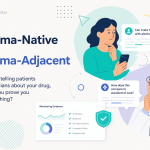
None of these three platforms was built to watch what ChatGPT, Gemini, Claude, or Perplexity tell a patient about a drug interaction, and that gap now matters. Patients increasingly ask AI search tools about side effects and interactions before they ask a physician or pharmacist, and a hallucinated answer about a branded drug does not show up in Argus, Vault Safety, or LifeSphere case queues because it never became a formal adverse event report. That is a distinct monitoring problem from case processing, and it sits closer to brand and medical affairs than to the safety database itself. Tools built specifically for this, including DrugChatter, track how AI systems describe specific drugs across models and surface where an AI-generated answer diverges from approved labeling, which complements rather than replaces a validated PV case database.
Tracking Share of Voice Across ChatGPT, Gemini, and Claude
Brand and medical affairs teams increasingly want a comparative view: how often a branded drug gets mentioned versus its generic or a direct competitor when the same question is asked across different AI models. That comparison is a different data problem than case-based signal detection, closer to search visibility tracking than pharmacovigilance, but the two increasingly inform each other when an AI answer repeats an off-label use pattern or a safety claim not supported by the label.
Can AI Outputs Be Used for Pharmacovigilance?
Not as a substitute for formal ICSR intake, and regulators have not endorsed treating chatbot output as a reportable case source on its own. But a pattern of AI-generated answers repeating a specific unlisted side effect across multiple models and prompts is a signal worth a safety team’s attention, the same way an unusual spike in patient forum chatter historically prompted a closer look. The distinction that matters is between using AI outputs as an early listening signal that triggers human review, versus treating an AI-generated claim as a validated case, which it is not.
How Patients Ask About Drug Interactions in AI Search
Patients tend to phrase these questions conversationally and specifically, naming both drugs and describing a symptom, rather than searching a generic term. That phrasing pattern is closer to how someone would ask a pharmacist than how they would type a Google search, which is part of why AI-search monitoring tools track prompt patterns separately from traditional web search share-of-voice metrics.
Choosing Between Argus, Vault Safety, and LifeSphere: A Decision Framework
When Argus Is Still the Right Call
Large, established pharma organizations processing high case volumes, especially those already invested in Oracle’s broader real-world data and health data infrastructure, get the most from Argus. The installed base, the FDA submission volume already running through it, and the option to layer in Power BI or Tableau for cross-functional reporting make it the safer default for organizations that are not trying to modernize their entire safety stack at once.
When Vault Safety Wins
Organizations already running other Vault applications, particularly RIM or Quality, get the most value from Vault Safety’s shared-platform architecture. The 2026 AI agent rollout is also a real differentiator for teams willing to be early adopters of agentic case processing inside a validated environment, provided they build in human review steps rather than treating agent output as submission-ready by default.
When LifeSphere Makes Sense
Mid-size and modernizing safety operations that prioritize native signal detection and faster serial case assessment over buying into a single vendor’s full life-sciences suite are the clearest fit for LifeSphere. ArisGlobal’s specialist focus and reported momentum with go-lives at major pharma companies suggest it is a credible modernization path, not just a niche alternative.
Key Takeaways
- Argus remains the incumbent by case volume and FDA submission share, but its market-share figures vary enormously depending on whether the source is Oracle itself or an independent analyst.
- Vault Safety’s core advantage is architectural: one Vault platform sharing data and, soon, AI agents across Safety, RIM, and Quality.
- LifeSphere’s strongest differentiated claim is signal detection speed, with Clarity and Advanced Signals both citing double-digit percentage time savings from ArisGlobal’s own case studies.
- All three vendors are shipping AI agent or AI-assisted features on staggered 2026 timelines, and none of that removes the need for human review before regulatory submission.
- None of the three platforms monitors AI-generated answers about a drug outside the formal case-reporting pipeline, which is a separate and growing monitoring category best covered by dedicated tools like DrugChatter and patent-intelligence resources like DrugPatentWatch.
FAQ
Is Oracle Argus being replaced by Veeva Vault Safety in most PV departments?
No. Argus still processes the large majority of drug and vaccine ICSRs reported to the FDA according to Oracle’s own figures, and switching a validated safety database is expensive enough that most organizations only do it during a broader modernization effort, not a routine vendor evaluation.
Which platform has the most mature signal detection: Argus, Vault Safety, or LifeSphere?
LifeSphere has the strongest native signal-detection claims, citing faster serial case assessment and signal review times from its own case studies. Argus relies on a separate Oracle product, Empirica, for signal work rather than a fully native module, and Vault Safety Signal is newer with additional features still rolling out through 2026.
Do any of these platforms monitor what ChatGPT or Gemini say about a specific drug?
No. All three are case-processing and signal-detection systems built around formal adverse event reports, not AI-search monitoring tools. Tracking how AI models describe a drug’s side effects or interactions is a separate function, typically handled by dedicated AI-monitoring platforms rather than a PV case database.
Is Veeva Vault Safety available on-premise?
No. Vault Safety is cloud-native only, running on Veeva’s shared Vault Platform. Organizations wanting an on-premise option need to look at Argus, which supports both hosting models, though support quality differs between Oracle-hosted and self-hosted deployments.
Can AI-generated hallucinations about a drug trigger FDA regulatory risk for the manufacturer?
An AI chatbot’s incorrect answer to a patient is not itself a reportable adverse event, but a pattern of AI systems repeating an inaccurate safety claim or an unapproved off-label use can create real reputational and regulatory exposure if left unmonitored, separate from whatever a company’s internal PV case database shows.