There’s a particular kind of question that shows up right before a night out, right after a prescription is filled, or right when someone realizes they’ve been mixing “just a little” with “just enough to matter.” It’s the one that starts with: Can I take this with alcohol?
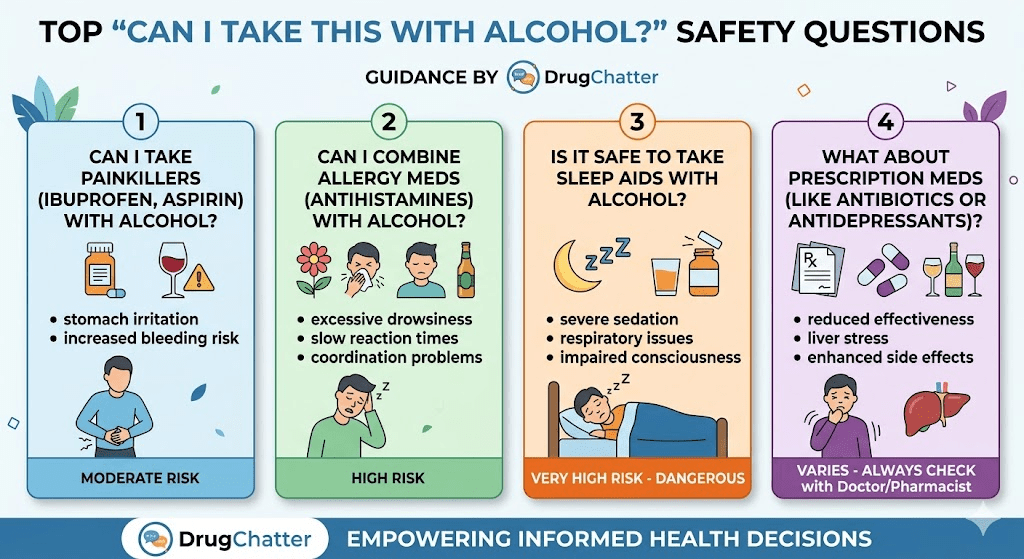
Below are a set of safety-adjacent, real-world medication questions—each linked to the corresponding DrugChatter thread—where the underlying theme is the same: alcohol can change how drugs work, how they’re metabolized, and how risky side effects can become. If you’re taking any of these medications (or considering them), it’s worth reading the full answer and, if anything is unclear, checking with your clinician or pharmacist before you mix.
Top “Can I Take This With Alcohol?” safety questions (with answers)
Quick takeaway: Alcohol isn’t just “extra.” It can amplify sedation, worsen dizziness, increase the chance of falls, and—depending on the drug—add stress to the liver or alter metabolism. If your medication already carries warnings about drowsiness, liver effects, or bleeding risk, that’s exactly where alcohol can turn a manageable side effect into a problem.
If you want, tell me which specific medication(s) you’re asking about and I’ll help you narrow down the alcohol-related risks to the most relevant safety points.