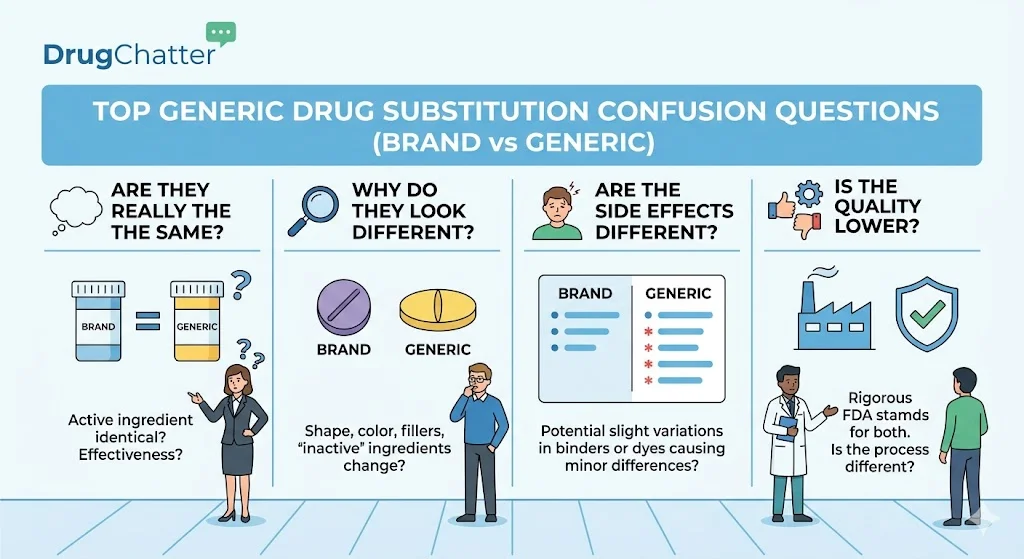
Somewhere between the pharmacy counter and the insurance portal, “generic” turns into a word that means everything and nothing. Is it the same drug? The same dose? The same effect? And—most importantly—will anyone notice?
Here are the top brand-vs-generic substitution confusion questions, gathered from real-world searches and answered in detail. If you’ve ever wondered whether your “generic” is actually your “brand,” start here.
Zonisamide: brand/generic identity and pricing
- Zonisamide?
- Zonisamide generic name?
- Zonisamide price?
- Zonisamide 50 mg tablet price?
- Zonisamide impurity manufacturers?
Kazano: when the same combo gets different labels
Emsam: the “generic when?” and “what is it?” loop
Adempas: “is it generic?” and substitution reality checks
Ethosuximide: generic status and price pressure
Thalidomide: the classic “generic?” question
Fabior: brand vs generic—and what it costs
Other brand/generic confusion hotspots (identity, naming, and substitution)
- Prevpac generic name?
- Naftifine hydrochloride cream over the counter?
- Spectazole cream generic?
- Flunisolide inhaler brand name?
- Flunisolide?
- Anaprox?
- Stadol?
- What is gamifant?
- Gamifant price?
- Gamifant emapalumab wholesale acquisition cost 2025 annual cost?
Why these questions cluster around substitution
Because “generic substitution” isn’t just a label swap—it’s a chain reaction involving drug naming, patent timing, insurance rules, and patient experience. Sometimes the confusion is about whether a generic exists at all; sometimes it’s about whether the generic is truly the same product in practice.
If you’re trying to figure out what you were given (or what you’re about to be given), click through the questions above. They’re the ones people ask when the pharmacy bag doesn’t match the prescription story.