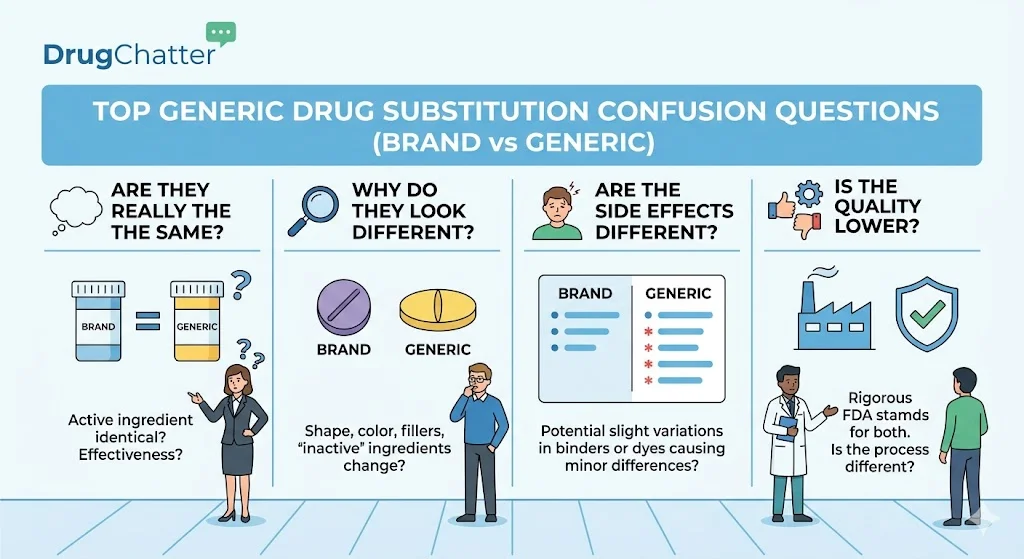
There are two kinds of confusion in prescription medicine: the kind that comes from biology, and the kind that comes from paperwork. Brand-vs-generic substitution lives squarely in the second category—where the active ingredient is the same, but the lived experience (timing, side effects, insurance rules, and “why does this pill look different?”) can feel wildly different.
Below are the most common “wait, is this the same drug?” questions—especially the ones that show up when patients are switched, refilled, or asked to accept a substitute. The theme is consistent: don’t panic, but do verify what you’re actually taking, and pay attention to how your body responds.
1) “Is the substitute really the same thing?” (The active ingredient vs. the experience problem)
Even when the active ingredient is identical, people notice differences in formulation, timing, and tolerability. That’s why questions about efficacy and side effects keep surfacing—because “same drug” doesn’t always mean “same day-to-day.”
2) “My new pill doesn’t behave the same—did the brand/generic switch change anything?”
Often, the switch didn’t change the drug so much as it changed the context: what you ate, what you took it with, what else you’re on, or how long you’ve been on it. Still, it feels personal when your routine changes.
Patients often assume that if the pill is “the same,” then the results should be “the same.” But food-drug interactions don’t care about brand names. They care about chemistry and timing.
4) “I switched brands and now I feel it”—side effects, timing, and logging
When side effects show up after a substitution, the instinct is to blame the pill. Sometimes that’s right; often it’s timing, dose, or interaction. Either way, the fix is the same: track what changed and when.
5) “Is it even legal / possible to get the substitute?” (and the paperwork reality)
Substitution isn’t just a pharmacy decision—it’s also a policy and access question. People ask it when they’re trying to refill quickly, avoid visits, or deal with coupons and coverage.
6) The “combination” confusion: brand/generic is only half the story
Sometimes the substitution isn’t the issue—the issue is what you combined it with. Patients frequently ask about interactions that can change effectiveness or side effects, making it feel like “the new pill is wrong.”
7) When “generic” isn’t the same category: biosimilars and formulation nuance
Most brand-vs-generic confusion is about small-molecule generics. But patients also run into biosimilars and formulation differences—where the conversation is different, and the stakes feel higher.
Check the active ingredient and dose (not just the color or shape).
Keep your routine stable: same timing, same food pattern, same co-medications when possible.
Track symptoms if something changes after a substitution (and ask your clinician/pharmacist to review interactions).
Don’t assume “different = wrong”—but don’t ignore real side effects either.
Brand-vs-generic substitution can be perfectly legitimate—and still confusing enough to make you doubt your own body. The cure is boring: verify what you’re taking, watch what changes around it, and get a professional to connect the dots.