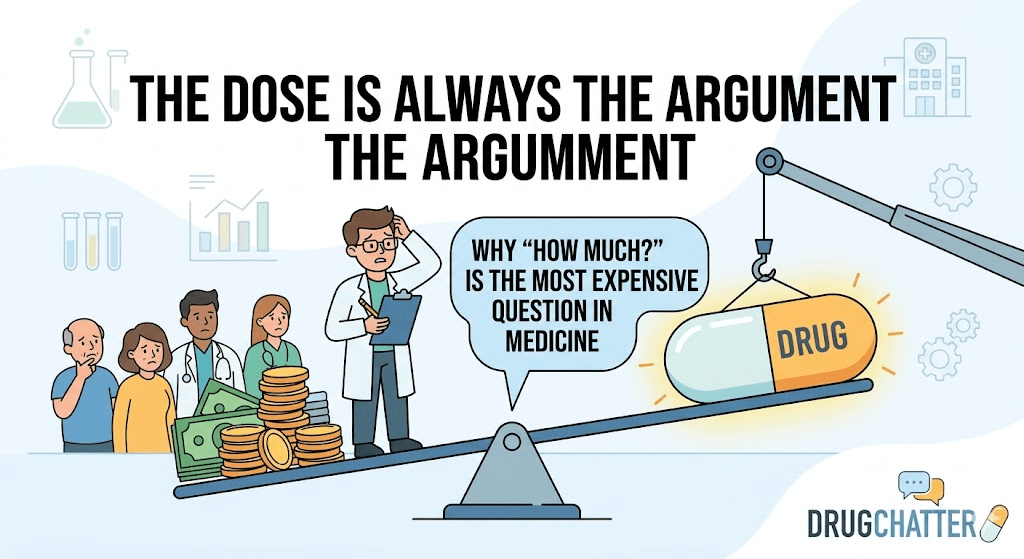
There’s a quiet moment in almost every medication conversation where the science stops sounding like science and starts sounding like arithmetic.
How much?
How often?
Is that too little—or already too much?
In practice, dosing confusion rarely announces itself as a single dramatic mistake. It shows up as small uncertainties stacked on top of each other: a pill taken with breakfast instead of bedtime, a supplement added “just in case,” a dose held because someone felt worse, not better.
Below is a tour through recurring questions—drawn from real patient discussions—where the line between too much, too little, and “wrong time” keeps shifting.
When “too much” is really about tolerance, interactions, and slow accumulation
With statins like Lipitor, the question is rarely just dose. It’s everything around it.
People don’t usually ask “Am I overdosing?” They ask things like whether grapefruit oil quietly erodes benefit or whether common OTC drugs tilt the balance.
- What liver meds interact with Lipitor?
answer - Can grapefruit oil reduce Lipitor’s cholesterol benefits?
answer - What OTC medications should be avoided with Lipitor?
answer
A similar pattern shows up with NSAIDs like Advil—where “too much” is often really “too long.”
- Can long-term Advil use worsen headaches?
answer - How does long-term Advil use impact elderly GI health?
answer - Should you consult a doctor before taking Advil daily?
answer
Even cancer and immunology drugs like Keytruda shift the definition of “dose” into something more like “exposure over time.”
- How long do Keytruda benefits last?
answer
When “too little” looks like failure—but isn’t
Under-dosing anxiety often hides inside comparisons: generics, alternatives, or expectations of response speed.
With Vascepa, for example, confusion often shows up as economics first, pharmacology second.
- How much cheaper are Vascepa generics?
answer
And then there’s the broader “is it working enough?” question:
- Can Trintellix improve depression symptoms?
answer - How effective is Vascepa for high triglycerides?
answer
In oncology, under-response becomes a moving target:
- How effective is lurbinectedin against targeted cancers?
answer
And sometimes “too little” is really just expectation vs mechanism:
- Is Polivy’s effect broad across cancer types?
answer
Timing: the invisible half of dosing
If dose is the number, timing is the biology.
With drugs like Lipitor, patients routinely ask whether food, exercise, or even daily rhythm changes outcomes.
- Does regular exercise enhance Lipitor’s effect?
answer - How long does statin therapy take to lower cholesterol?
answer - What is the best time to take metoprolol?
answer
Antivirals like acyclovir are even more explicit about timing logic:
Even chemotherapy infusion schedules become a kind of temporal dosing language:
- How often is nivolumab administered?
answer
When “dose” is actually an interaction problem in disguise
Some of the most persistent dosing confusion comes from combinations that behave like hidden multipliers.
With Lyrica, sedation risk changes depending on what else is in the system:
- Does Lyrica interact with blood pressure drugs?
answer - Are all alcohol types risky with Lyrica?
answer
With anticoagulants like Eliquis, the concern is stacking effects:
- Does Eliquis interact with aspirin?
answer
And with antihypertensives like losartan, painkillers quietly shift risk curves:
- Is it safe to take ibuprofen with losartan?
answer
Even “natural” add-ons complicate the system:
- Is it safe to take L-theanine with sleep medication?
answer
The underlying pattern
Across all these questions, one theme repeats:
Patients rarely misunderstand “dose” in isolation. They misunderstand dose in context.
Context includes:
- time (when it’s taken)
- biology (how fast it’s metabolized)
- combinations (what else is on board)
- expectations (what “working” looks like)
Which is why dosing confusion is less a math problem than a systems problem.
Or, more simply: the number on the prescription is never the whole number that matters.
Related Posts: