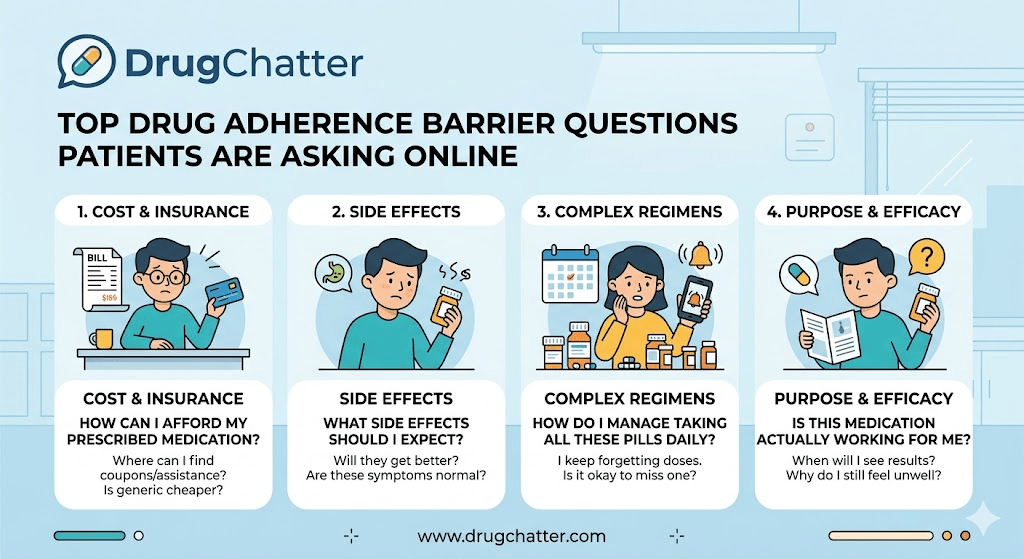
There’s a particular kind of anxiety that shows up when a prescription hits the real world: the pills are in the bottle, the schedule is on the calendar, and the body—unhelpfully—has opinions. Online, patients don’t ask only “what is this drug?” They ask the harder, more practical questions: will it hurt me, will it interact with what I already take, and what do I do when cost, timing, or side effects get in the way?
Below are some of the most common adherence-barrier questions people bring to DrugChatter—the ones that can determine whether someone keeps taking a medication long enough to matter.
1) “Is this medication going to damage my liver?”
- Can jakafi cause liver damage?
- Did you discuss lipitor’s potential impact on liver function with your doctor?
- Does tigecycline’s effect on liver differ in elderly?
- Is lipitor’s effect on hepatitis c progression well researched?
2) “Will it mess with my other meds—or my health in ways I can’t predict?”
- Acyclovir interactions with anti depressants?
- Does acyclovir hurt imuune system?
- Does lipitor interfere with garlic’s cholesterol lowering effect?
- How does aspirin interact with citrus in the stomach?
- Ibuprofen und eliquis?
- Does calcium in almonds impact beer’s alcohol absorption?
3) “What’s the right way to take it—timing, food, and all the little rules?”
- What’s the best time to take lipitor before or after meals and tums?
- How long before or after meals should i take ozempic?
- What makes ozempic effective for weight loss with insulin use?
- What’s the recommended fish oil dosage with lipitor?
- What is the maximum daily aspirin dosage for adults?
- Naproxen with aspirin?
- Have you discussed aspirin’s potential side effects with your doctor?
4) “If I’m going to take it, can I afford it?”
Cost isn’t just a financial issue—it’s a medication-adherence issue. When people can’t predict what something will cost, they delay, ration, or stop.
- How much does xeloda cost?
- Loqtorzi cost?
- Tromethamine cost?
- Ranolazine discount?
- Adcetris cost?
- Besremi price australia?
- Tazorac gel price?
- Cosentyx travel pack?
- What is the deadline for vascepa’s patient assistance program?
- Empaveli financial assistance?
- Secuado coupon?
- Egaten price?
- Why is aczone so expensive?
- Fostamatinib price?
- Cobicistat price?
- Norelgestromin patch cost?
- Loqtorzi cost?
5) “Will I feel weird on it—like, immediately?”
Side effects are the fastest route to nonadherence. People want to know what’s normal, what’s rare, and what’s a red flag.
- Wellbutrin and tinnitus?
- Prednisone keep you awake?
- How does one identify lipitor’s rare side effects?
- Can lipitor’s side effects be less severe than zocor s?
- Does lipitor impact exercise’s health benefits?
- What’s the effect of lipitor on elderly’s fitness?
- How does lyrica affect your daily routine?
6) “Is it even the right version for me?” (Dose, formulation, and practical logistics)
- Hemiclor 12 5 mg tablet?
- Zonisamide capsule sizes?
- Simulect?
- Strensiq medication?
- Bludigo injection?
- Cosentyx travel pack?
- Norelgestromin patch cost?
- Tirzepatide formulation stability?
- Suprep vs miralax?
- Sensorcaine vs marcaine?
7) “What happens if I miss doses—or if I’m not sure I should keep going?”
Sometimes the barrier isn’t a single pill—it’s uncertainty. Patients look for reassurance that continuing (or switching) makes sense.
- Humira for uc?
- Adempas?
- Mavacamten?
- Sparsentan?
- Unituxin?
- Kimmtrak?
- Mircera?
- Faslodex generic?
- Generic opsumit?
- Generic opsumit?
8) “What’s the bigger story—patents, generics, and access?”
When people hear that a drug is changing—generic coming, exclusivity ending, a patent expiring—they worry about continuity of care.
- Camptosar patent expiration year?
- Sutent loss of exclusivity date?
- Tybost patent?
- Blenrep patentschutz?
- How did lipitor’s revenue change after patent expiry?
- Ranexa generic cost?
- Faslodex generic?
9) “Are there special programs or coverage issues I should know about?”
- Does medicare cover salagen?
- Ced registry for briumvi usa?
- What is the deadline for vascepa’s patient assistance program?
10) “What if I’m older, or my body is different?”
- Does tigecycline’s effect on liver differ in elderly?
- What’s the effect of lipitor on elderly’s fitness?
- Taking expired clonidine’
The takeaway: adherence isn’t just willpower. It’s information—delivered in time, in plain language, and with enough specificity that a patient can decide, “Yes, I can do this,” instead of “I’m not sure.” If you recognize your own question in the list above, that’s not a sign you’re doing anything wrong. It’s a sign you’re doing the thing most people forget to do: asking.