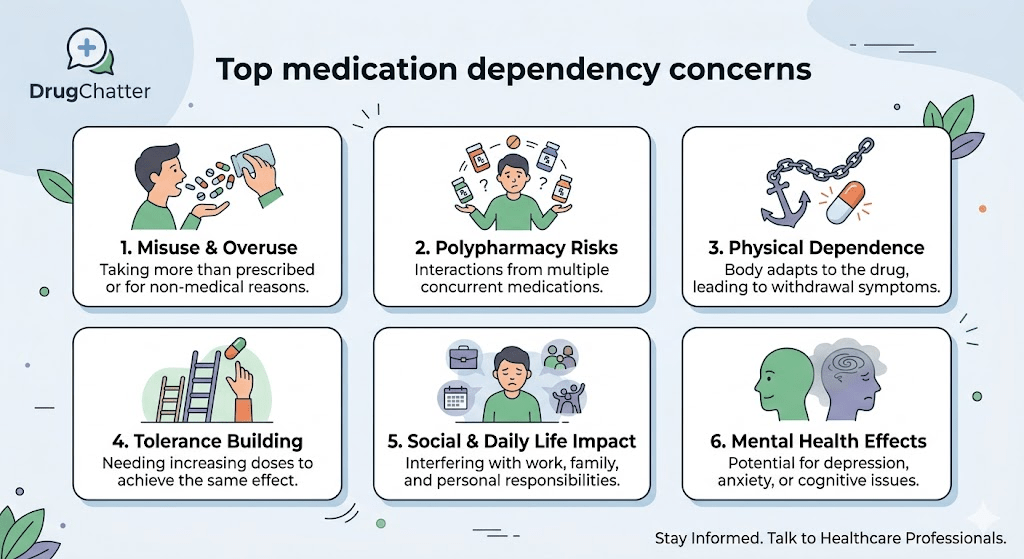
There’s a particular kind of dependency that doesn’t look like a movie montage. It looks like “just one more dose,” “it helps me sleep,” “I can’t function without it,” or “I’ve been on this forever, so it must be fine.” And then, one day, the body reminds you—politely at first, then not—that some medications don’t merely treat symptoms. They can also train physiology to expect them.
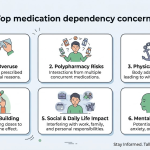
Below are the biggest dependency concerns that tend to sneak up on patients and caregivers, along with DrugChatter answers that dig into the practical side: what to watch for, what can worsen risk, and what to ask before you get stuck.
1) Painkillers that become “maintenance” instead of “rescue”
When analgesics shift from occasional use to routine use, the risk isn’t only side effects—it’s the psychological and behavioral pattern of needing the drug to feel normal. Even when the medication isn’t classically “addictive” in the opioid sense, frequent use can still create a cycle: pain flares → medication → temporary relief → fear of pain without medication → more medication.
If you’re trying to understand the risk landscape around common pain relievers, start with these:
2) Stomach injury that “locks in” continued use
Dependency isn’t always about craving. Sometimes it’s about damage. If a medication causes stomach injury, people may keep taking it because it’s the only thing that seems to control symptoms—or because they’re afraid to stop and have the original problem return.
Two angles matter here: whether the injury can be reversed, and what factors worsen bleeding or irritation.
- Are there treatments to reverse aspirin’s stomach damage?
- What other factors affect aspirin’s bleeding risk?
- Can citrus fruits enhance aspirin’s stomach side effects?
- How does alcohol affect advil’s stomach ulcer risk?
3) Alcohol and drug interactions that raise the “can’t stop” stakes
Alcohol doesn’t just add side effects—it can amplify them, making the medication feel “necessary” because stopping feels risky or because symptoms worsen when you change the routine. The dependency concern here is indirect: the more complicated the regimen, the easier it is to fall into a pattern you can’t easily unwind.
- How does excessive alcohol affect liver enzymes?
- Can alcohol consumption reduce liver cell’s antioxidant capacity?
- Can alcohol consumption delay muscle recovery?
- Any negative effects from combining red wine and lipitor?
4) Statins and the “fear loop” around side effects
Statins (like Lipitor) aren’t typically described as dependency-forming drugs, but they can create a different kind of lock-in: people stop and restart, adjust doses, or avoid them due to side effects—then feel uneasy without them because the cardiovascular benefit feels abstract until something goes wrong.
That fear loop can become its own dependency pattern: “I need it, but I’m scared of it.” The best defense is understanding what’s normal, what’s unique to certain groups, and how monitoring works.
- Which elderly groups have higher lipitor interaction risk?
- What lipitor side effects are unique to the elderly?
- Why is regular lipitor level monitoring important?
- How can lipitor’s effect on liver enzymes be monitored?
- Is it true lipitor has increased drug interaction risks?
5) Benzodiazepines: the classic “taper or regret” category
Some medications are famous for dependency risk—especially benzodiazepines. The concern isn’t only that they can be habit-forming; it’s that stopping abruptly can be dangerous, and long-term use can make the body less able to regulate anxiety or sleep without the drug.
If you’re trying to understand how these drugs behave across formulations and what that means for consistency, here’s a starting point:
6) “Mixing and matching” that turns one prescription into a system
Dependency concerns often rise when regimens become complicated: herbal supplements, multiple meds, and lifestyle factors all interact. The more moving parts you have, the harder it is to identify what’s causing side effects, and the easier it is to keep adding “fixes” instead of simplifying.
- Is a doctor’s consultation needed before combining lipitor and herbal supplements?
- Can lipitor and blood pressure meds be safely combined?
- Does lipitor’s effectiveness change with antacid use?
7) The “it’s working, so don’t change it” trap
One of the most common dependency accelerators is the belief that if a medication is helping, it should never be revisited. But many dependency risks are managed best by periodic reassessment: dose review, side effect review, and whether the original goal still matches current life.
For example, if you’re dealing with long-term use and want to understand how side effects evolve over time, these can help frame expectations:
- How long until lipitor and aspirin side effects subside?
- What’s the typical timeline for lipitor’s benefits?
Practical takeaway: dependency risk is often a “pattern,” not a single drug
Dependency concerns don’t always announce themselves as addiction. They show up as routines, fear of stopping, escalating doses, and complicated interactions that make it hard to tell what’s helping and what’s harming.
If you’re worried about dependency—whether it’s classic habit-forming drugs or the subtler lock-in of side effects and fear—your best next step is a medication review with a clinician: what you’re taking, why you’re taking it, what would count as success, and what a safe plan to reduce or adjust could look like.
Note: This post is informational and not medical advice. If you’re considering stopping or changing any medication, do it with professional guidance.