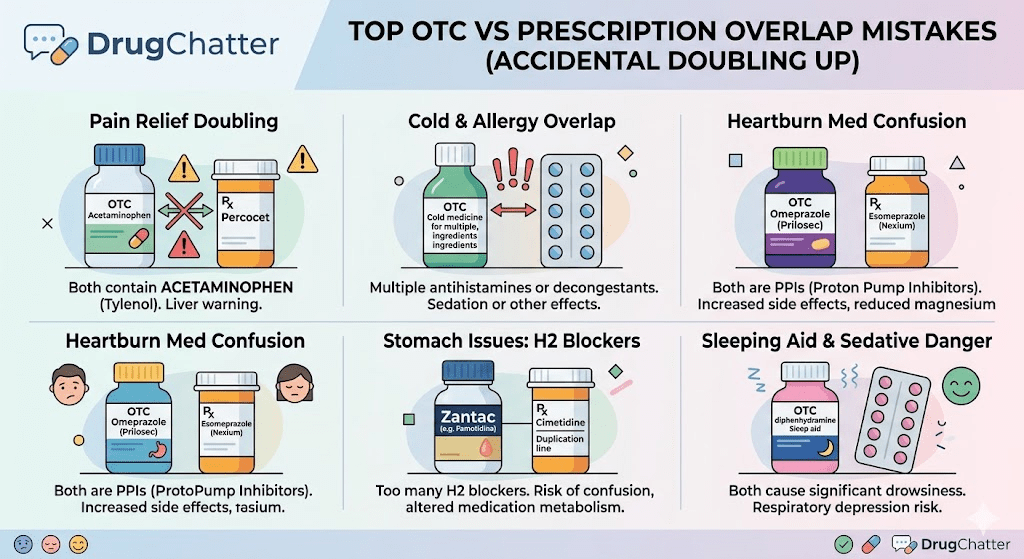
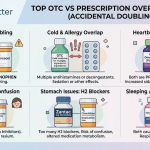
There are two kinds of medication mistakes: the dramatic ones (the wrong drug, the wrong patient) and the quiet ones—the ones that happen because the label looks different, the brand name is familiar, and the active ingredient is “probably the same.”
When it comes to OTC vs prescription overlap, the most common accidental harm is simple: people double up on the same pharmacologic effect without realizing it. Sometimes it’s because an OTC product contains an ingredient you already take by prescription. Sometimes it’s because you’re treating symptoms while your chronic meds are still doing their job in the background.
Below are the overlap-style traps people fall into—using real-world questions from DrugChatter as signposts—plus the practical takeaway: check the active ingredients, not the marketing names.
1) The “I’m just taking something for pain” trap (and the hidden overlap)
OTC pain relievers are often treated like harmless background noise. But if you’re already on prescription meds that affect the same systems—blood thinning, liver metabolism, muscle effects, or drug absorption—you can end up compounding risk without noticing.
Overlap mistake to avoid: treating an OTC “dual action” product as if it’s only doing one thing. If your prescription regimen already targets inflammation, pain, or clotting pathways, the OTC add-on can be more than “just a little extra.”
2) Aspirin: the classic overlap ingredient people forget they’re already taking
Aspirin is one of those drugs that shows up everywhere—sometimes as a prescription, sometimes as an OTC “heart” product, sometimes inside combination cold/flu products. People think they’re taking one thing for one reason; their body is getting aspirin’s effects again.
Overlap mistake to avoid: assuming “aspirin” is only for headaches. If you’re on a prescription regimen that already changes cardiovascular risk, adding aspirin again can be a double hit—especially if you’re also using other OTC products that contain salicylates.
3) Statins and the “supplement/food” overlap that feels like a medication but isn’t labeled like one
Statins (like Lipitor) are prescription drugs, but the overlap problem often comes from OTC add-ons: supplements, juices, “health” foods, and herbal products that change drug levels or side-effect risk. People don’t think of these as “doubling up,” but pharmacologically, they can behave like one.
Overlap mistake to avoid: thinking “OTC” means “no interaction.” If your prescription is already changing drug levels, an OTC supplement/food can push you into the same danger zone as if you’d taken more of the prescription.
4) The “I took it with something else” timing/absorption overlap
Sometimes the overlap isn’t a second dose—it’s a second effect. Food and timing can change absorption, which can make you feel like you need to take another dose, or it can increase side effects.
Overlap mistake to avoid: “dose chasing.” If you don’t feel the effect you expected, don’t add an OTC product (or an extra dose) until you’ve checked whether timing/absorption is the real issue.
5) The supplement “booster” that quietly changes the prescription’s behavior
People often reach for supplements to “help” a prescription—then accidentally alter potency or side-effect risk. That’s not always a direct duplication, but it’s the same underlying failure mode: you changed the drug’s impact without realizing it.
Overlap mistake to avoid: using supplements as if they’re neutral. If you’re already on a prescription with narrow tolerances, “natural” can still be pharmacologically active.
6) The “tell my doctor” mistake: not reporting OTC use
Even when people don’t double-dose, they often fail to report OTC products—so clinicians can’t see the full picture. That’s how overlap happens: the prescription plan is built on incomplete information.
Overlap mistake to avoid: treating OTC/homeopathic/herbal products as “not worth mentioning.” If it’s something you take regularly (or during symptom flares), it’s part of your medication profile.
The simple rule that prevents most accidental doubling
Before you take anything OTC, ask one question: “What is the active ingredient, and is it already in my prescription regimen?”
If you want a quick safety habit: keep a list of your prescriptions and OTC products (including vitamins, supplements, and “natural” remedies) and review it with your pharmacist or prescriber at least once a year—or whenever you add something new.
Because the most expensive medication mistake isn’t the one you meant to make. It’s the one you didn’t realize you were making.