There’s a particular kind of message that shows up again and again—usually late, usually anxious, and usually written in the tone of someone trying to decide whether they should call a doctor, stop a medication, or just lie very still and hope for the best.
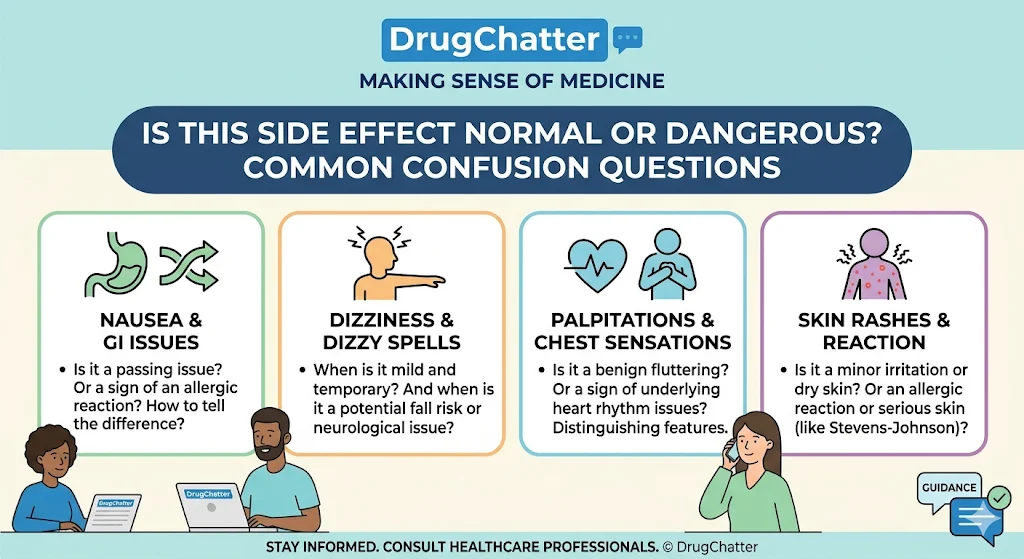
On the internet, those questions often get lumped together under one headline: “Is this side effect normal or dangerous?” But the truth is messier. Some effects are expected, some are dose-related, some are warning signs, and some are just the body doing body-things while the real problem is elsewhere.
Below are a set of common “confusion” questions—exactly the sort that make people second-guess themselves—paired with the DrugChatter answers. Use them as a starting point, not as a substitute for medical advice.
Cholesterol drugs: the “I feel weird—should I worry?” category
“Generic?” questions that often hide safety anxiety
Sometimes the side-effect worry isn’t about the symptom—it’s about the switch. People wonder whether a generic will behave differently, whether it’s “the same,” and whether the new version could explain the new problem.
Drug interactions: when the “side effect” might be a mismatch
A lot of dangerous-looking symptoms are actually interaction effects—especially with drugs that affect bleeding, metabolism, or immune function. If you’re getting a new symptom after adding something else (even OTC stuff), it’s worth checking.
Bottom line: don’t “wait it out” if it feels like a warning
Most side effects are not emergencies. But some are. If you’re dealing with severe symptoms, rapidly worsening problems, signs of allergy (like swelling or trouble breathing), chest pain, fainting, black/bloody stools, or anything that feels profoundly wrong, you shouldn’t treat it as a normal inconvenience.
Use these DrugChatter links to orient yourself—then contact a clinician for personalized guidance, especially when the symptom is new, intense, or paired with other risk factors.