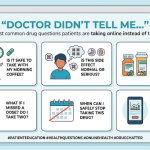
There’s a repeating theme across DrugChatter: not “what are the side effects?” but “is this normal—or something I should worry about?”
In practice, that usually means mapping expected pharmacology noise from true red flags.
GLP-1 drugs (semaglutide, Ozempic, Wegovy) tend to generate the same cluster of questions: nausea, GI effects, timing, and what “settling in” looks like. See the broader profile here: https://www.drugchatter.com/chat/51237/are-there-any-potential-side-effects-of-semaglutide and how long they typically last: https://www.drugchatter.com/chat/60651/how-long-until-ozempic-s-side-effects-typically-subside. The boundary between tolerable and problematic often shows up in context—alcohol use: https://www.drugchatter.com/chat/45257/is-alcohol-consumption-safe-while-taking-ozempic and dietary interference questions: https://www.drugchatter.com/chat/34420/can-certain-foods-interfere-with-ozempic’s-efficacy.
Immunotherapy brings a different flavor of “is this normal”—because sometimes it very much is not. With checkpoint inhibitors like Keytruda, the key issue is escalation: https://www.drugchatter.com/chat/58234/which-side-effects-of-keytruda-require-immediate-medical-attention and broader toxicity framing here: https://www.drugchatter.com/chat/43721/what-are-the-side-effects-of-keytruda. Cosentyx adds its own immune-modulation ambiguity—expected infection risk vs clinically meaningful immunosuppression: https://www.drugchatter.com/chat/26591/can-cosentyx-increase-the-risk-of-certain-infections plus vaccine constraints: https://www.drugchatter.com/chat/561/is-it-safe-to-receive-live-vaccines-post-cosentyx. Nivolumab sits in the same conceptual bucket, especially dermatologic immune effects: https://www.drugchatter.com/chat/35178/can-nivolumab-cause-skin-rashes-or-hives.
NSAIDs are where “normal” gets statistically common but biologically underestimated. Ibuprofen and aspirin overlap in ways that confuse risk perception: bleeding risk is not rare, just underappreciated https://www.drugchatter.com/chat/48570/can-aspirin-increase-the-risk-of-bleeding and combinations matter: https://www.drugchatter.com/chat/13545/what-are-the-risks-of-combining-advil-and-aspirin. Add antidepressants and the signal gets noisier: https://www.drugchatter.com/chat/49801/can-antidepressants-affect-ibuprofen-s-efficacy and alcohol doesn’t help clarity either: https://www.drugchatter.com/chat/61573/is-it-safe-to-consume-alcohol-while-taking-advil. Even basic “is ibuprofen itself the issue?” shows up repeatedly: https://www.drugchatter.com/chat/5440/what-are-the-most-common-side-effects-of-ibuprofen.
Neurologic and systemic meds shift the question toward dose sensitivity and physiology. Lyrica raises the familiar “behavior vs dose vs lifestyle” triangle: https://www.drugchatter.com/chat/26609/how-does-lyrica-affect-liver-function and https://www.drugchatter.com/chat/12036/how-does-exercise-impact-lyrica-dosage. Methotrexate adds the long-tail concern of interactions and monitoring: https://www.drugchatter.com/chat/16524/can-methotrexate-interact-with-other-medications.
Then there’s the chronic cardiovascular-lipid space, where “normal” often means “long-term tradeoffs.” Vascepa plus statins is a recurring uncertainty: https://www.drugchatter.com/chat/35643/are-there-any-potential-side-effects-of-using-vascepa-and-statins-together and interaction framing here: https://www.drugchatter.com/chat/33828/can-vascepa-be-taken-with-any-statin. Lipitor brings its own interaction anxiety loop, especially grapefruit: https://www.drugchatter.com/chat/13047/can-grapefruit-juice-increase-lipitor’s-side-effects.
Finally, oncology agents like lurbinectedin collapse the “is this normal?” question into tolerability versus toxicity versus reproductive risk: https://www.drugchatter.com/chat/981/how-does-lurbinectedin-impact-fertility-and-pregnancy.
The pattern underneath all of this is consistent: most “is this normal?” questions are really attempts to locate a drug on a spectrum between expected mechanism-based effects and clinically actionable harm. The hard part is that the boundary is rarely obvious from symptoms alone.