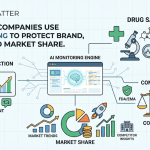
Every day, millions of patients and physicians type drug questions into ChatGPT, Gemini, Perplexity, and Claude. They ask whether Ozempic causes pancreatitis. They ask which SGLT2 inhibitor is best for heart failure. They ask if Humira biosimilars are equivalent. And the AI answers — confidently, conversationally, and often without a single citation linking back to a pharmaceutical company’s approved label.
For brand teams, medical affairs departments, and pharmacovigilance officers, this is not a future problem. It is a current one.
AI search is reshaping the front end of drug discovery, patient decision-making, and prescriber education in ways that traditional social listening tools were never built to handle. The pharmaceutical companies that recognize this early — and build monitoring infrastructure around it — will hold a genuine competitive advantage. Those that treat LLM outputs as someone else’s problem will find themselves reacting to brand damage, regulatory questions, and patient safety concerns they never saw coming.
This article covers what AI drug monitoring actually is, how it works in practice, what the regulatory exposure looks like, and how leading pharma companies are starting to build systematic intelligence programs around the AI search layer.
What Is AI Drug Monitoring and Why Does It Matter Now?
AI drug monitoring is the practice of systematically tracking how large language models describe, recommend, or discuss pharmaceutical products. It covers everything from basic brand mention frequency to subtle framing differences between how an LLM describes a branded drug versus its generic equivalent.
The urgency comes from the pace of adoption. According to a 2024 survey by the Pew Research Center, roughly 27% of American adults reported using an AI assistant for health-related questions. Among adults under 35, that figure was closer to 40%. Physician use of AI for clinical reference has grown sharply since GPT-4’s release, with a 2024 Mayo Clinic Proceedings study finding that 38% of surveyed U.S. physicians had used a conversational AI for drug interaction checks.
‘Physicians and patients are not waiting for validated AI tools. They are using general-purpose LLMs right now, and the information those systems produce about specific drugs is not subject to any regulatory oversight at the point of output.’ — Dr. Erin Fox, drug information specialist and adjunct professor at the University of Utah College of Pharmacy, speaking at a 2024 ASHP symposium on AI in clinical practice.
When a patient asks ChatGPT whether Keytruda is covered by Medicare Part D, the answer they receive depends on OpenAI’s training data, retrieval system, and prompt alignment policies — not on any fact-checked content from Merck’s medical affairs team. When a physician asks Perplexity about Jardiance versus Farxiga for a patient with CKD, the comparative framing they get shapes prescribing behavior in ways that no sales representative interaction will ever fully counter.
Pharmaceutical companies have spent decades building direct-to-consumer advertising infrastructure, managing formulary access, and training medical science liaisons to influence prescribing behavior. AI search is a new channel operating outside every one of those frameworks.
How LLM Drug Responses Differ From Traditional Search Results
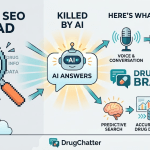
Traditional search returns a list of links. The user decides which source to trust. An AI assistant synthesizes an answer and presents it as a single authoritative response.
This distinction matters enormously for pharmaceutical brand teams. In traditional search, a manufacturer’s official product page, FDA prescribing information, and third-party clinical summaries all compete on equal footing. The user sees all of them and draws their own conclusion.
In AI search, the synthesis happens before the user sees anything. The LLM determines which information to weight, which drug names to use, which side effects to mention, and whether to recommend consulting a physician. The manufacturer’s website may not appear at all. The FDA prescribing information may be summarized incompletely. And the LLM has no mechanism for ensuring that its training data reflects the most recent label update, REMS program modification, or boxed warning addition.
Which AI Systems Are Patients and Physicians Actually Using?
The landscape is not monolithic. Different user populations gravitate toward different tools, and each tool has distinct response patterns for pharmaceutical queries.
- ChatGPT (OpenAI): The highest volume consumer platform for health queries. GPT-4o tends to provide balanced, moderately cautious drug responses with frequent ‘consult your physician’ qualifiers.
- Gemini (Google): Integrated into Google Search via AI Overviews. Reaches patients during active health searches and often surfaces information drawn from Google’s web index, including drug review sites and patient forums.
- Claude (Anthropic): Favored by more technically literate users and increasingly embedded in enterprise health workflows. Tends toward more conservative drug responses with clearer sourcing acknowledgments.
- Perplexity: Heavy citation model with real-time web access. Popular among physicians and researchers for its source-linked responses. Particularly influential in clinical reference queries.
- Microsoft Copilot: Embedded in Microsoft 365 and increasingly used in hospital administrative and clinical documentation workflows.
Each platform produces different outputs for identical drug queries. A question about the cardiovascular benefits of Entresto asked on Claude returns a different answer than the same question asked on Gemini — sometimes with different drug comparisons, different safety emphasis, and different treatment positioning.
Why ChatGPT Gets Drug Side Effects Wrong (And What Pharma Can Do About It)
LLM drug hallucinations fall into several distinct categories, and understanding the taxonomy matters for building an effective monitoring program.
Types of AI Drug Hallucinations Pharma Teams Need to Track
The first category is factual inaccuracy: the LLM asserts something about a drug that is simply false. It might state an incorrect dosing range, attribute a side effect profile from one drug to a different drug in the same class, or describe a contraindication that does not exist.
The second category is omission: the LLM provides accurate information but leaves out material safety information. It might correctly describe Eliquis as an anticoagulant for atrial fibrillation without mentioning the black box warning about premature discontinuation risk. Omissions are harder to detect than factual errors and potentially more dangerous from a pharmacovigilance standpoint.
The third category is outdated information: the LLM accurately describes a drug’s profile as it existed at some point in its training data, but the label has since been updated. This is particularly relevant for drugs with active post-marketing surveillance programs, where safety updates are frequent.
The fourth category is off-label framing: the LLM presents an off-label use as if it were a standard of care, or describes a drug’s off-label applications without distinguishing them from approved indications.
Can AI Hallucinations About Drugs Trigger FDA Regulatory Risk?
This is the question pharmaceutical legal and regulatory teams are actively wrestling with, and the honest answer is that the regulatory framework has not caught up with the technology.
The FDA’s current approach to drug misinformation focuses on promotional materials disseminated by pharmaceutical companies and their agents. An LLM output is generated by an AI company, not by a drug manufacturer. Under current frameworks, the drug company has no legal responsibility for what ChatGPT says about their product.
But that framing is beginning to shift. The FDA’s 2024 draft guidance on prescription drug promotion in the digital environment, while not specifically addressing LLMs, establishes a principle that companies have an obligation to correct false or misleading information about their products that circulates in digital channels when they have the means to do so. Whether that principle will be interpreted to cover LLM outputs is an open question.
The European Medicines Agency has taken a more proactive stance. Its AI strategy for 2025-2028 specifically identifies AI-generated drug information as a pharmacovigilance concern requiring monitoring infrastructure. EMA guidance issued in late 2024 notes that manufacturers should consider including AI-generated outputs in their signal detection processes.
Real-World Examples of AI Drug Misinformation in the Wild
In 2023, a research team at Stanford’s Center for Biomedical Informatics Research tested five major LLMs against a set of 100 drug interaction queries. GPT-3.5 produced clinically significant drug interaction errors in 14% of queries. Bard (now Gemini) produced errors in 22% of queries. In several cases, LLMs failed to identify life-threatening interactions between common medications — interactions that any pharmacist would catch immediately.
A 2024 study published in JAMA Network Open evaluated ChatGPT-4’s responses to questions about cancer drug dosing in renally impaired patients. The model provided incorrect dose modification recommendations in 31% of cases tested. The authors concluded that the model’s responses ‘should not be used as a substitute for clinical judgment or current prescribing information.’
For pharmaceutical companies, these are not abstract academic findings. They represent real patient risk and real reputational exposure when accurate information about a company’s drug is superseded by an AI-generated error that reaches hundreds of thousands of users before anyone notices.
How Often Claude Mentions Ozempic vs. Wegovy: Tracking LLM Brand Share-of-Voice
Share-of-voice measurement in traditional media is well-understood: you count mentions, measure sentiment, and compare your brand’s presence against competitors across identified channels. AI search share-of-voice follows similar logic but requires different infrastructure.
What Pharma Brand Share-of-Voice in LLMs Actually Measures
AI share-of-voice in the pharmaceutical context covers several distinct metrics:
- Mention frequency: How often does an LLM name your branded drug versus competitor brands or generic names in response to relevant therapeutic category queries?
- First-mention position: When multiple drugs are listed, does your drug appear first, second, or last? LLM users read the first answer they see, just like they click the first search result.
- Sentiment framing: Does the AI describe your drug’s side effect profile more negatively than a competitor’s? Does it describe competitor drugs more favorably?
- Indication accuracy: Does the AI correctly associate your drug with its approved indications, or does it misattribute indications from other drugs in the class?
- Generic displacement: When a patient asks about your branded drug, does the AI respond primarily with generic name information, effectively undercutting brand identity?
The Ozempic vs. Wegovy Problem: When Your Own Drugs Compete in AI
Novo Nordisk’s portfolio illustrates this challenge in a particularly clear way. Ozempic (semaglutide 0.5mg/1mg/2mg) is FDA-approved for type 2 diabetes management. Wegovy (semaglutide 2.4mg) is FDA-approved for chronic weight management. Both contain semaglutide. Both are made by Novo Nordisk. But they have distinct approved indications, different dosing regimens, different coverage profiles, and different patient populations.
LLMs frequently conflate them. A patient asking about Ozempic for weight loss may receive information drawn from Wegovy’s clinical data — and vice versa. An AI answering a diabetes management query may recommend Wegovy when only Ozempic is approved for that indication. The off-label dimension of these conflations creates real regulatory exposure, quite apart from the brand confusion they create.
This is not a problem Novo Nordisk created. It is a problem that emerges from the way LLMs process training data about a drug class in the midst of a cultural moment — the GLP-1 weight loss phenomenon — where the boundaries between products are already blurry in public discourse.
Do LLMs Recommend Generic Drugs More Often Than Branded Drugs?
The evidence suggests yes, consistently and materially. This matters most in therapeutic categories where branded drugs face significant biosimilar or generic competition.
When a user asks an LLM about treatment options for rheumatoid arthritis, the model will typically describe treatment classes (DMARDs, biologics, JAK inhibitors) using generic names before mentioning branded names, if it mentions them at all. When a user asks specifically about Humira, the model will almost universally mention adalimumab biosimilars — Hadlima, Hyrimoz, Cyltezo, and others — as equivalent alternatives, often framing them as cost-effective substitutes.
For AbbVie, whose Humira generated over $14 billion in U.S. revenue at peak and whose biosimilar transition strategy depends on maintaining brand preference in certain patient segments, this is a material brand intelligence issue. LLM responses are effectively providing unbranded market education that advantages biosimilar competitors.
Building a Pharma AI Monitoring Program: From Manual Queries to Systematic Intelligence
Most pharmaceutical companies are currently in one of three states: unaware that LLM monitoring is something they should do, aware but running ad hoc manual queries with no systematic tracking, or in early stages of building structured monitoring infrastructure.
The Manual Query Approach: What It Catches and What It Misses
The manual approach — having someone on the brand or medical affairs team periodically ask ChatGPT about a drug and note the response — has real value. It is free, requires no vendor relationships, and generates qualitative insight that brand teams can act on immediately.
What it misses is everything systematic. Manual testing does not capture response variation across models and prompts. It does not track changes over time as LLMs update their training data. It does not scale to cover competitor monitoring, therapeutic category monitoring, and adverse event language monitoring simultaneously. And it produces no structured data that can be presented to brand leadership or regulatory affairs as actionable intelligence.
How DrugChatter and Similar Platforms Approach AI Drug Monitoring
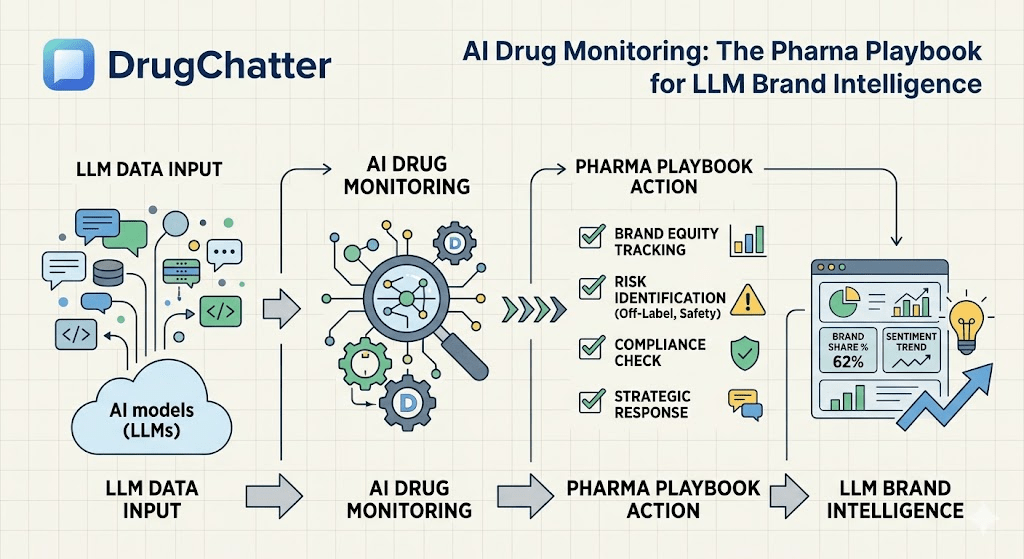
Purpose-built platforms like DrugChatter take a different approach. The core method involves submitting standardized query sets to multiple LLMs via API, capturing full response text, and applying natural language processing to extract structured insights about brand mention patterns, safety language, competitive positioning, and query-level sentiment.
DrugChatter’s platform, specifically designed for pharmaceutical AI monitoring, allows brand teams to track how their drugs appear across ChatGPT, Claude, Gemini, and Perplexity simultaneously, with historical tracking that surfaces changes over time. When an LLM’s training data updates and the response pattern for a drug shifts — perhaps following a label update, a major clinical trial publication, or a high-profile adverse event — a monitoring platform captures that shift in a way that manual testing never would.
DrugPatentWatch, while primarily a patent intelligence resource, represents the broader category of pharmaceutical-specific intelligence infrastructure that companies rely on to anticipate competitive threats. AI monitoring is the newest layer in that intelligence stack.
What Patient Queries in AI Search Look Like: Voice-of-Customer Intelligence
One of the most underappreciated applications of AI drug monitoring is the voice-of-customer intelligence it generates. When you systematically analyze the types of questions patients ask AI systems about drugs, you surface patient concern patterns that traditional market research misses.
Patients asking AI systems about Eliquis do not just ask ‘how does Eliquis work.’ They ask ‘what happens if I miss a dose of Eliquis,’ ‘is Eliquis safe with alcohol,’ ‘can I stop Eliquis before surgery,’ and ‘Eliquis vs Xarelto bleeding risk.’ These query patterns reveal the patient’s actual decision tree — the real-world concerns that shape medication adherence, physician conversations, and treatment persistence.
That query intelligence has direct application in:
- Patient education material development
- Medical affairs priority setting
- DTC messaging strategy
- Adverse event signal detection (when patients describe symptoms in their AI queries)
How to Structure a Pharmaceutical AI Monitoring Query Set
An effective pharmaceutical AI monitoring query set covers at least four distinct query types for each drug being monitored:
Condition-first queries: ‘What is the best medication for type 2 diabetes?’ These queries reveal competitive positioning and first-mention dynamics without the user naming a specific drug.
Drug-specific queries: ‘What are the side effects of Ozempic?’ These reveal how the AI characterizes your specific drug and whether its safety framing aligns with the approved label.
Comparison queries: ‘Ozempic vs Victoza — which is better?’ These reveal competitive framing and whether AI systems apply a consistent standard when comparing drugs in the same class.
Adversarial queries: ‘Is Ozempic safe?’ ‘Has Ozempic been recalled?’ ‘Does Ozempic cause cancer?’ These reveal how AI systems handle negative queries and whether they amplify or contextualize safety concerns appropriately.
Pharmacovigilance in the AI Age: Can LLM Outputs Be Used for Adverse Event Monitoring?
Pharmacovigilance — the ongoing monitoring of drug safety signals after market approval — has traditionally relied on spontaneous adverse event reports submitted to the FDA’s MedWatch system, data from registries and electronic health records, and social media listening programs that scan patient forums like PatientsLikeMe and Inspire.
AI search outputs represent a genuinely new signal source, with characteristics that differ meaningfully from existing sources.
What AI-Generated Drug Safety Language Tells You That MedWatch Doesn’t
MedWatch reports are structured, coded, and clinically specific. They describe what a patient or physician observed, in the terms they chose to report it. AI outputs are different: they reflect the aggregate pattern of how safety concerns about a drug are being discussed in the training corpus — which includes patient forums, news coverage, clinical literature, and social media.
When an LLM begins consistently emphasizing a particular adverse event in response to queries about a drug — an event it did not consistently mention six months earlier — that pattern shift is a signal. It may indicate that a safety concern is gaining traction in patient communities, that a new case series was published, or that media coverage has shifted the discourse around the drug. All of those are worth knowing before they appear in a MedWatch report spike or a journalist inquiry.
Real FDA Warning Letters and AI-Adjacent Safety Concerns
The FDA issued warning letters to multiple pharmaceutical companies in 2023 and 2024 related to social media promotion — including letters to manufacturers whose agents made efficacy claims on TikTok and Instagram without adequate fair balance disclosure of risks. These letters establish that the FDA is watching digital channels for promotional and safety content.
In 2024, FDA sent warning letters to weight loss supplement companies that had used AI-generated testimonials in marketing materials. While these were not directed at pharmaceutical manufacturers, they signal the FDA’s posture toward AI-generated health content and the importance of monitoring what is being said about products in AI environments.
The Ozempic litigation wave — involving lawsuits alleging that Novo Nordisk and Eli Lilly failed to adequately warn about gastroparesis risk associated with GLP-1 receptor agonists — illustrates how rapidly adverse event signals can escalate from patient forum discussions to class action litigation. Social listening programs that monitored patient forums were generating gastroparesis signals in 2022. Companies that were not monitoring those signals were reactive rather than proactive.
The same logic applies to AI monitoring: the question is not whether LLMs will amplify safety concerns about your drugs, but when they will and whether you will see it coming.
Using AI Outputs for Off-Label Use Detection
Off-label use monitoring is a specific pharmacovigilance obligation for manufacturers. When AI systems describe off-label uses of a drug — particularly when they do so without clearly distinguishing them from approved indications — this creates both a pharmacovigilance signal and a potential promotional compliance concern.
When LLMs began consistently describing semaglutide’s off-label applications for conditions beyond its approved indications (cardiovascular risk reduction in non-diabetic patients, polycystic ovary syndrome, non-alcoholic fatty liver disease), this pattern emerged in AI outputs before it became a mainstream clinical conversation. Systematic monitoring would have given Novo Nordisk earlier visibility into how the off-label landscape was forming.
Tracking AI Share-of-Voice Across ChatGPT, Gemini, and Claude: A Competitive Intelligence Framework
Competitive intelligence in pharmaceuticals has traditionally meant tracking prescription data from IQVIA, monitoring competitor clinical trial registrations, and analyzing competitor marketing spend through publicly filed financial disclosures. AI share-of-voice adds a new dimension to that competitive picture.
How Eli Lilly and Novo Nordisk Navigate the AI Brand Monitoring Challenge
Eli Lilly and Novo Nordisk are the two companies most directly implicated in the AI drug monitoring challenge because of the GLP-1 category’s cultural saturation. When a drug becomes a cultural phenomenon — when patients are asking AI systems about it daily at massive scale — the AI brand monitoring stakes are highest.
Lilly’s competitive intelligence teams, based on what has been reported publicly, are using AI monitoring as part of their broader digital strategy around Mounjaro (tirzepatide) and Zepbound. The core challenge for Lilly is distinguishing AI-generated content about tirzepatide from AI-generated content about semaglutide in a market where patients frequently conflate the two mechanisms and the two manufacturers.
Both companies have invested heavily in medical education initiatives around the distinct clinical profiles of their GLP-1 and dual GIP/GLP-1 receptor agonists. Whether that educational content reaches LLMs — and whether it is weighted appropriately in LLM responses — is itself a function of AI search optimization, not just traditional medical education.
Which Drugs Are Most Frequently Mentioned by AI Assistants?
Systematic studies of LLM drug mention frequency have found consistent patterns. Drugs that dominate cultural conversation also dominate LLM drug mentions. Ozempic, Wegovy, Humira, Keytruda, Eliquis, Lipitor, metformin, and lisinopril appear at far higher rates than their clinical significance alone would warrant — they are mentioned because they are mentioned frequently in the training data.
This creates a self-reinforcing dynamic that has implications for less-known drugs. A newer drug with a superior clinical profile but limited media coverage may be systematically underrepresented in LLM responses relative to older, more culturally prominent alternatives. For brand teams launching new products, this means that earned media, clinical publication strategy, and patient community presence all influence AI visibility — not just traditional promotional channels.
How AI Responses Shift After Major Clinical Trial Publications
LLM responses are not static. As models update their training data and as retrieval-augmented generation (RAG) systems incorporate new sources, AI responses to drug queries evolve. Pharmaceutical companies have an opportunity to influence this evolution by ensuring that significant clinical publications are indexed prominently, that authoritative clinical commentary is accessible to AI crawlers, and that label updates are reflected in sources the AI systems access.
When EMPEROR-Reduced and DAPA-HF established the heart failure indication for SGLT2 inhibitors, the time it took for LLMs to begin consistently mentioning heart failure as an indication for empagliflozin and dapagliflozin varied. Some models updated quickly; others continued describing SGLT2 inhibitors primarily as diabetes drugs for months after the landmark trial publications. Monitoring this lag — and understanding which AI systems are slower to incorporate new evidence — matters for medical affairs strategy.
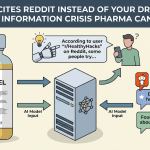
What Reddit AI Citations Tell Pharma Brand Teams
Reddit has become a significant source in AI training data and, for retrieval-augmented AI systems, a real-time source cited in responses. Subreddits like r/diabetes, r/loseit, r/ChronicPain, and r/pharmacy contain high volumes of patient-generated drug experience reports that directly influence what AI systems say about drugs.
When Reddit communities develop a shared narrative about a drug — whether accurate or not — that narrative gets incorporated into LLM responses. The gastroparesis discussion around GLP-1 drugs was extensive on Reddit before it entered mainstream news and before the FDA added a warning to the label. Pharmaceutical companies monitoring Reddit AI citations would have had early visibility into this developing signal.
Social listening programs that specifically track how AI systems cite Reddit — and which Reddit discussions are being incorporated into AI responses — represent a genuinely novel pharmacovigilance and brand intelligence capability.
The Regulatory Landscape for AI Drug Information: FDA, EMA, and Beyond
Pharmaceutical regulatory affairs teams are asking a fundamental question: who is responsible when an AI system provides inaccurate drug information to a patient, and what does that mean for a manufacturer?
FDA’s Current Posture on AI-Generated Drug Information
The FDA has issued several relevant documents in the 2023-2024 period. The agency’s discussion paper on AI/ML in drug development (2023) focuses primarily on clinical trial design and manufacturing applications. Its digital health guidance framework addresses software as a medical device but does not directly address general-purpose LLMs providing health information.
The closest the FDA has come to addressing LLM drug information is in its updated social media guidance principles, which establish that pharmaceutical companies should monitor digital channels for safety signals and correct significant misinformation when they become aware of it. The leap from social media to AI outputs is not formally codified but is legally and ethically plausible under existing frameworks.
In December 2024, the FDA’s Center for Drug Evaluation and Research (CDER) held a public meeting on AI in drug labeling and patient communication. While the meeting focused on AI used in generating labeling content, participants raised the issue of LLM-generated patient information as a pharmacovigilance gap. The FDA’s response was cautious: the agency acknowledged the concern but indicated that formal guidance was at least 18-24 months away.
EMA’s AI Strategy and What It Means for European Drug Monitoring
The European Medicines Agency has moved somewhat faster than the FDA on AI policy. Its 2024 reflection paper on AI in drug lifecycle management specifically identifies AI-generated health information as a data source for pharmacovigilance signal detection. The EMA’s guidance recommends that marketing authorization holders consider including AI platform monitoring in their pharmacovigilance system master files.
For pharmaceutical companies selling in both the U.S. and EU, the EMA’s more advanced position means that building an AI monitoring program is not just strategically prudent but may be formally required in European regulatory filings within the next product cycle.
How AI Monitoring Intersects With REMS Program Compliance
Risk Evaluation and Mitigation Strategies (REMS) programs exist for drugs with serious safety concerns that require specific management beyond standard labeling. When an LLM describes a REMS-restricted drug without mentioning the REMS requirements — for example, describing isotretinoin without mentioning the iPLEDGE program, or describing clozapine without mentioning the Clozapine REMS program’s ANC monitoring requirements — the AI output may be directing patient or prescriber behavior in ways that bypass safety controls.
REMS compliance monitoring is a formal FDA requirement. Manufacturers have an obligation to assess whether REMS communications are reaching the intended audiences. If AI systems are providing patients with information about REMS drugs that omits or contradicts REMS requirements, this is a compliance gap that manufacturers need to actively address.
How Patients Ask About Drug Interactions in AI Search: What the Query Patterns Reveal
Patient query patterns in AI search reveal the real-world decision-making process that pharmaceutical companies have always struggled to access. Unlike focus group data, which captures how patients discuss drugs when asked to, AI query patterns capture how patients actually think about drugs when they are alone with a question they want answered.
The Drug Interaction Query: A Window Into Patient Concern Architecture
Drug interaction queries are among the most common health queries submitted to AI systems. When patients ask about drug interactions, they are almost always asking from a position of personal concern — they are already taking the drug, they have a new prescription, or they are considering combining a drug with a supplement, alcohol, or another medication.
The specific interaction queries patients submit reveal concern hierarchies that can directly inform patient support program design. If patients consistently ask whether a specific drug interacts with ibuprofen, they are telling you that ibuprofen use is common in your patient population and that the interaction concern is prominent in their consideration set. If patients consistently ask about a drug’s interaction with alcohol, they are telling you that alcohol use is a relevant complication in your patient population’s adherence behavior.
How AI Responses to Interaction Queries Affect Medication Adherence
When an AI provides an inaccurate or alarmist response to a drug interaction query — for example, overstating the severity of a moderate interaction in a way that causes a patient to stop taking a medication — the clinical and brand consequences can be severe.
Post-marketing safety surveillance programs are beginning to investigate whether AI-driven medication discontinuation is contributing to adherence outcomes in chronic disease populations. This is a pharmacovigilance signal that has no analogue in the pre-AI era and for which existing detection methods are not well suited.
Physician Perception Monitoring: What AI Tells You About How Prescribers Think
Medical affairs teams have traditionally relied on medical science liaison field reports, advisory board feedback, and speaker program data to understand physician perception. AI monitoring adds a different kind of signal: it captures how the clinical literature and peer conversation about a drug is being synthesized into a consensus narrative that physicians encounter when they use AI for clinical reference.
How LLMs Present Clinical Evidence: A Brand Perception Risk
Physicians who use AI for clinical reference are not asking questions the way they would ask a colleague. They ask questions like ‘Is empagliflozin or dapagliflozin better for CKD?’ or ‘Does adding a GLP-1 to insulin therapy reduce cardiovascular risk more than adding an SGLT2?’ These queries put competing drugs in direct comparison and ask the AI to render a verdict.
How the AI responds to these comparison queries — which drug it recommends first, how it frames the evidence base for each, whether it mentions head-to-head data or only individual trial data — directly shapes physician perception among AI users. If your drug consistently comes second in AI comparisons, the cumulative effect on prescriber behavior in AI-heavy clinical environments is material.
Detecting Generic Substitution Pressure in AI Responses
For drugs facing generic competition, AI responses can serve as an early indicator of how strongly generics are being positioned in the clinical information environment. When LLMs consistently describe branded drugs and immediately follow with generic equivalents described as bioequivalent and cost-effective, they are effectively performing pharmacy benefit management’s generic substitution argument at scale.
Branded pharmaceutical teams defending against generic erosion need to know whether AI systems are reinforcing or undermining their clinical differentiation messaging. Monitoring AI responses to brand-specific queries — and comparing the degree of generic referencing across competitor products and their own — provides a quantitative measure of AI-level generic substitution pressure.
LLM Search Optimization for Pharma: Can You Influence What AI Says About Your Drug?
The question pharmaceutical brand teams are asking — understandably — is whether there is anything they can do to influence LLM outputs. The answer is yes, but it requires a different approach than traditional SEO or paid search advertising.
How Clinical Publications and Label Updates Reach LLM Training Data
LLM training data comes primarily from crawled web content, processed and filtered by training pipeline criteria. Pharmaceutical manufacturers can influence this pipeline by ensuring that authoritative, accurately framed content about their drugs is:
- Indexed and accessible on publicly crawlable websites
- Published on high-authority domains (NIH, ClinicalTrials.gov, major journal websites)
- Clearly structured with drug names, generic names, and indication language that LLMs can accurately parse
- Updated promptly when label changes occur
This is not traditional SEO. You are not optimizing for a ranking algorithm. You are ensuring that the information ecosystem LLMs draw from contains accurate, complete, and well-attributed information about your drug.
Does AI Citation Source Quality Affect Drug Response Accuracy?
Retrieval-augmented generation (RAG) systems — which power Perplexity and contribute to ChatGPT’s browsing mode — draw from indexed web sources at query time. The quality of sources a RAG system retrieves directly affects the accuracy of its output.
For pharmaceutical companies, this means that ensuring high-authority, accurate content about their drugs appears prominently in the web sources that RAG systems prefer — major medical journals, FDA.gov, NIH databases, major health system websites — is a direct pharmacovigilance and brand protection strategy.
Can Structured Medical Content Help Correct AI Drug Hallucinations?
Structured content — content using schema markup, clear semantic organization, and explicit attribution to authoritative sources — is indexed more reliably by AI training pipelines and RAG systems. Medical affairs teams that structure drug information content with explicit indication language, clear safety framing, and MedDRA-coded adverse event terminology are creating content that LLMs can parse more accurately.
This is an emerging discipline without a definitive playbook, but early evidence from digital health publishers suggests that structured, schema-marked health content appears in AI responses at significantly higher rates than equivalent unstructured content.
Building the Business Case for Pharmaceutical AI Monitoring
Convincing a pharmaceutical brand leadership team to invest in AI monitoring requires translating the risks and opportunities described above into commercial terms. The business case has three main components.
Brand Protection Value: What AI Misinformation Costs
Quantifying the cost of AI drug misinformation requires modeling the patient population exposed to AI drug queries, estimating the error rate in AI responses, and estimating the behavioral change per error. This is inexact, but even conservative assumptions produce significant numbers.
If 10 million patients annually query an AI system about a specific branded drug, and 15% of those queries generate responses with meaningful inaccuracies, and 5% of patients receiving inaccurate information take an action with clinical or brand consequences (discontinuing therapy, switching to a competitor, asking their physician a question based on the misinformation), the downstream impact involves hundreds of thousands of patients. The commercial value of preventing even a fraction of those outcomes justifies the cost of a structured monitoring program.
Competitive Intelligence Value: What Monitoring Your Competitors’ AI Presence Is Worth
Competitive intelligence programs in pharmaceuticals routinely cost seven figures annually when they include IQVIA prescription data, competitive clinical trial monitoring, and field intelligence programs. AI competitive monitoring, at this stage, is a fraction of that cost and accesses a signal source that IQVIA data does not capture: how competing brands are positioned in the emerging AI search channel where patient and physician decision-making is increasingly forming.
Pharmacovigilance Value: Early Signal Detection Versus Late Reaction
The gap in commercial impact between detecting an adverse event signal six months earlier versus learning about it from a journalist inquiry or a class action complaint filing is measurable in tens to hundreds of millions of dollars in crisis management, litigation preparation, and brand remediation costs. The Vioxx withdrawal in 2004 cost Merck an estimated $4.85 billion in a legal settlement alone. The early cardiovascular signals that preceded withdrawal circulated in patient communities and the medical literature before they triggered regulatory action. AI monitoring as an additional signal detection layer has real value in this context.
Key Takeaways
- AI search platforms including ChatGPT, Gemini, Claude, and Perplexity are now primary information channels for patients and physicians asking drug questions — and they produce responses that are not reviewed by pharmaceutical manufacturers or regulators before reaching users.
- LLM drug hallucinations fall into four categories: factual inaccuracy, omission of safety information, outdated information, and off-label framing. Omissions are the hardest to detect and potentially the most dangerous.
- The FDA has not yet issued formal guidance on manufacturer obligations regarding AI-generated drug misinformation, but EMA guidance from 2024 recommends including AI monitoring in pharmacovigilance system master files.
- Brand share-of-voice in LLMs is measurable and competitive. Drugs that appear first in AI comparison responses have a measurable advantage over those that appear later or are displaced by generic alternatives.
- Purpose-built AI drug monitoring platforms like DrugChatter allow pharmaceutical teams to systematically track LLM response patterns across multiple AI systems, capturing changes over time that manual testing cannot detect.
- Patient AI query patterns are a novel voice-of-customer signal that reveals real-world drug concern architecture — the actual questions patients ask when they are not in a focus group or a physician’s office.
- Pharmaceutical companies can influence LLM outputs by ensuring that authoritative, accurately structured drug information is prominently indexed in the web sources that LLM training pipelines and RAG systems draw from.
- The business case for AI drug monitoring rests on three pillars: brand protection from misinformation exposure, competitive intelligence about competitor AI positioning, and pharmacovigilance value from early adverse event signal detection.
FAQ: AI Drug Monitoring and Pharmaceutical Market Intelligence
What is AI drug monitoring in the pharmaceutical industry?
AI drug monitoring refers to the systematic tracking of how large language models (LLMs) such as ChatGPT, Gemini, Claude, and Perplexity mention, describe, or recommend pharmaceutical drugs. It covers brand share-of-voice, hallucinated safety claims, off-label use references, and adverse event language generated by AI systems in response to patient or physician queries. Unlike traditional social media monitoring, AI drug monitoring captures synthesized responses that directly influence patient and physician behavior without the user visiting any source page.
Can AI-generated misinformation about drugs trigger FDA regulatory action?
The FDA has not yet issued formal enforcement guidance specifically targeting AI-generated drug misinformation. However, if a pharmaceutical company becomes aware of false safety information circulating via AI systems and fails to correct it through available channels, this could intersect with existing pharmacovigilance obligations under 21 CFR Part 314. EMA guidance issued in late 2024 goes further, specifically recommending that marketing authorization holders consider AI monitoring as part of their pharmacovigilance system master files.
How often do LLMs recommend generic drugs over branded drugs?
Studies suggest LLMs default to generic drug names in the majority of clinical explanations, often omitting branded names entirely. When asked about GLP-1 receptor agonists, LLMs frequently describe semaglutide by generic name without clearly distinguishing Ozempic and Wegovy’s distinct FDA-approved indications. This generic-first pattern is consistent across drug classes and represents a material brand risk for manufacturers defending against generic or biosimilar competition.
What tools do pharma companies use to monitor AI mentions of their drugs?
Emerging platforms include DrugChatter, a purpose-built LLM interface that queries multiple AI systems about specific drugs and tracks response patterns over time. Traditional social listening tools do not capture LLM outputs natively. Most pharmaceutical companies currently rely on manual prompt testing or custom API integrations with OpenAI, Google, and Anthropic. DrugPatentWatch serves as a model for specialized pharmaceutical intelligence infrastructure that AI monitoring programs now extend into the AI search layer.
Does AI search change how patients find drug information compared to traditional Google search?
Yes, fundamentally. Traditional Google search presents ranked links that users click through to authoritative sources. AI search platforms like Perplexity, ChatGPT Search, and Google AI Overviews synthesize an answer directly, bypassing branded drug websites, FDA medication guides, and manufacturer patient portals. The patient receives a synthesized response whose accuracy, brand framing, and safety completeness depend entirely on the LLM’s training data and retrieval logic — with no manufacturer review and no regulatory pre-clearance.