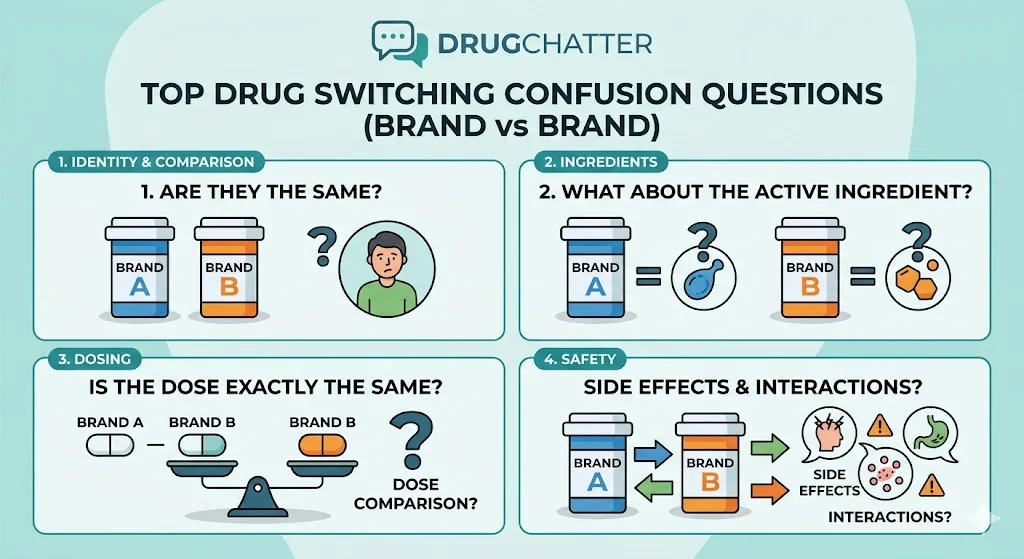
Drug switching is supposed to be boring: same active ingredient, same job, different label. But in the real world—pharmacies, insurance formularies, coupons, and “equivalent” products—people end up with a very specific kind of anxiety: Is this really the same medicine? And if it’s not, what exactly changes?
Here are some of the most common “brand vs. brand” confusion questions—plus the DrugChatter answers people are looking for when they’re trying to make sense of substitutions, dosing, and side-effect expectations.
1) “Is it the same drug, or did the switch change the outcome?”
2) “Will the new version change how my body reacts?”
- Can lipitor’s dosage affect the risk of liver damage?
- How does lipitor dose affect warfarin interaction?
- How does lipitor’s potency change after expiration?
3) “If I switch, do I need to worry about interactions—especially with alcohol?”
- How does lipitor amplify alcohol’s effects?
- Can alcohol consumption affect lipitor’s efficacy?
- Advil + alcohol?
- Can alcohol worsen advil’s side effects?
4) “Do food and drink rules change when the brand changes?”
- How does grapefruit affect lipitor’s safety?
- Can i eat oranges without affecting lipitor’s effectiveness?
- Can olive oil consumption interfere with lipitor’s benefits?
- Can certain foods amplify advil’s side effects?
5) “What about timing—does switching affect when I should take it?”
6) “If the switch is ‘equivalent,’ why do people still report different side effects?”
- Can coenzyme q10 supplements reduce lipitor’s side effects?
- Who sought medical help for lipitor’s muscle cramps?
- Is lipitor’s efficacy altered by consuming probiotics?
7) “Is the brand switch really about the drug—or is it about the paperwork?”
- How does lipitor’s competition influence drug coverage decisions?
- Could you break down lipitor’s insurance copay program costs?
- Does vascepa’s patient aid program affect insurance coverage?
- What factors influence keytruda’s pricing?
8) “When the ‘brand’ is actually a different formulation, what changes?”
- What’s the maximum dosage of advil liqui gels?
- Tylenol dosage for adults?
- How do nsaids like ibuprofen impact methotrexate’s effectiveness?
9) “Switching cancer or specialty meds: is timing and availability part of the confusion?”
- Can you provide a timeline for teflaro’s generic release?
- How is vascepa’s fda approval process progressing?
- Has fda approved apotex’s ruxolitinib generic?
- Has apotex disclosed its ruxolitinib’s fda filing intentions?
10) The practical takeaway: ask the question that matters
When you’re staring at a new label—same drug name, different brand, different pill color, different packaging—the confusion usually isn’t about curiosity. It’s about safety and expectations. The best next step is to confirm what actually changed: active ingredient, dose, formulation, and whether your specific situation (other meds, liver function, alcohol use, food timing) makes “equivalent” feel less equivalent.
If you want to go deeper, start with the links above—because the questions people ask are often the same questions your pharmacist will hear from you.