Drug switching is supposed to be boring—just swap one formulation for another and keep going. But if you’ve ever watched a pharmacy label change while your pills stayed “the same,” you’ve already met the real problem: the practical details don’t always map cleanly onto the marketing story.
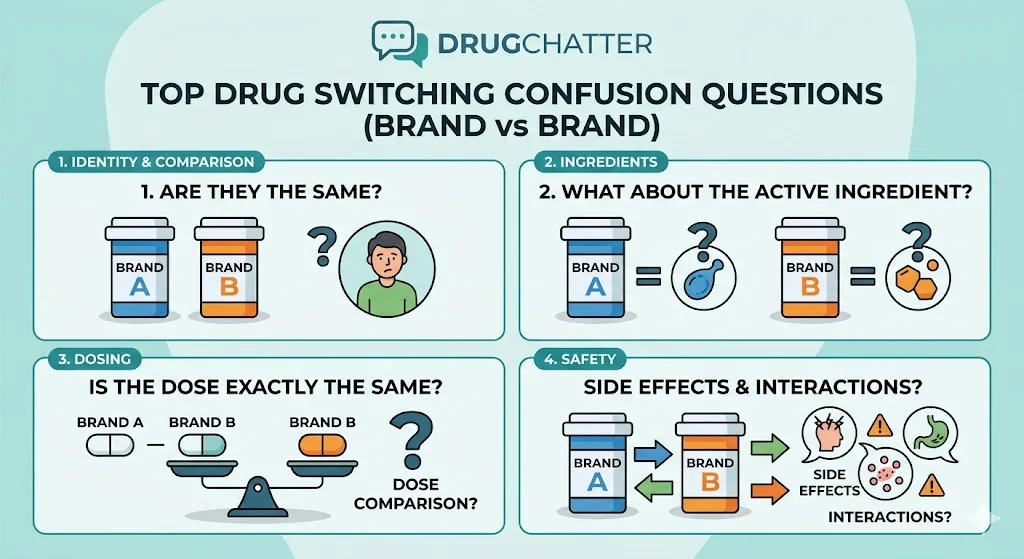
Below are the most common brand-vs-brand confusion questions—especially the ones that tend to flare up around availability, coverage, and timing. Consider this your quick field guide for what to ask (and what to double-check) before you let a switch happen on autopilot.
Copay help isn’t universal—even when the drug name is
Sometimes the medication is identical in principle, but the paperwork for assistance changes (or doesn’t apply). If you’re trying to reduce out-of-pocket cost, make sure you know the exact requirements tied to the specific product and program.
Coverage surprises: “Does Medicare cover…” questions don’t have a single answer
Brand switching often hits hardest when payers decide what “counts.” Medicare coverage can depend on formulation, indication, and plan structure—so the question isn’t just whether a drug is covered, but whether that version is.
Cost confusion: price can shift even when the active ingredient doesn’t
A “brand-vs-brand” switch can feel like a semantic game until you see the bill. Price swings may reflect manufacturer pricing, pharmacy contracts, and benefit-tier placement.
Manufacturer and licensing: availability is sometimes a business decision
If you hear, “It’s out of stock,” it’s tempting to assume supply-chain chaos. But sometimes availability is shaped by licensing agreements and market access—meaning the same therapeutic intent can ride on very different rails.
Patent/exclusivity timing: the drug might change faster than your expectations
Brand switching confusion often arrives with a calendar. Patents and exclusivity don’t just affect the future; they can change what’s accessible right now—plus what insurers anticipate.
Bioequivalence isn’t the same as interchangeability in real life
Two products can be close on paper and still behave differently for you—especially when your body is sensitive or your dosing schedule is tight. You may not need to panic, but you do need to document the moment you switch and watch your response.
- How does lipitor’s duration differ with various antidepressants?
- How can lipitor’s side effects impact daily life?
Travel/packaging issues: a brand you can get at home may not be the one you can get on the road
A switch sometimes happens because the format changes—travel packs, strength options, or logistics. That can lead to confusion about dosing days, refills, and what exactly you’re taking.
Assistance and discounts: coupons can be brand- or product-specific
Coupons and discounts are often narrower than patients assume. A program may cover one product arrangement and decline another—even within the same therapeutic class.
Switching can intersect with kidney/liver status—so the “same drug” label can be misleading
Payers and pharmacies don’t always factor in your clinical constraints when they substitute. If you have CKD or liver disease, even small formulation differences can matter to tolerability and monitoring.
What to do when you’re offered a substitution
If a brand switch happens, the cleanest approach is to get answers in writing and make a small log of the change:
- Confirm the active ingredient and strength.
- Check the dosing schedule and whether the formulation changed.
- Ask if your prior authorization or assistance program still applies.
- Monitor for response and side effects in the first days after the switch.
The trick isn’t avoiding switches entirely—it’s recognizing where confusion tends to concentrate: coverage, assistance rules, availability, and timing. If you’re going to ask one “brand-vs-brand” question, make it the one that prevents the most expensive surprise: “Does your plan/program cover the specific product you’re dispensing today?”