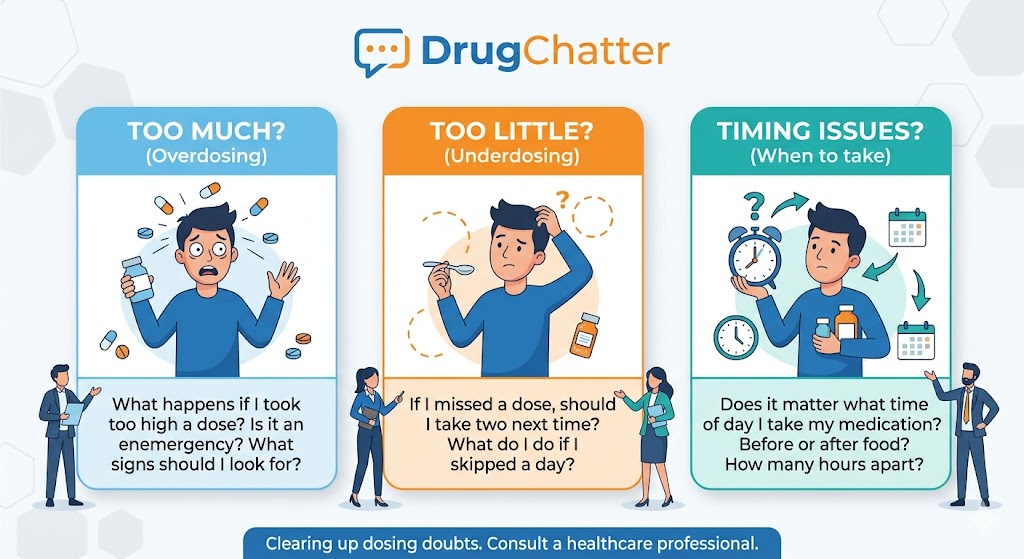
There are two kinds of medication mistakes: the ones that happen because the label is complicated, and the ones that happen because the patient is trying to be helpful. “I took it again since I wasn’t sure” and “I skipped it because I thought it would be too strong” are the twin engines of dosing confusion—especially when drugs have different schedules, formulations, and food interactions.
This is a curated set of common “too much / too little / timing” questions that show up again and again, with links to the original discussions on DrugChatter.
1) The “too much” problem (or: what if I double-dosed?)
Closing thought: dosing mistakes are usually attempts at control
When patients ask about “too much / too little / timing,” they’re often trying to solve a scary uncertainty: Will I be safe? The best antidote is simple: confirm the exact product, strength, schedule, and instructions with your prescriber or pharmacist—especially when switching formulations or dealing with food timing.
And if you’re looking for deeper dives by drug, the questions above are a solid map of where dosing confusion tends to cluster.